
You may wonder what makes lithium batteries last longer and work better. Activated carbon is a special material with a large surface area and tiny pores. You find it at the heart of many advanced batteries. In Lithium Battery Activated Carbon, this material stores and releases energy quickly. It also helps keep the battery stable and safe by trapping unwanted particles.
Key Takeaways
Activated carbon has a large surface area, allowing lithium ions to move quickly, which boosts battery efficiency and longevity.
Using high-purity activated carbon (99% or higher) enhances battery performance by preventing unwanted reactions and extending battery life.
Activated carbon traps impurities and reduces corrosion, making batteries safer and more reliable for everyday use.
Optimizing activated carbon with techniques like Atomic Layer Deposition can improve energy storage and protect against power loss.
Choosing the right pore size (2-50 nanometers) for activated carbon is crucial for maintaining high battery efficiency and fast charging.
Activated Carbon Properties
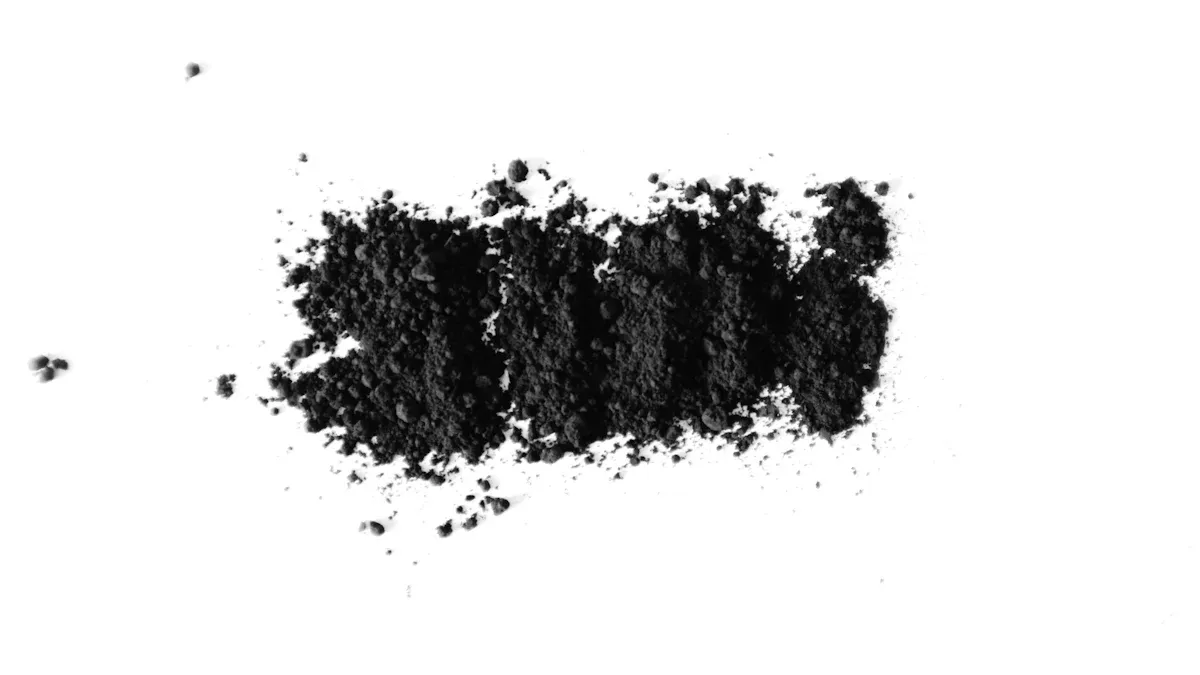
Structure and Surface Area
You see activated carbon as a material with a unique structure. It contains many tiny pores that create a huge surface area. This feature helps batteries work faster and last longer. You can compare activated carbon to other carbon materials by looking at their surface area. The table below shows how activated carbon stands out:
Material | Surface Area (m²/g) | Performance Impact |
|---|---|---|
Activated Carbon | >1500 | Enhances ion movement and battery efficiency |
Other Carbon Materials | <1500 | Slower ion movement and reduced efficiency |
You find that one gram of activated carbon can have more than 1500 square meters of surface area. Some sources report values as high as 2585 m²/g. This large surface area lets lithium ions move quickly inside the battery. The table below shows typical surface area values for activated carbon used in battery electrodes:
Source | Surface Area (m²/g) |
|---|---|
Wang et al. | 1313 |
Activated carbon nanospheres | 2000 |
Molina-Sabio et al. | 2585 |
You benefit from this structure because it improves the speed and efficiency of Lithium Battery Activated Carbon.
Adsorption and Conductivity
Activated carbon does more than provide a large surface area. It also helps batteries by adsorbing impurities and improving conductivity. You notice these advantages in several ways:
Activated carbon’s pores allow lithium ions to move faster within the battery.
The high surface area boosts conductivity, so the battery charges quickly and works efficiently.
Activated carbon removes impurities, which helps the battery last longer.
You also see that microstructural features, like surface functional groups, affect how lithium ions enter and leave the material. Oxygen groups on the surface can change how much charge is lost during these processes. This means the microstructure of activated carbon plays a big role in battery performance.
You rely on these properties to make batteries safer, more stable, and more reliable.
Roles in Lithium Batteries
Lithium Battery Activated Carbon Applications
You find Lithium Battery Activated Carbon in several parts of a lithium battery. Each part uses activated carbon for a different purpose. The table below shows where you see activated carbon and what it does:
Component | Function |
|---|---|
Anode | Helps lithium ions move and store better. |
Cathode | Acts as an additive or coating to improve discharge and longevity. |
Electrolytes | Enhances performance by capturing impurities and improving battery life. |
You see that activated carbon helps lithium ions move and store energy in the anode. In the cathode, it improves how the battery releases energy and makes the battery last longer. When you look at electrolytes, activated carbon captures impurities and boosts battery life. You notice that Lithium Battery Activated Carbon makes each part of the battery work better.
You also find activated carbon in lithium-ion capacitors. These devices use the electric double-layer capacitance effect. This effect lets you store energy quickly and release it fast. You benefit from this technology because it gives you high power and quick charging.
Enhancing Stability and Conductivity
You want your battery to stay stable and work well during many charge and discharge cycles. Activated carbon helps you achieve this goal. Here are some ways it improves stability:
Activated carbon removes oil and impurities when you prepare electrode materials.
These impurities can lower battery performance and make charging and discharging less efficient.
The high surface area of activated carbon lets it adsorb impurities, keeping electrodes stable and strong.
You notice that Lithium Battery Activated Carbon keeps your battery reliable. It stops unwanted particles from hurting the battery. You get better performance and longer battery life.
When you add activated carbon to lithium iron phosphate cathodes, you see a big improvement in conductivity. The battery can move electricity faster. This means you get better performance and more reliable energy storage. You can charge your battery quickly and use it for longer periods.
Impurity Removal and Corrosion Reduction
You want your battery to last as long as possible. Impurities and corrosion can shorten battery life. Lithium Battery Activated Carbon helps you by trapping impurities and reducing corrosion. The pores in activated carbon catch tiny particles that could damage the battery. You see fewer problems with battery breakdown and longer cycle life.
You also notice that activated carbon lowers the risk of corrosion. It protects the battery’s metal parts and keeps them from reacting with harmful substances. You get a safer battery that works well for many years.
Tip: If you choose high-quality Lithium Battery Activated Carbon, you can boost your battery’s energy density and cycle life. You get more power and longer use from each charge.
You see that activated carbon plays a key role in making lithium batteries stable, efficient, and long-lasting. You benefit from its ability to improve conductivity, remove impurities, and reduce corrosion.
Benefits and Drawbacks
Performance Advantages
You gain several benefits when you use activated carbon in lithium batteries. The large surface area lets lithium ions move quickly, which boosts energy density. Your battery stores more power and delivers it faster. You also notice that batteries with activated carbon last longer. They keep working well through many charge and discharge cycles. This means you get extended cycle life and improved reliability.
Activated carbon helps you by making batteries safer. It traps impurities and reduces corrosion, so your battery stays stable. You can depend on your battery for everyday use. Many factories use plant waste, like coconut shells, to make activated carbon. This saves trees and reduces trash. Cleaner production methods cut down on pollution. Better recycling processes keep harmful waste out of landfills. The table below shows how these trends help you and the planet:
Trend | How It Helps You and the Planet |
|---|---|
Using plant waste | Saves trees and reduces trash |
Cleaner production methods | Cuts down on pollution |
Better recycling processes | Keeps harmful waste out of landfills |
Renewable energy in factories | Lowers carbon footprint |
Limitations and Challenges
You face some challenges when you use activated carbon in lithium batteries. Large pieces of activated carbon can slow down ion movement. Small pieces may clump together and block ion movement. You need to choose the right size and shape for the best performance.
You also see environmental impacts from making activated carbon. Mining raw materials releases pollutants like sulfur dioxide and heavy metals. Battery production can suffer if impurities get into electrode materials. Improper waste disposal leads to toxic metals contaminating soil and water.
Raw material mining releases harmful pollutants.
Battery production can degrade if impurities enter electrodes.
Improper disposal causes toxic metals to pollute soil and water.
Lithium Battery Activated Carbon offers many benefits, but you must consider these limitations and challenges. You need to balance performance with environmental responsibility.
Selection and Optimization
Choosing Activated Carbon
You want to pick the best activated carbon for your lithium battery. Purity matters most. High purity keeps your battery running longer and prevents unwanted reactions. You should look for activated carbon with a purity level of 99% or higher. Lower purity can cause problems and shorten battery life. The table below shows how purity affects battery performance:
Purity Level | Battery Performance |
|---|---|
99% or higher | Best choice, long life |
95% – 98% | Good, but not perfect |
Below 95% | Not recommended |
Pore size distribution also plays a big role. Activated carbon acts like a sponge, trapping impurities that can slow down ion movement. You need a material with the right pore size to keep ions moving fast and efficiently. Organic impurities, such as aromatic or halogenated compounds, can come from lithium sulfate brine or decomposition products with fluorine or phosphorus. Removing these impurities helps your battery work better.
You can use several testing methods to check the quality of activated carbon:
Sieving method separates particles by size.
Nitrogen adsorption method measures surface area and pore size.
Iodine value method checks how well the carbon adsorbs impurities.
Compression strength test measures durability.
Optimization Strategies
You can improve battery performance by using smart optimization strategies. Atomic Layer Deposition (ALD) coats activated carbon, protecting it from power loss and boosting energy storage. Molecular Layer Deposition (MLD) adds a protective surface, stopping unwanted reactions at the interface between the electrolyte and electrode. You should also pay attention to purity and particle size, making sure they match other battery parts.
The table below lists some common optimization strategies:
Optimization Strategy | Description |
|---|---|
Atomic Layer Deposition (ALD) | Coats activated carbon to protect against power loss and enhance energy storage. |
Molecular Layer Deposition (MLD) | Provides a protective surface that prevents unwanted reactions. |
Purity and Particle Size | Ensures compatibility with battery components for better performance. |
You want activated carbon with high oil absorption capacity, large surface area, strong mechanical strength, and good regenerative properties. These features help remove impurities, improve efficiency, and lower costs. By choosing the right activated carbon and using smart optimization methods, you make your lithium battery safer, stronger, and longer-lasting.
You see activated carbon as a key material in lithium batteries. It boosts energy density, extends cycle life, and protects electrodes. The table below shows how activated carbon improves battery performance:
Benefit | Description |
|---|---|
Cycle Life Enhancement | Lets you charge and discharge many times without losing power. |
Energy Density Improvement | Stores more energy in the same space. |
Electrode Protection | Stops harmful chemicals from damaging battery parts. |
Impurity Removal | Keeps the battery clean for steady operation. |
Cathode Applications | Makes batteries more stable and reliable. |
You get the best results by choosing high-quality activated carbon with large surface area and strong mechanical strength. This choice helps your battery charge faster and last longer.
FAQ
What makes activated carbon different from regular carbon?
You see activated carbon with a much larger surface area and more pores. This structure lets it adsorb impurities and move ions faster. Regular carbon does not offer these benefits.
How does activated carbon improve battery safety?
You rely on activated carbon to trap harmful particles and reduce corrosion. This keeps your battery stable and lowers the risk of failure.
Tip: Clean electrodes mean safer batteries.
Can you recycle activated carbon from lithium batteries?
You can recycle activated carbon. Factories use special methods to clean and reuse it. This process helps reduce waste and saves resources.
What is the best pore size for activated carbon in batteries?
You want pores between 2 and 50 nanometers. This size lets lithium ions move quickly and keeps the battery efficient.
Pore Size (nm) | Battery Efficiency |
|---|---|
2–50 | High |
<2 or >50 | Low |
Does activated carbon affect battery charging speed?
You notice faster charging with activated carbon. The high surface area lets ions move quickly, so your battery charges in less time.
Note: Proper particle size boosts charging speed.