
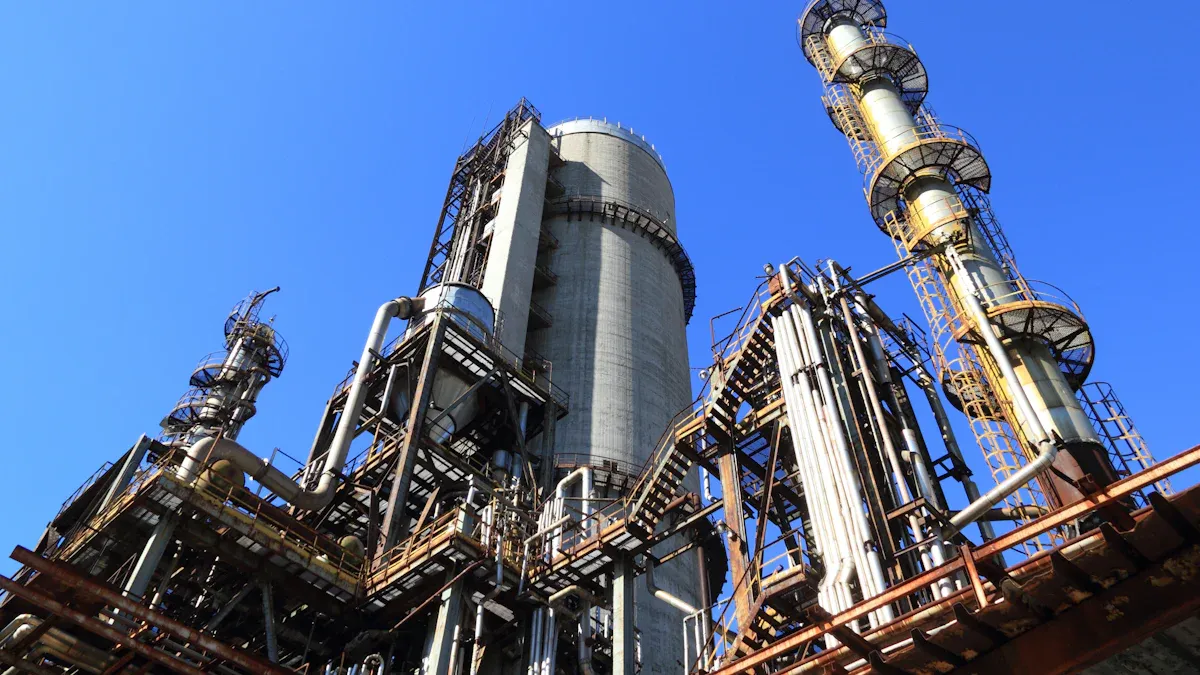
You see activated carbon used in industrial waste gas treatment because it traps dangerous gases and helps factories meet air quality regulations. Clean air matters for your health and for the environment. Activated carbon targets many harmful gases, including acid gases, mercury vapor, and volatile organic compounds.
Harmful Gases | Description |
|---|---|
Acid Gases | Captured during flue gas treatment |
Mercury Vapor | Targeted for compliance with emission standards |
Volatile Organic Compounds (VOCs) | Includes various organic pollutants like hydrocarbons, alkenes, and aldehydes |
Industrial waste gas treatment Activated Carbon removes pollutants and makes the air safer in workplaces.
Key Takeaways
Activated carbon effectively captures harmful gases, helping industries meet air quality standards and protect health.
The unique porous structure of activated carbon provides a large surface area, enhancing its ability to trap pollutants quickly.
Choosing the right type of activated carbon based on specific pollutants ensures optimal performance in gas treatment systems.
Regular maintenance and regeneration of activated carbon are essential to maintain its efficiency and prolong its lifespan.
Activated carbon not only removes VOCs and odors but can also convert harmful chemicals into safer compounds, benefiting both the environment and workplace safety.
Properties of Activated Carbon
Porous Structure and Surface Area
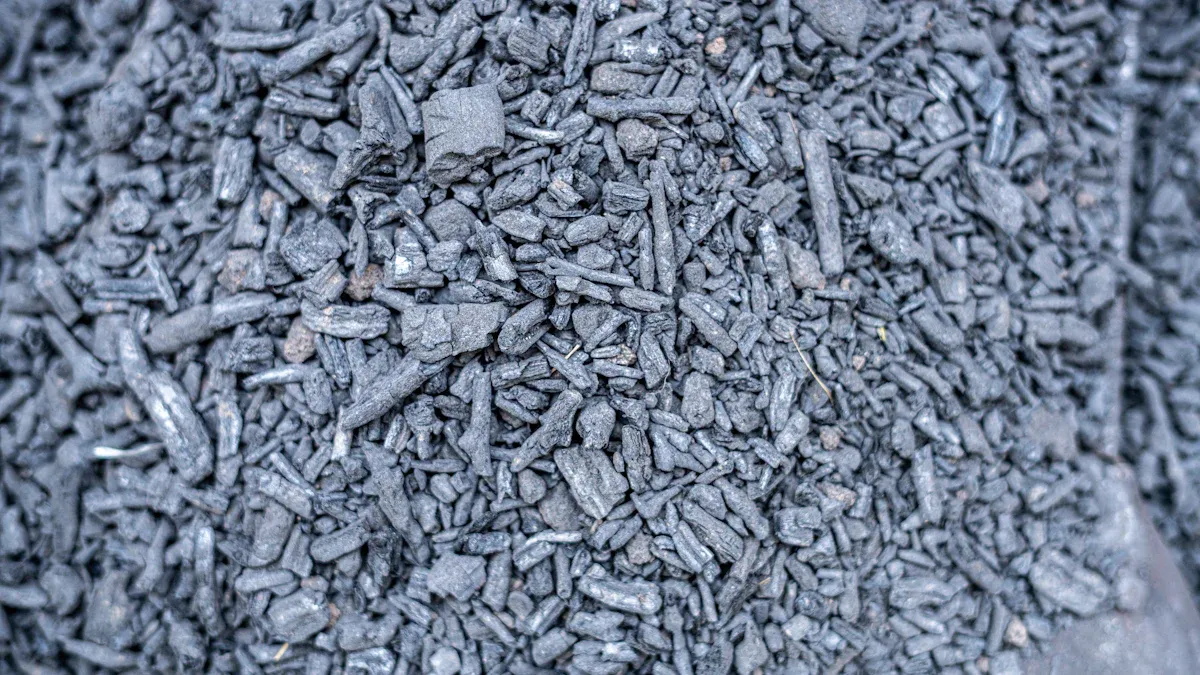
You benefit from activated carbon because it has a unique structure filled with tiny pores. These pores come in three types: micropores, mesopores, and macropores. Each pore type helps trap different molecules. Micropores do most of the work by catching small pollutants. Mesopores and macropores help move gases to the micropores, making the process faster and more efficient.
The porous structure gives activated carbon a high surface area.
Surface area for gas-phase applications ranges from 1000 to 2000 m²/g.
Some activated carbon types reach over 3000 m²/g in general applications.
This high surface area means you get more space for pollutants to stick, which is important for Industrial waste gas treatment Activated Carbon.
Adsorption Capabilities
Activated carbon grabs pollutants from the air through adsorption. You see it work best with certain chemicals. The removal efficiency depends on the type of compound. Here is a table showing how well activated carbon removes different pollutants:
Compound Type | Removal Efficiency Order |
|---|---|
Xylene | 1 |
Ethylbenzene | 2 |
Toluene | 3 |
Tri or Tetrachloroethylene | 4 |
Benzene | 5 |
Carbon Tetrachloride | 6 |
Chloroform | 7 |
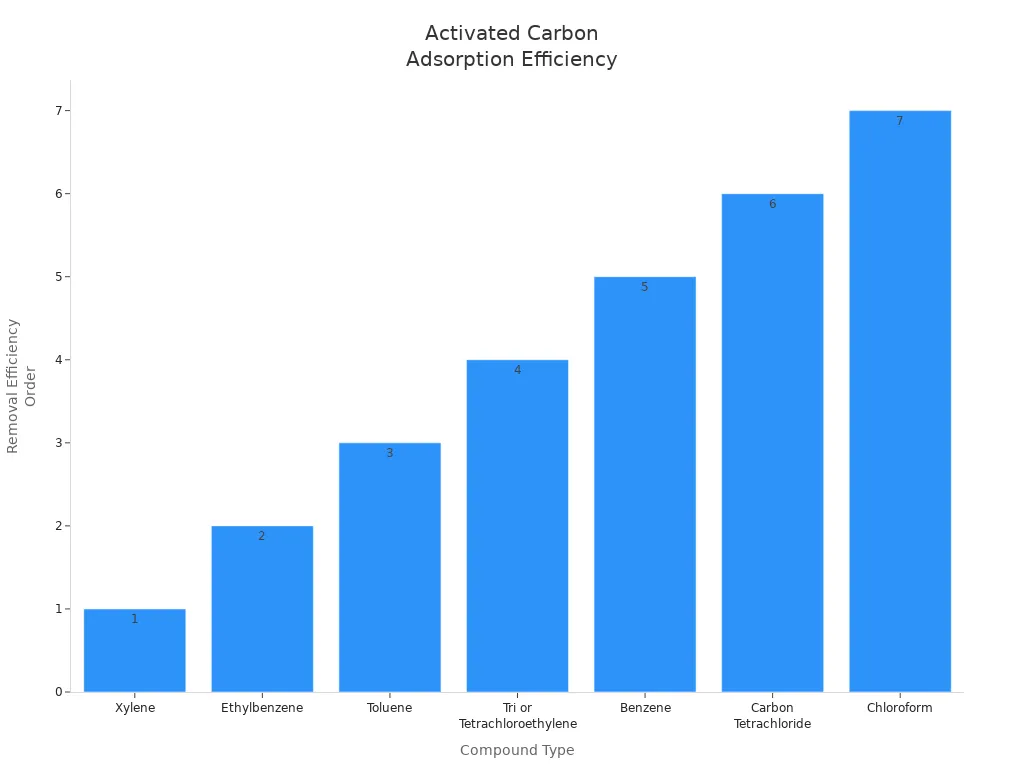
You notice that xylene and ethylbenzene are removed most efficiently. Activated carbon also works well for benzene and other hazardous gases.
Types Used in Industry
You find several types of activated carbon in industrial settings. Each type has special features and uses. Here is a table to help you compare:
Type of Activated Carbon | Advantages | Applications |
|---|---|---|
Coal-based | High adsorption capacity, stable in acidic and basic conditions | Industrial waste gas treatment, chemical treatment, air filtration |
Biomass-based | Environmentally sustainable, cost-effective, renewable | Industrial waste gas treatment, environmental remediation |
You also see granular activated carbon (GAC) and powdered activated carbon (PAC) used in different ways. GAC has larger particles and is used in vessels. PAC has finer particles and is added directly to process units. PAC offers higher surface area, so it catches more pollutants.
Tip: Choose the right type of activated carbon based on your pollutant and system needs. This helps you get the best results in industrial waste gas treatment.
Industrial Waste Gas Treatment with Activated Carbon
Treatment Process Overview
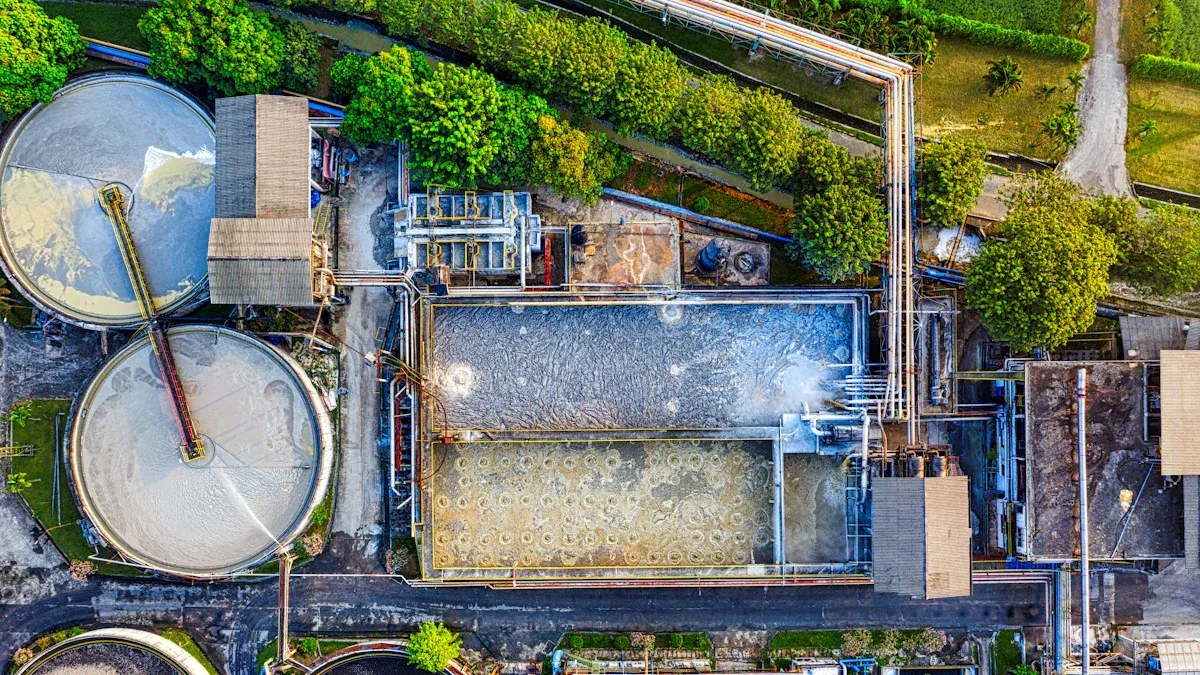
You start the process by collecting waste gas from its source. A suction hood pulls the gas away, stopping it from spreading into the workplace. You move the gas through pipes and fans to the treatment area. The gas flows at a controlled speed to avoid problems and ensure safety.
When the gas reaches the treatment system, it passes through activated carbon. Pollutants stick to the surface of the carbon. This step removes harmful substances from the gas stream. You finish the process by purifying the gas. Extra cleaning methods, such as wet scrubbers or biological filters, help the gas meet environmental standards.
Step | Description |
|---|---|
A suction hood pulls the gas from its source to prevent spreading. Proper collection is crucial for safety and compliance. | |
Gas Transport | The gas is moved through pipes and fans to the treatment area, ensuring the right speed to avoid issues. |
Adsorption | The gas passes through activated carbon, where pollutants adhere to its surface, effectively removing harmful substances. |
Purification | Final cleaning of the gas to ensure it meets environmental standards, using methods like wet scrubbers or biological processes. |
Note: You must collect and transport gas carefully to protect workers and keep the system running smoothly.
System Design and Operation
You design the system based on the types and amounts of pollutants in your facility. You measure emission rates and study how emissions change during production. This information helps you choose the right activated carbon and build a system that fits your needs.
“Successful industrial air pollution control begins with comprehensive emission characterization. Identifying all pollutant sources, measuring actual emission rates, and understanding how emissions vary with production provides essential data for system design.”
You control the flow rate of gas through the system. If the flow rate is too high, pollutants pass through without sticking to the carbon. If the flow rate is too low, treatment slows down, but removal improves. You aim for an optimal flow rate to balance speed and efficiency.
Flow Rate | Effect on Adsorption | Efficiency |
|---|---|---|
Too High | Pollutants pass through | Low |
Too Low | Slow treatment, high removal | Medium |
Optimal | Good removal, fast treatment | High |
High flow rate can lead to low pollutant removal efficiency.
Low flow rate allows for better pollutant adhesion but may reduce gas treatment capacity.
Optimal flow rate balances treatment speed and pollutant removal.
You monitor and adjust the flow rate regularly. This keeps the system efficient and prevents damage from high pressure. You select the type of activated carbon based on the pollutants you need to remove. Industrial waste gas treatment Activated Carbon works best when you match the carbon to your emission profile.
Maintenance and Regeneration
You keep the system working by maintaining and regenerating the activated carbon. Over time, the carbon fills up with pollutants and loses its ability to clean gas. You restore its adsorption capacity by regenerating it. The frequency of regeneration depends on the type of carbon and how long the system runs.
You check gas purity often to decide when to regenerate the carbon. This helps you maintain high efficiency. After several regeneration cycles, the carbon loses some surface area and strength. Thermal regeneration removes contaminants but can cause up to 10% surface area loss and 10-20% carbon loss. This reduces the carbon’s ability to adsorb pollutants.
You replace the carbon when it no longer works well. Regular maintenance keeps your Industrial waste gas treatment Activated Carbon system running smoothly and ensures clean air in your facility.
Pollutants Removed by Activated Carbon
VOCs and Hazardous Gases
You often find volatile organic compounds (VOCs) in industrial waste gases. These chemicals can harm your health and the environment. Activated carbon traps VOCs like toluene, xylene, and trichloroethylene. You see these pollutants in paint, solvents, and chemical manufacturing. Activated carbon also removes hazardous gases such as chlorine and sulfur dioxide. These gases can cause strong odors and health risks if released into the air.
Tip: You can use activated carbon to control odors and reduce exposure to dangerous chemicals in your facility.
Hydrogen Sulfide, Ammonia, and Thiols
You may notice rotten egg smells in some industrial areas. This odor comes from hydrogen sulfide. Activated carbon captures hydrogen sulfide and stops it from spreading. You also use activated carbon to remove ammonia, which can irritate your eyes and lungs. Thiols, or mercaptans, create strong odors even at low levels. Activated carbon adsorbs these compounds and helps you keep the air clean.
Pollutant | Source Examples | Effect if Not Removed |
|---|---|---|
Hydrogen Sulfide | Wastewater treatment, pulp mills | Odor, corrosion, health risks |
Ammonia | Fertilizer plants, refrigeration | Respiratory irritation |
Thiols | Petrochemical processes | Strong odors, complaints |
Benzene and Other Compounds
You face strict rules for benzene emissions because benzene is a known carcinogen. Activated carbon works very well for benzene removal. Research shows that activated carbon can achieve high removal rates for benzene in gas streams. The high surface area of activated carbon, which can reach up to 3500 m²/g in industrial applications, gives you strong adsorption power. You also get excellent results for toluene and similar hazardous compounds. The US Environmental Protection Agency lists activated carbon adsorption as one of the best technologies for removing hazardous organic pollutants from industrial waste. You can rely on Industrial waste gas treatment Activated Carbon to protect your workers and meet environmental standards.
Adsorption Principles and Performance Factors
Adsorption Mechanism
You see activated carbon work through two main adsorption mechanisms. Physical adsorption relies on van der Waals forces. These forces pull pollutants onto the carbon’s surface. Chemical adsorption forms new bonds between the carbon and the pollutant. This process changes the pollutant’s structure and locks it onto the carbon. Both mechanisms help you capture harmful gases in your facility.
Type of Adsorption | Characteristics | Process Type |
|---|---|---|
Physical Adsorption | Electrostatic attraction; endothermic | Endothermic |
Chemical Adsorption | Bond formation; exothermic; changes pollutant structure | Exothermic |
Influencing Factors
You need to pay attention to temperature, humidity, and flow rate. These factors affect how well activated carbon removes pollutants.
Condition | Effect on Adsorption Capacity |
|---|---|
High Humidity | Water competes with pollutants, lowering capacity |
Relative Humidity | At 80%, capacity drops to half compared to dry air |
Increased Temperature | Pollutants stick less to carbon at higher temperatures |
Room Temperature | Best for capturing volatile organic compounds |
High Temperature | Much less pollution gets captured |
High flow rate gives pollutants less time to stick to the carbon, so efficiency drops.
Low flow rate improves pollutant adhesion but slows down gas treatment.
Optimal flow rate balances speed and removal efficiency.
Tip: You can improve performance by keeping the system at room temperature and controlling humidity.
Impregnated Activated Carbon
You use impregnated activated carbon when you need to remove specific hazardous gases. This type of carbon contains special chemicals that boost its adsorption power. You can target gases like hydrogen sulfide, chlorine, ammonia, and formaldehyde. Impregnated carbon changes these gases into safer compounds or traps them more tightly.
Application Area | Effectiveness |
|---|---|
Flue Gas Treatment | Captures acid gases, mercury vapor, and industrial waste gases for emission compliance |
Specialized Modifications | Offers advanced adsorption and enhanced air purification |
Impregnated carbon works against organic contaminants, VOCs, hydrogen sulfide, chlorine, hydrogen cyanide, sulfur dioxide, arsine gas, phosgene, formaldehyde, ammonia, and amines.
You rely on Industrial waste gas treatment Activated Carbon to handle tough pollutants and meet strict air quality standards. Impregnated carbon helps you achieve better results in challenging environments.
Industrial Applications and Case Studies
Vapor Recovery Units
You see vapor recovery units in many industries. These units help you capture valuable solvents and prevent air pollution. Activated carbon plays a key role in these systems. Its porous structure traps vapors and lets you recover them for reuse. You find vapor recovery units in:
Paint manufacturing
Petrochemical plants
Synthetic fiber production
Printing facilities
Rubber processing
Adhesive factories
Solvent manufacturing
Coating operations
Common solvents recovered include acetone, benzene, toluene, ethanol, ethyl ether, pentane, tetrahydrofuran, xylene, chlorinated hydrocarbons, and aromatics. You benefit from lower emissions and cost savings when you use activated carbon in vapor recovery units.
Flue Gas Purification
You use activated carbon to clean flue gas in power plants and factories. Its high porosity and large surface area attract and trap pollutants. You inject activated carbon into the flue gas stream. This process, called Activated Carbon Injection (ACI), captures mercury and other harmful substances. Over 90 ACI systems operated in the USA by 2008. You rely on activated carbon to remove heavy metals like mercury, lead, and cadmium. It also adsorbs toxic dioxins and acidic gases such as sulfur oxides (SOx) and nitrogen oxides (NOx). You help your facility meet regulations and protect public health with this method.
Industry Examples
You can look at real-world examples to see how activated carbon works in practice. The table below shows two notable case studies:
Application | Purpose | Method | Effectiveness |
|---|---|---|---|
Coal-fired power plants | Mercury control | Activated Carbon Injection | Significant reduction of mercury emissions |
Recycling fluorescent lights | Mercury vapor capture | Activated carbon filters | Prevents mercury from escaping into the air |
You see that Industrial waste gas treatment Activated Carbon delivers strong results in different industries. You can trust this technology to improve air quality and support environmental goals.
You gain many advantages when you use activated carbon for industrial waste gas treatment:
Large surface area lets you capture pollutants fast.
You remove VOCs and odors effectively.
Some types change harmful chemicals into safer ones.
The process stays stable in harsh conditions and meets strict air quality rules.
You can clean and reuse activated carbon, saving money.
You face some challenges:
Activated carbon has low capacity for hydrogen sulfide.
Adsorption stops when equilibrium is reached.
There is a risk of spontaneous combustion.
Limitation of Activated Carbon | Impact on Adoption of Alternatives |
|---|---|
High cost | Drives search for economical adsorbents |
Energy-intensive production | Encourages exploration of sustainable materials |
You should match the carbon type to your pollutants, maintain your system, and follow regulations. Activated carbon gives you a reliable way to keep industrial emissions clean.
FAQ
What is activated carbon?
Activated carbon is a material with many tiny pores. You use it to trap pollutants from air and water. Its high surface area makes it very effective for cleaning gases in factories.
How often should you replace activated carbon?
You should check the system regularly. Replace activated carbon when it stops removing pollutants well. Most systems need new carbon every few months, depending on usage.
Can activated carbon remove all types of industrial gases?
Activated carbon removes many harmful gases, including VOCs and odors. Some gases, like hydrogen sulfide, need special types of carbon. You should match the carbon to your pollutants.
Is activated carbon safe to use?
You can use activated carbon safely in industrial systems. Handle it with care to avoid dust and fire risks. Always follow safety guidelines and store it in a dry place.