
Coconut activated carbon sits in demanding applications where a failed batch costs real money. Drinking water plants use it to strip taste and odor compounds and trace organics, gold operations run it through carbon-in-pulp circuits where adsorption efficiency decides recovery, and food and pharmaceutical producers rely on it for decolorization and purification. The carbon itself is a commodity, but the manufacturer behind it is not. Two suppliers can quote the same iodine number and price, then deliver carbon that performs completely differently in your process, because quality lives in raw material sourcing, activation control, testing discipline, and batch-to-batch consistency. That is why supplier selection matters more than grade selection.
Choose a reliable coconut activated carbon manufacturer by verifying certifications, testing product specifications with samples, auditing the factory, comparing price on unit adsorption cost rather than per ton, and locking in clear commercial terms, because a trustworthy supplier proves quality with documents, data, and traceability instead of promises.
This guide walks through the selection process in the order an experienced buyer would follow. It starts with the certifications and product specifications that separate qualified suppliers from traders, then covers sample testing, factory audits, pricing, supply chain, batch consistency, and commercial terms. Each section can be read on its own, so you can jump straight to the part that answers your question.
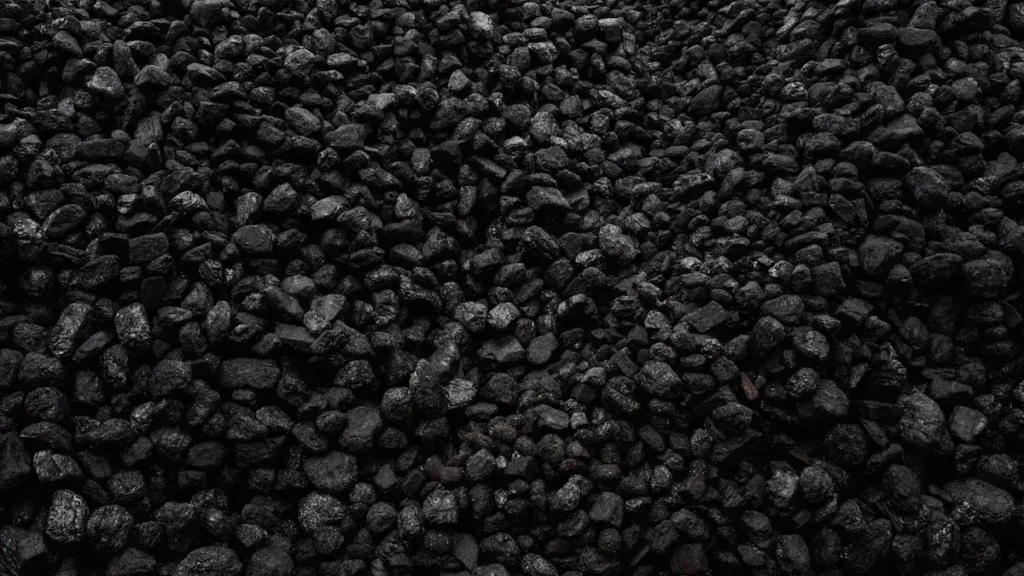
Why does the manufacturer matter for coconut activated carbon?
The manufacturer matters because coconut activated carbon quality is set upstream, in raw material sourcing and activation control, and those factors cannot be inspected from the finished bag alone, so a poor manufacturer produces inconsistent carbon no matter what the label claims.
Coconut carbon starts with the shell. Shells from different regions, different harvests, and different preprocessing methods produce char of varying density and purity, and a manufacturer that buys inconsistent feedstock cannot make consistent carbon. The activation step adds another layer of variability: temperature, steam flow, and residence time in the kiln determine pore development, and small shifts change the iodine number and surface area of the finished product. A serious manufacturer controls both steps and documents them.
The practical risk of a weak manufacturer shows up in your process. Adsorption performance drops, fines appear in the water or product, hardness falls short and the carbon crushes in the vessel, or a batch arrives with ash and heavy metal levels that fail your compliance requirements. By then the cheap price has turned into rework, downtime, and a damaged relationship with your own customer. Checking the manufacturer before ordering is cheaper than discovering the problem after installation.
What certifications should a reliable manufacturer hold?
A reliable manufacturer holds ISO 9001 for quality management, ISO 14001 for environmental management, application-specific certifications such as NSF/ANSI 61 for drinking water carbon and food-grade approvals where needed, plus export documentation and REACH registration for EU-bound product.
| Certification | What it covers | When it matters |
| ISO 9001 | Quality management system, process control | Always |
| ISO 14001 | Environmental management, compliance | Always, and for ESG programs |
| NSF/ANSI 61 | Health effects of drinking water contact materials | Drinking water applications |
| Food-grade approval | Safety for food contact and processing | Food and beverage, pharma |
| REACH registration | EU chemical compliance | EU-bound shipments |
| COA with batch numbers | Actual test results for the specific batch | Every shipment |
Certifications are the first screen, not the final proof. A valid ISO 9001 certificate tells you the manufacturer runs a documented quality system, which correlates with consistent output. NSF/ANSI 61 matters specifically for drinking water carbon because it tests health effects, not just adsorption performance, and many municipal buyers will not accept carbon without it. REACH registration becomes non-negotiable when the destination is the European Union, because unregistered substances can be blocked at customs.
Check that the certificates are current and match the product line you are buying. Some suppliers hold a certificate for one plant or one product family and imply it covers everything. Ask for the certificate number and verify it with the issuing body, and ask whether the certification covers the specific coconut carbon grade you intend to order. Documents that cannot be verified should be treated as marketing material.
What specifications should you check on the product?
The core specifications to check are iodine number, BET surface area, moisture, ash content, hardness, bulk density, and particle size distribution, and each one must match your application rather than just look impressive on a datasheet.
| Parameter | Typical coconut carbon range | What it affects |
| Iodine number | 950 to 1100 mg/g for premium grades | Overall adsorption capacity |
| BET surface area | 900 to 1200 m2/g | Total pore surface |
| Methylene blue value | 180 to 220 mg/g | Large pore uptake |
| Moisture content | 5 percent or less | Weight accuracy, handling |
| Ash content | 4 percent or less | Purity, downstream contamination |
| Hardness number | 95 percent or higher | Wear resistance in service |
| Bulk density | 480 to 530 g/L | Bed volume, vessel sizing |
| Mesh size | Matches your vessel and application | Hydraulics, contact efficiency |
Iodine number is the most quoted number in the industry, but it tells you only part of the story. It measures the carbon’s uptake of a small molecule, which correlates with micropore volume, while applications targeting larger molecules, such as color bodies in sugar refining or certain organics in water, depend more on mesopore development reflected by methylene blue value. Hardness matters for granular carbon because soft carbon breaks down in the vessel, generates fines, and plugs downstream equipment. Ash content matters for purity-sensitive applications such as drinking water and food processing, where the carbon itself must not introduce contaminants.
Particle size distribution is easy to overlook and expensive to ignore. A carbon that meets iodine and hardness specs but arrives with the wrong mesh cut will not fluidize or filter the way the vessel expects. Confirm the mesh range against your equipment, and ask for the actual distribution from the batch rather than the datasheet range. Every specification should come from the certificate of analysis attached to your shipment, not from the sales brochure.
How do you verify quality before ordering?
Verify quality by requesting free samples from the current production batch, testing iodine, BET, moisture, ash, and mesh distribution in your own lab or an independent laboratory, and comparing the results against the manufacturer’s COA before committing to volume.
Sampling is standard practice among serious coconut carbon producers, and a manufacturer that hesitates to send samples is signaling trouble. Ask for samples from the batch you would actually receive, not a carefully prepared showpiece, and request enough material for a real test rather than a single bag. Alongside the sample, demand the certificate of analysis with the batch number, so you can confirm the shipped product matches what you approved.
Independent verification closes the gap between what the manufacturer claims and what the product delivers. Laboratories such as SGS and Bureau Veritas run standard adsorption tests, and the cost is small compared with the risk of a bad container. Batch-to-batch consistency is just as important as the absolute numbers, so test samples from at least two production runs and compare the spread. A manufacturer whose results vary by a few points between batches is more reliable than one whose COA never changes, because real production data varies.
What should a factory audit cover?
A factory audit should verify production capacity, raw material sourcing, activation equipment, laboratory capability, environmental compliance, and warehouse and logistics capacity, either on site or through a documented video tour.
| Audit area | What to check |
| Capacity | Actual production lines, output per month, order book |
| Raw materials | Shell source, storage, preprocessing, contamination control |
| Activation process | Kiln type, temperature control, steam supply, process records |
| Laboratory | QC equipment, in-house test capability, calibration records |
| Environmental compliance | Permits, waste handling, emissions control |
| Warehouse and logistics | Stock levels, packaging, loading, shipping arrangements |
Capacity verification matters because some suppliers sell more carbon than they produce and backfill orders from other plants or traders, which breaks traceability. Ask to see the production lines, confirm the monthly output, and check whether the order book matches. Raw material inspection covers where the shells come from, how they are stored, and whether foreign material or contamination can enter the process. A manufacturer with clean, covered shell storage and documented sourcing has a real quality story; one that shrugs at the question does not.
The laboratory is where quality control actually happens. A reliable manufacturer tests every batch in-house and keeps the records, and the QC lab should have the equipment to measure the specifications you care about. Ask about calibration and see the actual records, not a sample report on the wall. Environmental compliance is increasingly part of buyer due diligence, and manufacturers with permits and waste management systems in place are less likely to face shutdowns that interrupt your supply. If an on-site visit is impractical, a live video tour that shows the same areas and answers the same questions is a reasonable second option, though it cannot fully replace seeing the plant.
How do you compare pricing fairly?
Compare pricing on unit adsorption cost and total delivered cost rather than price per ton, because a cheaper carbon with lower iodine, higher ash, or more fines costs more per unit of treatment once you account for dose, freight, and losses.
| Grade example | Iodine | Approximate FOB price range (USD per ton) |
| Standard water treatment | 900 to 1000 mg/g, 8×30 mesh | 950 to 1300 |
| Premium general purpose | 1000 to 1100 mg/g | 1200 to 1600 |
| High purity gold recovery | 1050+ mg/g, acid washed | 1800 to 2200 |
The price range for coconut granular carbon is wide, and it reflects real differences in grade, purity, and market conditions. Standard water treatment grade sits in the lower band, while high purity acid-washed carbon for gold recovery commands a premium. Prices also move with feedstock markets; when coconut shell supply from Southeast Asia tightens, prices firm across the board, so a quote that looks cheap may simply be stale or sourced from lower quality feedstock.
Do the math on what the carbon actually delivers. A carbon with iodine 950 at a lower price may require a higher dose in your process than a carbon with iodine 1050 at a higher price, which wipes out the saving. Account for freight, insurance, tariffs, and the cost of handling and disposal, and compare the total delivered cost per unit of contaminant removed. Ask suppliers for the breakdown of their quote, including FOB or CIF terms, and be suspicious of quotes far below the market band, because carbon that is too cheap is usually cheap for a reason.
What supply chain and logistics factors matter?
Supply chain and logistics factors that matter are feedstock security, production lead time, packaging integrity, and shipping reliability, because a good manufacturer can still fail you if it cannot deliver consistently and without damage.
Feedstock security is the foundation of supply reliability. Coconut shells come from tropical regions, and supply varies with harvest seasons, weather, and export policies in producing countries. Ask how much raw shell the manufacturer holds, whether sourcing is contracted or spot market, and how the plant manages seasonal shortfalls. A manufacturer with contracted supply and buffer stock is more predictable than one that buys shells week to week.
Lead time and packaging complete the picture. Typical production lead times for coconut carbon run roughly 15 to 25 days depending on grade and order size, and a reliable supplier states the lead time clearly and meets it. Packaging must keep the carbon dry and intact through ocean freight and handling, because moisture pickup and broken bags destroy value before the product reaches your site. Confirm the packaging specification, the loading arrangement, and how the supplier handles damage claims, and test the communication flow with a small trial order before committing to container volumes.
How do you assess batch consistency and long-term supply?
Assess batch consistency by tracking COA data across multiple shipments and production dates, and assess long-term supply by checking production capacity, raw material contracts, and the manufacturer’s track record with repeat customers.
Consistency is the hidden quality parameter. A single great batch proves nothing; what matters is whether shipment twelve matches shipment one. Keep a simple register of iodine, moisture, ash, hardness, and mesh data from every COA, and look at the spread. A manufacturer that holds these parameters within a tight band through different seasons and production runs has real process control. One that drifts, or whose COA numbers are suspiciously identical every time, deserves scrutiny.
Long-term reliability comes from capacity and commitment. Confirm that the manufacturer has dedicated coconut carbon production rather than occasional runs between other products, and check how the plant handles peak demand without sacrificing quality. Talk to long-standing customers if possible, or look for public evidence of sustained supply relationships. The goal is a supplier that grows with your demand, maintains quality as volume rises, and communicates early when feedstock or logistics conditions change, so you are never surprised by a delayed or off-spec shipment.
What commercial terms and after-sales support should you expect?
Expect clear commercial terms covering price basis, payment schedule, lead time, MOQ, and claims handling, plus after-sales support that includes technical guidance, application testing, and a defined process for quality disputes.
| Term | What to confirm |
| Price basis | FOB, CIF, or delivered, and what is included |
| Payment | Schedule such as T/T with deposit and balance, or L/C |
| Lead time | Confirmed production and shipping time |
| MOQ | Minimum for trial and for regular orders |
| Claims | Documented process for off-spec product |
| Support | Technical advice, testing help, replacement policy |
Commercial terms reveal how the supplier treats customers when things go wrong, and that is when reliability matters. Confirm whether the quoted price is FOB or CIF and what each term includes, so there are no surprises at the port. Standard payment schedules for bulk carbon often use a deposit and balance structure, and a supplier that demands full payment before shipment on first orders should explain why. Lead time, MOQ, and the claims process should be stated in writing, because a vague policy protects the seller, not you.

After-sales support separates manufacturers from traders. A real manufacturer can answer application questions, help you interpret test results, and adjust grades or packaging to your process. It stands behind the product with a documented process for handling off-spec shipments, including replacement or credit. A trader that disappears after payment is the worst case, and it is avoidable if you verify the factory, test the product, and negotiate terms that give you recourse before the container leaves the port.
Summary
Choose a reliable coconut activated carbon manufacturer by verifying current certifications, checking application-specific specifications against independent test results, auditing the factory, comparing total delivered cost per unit of adsorption, and agreeing on clear commercial terms with a documented claims process.
Reliability is a chain, not a single check. Certifications show the manufacturer runs a real quality system, while COA data and independent lab tests prove the specific product meets your requirements. The factory audit verifies that capacity, raw materials, and laboratories exist behind the paperwork, and batch tracking confirms the quality holds across time. Pricing should be evaluated on what the carbon delivers in your process, not on the price per ton alone, and the commercial terms should give you a way to hold the supplier accountable. A manufacturer that passes these checks, and answers your questions with documents and data rather than assurances, is the one worth buying from. Buyers who run these checks get consistent adsorption performance, fewer process upsets, and a supplier they can plan production around.