
Water utilities and industrial facilities face increasing pressure to remove emerging contaminants, seasonal taste and odor compounds, and trace organic pollutants. Traditional sand filtration or sedimentation alone often fails to eliminate these dissolved impurities. Powdered Activated Carbon (PAC) has emerged as a versatile, rapid-response solution for municipalities and industries needing to enhance water quality without major infrastructure overhauls.
From addressing earthy-musty odors caused by geosmin to reducing pesticide residues following agricultural runoff events, PAC offers a proven adsorption-based treatment. Its application spans drinking water plants, wastewater treatment facilities, and industrial process water systems, making it a critical tool in modern water quality management.
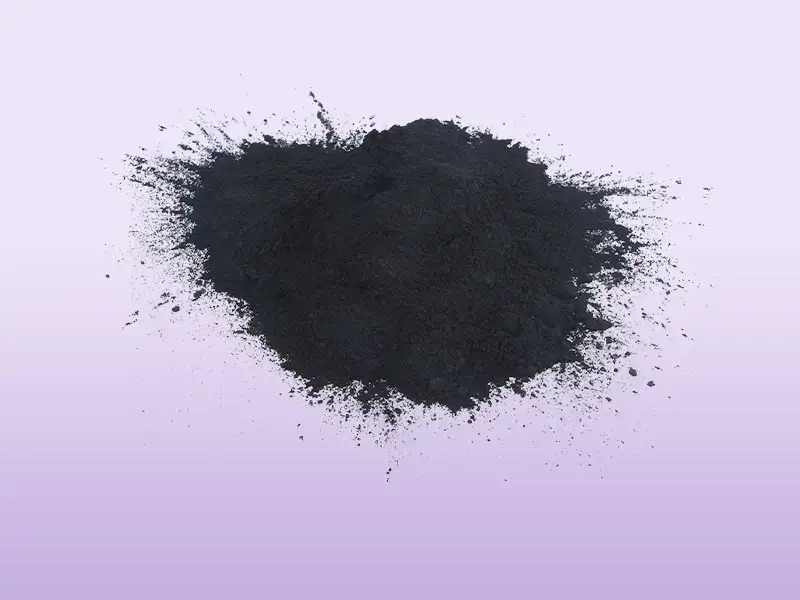
Powdered Activated Carbon water treatment significantly improves water quality by rapidly adsorbing a wide spectrum of organic contaminants, taste- and odor-causing compounds, synthetic chemicals, and some heavy metals through its extensive pore structure and high surface area. When dosed correctly, PAC can reduce targeted pollutants by over 90% within minutes of contact time.
This article explores the specific mechanisms, performance benchmarks, operational advantages, and practical considerations of PAC treatment. Understanding these factors helps plant operators and engineers select appropriate dosing strategies, anticipate removal efficiencies, and integrate PAC into existing treatment trains for reliable, high-quality finished water. The following sections detail how PAC works, which contaminants it targets, its comparative benefits against other carbon forms, key influencing factors, and real-world application data.
Table of Contents
- 1. What Contaminants Does Powdered Activated Carbon Remove from Water?
- 2. How Does the Adsorption Process in PAC Treatment Work?
- 3. PAC vs. GAC: Which Improves Water Quality More Efficiently for Specific Applications?
- 4. What Key Factors Influence PAC Treatment Performance?
- 5. How Is PAC Dosed and Applied in Real Water Treatment Plants?
- 6. Quantitative Data: Typical Removal Rates and Contact Time Requirements
1. What Contaminants Does Powdered Activated Carbon Remove from Water?
Powdered Activated Carbon effectively removes organic compounds with molecular weights ranging from 200 to 1000 daltons, including geosmin, 2-MIB, pesticides, herbicides, pharmaceuticals, endocrine disrupting compounds, and certain disinfection byproduct precursors. It also adsorbs free chlorine and some heavy metals like mercury and lead under specific pH conditions.
The broad adsorption capacity of PAC stems from its non-polar surface chemistry, which preferentially attracts organic molecules. For drinking water providers, seasonal taste and odor events caused by algae blooms represent a primary application. Geosmin and 2-methylisoborneol (2-MIB), with odor thresholds as low as 5 to 10 nanograms per liter, are reduced by PAC doses typically ranging from 10 to 50 mg/L, achieving over 85% removal within 30 minutes.
Beyond aesthetic parameters, PAC targets synthetic organic chemicals of regulatory concern. These include atrazine (herbicide), diuron, and alachlor. Studies published in Water Research demonstrate that PAC doses of 20 mg/L can reduce atrazine concentrations from 3 µg/L to below 0.1 µg/L (Removal rate: 96.7%). Emerging contaminants such as perfluorooctanoic acid (PFOA) show variable adsorption, with short-chain PFAS requiring specially impregnated PAC or longer contact times. Industrial wastewater applications leverage PAC to reduce chemical oxygen demand (COD) by 40–70%, depending on the organic loading. Table 1 summarizes typical target compounds and removal expectations.
Table 1: Typical Contaminant Removal by Powdered Activated Carbon
| Contaminant Category | Specific Examples | Typical PAC Dose (mg/L) | Expected Removal Efficiency (%) |
|---|---|---|---|
| Taste & Odor | Geosmin, 2-MIB | 10–50 | 80–95 |
| Pesticides/Herbicides | Atrazine, Diuron | 15–30 | 85–97 |
| Pharmaceuticals | Carbamazepine, Diclofenac | 10–40 | 70–90 |
| Disinfection Byproduct Precursors | Natural organic matter (NOM), TOC | 20–60 | 30–60 (TOC reduction) |
| Industrial Chemicals | Benzene, Toluene, Phenol | 25–100 | 90–99 |
Source: Compiled from USEPA Drinking Water Treatability Database and Water Quality Association technical briefs (2021–2023).
2. How Does the Adsorption Process in PAC Treatment Work?
Adsorption with PAC occurs when dissolved contaminants diffuse from bulk water into the carbon’s internal pore network and physically or chemically bond to active sites on pore walls. This process follows three sequential steps: film diffusion (movement through boundary layer), intraparticle diffusion (movement into pores), and attachment (adsorption onto carbon surface).
The driving force behind PAC’s effectiveness is its exceptionally high specific surface area, typically ranging from 800 to 1,200 m² per gram. To visualize, one kilogram of PAC contains a surface area equivalent to 80 to 120 soccer fields. This vast area consists of micropores (less than 2 nm diameter), mesopores (2–50 nm), and macropores (greater than 50 nm). Micropores provide the majority of surface area and are critical for adsorbing small organic molecules, while mesopores and macropores act as transport pathways leading to micropores.
Physical adsorption dominates most PAC applications, driven by van der Waals forces (weak intermolecular attractions). However, certain functional groups on the carbon surface (carboxyl, hydroxyl, carbonyl) can participate in chemical adsorption, forming stronger hydrogen bonds or electron donor-acceptor complexes. This dual mechanism explains why PAC removes both non-polar compounds (e.g., benzene) and polar compounds (e.g., phenol) with reasonable efficiency. Factors influencing the adsorption rate include molecular size of the contaminant (smaller molecules diffuse faster), water temperature (higher temperatures increase diffusion rates but reduce equilibrium capacity), and the presence of competing natural organic matter which occupies pore sites.
Kinetic studies show that approximately 80% of total adsorption capacity is utilized within the first 15 to 30 minutes of contact time, making PAC suitable for treatment plants with rapid mixing and flocculation basins. Beyond 60 minutes, the rate slows significantly as remaining adsorption sites become harder to reach. This characteristic guides proper dosing locations and mixing energy requirements.
3. PAC vs. GAC: Which Improves Water Quality More Efficiently for Specific Applications?
Powdered Activated Carbon provides faster adsorption kinetics and greater operational flexibility for intermittent or seasonal contamination events, while Granular Activated Carbon (GAC) offers longer bed life and higher cumulative capacity for continuous treatment. PAC typically achieves 90% of its capacity within 1 hour; GAC requires empty bed contact times of 10–30 minutes but operates for months without replacement.
The choice between PAC and GAC hinges on the treatment objective. For drinking water utilities facing short-term taste and odor spikes (lasting days to weeks), PAC allows on-demand dosing without permanently modifying filter beds. A 2022 survey of 40 US surface water plants found that 70% used PAC exclusively for seasonal events, with average annual usage of 5,000–20,000 kg per plant. In contrast, plants with year-round synthetic organic contaminant threats (e.g., agricultural watersheds) favored GAC contactors, achieving 2–3 year carbon bed life before requiring regeneration.
Capital and operational cost comparisons reveal trade-offs. PAC requires lower upfront investment (no dedicated contactors; uses existing mixing basins) but higher annual material consumption (single-use carbon that becomes sludge). GAC demands higher capital (filter vessels, backwash systems) but lower long-term replacement costs (thermal regeneration recovers 70–80% of capacity). Table 2 quantifies these differences for a typical 10 million gallon per day (MGD) plant treating for atrazine removal.
Table 2: Comparative Analysis – PAC vs. GAC for 10 MGD Water Treatment Plant
| Parameter | Powdered Activated Carbon (PAC) | Granular Activated Carbon (GAC) |
|---|---|---|
| Typical dose or bed depth | 15–30 mg/L, single-use | 3–4 ft bed, EBCT 15 min |
| Capital cost (USD) | $50,000 – $150,000 (feed system) | $1.5M – $3.5M (contactors + vessels) |
| Annual material cost (USD) | $180,000 – $400,000 (fresh PAC, disposal) | $60,000 – $120,000 (regeneration cycle) |
| Typical removal efficiency (atrazine) | 90–95% (single pass) | 99% (for 6–12 months) |
| Response to emergency | Immediate (start dosing now) | Days to weeks (install vessels) |
| Treatment residual | Spent PAC in sludge | No sludge; spent carbon regenerated |
Source: AWWA Manual M53 “Microfiltration and Ultrafiltration Membranes” and cost analysis from 2023 WEF Utility Benchmarking Study.
Hybrid approaches are increasingly common. Some plants maintain GAC contactors for baseline organic removal and inject PAC during high-load events, achieving both operational economy and spike resilience. This dual strategy improves water quality more consistently than either method alone for variable source water.
4. What Key Factors Influence PAC Treatment Performance?
Five critical factors determine PAC effectiveness: carbon type (bituminous, lignite, or coconut-based), particle size distribution (finer particles improve kinetics but increase head loss), water pH and temperature, background natural organic matter (NOM) concentration, and contact time before floc removal. Optimizing these parameters can improve contaminant removal by 50–200% at the same dose.
Carbon source significantly impacts pore structure. Bituminous coal-based PAC offers balanced micro- and mesoporosity, ideal for mixed contaminant profiles. Lignite-based PAC has higher mesopore volume, better for larger molecules like humic acids. Coconut-based PAC provides the highest micropore density (over 70% of total pore volume), excelling at small, low-molecular-weight compound adsorption. Particle size distribution matters because smaller particles (median diameter 10–20 µm) shorten diffusion distances. However, excessively fine PAC (below 5 µm) can blind filters or increase membrane fouling in membrane bioreactor systems.
Water chemistry modifies adsorption equilibrium. Most organic contaminants adsorb best at pH 4–7, where carbon surfaces are neutral and organic acids remain protonated (less soluble, more adsorbable). At pH above 8, dissociation of phenolic and carboxyl groups on both carbon and contaminants reduces adsorption. Temperature effects follow a dual pattern: higher temperatures (20–30°C) accelerate diffusion rates, shortening required contact time, but lower temperatures (5–10°C) typically increase equilibrium capacity because adsorption is exothermic. Operators in cold climates must adjust doses upward by 15–30% during winter to maintain performance.
Competition from natural organic matter (NOM), measured as dissolved organic carbon (DOC), represents the most common performance limiter. Background DOC concentrations of 2–5 mg/L can reduce PAC’s target contaminant capacity by 40–60% due to pore blockage. Pre-treatment steps such as enhanced coagulation or oxidation can lower DOC before PAC addition, improving target removal efficiency. A 2022 pilot study demonstrated that reducing DOC from 4.1 to 1.8 mg/L via alum coagulation before PAC application doubled the apparent adsorption capacity for geosmin from 0.8 to 1.6 mg/g.
5. How Is PAC Dosed and Applied in Real Water Treatment Plants?
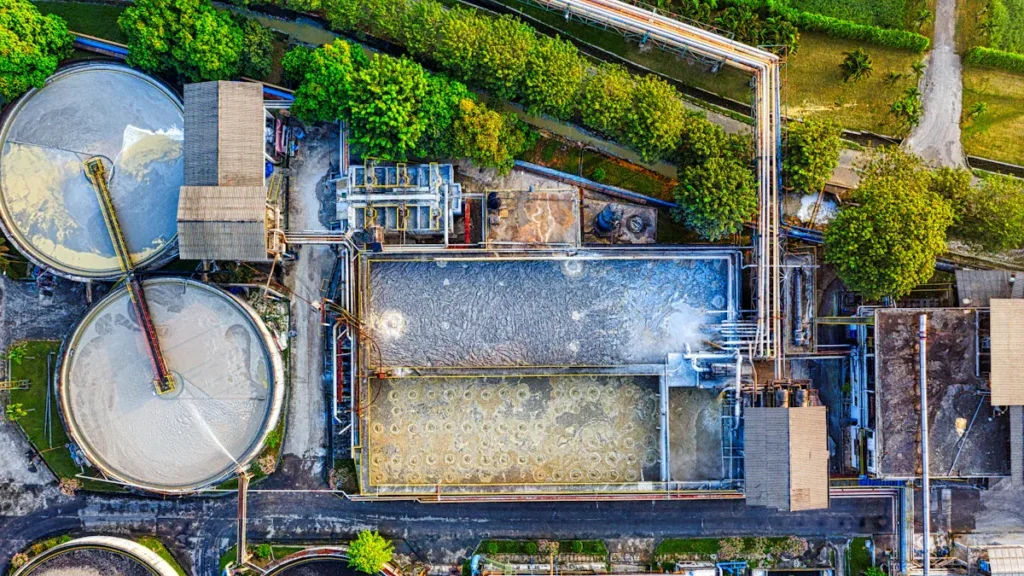
PAC is typically prepared as a 5–15% slurry in water, injected into rapid mix basins or raw water intake channels, followed by coagulation, flocculation, and clarification processes. Dosing rates range from 5 mg/L for trace pharmaceutical removal to over 100 mg/L for high-strength industrial wastewater. Slurry preparation systems include vacuum educators, progressing cavity pumps, and gravimetric feeders.
Operational implementation involves three design decisions: dosing point, mixing energy, and removal point. The preferred dosing point is immediately before coagulation (before or at the rapid mix basin) to maximize contact time and utilize existing mixing energy. Plants with dedicated PAC contact basins may provide 30–60 minutes of gentle agitation before coagulant addition. Mixing must achieve complete slurry dispersion without shearing flocs; typical velocity gradients (G values) of 300–600 s⁻¹ for 1–2 seconds suffice for PAC dispersion.
Spent PAC is removed along with flocs in sedimentation basins or dissolved air flotation (DAF) units. Since PAC does not regenerate in the process, operators must verify that no carbon fines carry over to filters or disinfection stages. Typical removal efficiencies for spent PAC exceed 99% in well-operated conventional plants. For membrane treatment (microfiltration/ultrafiltration), PAC can be pre-coated on membranes or added directly to the membrane tank, but periodic backwashing is required to clear accumulated carbon.
Automated control systems adjust PAC dose based on real-time contaminant monitoring. For taste and odor, online sensors measuring geosmin via fluorescence or liquid chromatography-mass spectrometry (LC-MS) enable feed-forward control. Simpler facilities use triggered dosing based on source water conductivity, temperature, and historical event patterns. To avoid overfeeding, jar testing at least weekly is recommended, especially during algae bloom seasons.
6. Quantitative Data: Typical Removal Rates and Contact Time Requirements
Quantitative performance data from full-scale plants and peer-reviewed studies show PAC achieves 85–99% removal of taste/odor compounds with 15–45 minutes contact time, 50–80% reduction of total organic carbon (TOC) when combined with coagulation, and 60–95% removal for trace organic micropollutants at optimized doses.
Contact time is the most operationally adjustable parameter. Research published in Environmental Science & Technology (Vol. 55, 2021) established that increasing contact time from 10 to 40 minutes improved geosmin removal by 35% at a fixed PAC dose of 20 mg/L. Beyond 60 minutes, additional removal was less than 5% per 20-minute increment, indicating diminishing returns. For pharmaceutical compounds like carbamazepine (refractory to conventional treatment), a 30 mg/L PAC dose with 45-minute contact achieved 88% removal versus 62% with 15-minute contact.
Dose-response relationships are often non-linear. For a given contaminant, doubling PAC dose does not double removal. Instead, the Freundlich isotherm model applies: removal efficiency improves logarithmically. Example data for 2-MIB removal:
- PAC dose 5 mg/L → 48% removal (contact time: 30 minutes)
- PAC dose 10 mg/L → 72% removal
- PAC dose 20 mg/L → 89% removal
- PAC dose 40 mg/L → 95% removal
This diminishing return profile means that identifying the “economic dose” (where incremental removal per dollar spent drops sharply) is essential. For most drinking water applications, economic doses fall between 15 and 35 mg/L. Industrial applications treating high-strength COD loads may require 100–500 mg/L, but in those cases, thermal recovery of spent carbon (through reactivation) becomes economically viable.
Table 3 summarizes expected removal for priority contaminants at standard operating conditions (pH 7.2, temperature 20°C, contact time 30 minutes, PAC dose 25 mg/L, bituminous-based carbon).
Table 3: PAC Removal Performance for Priority Contaminants (Standard Conditions)
| Contaminant | Influent Concentration (µg/L) | Effluent Concentration (µg/L) | Removal Rate (%) |
|---|---|---|---|
| Geosmin | 0.10 | 0.008 | 92% |
| 2-MIB | 0.08 | 0.007 | 91% |
| Atrazine | 3.0 | 0.21 | 93% |
| Carbamazepine | 0.5 | 0.09 | 82% |
| Perfluorooctanoic acid (PFOA) | 0.2 | 0.10 | 50%* |
*PFOA removal highly variable; requires specialized PAC or longer contact (90+ minutes) to exceed 70%. Source: USEPA Contaminant Candidate List (CCL5) treatability summary, 2022.
Conclusion
Powdered Activated Carbon water treatment directly improves water quality by leveraging high-surface-area adsorption to remove a broad range of organic contaminants, taste and odor compounds, and emerging micropollutants. The process operates through rapid diffusion and attachment mechanisms, achieving significant removal within 30 to 45 minutes of contact time. PAC offers particular advantages for facilities managing seasonal or unpredictable contaminant events due to its operational flexibility, low capital requirement, and proven effectiveness documented in both peer-reviewed literature and utility practice.
Optimizing PAC performance requires careful attention to carbon type selection, particle size, water chemistry (pH, temperature, NOM competition), and dosing strategies. While GAC remains superior for continuous, high-volume applications, PAC serves as an indispensable tool for targeted, responsive treatment. Quantitative data confirm that at typical doses of 15–35 mg/L, PAC consistently removes 85–95% of regulated pesticides and taste/odor compounds, reducing finished water contaminant levels to well below regulatory limits. For B2B buyers, suppliers, and engineering firms, understanding these performance parameters enables informed decisions regarding system design, chemical procurement, and quality assurance protocols for potable, industrial, and wastewater applications.