
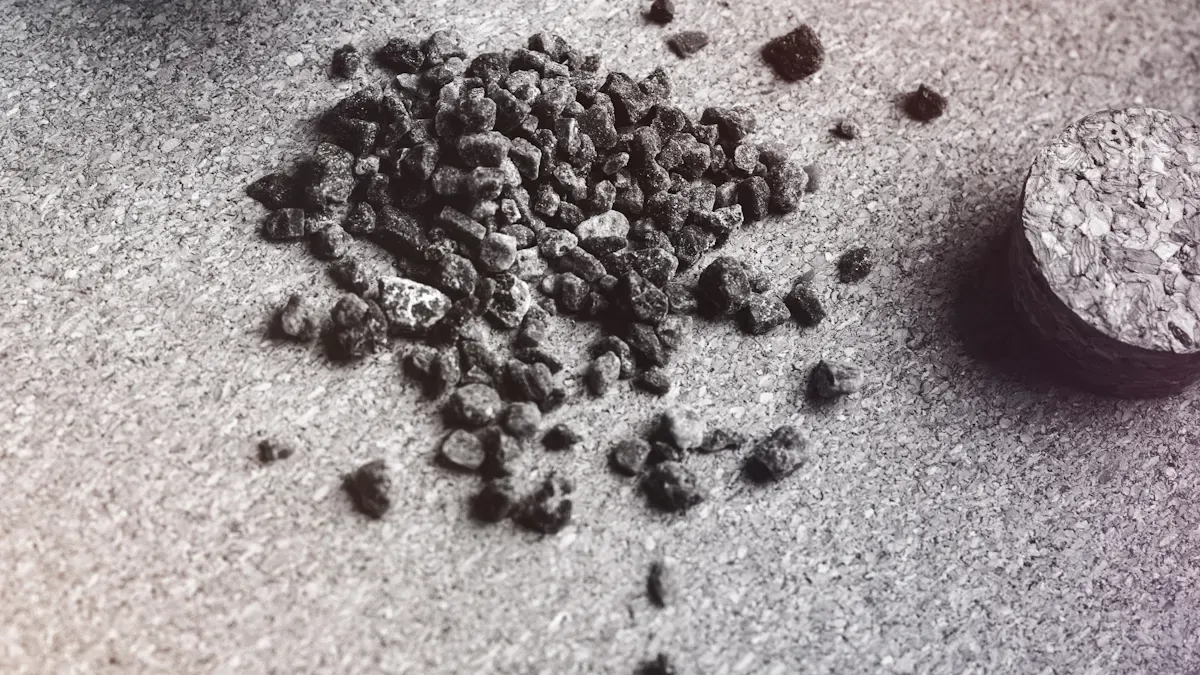
You might see activated carbon as a black, powdery material, but it does a lot more than you think. People use it in water treatment because it grabs onto unwanted substances. Common sources include coconut husks, wood, coal, and even things like nutshells and rice husks. Activated carbon works well for water purification by taking out bad tastes, odors, and many chemicals. It can’t catch everything, though, so you still need other methods for some contaminants.
Key Takeaways
Activated carbon effectively removes bad tastes, odors, and many harmful chemicals from water, making it a popular choice for filtration.
Different types of activated carbon filters, like Granular Activated Carbon (GAC) and Carbon Block filters, serve various needs, from home use to industrial applications.
Regular maintenance and timely replacement of filters are crucial for optimal performance; change activated carbon filters every 6 to 12 months.
Activated carbon cannot remove heavy metals, bacteria, or nitrates, so consider using additional filtration methods for comprehensive water treatment.
Using activated carbon is an environmentally friendly choice, as it often comes from renewable materials like coconut shells.
Activated Carbon Overview
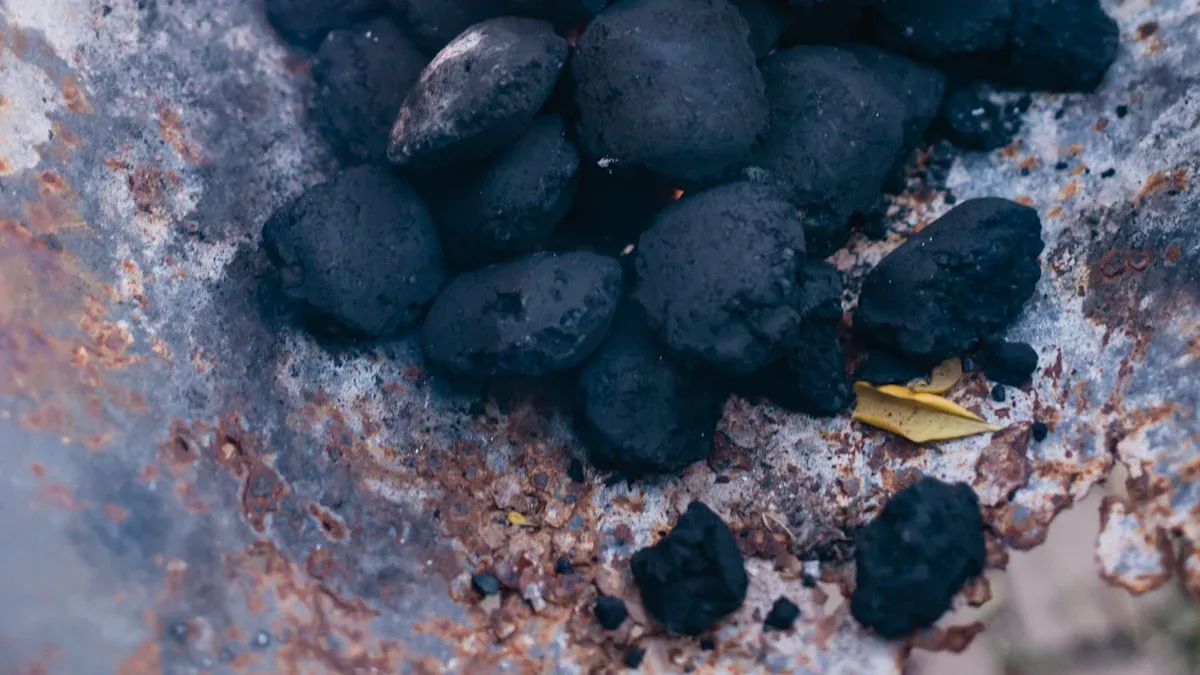
What Is Activated Carbon?
You might wonder what makes activated carbon so special for water. Scientists describe it as a powerful tool for cleaning water because it can grab onto many different contaminants. When you use activated carbon filtration, you let water pass through a material full of tiny holes and pockets. These spaces trap things you don’t want in your water, like chemicals and bad smells. Many cities and factories rely on activated carbon filtration to make sure their water is safe to drink or use.
Did you know?
Activated carbon filtration works by pulling impurities out of water, especially organic compounds and chlorine. This helps stop harmful byproducts from forming.
Properties & Sources
Activated carbon filtration works so well because of its amazing structure. Each tiny piece has a huge surface area—sometimes more than 500 square meters in just one gram! This means there are lots of places for contaminants to stick. The pores come in different sizes, which helps trap a wide range of substances. Activated carbon can also react with chemicals like chlorine, turning them into safer forms.
Here’s a quick look at where activated carbon comes from:
Raw Material | Description |
|---|---|
Coconut Shell | Popular for water purification. |
Wood | Used in many filtration systems. |
Coal | Common in industrial applications. |
Rice Husks | Made from agricultural waste. |
Nutshells | Another natural source. |
Role In Water Treatment
You see activated carbon filtration in action almost everywhere—from home filters to big city water plants. The main job is to remove things that make water taste or smell bad. Activated carbon filtration also helps get rid of pesticides and other chemicals. Studies show that changing the pore size and surface chemistry can make activated carbon filtration even better at removing certain pollutants. If you want cleaner, better-tasting water, activated carbon filtration is a smart choice.
Activated Carbon Function
Adsorption Process
You might wonder how activated carbon actually works in water treatment. The secret lies in adsorption. When water flows through an activated carbon filter, molecules from unwanted substances stick to the surface of the carbon. This happens because the carbon has a huge surface area filled with tiny pores. These pores grab onto contaminants using intermolecular forces.
Here’s what affects how well adsorption works:
The surface area and pore size of the activated carbon.
The chemical makeup of the carbon source.
The type and concentration of the contaminant.
The pH and temperature of the water.
The amount of time water stays in contact with the filter.
If you use a filter with finer particles, you get better contact and more efficient removal. Lower flow rates give contaminants more time to stick to the carbon. Cooler water usually helps adsorption, while higher temperatures can make it less effective.
Tip:
Longer exposure to activated carbon means more contaminants get trapped. If you want the best results, let water move slowly through the filter.
Contaminants Removed
Activated carbon shines when it comes to removing contaminants that make water taste or smell bad. You’ll see it used in municipal water treatment plants and home filters. It’s especially good at trapping organic chemicals and chlorine.
Here are some common contaminants that activated carbon removes:
Chlorine
Chloramines
Volatile Organic Compounds (VOCs)
Pesticides
Herbicides
Industrial pollutants
Amyl acetate
Benzene
Chloroform
Chlorobenzene
Methyl bromide
If you want water that tastes fresh and clean, activated carbon is a smart choice. It’s also great for getting rid of many chemicals found in tap water.
Limitations In Water Treatment
Activated carbon does a lot, but it can’t handle everything. You won’t see it remove heavy metals like manganese or uranium very well. In fact, removal rates for these metals are often less than 1%. It also struggles with nitrates, sodium, and most bacteria. Sometimes, bacteria can even grow on the carbon, making it less effective.
Here’s a quick look at what activated carbon can’t remove:
Heavy metals (like manganese and uranium)
Nitrates
Sodium
Most bacteria
If you need to remove these contaminants, you’ll want to use other methods like reverse osmosis or UV treatment.
Pre-filtration helps a lot in multi-stage water treatment systems. It keeps dirt and particles from clogging the activated carbon. This makes your filter last longer and work better at removing contaminants.
Factor | Description |
|---|---|
Particle Size | Finer mesh provides better contact and removal efficiency, but increases pressure drop. |
Flow Rate | Lower flow rates allow more time for contaminants to adsorb, improving overall adsorption. |
Temperature | Lower temperatures favor adsorption. Higher temperatures can disrupt the process. |
Molecular Weight | Higher molecular weight compounds are adsorbed more effectively. |
pH | Lower pH increases adsorption of organics. Higher pH decreases it. |
Contaminant Concentration | Higher concentrations enhance removal capacity, but may lead to leakages. |
Length of Exposure | Longer contact time increases the number of contaminants removed. |
Note:
Activated carbon works best as part of a multi-stage system. Pre-filtration and other steps help you get the cleanest water possible.
Types Of Activated Carbon Filters
Granular Activated Carbon (GAC)
You’ll find granular activated carbons in many water filtration systems. These filters use larger carbon particles that look like tiny black grains. Water flows easily through the loose grains, which means you get a good flow rate. GAC filters work well for drinking water filtration and even in whole-house systems. They’re great for removing things that cause bad taste and odour control, like chlorine and organic chemicals.
Here’s a quick look at how GAC compares to powdered activated carbons:
Type of Activated Carbon | Particle Size | Surface Area | Flow Characteristics |
|---|---|---|---|
Larger | Smaller external surface | Rapid diffusion, good for liquids and gases | |
Powdered Activated Carbon (PAC) | Smaller | Larger surface area | High head loss, not used in dedicated vessels |
Powdered Activated Carbon (PAC)
Powdered activated carbons have much smaller particles than GAC. You’ll see these used in water treatment plants to protect waterways from pesticides, fuels, and solvents. PAC also helps industries like beverage and pharmaceutical companies keep their process water clean. Sometimes, you’ll find PAC used with other methods, such as UV disinfection, to boost filtration. Because the particles are so fine, PAC isn’t usually used in stand-alone filters at home, but you might see it in small-scale filters or as an extra treatment step.
Carbon Block Filters
Carbon block filters use activated carbon pressed into a solid block. This structure creates a dense filter with fixed pores. Water moves slowly through the block, which means more contact time and better filtration. These filters remove a wide range of contaminants, including chlorine, VOCs, pesticides, herbicides, PFAS, microplastics, and even some heavy metals like lead. You’ll notice that carbon block filters often provide the best taste and odour control in your water.
Here’s how carbon block filters compare to GAC filters:
Feature | Carbon Block Filters | Granular Activated Carbon (GAC) Filters |
|---|---|---|
Structure | Rigid block with fixed pore structure | Loose grains with void spaces |
Flow Rate | Lower due to dense structure | Higher, good for high-flow applications |
Contaminant Removal Efficiency | More effective for a range of contaminants | Effective but less efficient for some |
Water Filtration Methods Comparison
You might wonder how these filters stack up against other water filtration methods. Activated carbon filters use adsorption to grab impurities, especially those that affect taste and odour control. They’re excellent for removing chlorine and VOCs, making your water taste fresh. Reverse osmosis removes even more contaminants, but it costs more and needs more maintenance.
Filtration Method | Effectiveness in Removing Taste and Odor | Limitations |
|---|---|---|
Activated Carbon Filters | High (removes chlorine, VOCs, odors) | Limited in heavy metals removal |
Reverse Osmosis | Very High (removes a wide range) | More expensive, requires maintenance |
You’ll find that water filtration methods using activated carbon are popular because they’re simple, effective, and improve the clarity and taste of your water.
Benefits & Limitations
Advantages Of Activated Carbon
You want clean, fresh water at home. Activated carbon makes that possible. This material stands out in water treatment because it gives you reliable results without much fuss. You don’t need electricity or complicated machines. The filtration process works passively, so you can trust it even during a power outage.
Here’s why you might choose activated carbon for your water:
It removes chlorine, which often causes bad taste and smell.
It reduces chloramines, making your water safer and more pleasant.
It captures up to 99.9% of many volatile organic compounds (VOCs), so you get safer drinking water.
It helps get rid of pesticides and pharmaceuticals, keeping harmful substances out of your glass.
It improves taste and odor, so your water feels pure and refreshing.
It uses renewable materials, like coconut shells, making it an environmentally friendly choice.
You get effective chemical removal and better water quality with this simple method. Many people love how it boosts the purity of their water without adding extra steps.
Tip:
If you want a filter that works for a wide range of contaminants and doesn’t need power, activated carbon is a smart pick.
Drawbacks & Filter Lifespan
Activated carbon does a lot, but it’s not perfect. You need to know what it can’t do. Standard filters don’t remove bacteria or viruses. They also leave behind minerals that cause water hardness, like calcium and magnesium. Nitrates, nitrites, and fluoride usually pass right through.
Here’s a quick list of what activated carbon filters can’t handle:
Bacteria and viruses
Water hardness (dissolved minerals)
Nitrates and nitrites
Fluoride
You also need to think about filter lifespan. How long does a filter last? That depends on your water quality, how much water you use, and the type of filter you pick. If you have a big family or your water has lots of chlorine, you’ll need to change filters more often.
Filter Type | Lifespan | Notes |
|---|---|---|
Whole House Carbon Filters | Up to 5 years | For city water; only 12 months for well water |
Replaceable Cartridges | 6-12 months | Pre-filters may need changing every 3-6 months |
To keep your filtration system working well, replace filters every six months to one year. Don’t wait longer than a year. If you do, the filter can fill up and let contaminants leak back into your water.
Safety & Environmental Impact
You care about safety and the planet. Activated carbon helps with both. It removes chlorine, chloramines, and some byproducts from disinfection, like trihalomethanes (THMs). These byproducts can raise your risk of cancer if they build up in your water. The EPA says THM levels should stay below 80 parts per billion. Activated carbon filtration helps you meet that goal.
You also avoid chronic health problems by removing harmful chemicals. These can damage your liver or kidneys over time. Activated carbon targets dissolved organics and other risky substances, making your water safer to drink.
Let’s talk about the environment. Many filters use sustainable materials, which is good news. But making activated carbon does use energy and resources. When you throw away old filters, they might contain trapped pollutants. You should always follow local rules for disposal to protect the environment.
Note:
Activated carbon filters help stop harmful byproducts from forming in your water. They also support comprehensive filtration when you use them with other methods.
If you want a balance of safety, effective chemical removal, and environmental responsibility, activated carbon is a solid choice for water treatment.
Choosing & Maintaining Filters
Selecting The Right Filter
You want the best filtration for your home or business. Start by testing your water. This helps you find out what contaminants are present. Water quality reports from your city or local provider can also show you what’s in your water. Once you know the problem, you can pick the right filter.
Here’s what you should look for when choosing an activated carbon filter:
Check the types and amounts of contaminants in your water.
Look at the particle size and surface area of the filter. Smaller particles usually trap more contaminants.
Make sure the filter has certifications from groups like NSF or WQA.
Think about your needs. Do you want a filter for the whole house or just for drinking water?
Remember to replace filters often to keep your water safe.
Maintenance Tips
Keeping your filtration system in top shape is easy if you follow a few steps:
Clean or replace pre-filters every 3 to 6 months. This stops dirt from clogging your main filter.
Watch for changes in water taste or flow. These signs mean it’s time to check your filter.
Clean the filter housing when you change the filter. This keeps everything working well.
Use only high-quality water for cleaning and rinsing parts.
Tip:
Set a reminder on your phone so you never forget to check your filters!
Replacement Guidelines
Changing your filter on time keeps your water clean. Most activated carbon filters last 6 to 8 months. Some may need changing every 3 months, especially if your water has lots of contaminants.
Filter Type | Replacement Frequency |
|---|---|
Sediment Filters | Every 3-6 months |
Activated Carbon Filters | Every 6-8 months |
If you wait too long, old filters can release trapped contaminants back into your water. Always follow the schedule for your system.
Real-World Applications
You see activated carbon filtration everywhere. In homes, it makes tap water taste better and removes chlorine. Cities use it to clean large amounts of water and meet safety rules. Factories use these filters to protect equipment and make sure products like drinks and medicine stay pure. Some industries use filtration for spill cleanup and to keep harmful chemicals out of rivers.
No matter where you use it, activated carbon and other methods help you get high-quality water every day.
You get a lot of benefits when you use activated carbon for water treatment. Here’s what it does for you:
Removes pesticides, endocrine disruptors, and many medicines.
Controls taste and odor in your drinking water.
Helps reduce disinfection by-products.
However, some stubborn substances can slip through. These may need extra treatment steps. If you want water that tastes fresh and safe, activated carbon is a smart choice for your home or business.
FAQ
How often should you replace an activated carbon filter?
You should change your activated carbon filter every 6 to 12 months. If your water smells or tastes strange, swap it sooner. Heavy use or poor water quality means you need to replace it more often.
Can activated carbon remove all contaminants from water?
Activated carbon removes many chemicals, bad tastes, and odors. It cannot catch bacteria, viruses, nitrates, or heavy metals. You need other filters for those. Always check your water quality before choosing a filter.
Is activated carbon safe for drinking water?
Activated carbon is safe for water filtration. You get cleaner, better-tasting water. Make sure you use certified filters and replace them regularly. This keeps your water safe and fresh.
What is the difference between GAC and carbon block filters?
Filter Type | Best For | Flow Rate |
|---|---|---|
Granular Activated Carbon (GAC) | Whole-house systems | Fast |
Carbon Block | Drinking water | Slower |
GAC filters work well for large volumes. Carbon block filters remove more contaminants.
Can you recycle used activated carbon filters?
Most used filters cannot be recycled at home. You should follow local disposal rules. Some companies offer recycling programs. Always check with your filter manufacturer for options.