
You can trust activated carbon to make your drinking water cleaner and safer. Many people worldwide rely on this method.
In fact, activated carbon is expected to account for 53.0% of the global drinking water treatment market by 2025.
The material’s porous structure traps chlorine, odors, and even tiny chemicals, so your water tastes fresh and pure.
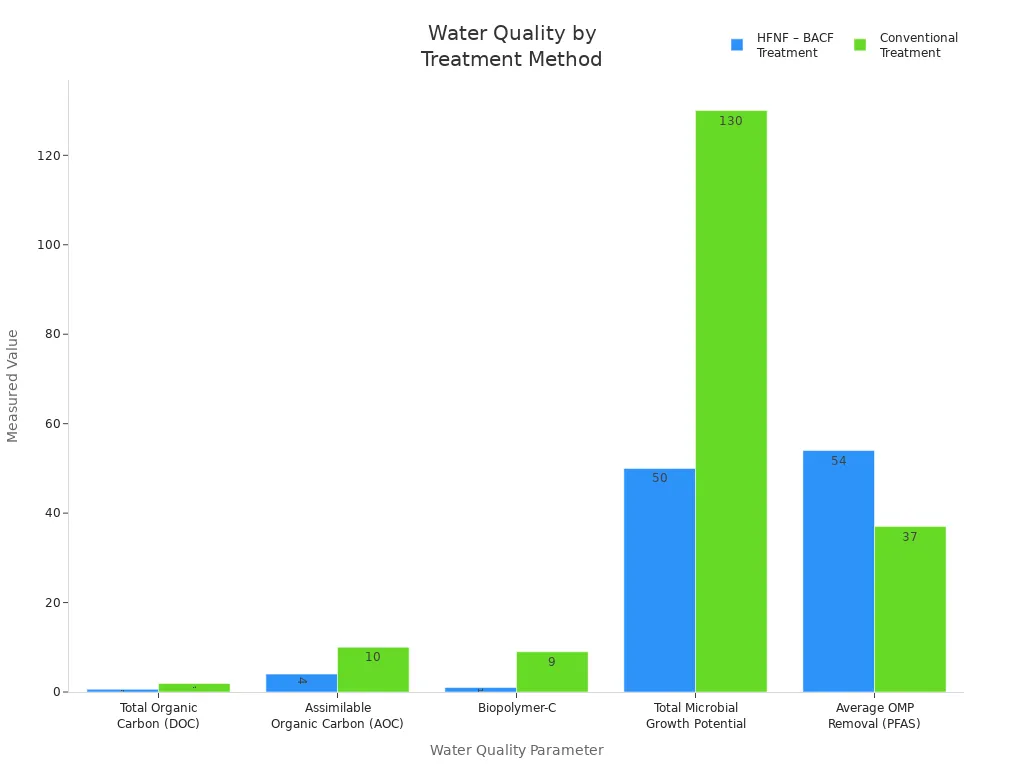
Scientists have compared different water treatment methods. The results show that activated carbon treatment removes more contaminants and improves water quality better than traditional ways.
Parameter | HFNF – BACF Treatment | Conventional Treatment |
|---|---|---|
Total Organic Carbon (DOC) | 0.6 mg/L | 1.9 mg/L |
Assimilable Organic Carbon (AOC) | 4 μg/L | 10 μg/L |
Biopolymer-C | <1 μg/L | 9 μg/L |
Total Microbial Growth Potential (MGP) | 50 ng d/L | 130 ng d/L |
Average OMP Removal (PFAS) | 54% | 37% |
Key Takeaways
Activated carbon effectively removes contaminants like chlorine, pesticides, and pharmaceuticals, improving water quality and taste.
Regular maintenance of activated carbon filters is crucial; replace them every 3 to 6 months to ensure optimal performance.
Choose the right type of activated carbon filter—granular for high flow rates and carbon block for fine particle removal—to meet your specific water needs.
Activated carbon filtration enhances the taste and smell of water, making it more enjoyable and healthier to drink.
Always test your water quality to identify contaminants and select certified filters that match your household requirements.
Activated Carbon Effectiveness
Water Quality Improvement
You can see clear improvements in your water quality when you use activated carbon filtration. The porous structure of activated carbon attracts and traps many unwanted substances. This process makes your water taste better and smell fresher. You notice the difference right away, especially if your tap water has a strong chlorine taste or chemical odor.
Water tastes and smells cleaner.
Chlorine and chemical smells disappear.
Coffee and tea taste richer and smoother.
Your water becomes healthier because harmful chemicals and contaminants are removed.
Appliances like kettles and coffee makers last longer because they stay free from chemical buildup.
Activated carbon filtration gives you water that feels pure and refreshing. You enjoy every sip and protect your health at the same time.
Simple filtration systems using activated carbon can make a big difference. You get safer water without needing complicated equipment. Many people choose this method because it works well and fits into daily routines.
Removal Capabilities
Activated carbon removes a wide range of contaminants from your drinking water. You benefit from its ability to trap substances that affect taste, odor, and safety. Here are some of the most common contaminants removed:
Chlorine and chlorine byproducts
Pharmaceuticals
Pesticides
Phosphate
Chloride
Laboratory studies show that activated carbon reduces pesticide concentrations below safe limits. You can trust this method to keep your water free from harmful chemicals. Over time, the filter may lose some efficiency, especially after several months of use, but regular maintenance helps keep removal rates high.
You also get protection from certain heavy metals, although activated carbon works best for chemicals and organic compounds. Compared to other methods, activated carbon stands out for improving taste and odor. Reverse osmosis removes dissolved solids and microorganisms, but it can be wasteful and complex. UV purification kills bacteria and viruses but does not remove chemicals. Ion exchange softens water and removes some metals, but it may not address all contaminants.
Treatment Method | What It Removes | Limitations |
|---|---|---|
Activated Carbon | Chlorine, VOCs, taste, odor, pesticides | Limited for microscopic particles |
Reverse Osmosis | Dissolved solids, microorganisms | Wasteful, complex |
UV Purification | Bacteria, viruses | Does not remove chemicals/metals |
Ion Exchange | Some heavy metals, softens water | May not remove all contaminants |
You get the best results when you choose the right filter and maintain it regularly. Activated carbon gives you reliable performance and helps you enjoy safe, high-quality water every day.
How Activated Carbon Works
Adsorption Process
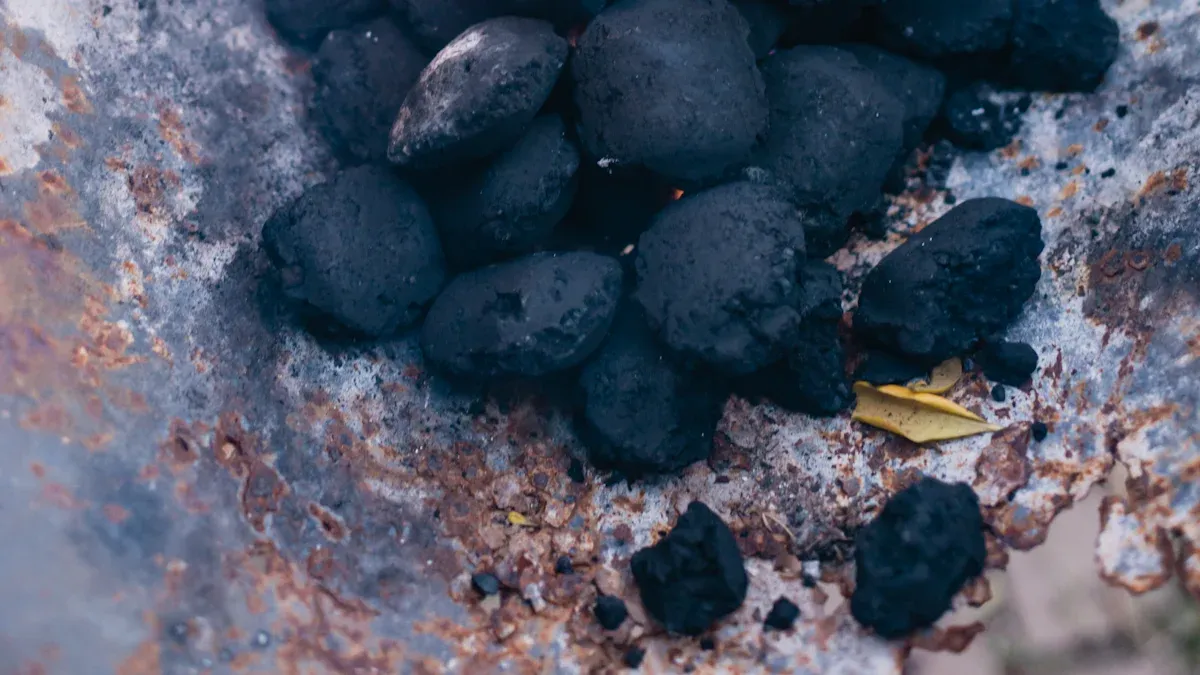
You can count on activated carbon to clean your water through a process called adsorption. This process happens when unwanted molecules stick to the surface of the carbon. The secret lies in the carbon’s tiny pores. These pores come in different sizes, which helps trap a wide range of substances. Small molecules, like those in natural organic matter, compete with larger chemicals for space in the smallest pores. The surface of the carbon also matters. If the surface has more oxygen groups, water can block the pores and slow down adsorption. When the surface is more basic and less polar, it works better for removing pesticides and other chemicals.
Tip: The more basic the carbon surface, the better it removes certain pesticides from your water.
The pore structure plays a big role in how well activated carbon works. Here’s a simple table to show how different pore types help:
Pore Type | Molecule Size | Adsorption Characteristics |
|---|---|---|
Micropores | Low molecular weight | Great for small molecules; strong adsorption forces. |
Mesopores | Larger molecules | Good for bigger organic compounds like humic acids. |
Macropores | Very large molecules | Allow access for the largest molecules, boosting overall capacity. |
Material Sources
You might wonder where activated carbon comes from. Manufacturers use different raw materials to create it, and each source gives the carbon unique properties. The most common sources are bituminous coal, coconut shell, and wood. Each material creates a different pore structure, which affects what the carbon can remove from your water.
Raw Material | Characteristics |
|---|---|
Bituminous Coal | Makes carbon with both micropores and mesopores. Good for a wide range of molecules. |
Coconut Shell | Produces carbon rich in micropores. Works well for small organic molecules and has high strength. |
Wood | Creates carbon with more macropores. Best for very large molecules. |
Coconut shell carbon has higher microporosity, so it removes smaller organic molecules like trihalomethanes (THMs) and trichloroethylene (TCE) very well. Coal-based carbon has a wider range of pore sizes, making it better for larger molecules such as tannins and humic acids. You can choose the right type based on the contaminants you want to remove.
Contaminants Removed
Taste And Odor
You often notice when your water tastes or smells strange. Activated carbon helps you enjoy fresh, clean water by removing many of the compounds that cause these problems. You can expect it to filter out:
Geosmin
MIB (2-methylisoborneol)
Chlorine
Sulfur compounds
Other organic compounds
These substances often make water taste earthy, musty, or chemical-like. Activated carbon filtration improves the taste and odor of your drinking water by trapping these unwanted compounds. You get water that smells and tastes better, making it easier to drink every day.
Tip: If your tap water has a strong chlorine smell, using an activated carbon filter can make a big difference.
The small pores in activated carbon increase its surface area, which helps trap more chemicals and organic materials. This process gives you water that feels pure and refreshing.
Chemicals And Metals
You want your water to be free from harmful chemicals and metals. Activated carbon filters remove many of these contaminants, making your water safer. Here is a table showing how well these filters work for some common substances:
Contaminant | Removal Efficiency |
|---|---|
Herbicides | Up to 90% |
Lithium | Up to 90% |
PFAS (PFOS, PFNA) | Effective removal |
Pharmaceuticals | Effective removal |
You also benefit from the removal of pesticides and industrial solvents. These filters help protect your health by reducing your exposure to dangerous chemicals.
Limitations
While activated carbon works well for many contaminants, it does not remove everything. You should know its limits:
It cannot filter out nitrates, fluoride, or chloride.
It does not reduce water hardness (calcium and magnesium).
Most metal ions remain in the water.
You may need other treatment methods if your water contains these substances. Always check your water quality and choose the right filter for your needs.
Activated Carbon Filters
Granular Filters
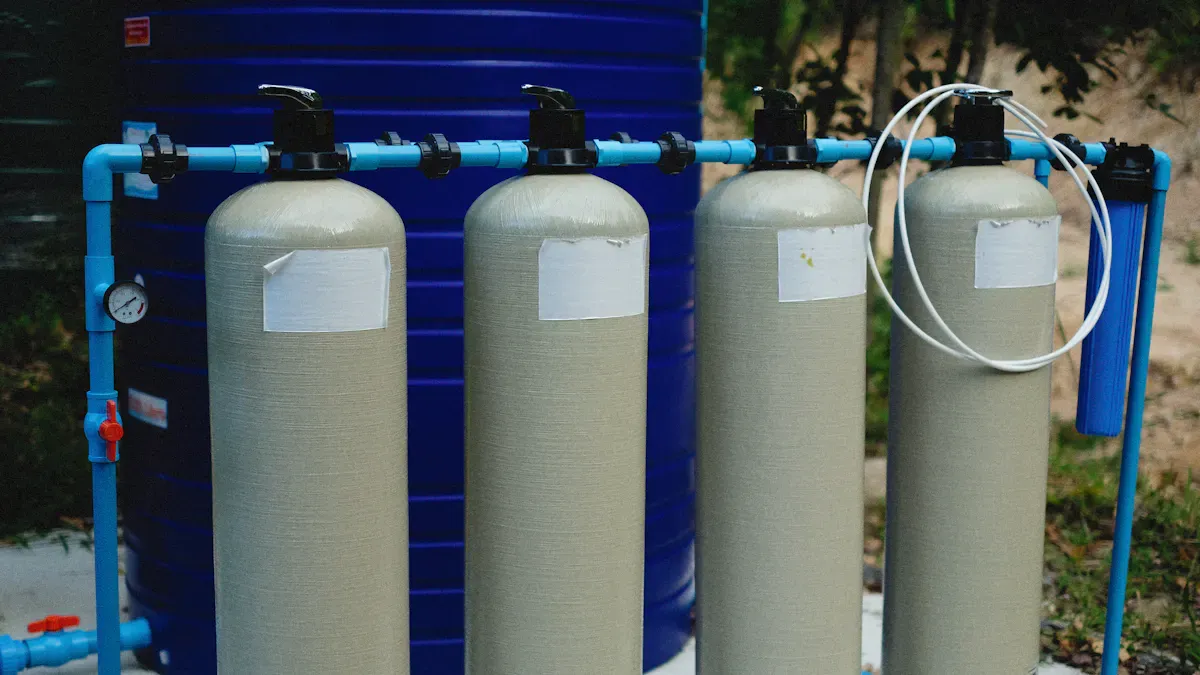
Granular activated carbon filters use loose carbon granules packed inside a cartridge or tank. You often see these filters in whole-house systems or under-sink units. They work well for removing chlorine and organic compounds from water. You get a high flow rate, so water moves quickly through the filter. This makes them a good choice when you need to treat large amounts of water fast.
Granular filters are less effective at removing fine particles.
They may not filter out very small contaminants.
Over time, water can create channels through the loose granules, which lowers filtration consistency.
You should use granular filters when you want to improve taste and odor or reduce bulk contaminants. If you need to remove tiny particles, you may need an extra filter.
Carbon Block Filters
Carbon block filters use compressed activated carbon shaped into a solid block. This design gives you a denser structure and more surface area for water to contact. You get better removal of small contaminants, including volatile organic compounds (VOCs) and fine particles.
Carbon block filters can remove particles as small as 0.5 microns.
They combine adsorption with mechanical filtration for higher precision.
The compact structure slows water flow but increases purification.
You should choose carbon block filters for drinking water taps or when you want the highest level of contaminant removal. These filters give you more consistent results and reduce channeling.
Feature | Carbon Block Filters | Granular Activated Carbon Filters |
|---|---|---|
Structure | Solid, compressed block | Loose granules |
Filtration Consistency | High | Moderate |
Flow Rate | Lower | Higher |
Particle Removal | Excellent | Good for larger particles |
Usage And Maintenance
You need to maintain your filters to keep your water safe. Most activated carbon filters last 3–6 months, but this depends on how much water you use and your water quality. Watch for these signs that your filter needs replacing:
Water starts to taste or smell bad.
You notice a drop in water pressure.
You should also store unused filters in a cool, dry place. Use a pre-filter to catch larger particles and extend the life of your main filter. Clean and check your system regularly. If your filter has an indicator light, follow its guidance for replacement.
Tip: Always test your water to know which contaminants you need to remove. Choose a filter that matches your household needs and has reliable certifications.
You gain many benefits when you use activated carbon for drinking water treatment.
It removes harmful contaminants, improves taste, and meets safety standards set by organizations like the World Health Organization.
You can choose from different filter types to match your needs.
Regular maintenance keeps your water clean and extends filter life.
Make smart choices by selecting certified filters and replacing them on time. You protect your health and enjoy high-quality water every day.
FAQ
How often should you replace an activated carbon filter?
You should replace your activated carbon filter every 3 to 6 months. Check your water quality and usage. If water tastes or smells bad, change the filter sooner.
Can activated carbon remove all contaminants from water?
Activated carbon removes many chemicals, tastes, and odors. It does not remove bacteria, viruses, or minerals like calcium and magnesium. You may need other filters for full protection.
Is activated carbon safe for drinking water?
Activated carbon is safe. You find it in many certified water filters. It meets health standards and does not add harmful substances to your water.
What is the difference between granular and carbon block filters?
Filter Type | Best For | Flow Rate |
|---|---|---|
Granular | Taste, odor, chlorine | Fast |
Carbon Block | Fine particles, VOCs | Slower |
Choose based on your water needs.
Can you use activated carbon filters for well water?
You can use activated carbon filters for well water. They improve taste and remove chemicals. Test your well water first to find out which contaminants you need to target.