
You can use activated carbon to control strong smells from many sources. This material has a porous structure that traps tiny odor molecules. It works well for organic odor treatment with activated carbon in places like wastewater plants, compost bins, and buildings. The market for activated carbon continues to grow as more industries need solutions for odor problems.
Type of Odor | Source | Effectiveness of Activated Carbon |
|---|---|---|
Hydrogen Sulfide (H2S) | Wastewater treatment plants | |
Ammonia (NH3) | Wastewater treatment plants | Up to 78.9% removal efficiency |
Volatile Organic Compounds (VOCs) | Industrial processes | Effective in deodorization processes |
You can count on activated carbon for organic odor treatment in both large and small spaces.
Key Takeaways
Activated carbon effectively removes odors from air, water, and soil by trapping odor molecules in its tiny pores.
Choose the right type of activated carbon based on your specific odor control needs, considering factors like pore size and target compounds.
Regularly replace activated carbon filters every 3 to 6 months to maintain optimal odor control performance.
Activated carbon is versatile and can be used in various settings, including wastewater treatment, composting, and home air purifiers.
For best results, combine activated carbon filters with other technologies, like HEPA filters, to tackle both gases and particles.
Activated Carbon Odor Removal Technology
How Activated Carbon Adsorbs Odor Molecules
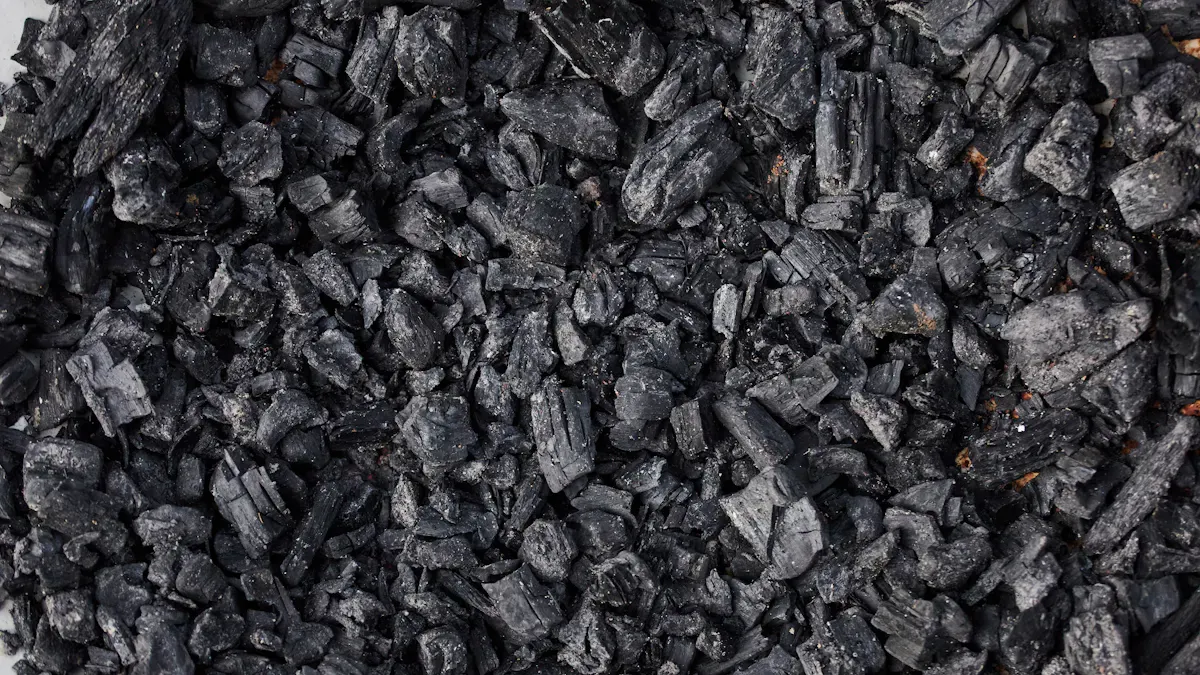
You can rely on activated carbon odor removal technology to trap and eliminate unwanted smells. The secret lies in the structure of activated carbon. The activation process creates a network of tiny pores inside each piece. These pores give the material a huge surface area, sometimes more than 1,000 square meters per gram. When air or water passes through activated carbon products, odor molecules stick to the surface and get trapped inside the pores. This process is called adsorption.
Activated carbon technologies use both micropores and mesopores to capture different types of odor molecules. The porous nature allows contaminants to adhere to the carbon, making it effective for organic odor treatment. As you use activated carbon, you notice that it removes smells from air, water, and even soil. The chemical makeup of activated carbon also helps it attract organic molecules, boosting its adsorption capacity.
Tip: You can improve odor removal by choosing activated carbon with the right pore size for your specific needs.
The adsorption capacity for common bio odor molecules varies. The table below shows how much activated carbon can trap different gases:
Gas | |
|---|---|
H2S | 0.2 |
NH3 | 4.2 |
AA | 6.3 |
MM | 6.6 |
TMA | 35.7 |
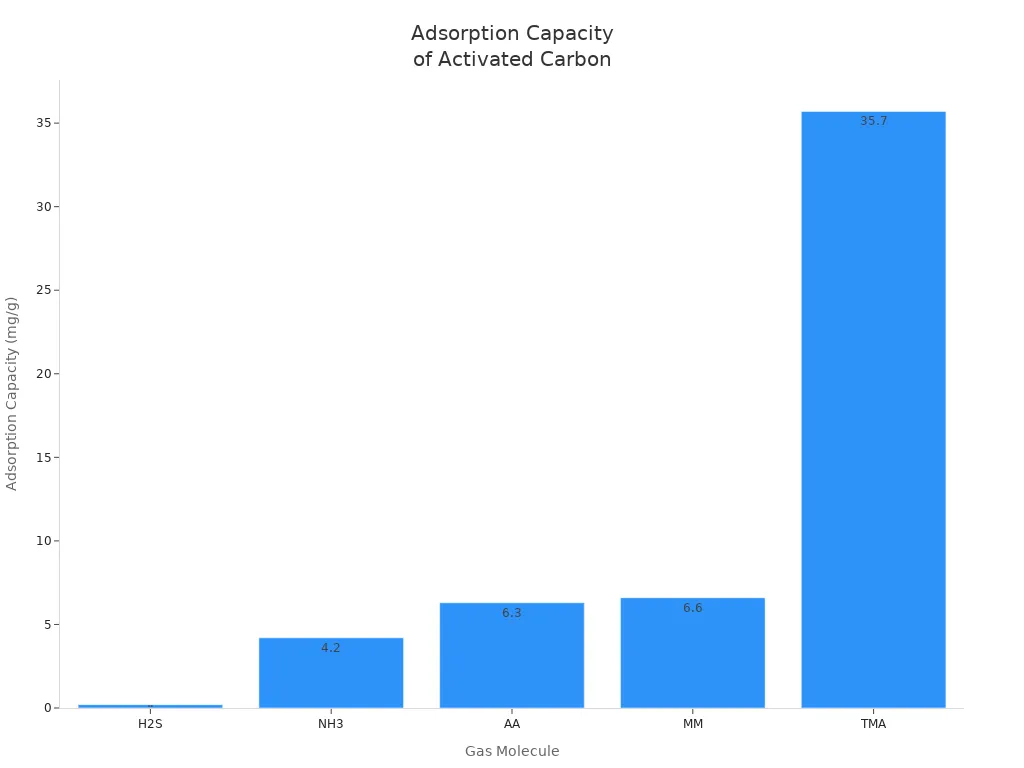
You see that ammonia adsorption happens quickly, even at low concentrations. Hydrogen sulfide adsorption depends on the micropore surface area of the activated carbon. The more micropores, the better the removal of sulfur-containing compounds.
Effectiveness For Organic Odor Treatment
You can use activated carbon for organic odor treatment with activated carbon in many settings. It works well for removing hydrogen sulfide, ammonia, and volatile organic compounds. Activated carbon odor removal technology is effective because it traps both large and small molecules. You find it useful in wastewater treatment, composting, and air purification.
Activated carbon plays a key role in both primary and polishing stages of odor control. In the primary stage, you remove concentrated contaminants like hydrogen sulfide and VOCs. After this, activated carbon acts as a polishing filter. It captures any leftover gases, making sure the air meets quality standards. This step is important for reducing complaints from neighbors and keeping the environment safe.
You can choose activated carbon products that fit your needs. Some blends combine activated carbon with other materials for even better performance. Activated carbon technologies help you achieve near-complete odor removal. You get reliable results for organic odor treatment, whether you work in a large facility or manage odors at home.
Applications Of Activated Carbon In Odor Control
Wastewater And Air Pollution Treatment
You see activated carbon used in many places to control odor and improve air quality. Wastewater treatment plants rely on activated carbon to trap hydrogen sulfide and ammonia. Industrial facilities use it to remove volatile organic compounds and chemical odors. You find activated carbon in air scrubbers and HVAC systems. Granular activated carbon works well in high-flow environments. Pelletized activated carbon gives you steady performance. Specialized systems, like the I-BOx® Biological Odor Control System, polish residual odors after biological treatment. Activated carbon has a high surface area, so it quickly adsorbs organic matter and odors. It also removes heavy metals and dyes from water. You benefit from quiet operation and custom solutions for different contaminants.
Environment | Purpose |
|---|---|
Industrial facilities | Removing VOCs and chemical odors |
Wastewater treatment plants | Controlling hydrogen sulfide and ammonia |
Food processing plants | Eliminating organic odors |
Commercial buildings | Improving indoor air quality |
Composting And Building Emissions
You can use activated carbon to reduce emissions from composting and building operations. Composting facilities often struggle with ammonia and hydrogen sulfide odors. Activated carbon and biochar additives help lower these emissions. For example, acid-modified rice husk biochar can reduce ammonia by over 54% and hydrogen sulfide by nearly 13%. Lignin-based resin also cuts both gases. You improve indoor air quality in commercial buildings by installing activated carbon filters. These filters trap VOCs, formaldehyde, and other harmful gases. You protect workers and visitors from unpleasant smells and health risks.
Home And Personal Odor Solutions
You can bring activated carbon into your home for organic odor treatment. Air purifiers like Austin Air HealthMate and IQAir HealthPro Plus use large amounts of activated carbon to remove VOCs and odors. You place these units in bedrooms, kitchens, or living rooms. Activated carbon also works in personal care products, shoe inserts, and refrigerator deodorizers. You enjoy fresher air and a healthier environment. Activated carbon does not mask odors; it neutralizes them by removing the molecules responsible. You get reliable organic odor treatment with activated carbon for both large and small spaces.
Benefits Of Organic Odor Treatment With Activated Carbon

Efficiency And Versatility
You get fast and reliable results when you use activated carbon for organic odor treatment. This material can remove more than 90% of many common odors. You can see how it compares to other technologies in the table below:
Technology | Efficiency Rate | Advantages |
|---|---|---|
Activated Carbon | 90% or higher | Fast, efficient, low-maintenance |
Biofilters | Varies | Eco-friendly, low operating cost |
Chemical Scrubbers | High for specific cases | Versatile, high removal efficiency |
Activated carbon works in many places. You can use it in factories, wastewater plants, food processing, and even in your home. It traps volatile organic compounds and other gases on its large surface area. You can count on it to handle odors from air, water, and soil. This makes it a top choice for organic odor treatment with activated carbon.
Activated carbon systems can achieve high removal rates for VOCs, hydrogen sulfide, and ammonia.
You can use them in:
Industrial facilities
Wastewater plants
Food processing plants
Commercial buildings
Safety And Environmental Impact
You should always use activated carbon safely. If you do not follow the right steps, fire hazards can occur. Always follow the manufacturer’s instructions and make sure trained people check the system. You can add safety features like flame arrestors to lower risks. You also need to think about the environment. Making activated carbon uses a lot of energy and can create carbon emissions. When you throw away used carbon, it may affect water and soil. You should always dispose of it properly to protect nature.
Note: Always check local rules for disposal and follow safety guidelines to keep your space safe.
Maintenance And Longevity
You need to replace activated carbon filters every 2 to 6 months in most cases. In homes, filters last about 3 to 6 months. In places with more pollution, you may need to change them more often. Water filters can last up to a year, but this depends on how much you use them. When the carbon becomes full, it cannot trap odors anymore. You must replace it to keep your treatment system working well. Even though you need to change filters often, you get strong and steady odor control.
Limitations And Considerations For Odor Removal
Drawbacks And Suitability
You should know that activated carbon does not solve every odor problem. Some compounds, like certain sulfur chemicals, do not respond well to this treatment. For example, dimethyl disulfide and dimethyl trisulfide are hard to remove. The ability to treat odors depends on the size and properties of the molecules. You may also face other challenges when you use activated carbon. The table below shows common drawbacks:
Drawback | Description |
|---|---|
Limited Effectiveness Against Certain Contaminants | Activated carbon is not effective at removing inorganic contaminants like heavy metals or certain salts. |
Saturation and Replacement | Activated carbon requires regular replacement due to saturation, leading to increased operational costs. |
Potential for Microbial Growth | Improper maintenance can lead to microbial growth, risking recontamination of treated environments. |
Variable Quality of Activated Carbon | The effectiveness can vary based on the source and manufacturing process, affecting adsorption capacity. |
Flow Rate Limitations | Activated carbon can reduce flow rates, which may not be suitable for high-demand applications. |
You may also notice that activated carbon has low capacity for hydrogen sulfide when levels are high. In rare cases, self-heating can cause a fire risk, especially in high sulfur environments.
Maintenance And Replacement
You need to keep your system working well by changing the activated material on time. If you do not replace it, the filter will stop removing odors. The table below gives you a guide for when to replace activated carbon in different situations:
Condition | Recommended Interval |
|---|---|
Normal use | Every 3 to 6 months |
High-pollution environments | More frequently than 3 months |
High-use environments | 3 to 12 months |
Sachets and mats | Every 3 to 6 months |
You should check your system often. If you notice odors coming back, it is time to change the filter. Regular maintenance also helps prevent problems like microbial growth.
Factors Affecting Performance
You can improve odor removal by understanding what affects activated carbon performance. The table below lists important factors:
Factor | Description |
|---|---|
Specific Surface Area | Affects the adsorption capacity of activated carbon. |
Pore Size | Influences the ability of activated carbon to capture different odor molecules. |
Intermolecular Forces | Determines how effectively activated carbon can attract and hold onto odor molecules. |
Filtration Area | The design parameter that impacts the overall efficiency of the activated carbon filtration system. |
Filtration Wind Speed | Must be controlled to optimize the adsorption process; specific limits are set for different systems. |
Carbon Layer Thickness | Needs to be designed based on exhaust gas concentration and desired removal efficiency. |
You should choose the right type of activated carbon for your system. Make sure you control the airflow and keep the filter thick enough for your needs. These steps help you get the best results from your odor treatment.
Choosing Activated Carbon For Odor Control
Selecting The Right Type
You need to pick the best activated carbon for your odor control needs. Start by defining your target compounds and success criteria. Think about the concentration, flow, temperature, and pH. Choose between liquid or vapor phase media. Select a form that fits your equipment. Granular activated carbon works well for gas phase treatment. Pelletized activated carbon gives you steady performance in air filtration systems. Powdered activated carbon has a large surface area and removes bigger molecules, like those found in food odors.
Goal | Phase | Form | Base Material | Helpful Specs |
|---|---|---|---|---|
Gas | Pellet or granular | Coal or coconut | Butane or CTC activity, hardness |
You should match the pore structure to the molecule size. Pick a grade with suitable activity and hardness. Plan for contact time and bed depth. Confirm pressure drop and vessel dimensions. Test with a small trial bed before full deployment.
Installation And Use Tips
You can improve your odor control solutions by following simple installation tips. Label and date all carbon media installations. Store unused sachets and filters in sealed containers. Train staff on proper use and disposal. Monitor air quality with VOC detectors or odor logs. Place units in high-traffic areas to capture odors from people and equipment. Position behind reception desks in customer-facing businesses. Deploy in task-intensive zones, like control rooms and laboratories. Make sure you have enough airflow around the unit. Avoid blocking intake or exhaust vents. Combine activated carbon filters with HEPA filtration to remove both gases and particles.
Tip: Always check that your granular and pelletized activated carbon filters fit tightly in their housings.
Maintenance Best Practices
You need to keep your system working well with regular maintenance. Label and date installations to track replacement schedules. Store unused filters in sealed containers to prevent premature saturation. Train staff for proper use and disposal. Monitor air quality with VOC detectors or odor logs. Consider reactivation services for large industrial beds to reduce waste and cost.
Maintenance Procedure | Description |
|---|---|
Label and date installations | Track replacement schedules for carbon media |
Store in sealed containers | Prevent premature saturation of unused filters |
Train staff | Ensure proper use and disposal |
Monitor air quality | Use VOC detectors or odor logs for checks |
Reactivation services | Reduce waste and cost for large industrial beds |
Most manufacturers suggest changing carbon filters every 3 to 6 months. In high pollution environments, replace them more often, with intervals from 3 to 12 months. You keep your odor control solutions effective with these steps.
You can rely on activated carbon for many odor control needs. Its unique structure lets you remove organic pollutants from water and harmful gases from air. You see it work in hospitals, homes, and wastewater plants.
It captures VOCs and odorous molecules without creating by-products.
The high surface area from the activated process boosts its performance.
You improve air and water quality in many settings.
Tip: Choose the right product and replace filters on schedule to keep your system working well. If you have special needs, talk to an expert for the best results.
FAQ
What is activated carbon and how does it control odors?
You use activated carbon because it has millions of tiny pores. These pores trap odor molecules from air or water. This process removes smells and improves air quality in your space.
How often should you replace activated carbon filters?
You should check your filters every few months. Replace them when you notice odors returning or after three to six months of use. This keeps your odor control system working well.
Can activated carbon remove all types of odors?
You get the best results with organic odors, like bio-effluent odors, ammonia, and VOCs. Some chemicals may not respond as well. Always match the filter to your specific needs.
Is activated carbon safe for home use?
You can safely use activated carbon in homes. It does not release harmful chemicals. Always follow the manufacturer’s instructions for installation and disposal.
Where can you use activated carbon for odor control?
You can use activated carbon in wastewater plants, compost bins, air purifiers, and even refrigerators. It works in both large facilities and small spaces at home.