
You can use activated carbon to preserve food by trapping unwanted gases and moisture. Activated carbon has a porous structure that captures ethylene, which helps keep fruits and vegetables fresh. It stands out from traditional methods because it offers superior adsorption and meets strict food safety regulations. Many companies choose activated carbon for its high efficiency and safety. The global market for activated carbon in food preservation is valued at $1.5 billion, and it continues to grow quickly. Food-grade activated carbon gives you peace of mind about safety.
Key Takeaways
Activated carbon extends the shelf life of fruits and vegetables by trapping ethylene gas, keeping them fresh for 1.5 to 2 times longer.
Using food-grade activated carbon ensures safety and purity in food preservation; always check for certifications before purchasing.
Activated carbon absorbs moisture and odors, improving food quality and preventing spoilage in storage environments.
Regenerate activated carbon by heating it to restore its moisture-absorbing ability, making it a sustainable choice for food storage.
Follow safety guidelines when using activated carbon to avoid health risks; handle it carefully and store it properly.
Activated Carbon Mechanisms
Adsorption Process
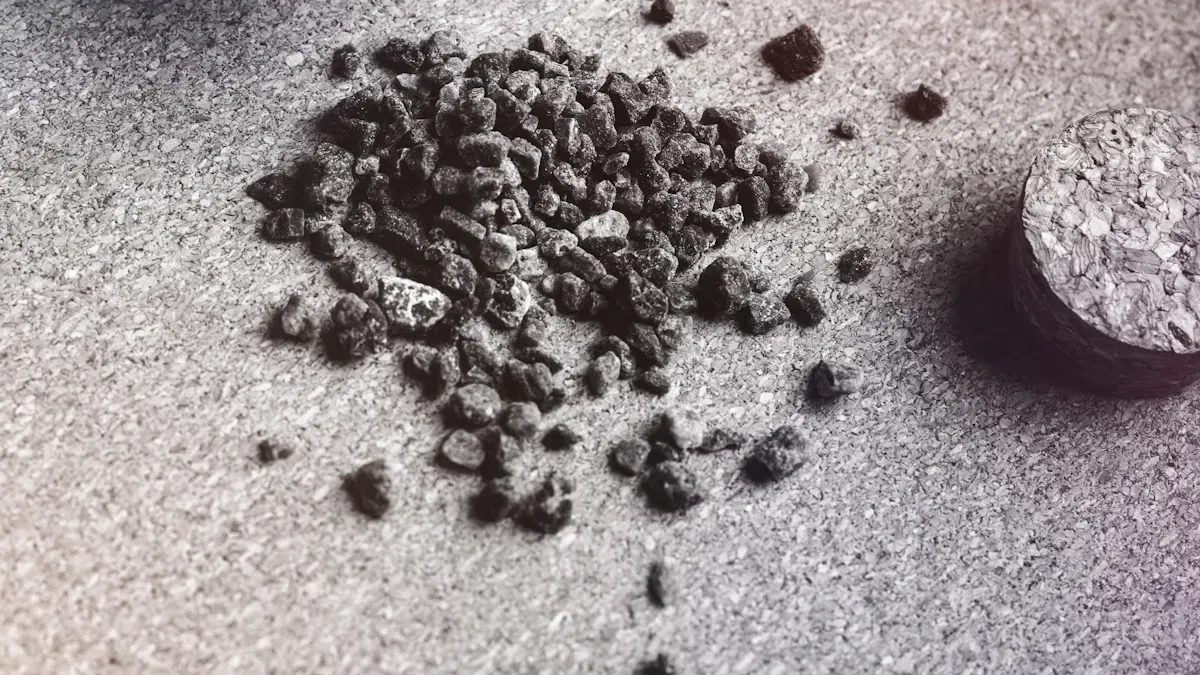
You can rely on activated carbon to protect your food because of its unique adsorptive properties. The science behind activated carbon starts with its porous structure. Each piece contains millions of tiny holes called micropores. These pores create a surface area that can exceed 500 square meters per gram. This massive surface area allows activated carbon to attract and hold molecules from the air and food.
Activated carbon uses mass transfer to pull molecules onto its surface.
Unbalanced forces on the carbon surface cause molecules to stick.
The concentration of gases or contaminants becomes higher on the carbon than in the surrounding air.
When you use activated carbon in food storage, it captures gases like ethylene. Ethylene speeds up ripening in fruits and vegetables. By trapping ethylene, activated carbon slows down ripening and keeps produce fresh longer. Studies show that activated carbon can increase the shelf life of fruits and vegetables by 1.5 to 2 times. You can see this effect in patented composite drawers made from activated carbon and polypropylene.
Activated carbon also works well because its surface chemistry, pore volume, and particle size influence how much gas it can adsorb. The Langmuir isotherm model explains that ethylene forms a single layer on the carbon surface. Micropore volume and diameter are crucial for boosting adsorption performance.
Aspect | Description |
|---|---|
Surface Chemistry | Determines how much gas activated carbon can adsorb. |
Surface Area | Larger surface area means more ethylene can be trapped. |
Pore Volume | Bigger pore volume improves ethylene adsorption. |
Temperature | Changes in temperature affect adsorption efficiency. |
Relative Humidity | Humidity impacts how well activated carbon works. |
Particle Size | Smaller particles increase surface area and porosity. |
Adsorption Model | Langmuir isotherm shows ethylene forms a monolayer on activated carbon. |
Pore Size | Ethylene needs pores larger than 3.9 Å for effective adsorption. |
Activated carbon produced from food waste often has a well-developed surface area and a rich porous structure. The activating agent and precursor type change the textural parameters of activated carbon. You can choose different types based on your needs. For example, potassium carbonate creates activated carbon with lower ash content and a neutral pH. Orthophosphoric acid produces a strongly acidic activated carbon.
Moisture & Gas Control
Activated carbon helps you control moisture and gases in food packaging. You can use it in modified atmosphere packaging (MAP) to manage carbon dioxide levels. Activated carbon absorbs excess CO2, which prevents spoilage and extends shelf life. It also reduces browning and mold decay.
Activated carbon absorbs moisture from the air.
It can hold 10% to 25% of its weight in water.
Activated carbon works best under humid conditions.
You can regenerate activated carbon by heating it to at least 40 °C. This process restores its moisture removal ability. Activated carbon performs differently from silica gel. Silica gel absorbs more moisture, but activated carbon also removes odors and volatile organic compounds. This dual function makes activated carbon valuable in food storage.
Temperature and humidity affect how well activated carbon works. High humidity boosts its dehumidification capacity. You can use activated carbon in environments where moisture control is important. Activated carbon also manages oxygen and other gases, which helps keep food fresh.
Contaminant Removal
You can trust activated carbon to remove contaminants from food storage environments. Its porous structure traps unwanted chemicals, odors, and volatile organic compounds. Activated carbon acts as a filter, keeping your food safe and pure.
Activated carbon removes pesticides and chemical residues.
It captures odors that can spoil food.
It adsorbs volatile organic compounds that may harm food quality.
Technological advancements have improved activated carbon in recent years. Manufacturers now produce highly porous activated carbon with enhanced adsorption capacities. You can find customized solutions for specific food processing needs. Sustainable production methods use renewable resources to make activated carbon. Efficiency improvements focus on cost-effectiveness and better treatment processes.
Advancement Type | Description |
|---|---|
Highly Porous Activated Carbons | Enhanced adsorption for specific contaminants. |
Customized Solutions | Tailored activated carbon for food processing. |
Sustainable Production | Environmentally friendly activated carbon from renewable resources. |
Efficiency Improvements | Better efficiency and cost-effectiveness. |
You can select activated carbon based on your needs. Some types have lower ash content, while others have higher elemental carbon. The activating agent changes the pH and chemical structure. Activated carbon produced with potassium carbonate is slightly acidic to neutral. Those made with phosphoric acid are strongly acidic. The presence of phosphate groups in the carbon structure can affect its performance.
Activated carbon stands out because it is multifunctional. You can use it to extend shelf life, control moisture, manage gases, and remove contaminants. Its adsorptive properties make it a top choice for food preservation.
Benefits
Shelf Life Extension
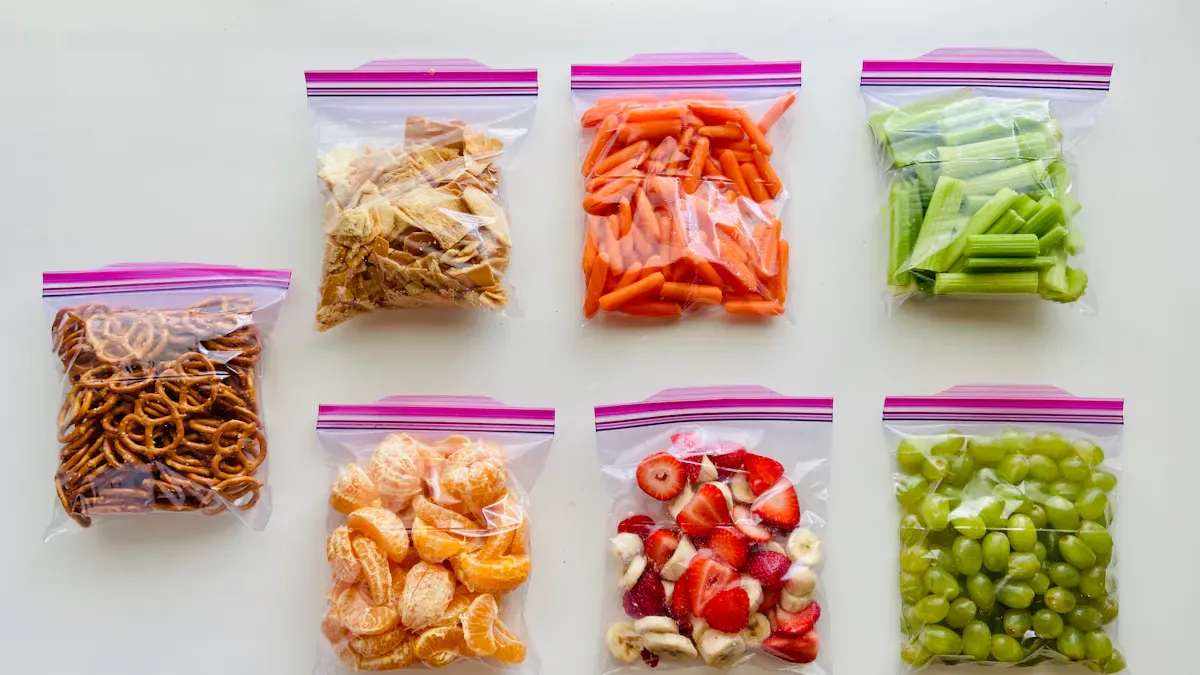
You can use activated carbon to extend the shelf life of many foods. This food preservation strategy works by trapping gases that cause spoilage. When you place activated carbon in storage drawers, you slow down the ripening process. You see a clear difference compared to traditional methods. For example, bananas stored with activated carbon stay fresh much longer.
The shelf life of bananas increases by 1.5 to 2 times when you use activated carbon in storage drawers.
Composite drawers with activated carbon outperform regular polypropylene drawers.
You get more time to enjoy your fruits and vegetables. This benefit makes activated carbon a smart choice for anyone who wants to reduce waste and save money.
Freshness & Quality
Activated carbon helps you keep food fresh and maintain its quality. You notice that fruits and vegetables look better and taste better when you use this food preservation strategy. Activated carbon absorbs ethylene gas, which slows down ripening and prevents browning. You protect the sensory qualities of your food, such as color, texture, and flavor.
Tip: You can use activated carbon in your refrigerator to keep produce crisp and flavorful.
You also avoid unpleasant odors. Activated carbon removes smells that can build up during storage. You get food that stays appealing for longer periods.
Safety & Purity
You can trust activated carbon to keep your food safe and pure. Studies show that activated carbon removes harmful gases and contaminants from storage environments. You protect your food from pesticides and chemical residues. The table below shows how researchers used activated carbon to improve food safety and purity:
Study Aim | Methodology | Findings |
|---|---|---|
To develop a porous carbon/polypropylene composite to evaluate as a novel refrigerator drawer for extending the shelf life of fruits and vegetables. | Activated carbon was produced from walnut shells and oak wood chips. A composite was created by adding activated carbon to polypropylene without binder agents. | The shelf life of fruits and vegetables increased by 1.5–2 times due to ethylene gas adsorption onto activated carbon. |
You get peace of mind knowing that activated carbon supports safe food preservation. You avoid exposure to unwanted chemicals and keep your food clean.
Safety & Regulations
Food-Grade Certification
You need to check food-grade certification before using activated carbon in food preservation. Certification ensures that manufacturers follow strict safety standards. You can trust certified products because they meet international guidelines for food safety. The table below shows the main certifications for activated carbon used in food storage:
Certification | Description |
|---|---|
ISO22000:2018 | Ensures adherence to the highest food safety standards throughout the production process. |
HACCP | Guarantees that all aspects of food-grade production meet stringent hazard analysis standards. |
GMP | Confirms that rigorous guidelines for production and control are followed to ensure safety and quality. |
You should look for these certifications when buying activated carbon. They help you avoid products that may not meet safety requirements. Certified activated carbon protects your food from contaminants and supports safe storage.
Tip: Always check the packaging for certification labels. This step helps you confirm that the activated carbon meets food-grade standards.
Health Precautions
You must use activated carbon carefully to protect your health. Improper application can cause risks. You may face pulmonary aspiration if you inhale activated carbon particles. You can avoid this risk by using proper filtration systems. These systems remove contaminants without affecting the taste or smell of your food.
Pulmonary aspiration can happen if you use activated carbon incorrectly.
Filtration systems help you keep food safe and maintain sensory quality.
You should follow instructions for handling activated carbon to prevent health issues.
You can keep your food safe by using activated carbon in sealed containers or packaging. You should avoid direct contact with food unless the product is specifically designed for that purpose. You can also wear gloves and masks when handling activated carbon in bulk.
Note: You should never use industrial-grade activated carbon for food storage. Only use products labeled as food-grade.
Legal Status
You must follow legal requirements when using activated carbon for food preservation. Regulatory agencies like the FDA in the United States and EFSA in the European Union evaluate the safety of activated carbon for food contact. You can see the main regulatory approaches in the table below:
Region/Country | Regulatory Approach | Key Requirements |
|---|---|---|
European Union | Focus on finished product | Compliance through migration testing with food simulants |
United States | Focus on material quality control | Premarket regulatory clearance for food contact substances |
You need to know that the European Union sets requirements for active and intelligent materials under Regulation No 450/2009/EC. You must comply with migration testing to ensure that activated carbon does not transfer harmful substances to food. In the United States, you must get premarket regulatory clearance if activated carbon is classified as a food additive. Article producers are responsible for compliance.
In the EU, compliance responsibilities are shared along the food chain.
In the USA, article producers must ensure regulatory clearance.
You should always check local regulations before using activated carbon in food storage.
You can trust the safety of activated carbon when you follow legal guidelines and use certified products. Regulatory agencies help you protect your health and ensure that activated carbon meets strict standards.
Callout: You should consult food safety professionals if you have questions about legal requirements or certification.
You can use activated carbon confidently when you follow safety guidelines, check certifications, and comply with regulations. You protect your food and your health by making informed choices.
Applications
Home Use
You can use activated carbon at home to keep your food fresh and safe. Many people place activated carbon in refrigerators or storage drawers. This method helps you remove unwanted odors and gases. You can also use activated carbon to filter water and beverages. It works well for cleaning sugarcane juice, removing up to 98% of pollutants at room temperature. You get better food quality and less spoilage.
Place activated carbon sachets in produce drawers.
Use activated carbon filters for water and juice purification.
Add activated carbon to storage containers to absorb moisture and odors.
Tip: Always choose food-grade activated carbon for home applications.
Commercial Use
You see activated carbon used in many commercial food preservation processes. Factories rely on it to improve product quality and meet safety standards. The table below shows how different regions use activated carbon in food manufacturing:
Region | Projected CAGR | Key Applications | Outcomes |
|---|---|---|---|
United States | 4.3% | Sugar processing, food manufacturing | Improved color removal, compliance with food safety standards |
United Kingdom | 3.8% | Confectionery production, specialty sugar manufacturing | Enhanced quality protection, operational excellence |
Japan | 3.4% | Specialty sugar production, food manufacturing | Operational excellence, superior adsorption properties |
Europe | 3.8% | Comprehensive food processing programs | Growth in market share, increasing food industry development |
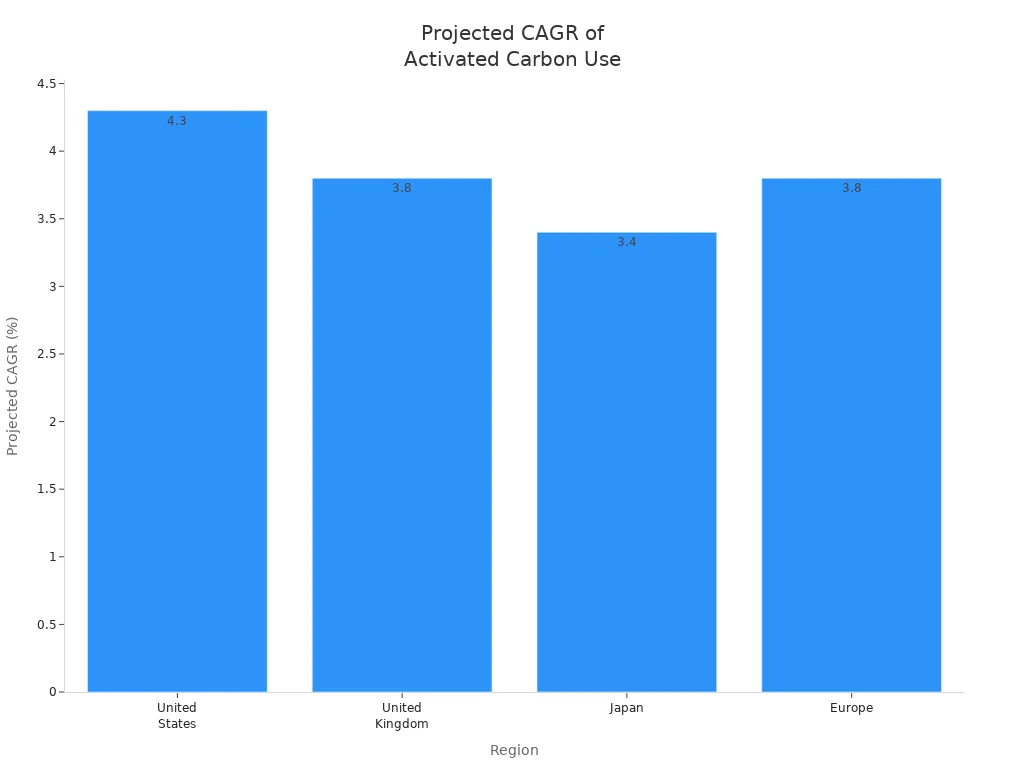
You notice that activated carbon helps factories remove color from sugar and protect food quality. It supports operational excellence and boosts market growth.
Activated Carbon in Packaging
You benefit from activated carbon in modern food packaging. It plays a key role in keeping fruits and vegetables fresh. Activated carbon scavenges ethylene, which slows ripening and extends shelf life. You find it combined with other materials to improve food safety and quality. Many companies use activated carbon in modified atmosphere packaging to maintain tomato quality during cold storage.
Benefit/Functionality | Description |
|---|---|
Ethylene Scavenging | Activated carbon helps prolong the shelf life of fruits and vegetables by scavenging ethylene. |
Integration with Other Materials | Enhances food safety and quality when combined with other packaging materials. |
Multifunctionality | Contributes to the development of environmentally friendly and smart packaging solutions. |
Application | Description |
|---|---|
Modified Atmosphere Packaging | Utilizes activated carbon to maintain the quality of tomato fruits during cold storage. |
Feature | Description |
|---|---|
Active Packaging | Responds to environmental changes by absorbing or releasing agents to maintain food safety and quality. |
Types of Scavengers | Includes oxygen scavengers, moisture scavengers, and ethylene absorbers. |
You get multifunctional benefits from activated carbon. It is non-toxic and cost-effective. You can use it in many types of packaging to protect food and reduce waste.
Limitations & Risks
Drawbacks
You may notice some drawbacks when you use activated carbon for food preservation. Activated carbon can sometimes release dust, which poses a risk if you inhale it. You need to handle it carefully to avoid respiratory issues. You also face challenges with dosage. If you use too much activated carbon, you may affect the taste or odor of your food. The table below shows recommended dosages for different applications:
Application Type | Recommended Dosage (mg/L) |
|---|---|
Taste and Odor | 10–50 |
Color Reduction | 50–200 or more |
You should also consider environmental impacts. The production of activated carbon uses carbonaceous organic materials, including waste. This process helps manage waste and reduces greenhouse gas emissions. However, improper disposal can harm the environment. You need to choose sustainable options and dispose of activated carbon responsibly.
Activated carbon does not work for every food type. Some foods may lose flavor or aroma if exposed to activated carbon for too long. You may also find that activated carbon has limited binding capacity for certain contaminants. Chitosan, often used with activated carbon, improves antibacterial and antioxidant properties, but you must check compatibility with your food products.
Precautions
You need to follow safety precautions when you use activated carbon. Dust exposure is a concern with some activated carbons.
Dust exposure is a concern with some activated carbons and normal dust handling procedures should be used such as eye protection and dust masks for personnel handling the carbon, as well as room dust filters to keep dust level under control.
You should store food grade activated carbon separately from other substances to prevent contamination. Keep it away from strong oxidizing agents, acids, and bases. Avoid storing it near food products to prevent adsorption of flavors or odors. Regularly inspect stored food grade activated carbon for clumping, discoloration, or unusual odors. Take corrective actions if any issues are noticed.
You can combine activated carbon with chitosan to create active films that offer antibacterial activity and antioxidant properties. These films help preserve food and protect against spoilage. You need to monitor the antibacterial and antioxidant effects to ensure safety. Always check the compatibility of chitosan and activated carbon with your food items.
You protect your health and food quality by following these precautions. You also support environmental remediation by using activated carbon made from waste materials.
You learned how activated carbon helps preserve food by trapping gases and moisture. You can extend shelf life, improve freshness, and protect food safety with activated carbon. You should always choose food-grade activated carbon and follow safety guidelines.
Place activated carbon in storage containers or packaging for best results.
Check certifications before buying activated carbon.
You can ask food safety professionals for advice and explore new research about activated carbon in food preservation.
FAQ
What is food-grade activated carbon?
Food-grade activated carbon meets strict safety standards. You can use it for food storage without worrying about harmful chemicals. Always check for certification labels before buying.
How do you use activated carbon in your kitchen?
You place activated carbon sachets in your refrigerator or food containers. These sachets absorb odors and moisture. You keep fruits and vegetables fresh for a longer time.
Is activated carbon safe for all foods?
You can use activated carbon with most fruits and vegetables. Some foods may lose flavor if exposed for too long. Always follow instructions and avoid direct contact unless the product is designed for it.
Can you reuse activated carbon?
You can regenerate activated carbon by heating it. This process restores its moisture removal ability. You should check the manufacturer’s guidelines for safe reuse.
What are the main benefits of activated carbon in food preservation?
You extend shelf life, reduce odors, and keep food safe from contaminants. Activated carbon helps you save money and reduce waste. You improve food quality with this simple method.