
The global activated carbon market is undergoing a period of sustained expansion, driven by tightening environmental regulations, growing water scarcity concerns, and rising industrial emission control requirements. According to the latest industry research from ResearchAndMarkets.com, the market reached a valuation of $8.07 billion in 2025 and is projected to climb to $9.26 billion in 2026, reflecting a compound annual growth rate (CAGR) of 14.8%. By 2030, the market is expected to reach $15.71 billion, underscoring the long-term strength of demand across municipal, industrial, and pharmaceutical sectors.
This rapid expansion has a direct impact on pricing. Procurement managers, plant operators, and supply chain professionals navigating the activated carbon market in 2026 face a landscape where regional disparities, raw material volatility, and evolving quality specifications all influence the final cost per metric ton. Understanding these dynamics is essential for making informed purchasing decisions and securing competitive pricing.
As of Q2 2026, activated carbon prices range from approximately $1,688 per metric ton in China to $2,887 per metric ton in South Korea, with the United States at $2,302/MT and Germany at $2,743/MT. The wide price spread reflects differences in raw material sourcing, energy costs, regulatory environments, and product grade specifications.
This article provides a comprehensive analysis of the activated carbon pricing landscape in 2026. It examines current price benchmarks across major markets, breaks down the key cost drivers from raw materials to logistics, compares pricing across different carbon types, and offers practical procurement guidance for industrial buyers. Whether you are sourcing granular activated carbon for a municipal water treatment plant or specialty impregnated carbon for an air purification system, the insights that follow will help you benchmark prices and optimize your purchasing strategy.

Current Activated Carbon Prices by Region in 2026
As of the second quarter of 2026, activated carbon prices vary significantly across major global markets. The lowest prices are observed in China at $1,688/MT, while South Korea commands the highest at $2,887/MT, driven by high-specification demand from semiconductor manufacturing and reliance on imported raw materials.
Regional price data from Q2 2026, as tracked by the IMARC Group activated carbon pricing report, shows the following benchmark prices for standard-grade activated carbon:
| Region | Q4 2025 Price (USD/MT) | Q1 2026 Price (USD/MT) | Q2 2026 Price (USD/MT) | QoQ Change |
| China | 1,631 | 1,651 | 1,688 | +2.2% |
| India | 1,988 | 2,030 | 2,077 | +2.3% |
| United States | 2,154 | 2,204 | 2,302 | +4.4% |
| Germany | 2,635 | 2,664 | 2,743 | +3.0% |
| South Korea | 2,710 | 2,797 | 2,887 | +3.2% |
The price trajectory across all major markets shows a consistent upward trend through the first half of 2026. The United States experienced the steepest quarterly increase at 4.4%, driven by steady demand from water treatment plants and air filtration applications across industrial and municipal sectors. China saw a more moderate 2.2% rise, supported by stable domestic industrial demand from the chemical processing and water purification sectors, as well as recovering export demand from Southeast Asia and Europe.
Germany remains the highest-priced market in Europe at $2,743/MT, reflecting strong demand from air purification systems and industrial emission control applications, combined with significant reliance on imports that are influenced by international freight and logistics costs. South Korea’s premium pricing at $2,887/MT is attributable to the high specification requirements of its semiconductor manufacturing sector and advanced industrial filtration applications, with import dependency further shaping supply dynamics.
Key Factors That Drive Activated Carbon Pricing
Activated carbon pricing is determined by five primary factors: raw material type and quality, the manufacturing process employed, energy costs, performance specifications such as iodine value, and regional regulatory and logistics environments. Among these, raw material selection alone can create a 40% price differential between coal-based and coconut shell-based products.
Raw material selection is the single most influential cost driver. Coconut shell-based activated carbon consistently commands the highest prices due to the limited availability of coconut shells, which are geographically concentrated in tropical regions such as the Philippines, Indonesia, India, and Sri Lanka. The procurement, drying, and crushing of premium coconut shells involve higher logistical and processing costs. In contrast, coal-based activated carbon benefits from abundant domestic coal reserves in major producing countries like China, resulting in significantly lower raw material costs. Wood-based activated carbon occupies a middle ground, with costs influenced by forestry management and sawmill industry output. At the lowest end, agricultural waste feedstocks such as rice husks and straw offer minimal material costs but typically yield lower adsorption performance.
The manufacturing process introduces a second tier of cost differentiation. Physical activation, which uses steam or carbon dioxide at temperatures of 800 to 1,000 degrees Celsius, is energy-intensive and accounts for an estimated 20% to 40% of total production costs. Chemical activation, employing reagents such as phosphoric acid or zinc chloride, operates at lower temperatures but introduces substantial costs for chemical procurement and for the systems required to treat and dispose of chemical-laden wastewater. According to industry analysis of activated carbon production cost drivers, products manufactured via chemical activation typically carry a 15% to 25% price premium over physically activated equivalents.
Performance specifications create granular price variations within each product category. The iodine value, which measures microporous adsorption capacity, is the most widely referenced quality indicator. A coal-based granular activated carbon with an iodine value of 1,000 mg/g can cost $200 to $350 more per metric ton than one rated at 800 mg/g. Similarly, methylene blue value, which reflects mesopore volume for decolorization applications, drives wood-based powdered carbon prices higher by 5% to 8% for every 2 ml/g increase. Ash content is another critical parameter; coconut shell carbon with ash content below 3% can be priced $150 per ton or more above product with 10% ash content. Modified or impregnated carbons tailored for specialized applications such as gold recovery or mercury capture command premiums of 30% to 50% over standard grades.
Energy costs and environmental compliance represent fixed overheads that vary by region. Production facilities in regions with higher electricity and natural gas prices face structurally higher manufacturing costs. Environmental regulations governing exhaust gas treatment, VOC capture, and wastewater processing have added mandatory capital and operational expenditures that are now embedded in baseline pricing across all major producing regions.
Finally, logistics and supply chain dynamics contribute to regional price differentials. Countries dependent on imports, such as Germany and South Korea, face additional freight, insurance, and port handling costs that elevate landed prices. Raw material supply disruptions, such as a poor coconut harvest in a major producing country, can cascade through the supply chain and trigger short-term price spikes.
Activated Carbon Types and Their Price Comparison
Activated carbon is available in multiple forms, each with distinct price ranges determined by raw material, form factor, and performance specifications. Based on FOB China pricing, coal-based granular activated carbon is the most economical at $500 to $1,200/MT, while activated carbon fiber is the most expensive at $8,000 to $15,000/MT. The choice of carbon type should be driven by application requirements rather than price alone, as total cost of ownership often favors higher-performing materials in demanding applications.
The following table provides a consolidated price comparison across the major activated carbon types available in the global market, based on FOB China export pricing as documented in comprehensive activated carbon type specifications:
| Type | Raw Material | Form | Key Specification | Price Range (FOB China) | Primary Applications |
| Coconut Shell GAC | Coconut shell | Granular | Iodine 900–1,200 mg/g | $1,200–3,700/MT | Drinking water, gold recovery, food and beverage |
| Coal-Based GAC | Bituminous coal | Granular | Iodine 500–1,000 mg/g | $500–1,200/MT | Municipal water, wastewater, dechlorination |
| Wood-Based PAC | Sawdust/wood chips | Powder | MB ≥ 180 mg/g | $600–3,000/MT | Sugar decolorization, pharmaceutical, food processing |
| Pellet/Extruded | Coal or coconut | Cylindrical | CTC 30–100% | $800–3,200/MT | Air/gas treatment, VOC removal, biogas |
| Powdered (Coal) | Coal | Powder | Iodine 600–1,000 mg/g | $500–1,500/MT | Emergency dosing, wastewater spikes |
| Impregnated | Coal/coconut + chemicals | Granular or pellet | Varies by treatment | $1,500–3,000/MT | H₂S removal, mercury capture, acid gas |
| Reactivated | Spent GAC | Granular | Iodine 700–950 mg/g | $500–800/MT | Cost-sensitive utilities, ESG programs |
| Carbon Fiber (ACF) | Viscose/PAN fiber | Felt, cloth, paper | BET 1,000–2,000 | $8,000–15,000/MT | Air purifiers, solvent recovery, masks |
Coconut shell granular activated carbon remains the premium choice for liquid-phase adsorption applications. Its high micropore volume, hardness exceeding 98%, and ash content below 3% make it the default selection for potable water treatment, gold recovery circuits, and food-grade processing. The wide price range from $1,200 to $3,700 per metric ton reflects differences in iodine number, mesh size, and purity grade. High-iodine coconut shell carbon with values above 1,100 mg/g commands the upper end of this range.
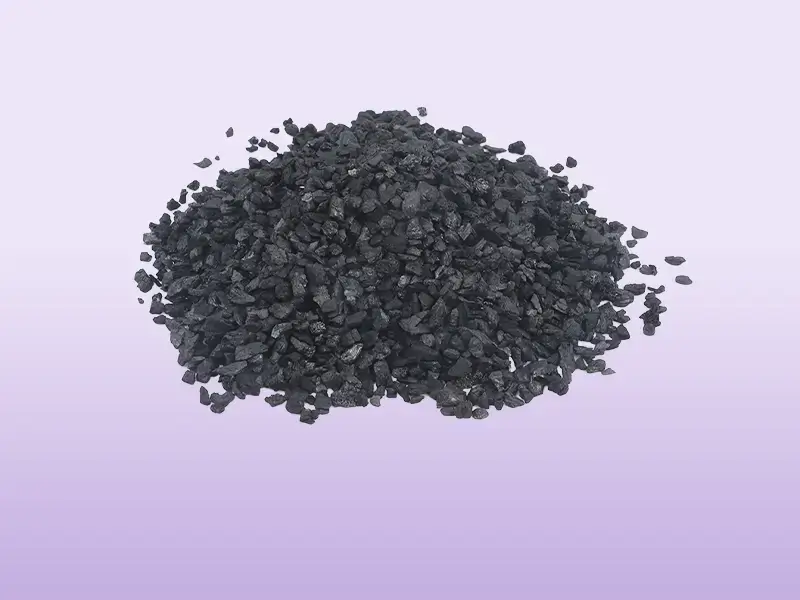
Coal-based granular activated carbon is the workhorse of large-volume water and wastewater treatment. It offers a broader pore size distribution than coconut shell carbon, making it effective against a wider range of contaminant molecular sizes. Its price advantage of 20% to 40% over equivalent-performance coconut shell grades makes it the preferred choice for municipal water treatment plants and industrial wastewater facilities where capital and operating budgets are constrained.
Pelletized or extruded activated carbon serves a distinct niche in gas-phase applications. Its uniform cylindrical shape ensures predictable pressure drop across packed beds, making it ideal for VOC removal from industrial exhaust, biogas hydrogen sulfide scrubbing, and solvent recovery systems. Pricing varies primarily by CTC (carbon tetrachloride) activity value, with high-activity pellets for demanding industrial emission control commanding the upper price tier.
Reactivated carbon, produced by thermally regenerating spent granular activated carbon, represents the most cost-effective option at $500 to $800 per metric ton. While its iodine value of 700 to 950 mg/g is lower than virgin carbon, it is increasingly adopted by utilities and industrial users pursuing both cost reduction and sustainability objectives. The reactivation process typically restores 90% to 95% of original adsorption capacity.
Industries Driving Demand and Price Growth
Water treatment, air purification, and automotive emission control are the three largest demand drivers for activated carbon in 2026, collectively accounting for the majority of global consumption. The pharmaceutical and food and beverage sectors represent high-growth niches where specialty-grade carbons command significant price premiums.
The water treatment sector remains the largest end-use market for activated carbon. Expanding municipal water treatment infrastructure, particularly in developing economies across Asia-Pacific and Africa, is generating sustained demand for both granular and powdered activated carbon. Stringent drinking water standards in developed markets, including emerging regulations targeting PFAS (per- and polyfluoroalkyl substances), are driving adoption of high-performance coconut shell carbon with elevated iodine values. Industrial wastewater treatment adds a parallel demand stream, with sectors such as chemicals, textiles, and mining requiring activated carbon for COD reduction, color removal, and heavy metal adsorption.
Air purification and industrial emission control constitute the second major demand pillar. Regulatory frameworks such as the European Union Industrial Emissions Directive and the U.S. Clean Air Act continue to tighten emission limits for VOCs, mercury, and acid gases, mandating the use of activated carbon in flue gas treatment systems. The growing deployment of air quality monitoring networks in urban centers across China and India is further accelerating demand for activated carbon filters in both industrial and commercial building ventilation systems.
The automotive sector is an increasingly significant demand driver. Activated carbon is used extensively in evaporative emission control systems to capture fuel vapors and in cabin air filtration to remove pollutants and odors. With global vehicle production recovering and electric vehicles incorporating activated carbon for cabin air quality management, this sector is projected to contribute meaningfully to market growth through the end of the decade. The 13.9% increase in EU car sales recorded in 2023 to 10.5 million vehicles illustrates the scale of the automotive market that relies on activated carbon components.
The pharmaceutical and food and beverage industries, while smaller in total volume, are high-value segments. Pharmaceutical purification requires activated carbon with extremely low extractables and tightly controlled purity profiles, often involving acid-washing and multiple quality verification steps. Sugar decolorization, edible oil refining, and beverage processing similarly demand wood-based powdered activated carbon with high methylene blue values. These specialty applications support price points two to three times higher than commodity-grade water treatment carbon.
Procurement Strategies for Industrial Buyers
Industrial buyers can optimize their activated carbon procurement by aligning specifications precisely with application requirements, evaluating total cost of ownership rather than purchase price alone, diversifying supplier bases across regions, and considering reactivated carbon where performance requirements permit. A structured procurement approach can reduce annual carbon costs by 10% to 25% without compromising treatment performance.
The most effective cost optimization strategy begins with specification alignment. Many industrial buyers inadvertently over-specify their activated carbon, purchasing high-iodine coconut shell carbon for applications where coal-based alternatives would perform equivalently. Conducting pilot-scale column tests or isotherm studies with multiple carbon grades provides empirical data to justify specification choices. For a typical municipal water treatment plant, switching from coconut shell to high-grade coal-based GAC with an iodine value of 900 to 1,000 mg/g can reduce carbon costs by 25% to 35% while maintaining compliant effluent quality.
Total cost of ownership analysis should replace purchase price comparison as the primary procurement metric. Coconut shell carbon, despite its higher upfront cost, delivers longer bed life and lower fines generation in aggressive applications such as carbon-in-pulp gold recovery circuits. The reduced frequency of carbon change-outs, lower gold losses from fines, and decreased backwash water consumption all contribute to a lower total operating cost over the filter bed lifecycle. Conversely, for single-use PAC dosing applications where carbon is not regenerated, minimizing purchase price is the dominant economic consideration.
Supplier diversification is a practical risk management measure in the current market. Geographic concentration of coconut shell supply in Southeast Asia creates vulnerability to weather events, crop disease, and logistics disruptions. Buyers who maintain qualified supplier relationships across multiple producing regions and who have validated both coconut shell and coal-based alternatives for their applications are better positioned to manage supply disruptions and price volatility.
Contract structure can significantly influence realized pricing. Annual or multi-year supply agreements with volume commitments typically secure pricing 5% to 10% below spot market levels. Buyers should negotiate price adjustment mechanisms tied to transparent indices such as raw material cost indices or energy price benchmarks, rather than accepting supplier-discretionary adjustments. Including a reactivation or take-back clause in supply contracts can further reduce net carbon costs, as the supplier credits the value of spent carbon against new material purchases.
For cost-sensitive applications, reactivated carbon deserves serious evaluation. At $500 to $800 per metric ton, reactivated GAC offers a 30% to 60% cost reduction compared to virgin coal-based carbon, while delivering 90% to 95% of original adsorption capacity. Utilities and industrial users with established carbon handling infrastructure can implement reactivation programs that simultaneously reduce procurement costs and support corporate sustainability targets through circular economy principles.
Long-Term Price Outlook and Market Forecast
The activated carbon market is projected to grow from $9.26 billion in 2026 to $15.71 billion by 2030 at a CAGR of 14.1%, indicating sustained upward pressure on pricing. However, regional price convergence is likely to be limited, as structural cost differences in raw materials, energy, and environmental compliance persist across producing regions.
Several structural trends support a constructive long-term price outlook. Global investment in clean water infrastructure is accelerating, with multilateral development banks and national governments channeling significant funds into municipal water treatment and wastewater recycling projects. The United Nations Sustainable Development Goal 6 target of universal access to safe drinking water by 2030 translates into tangible procurement demand for filtration media, including activated carbon. Air quality regulations are similarly tightening worldwide, with an increasing number of jurisdictions adopting emission standards that effectively mandate activated carbon injection or fixed-bed adsorption systems for industrial sources.
On the supply side, the industry faces both opportunities and constraints. The expansion of coconut shell-based carbon production is limited by the geographic concentration of coconut cultivation and competition for shells from other industries such as coir fiber and biomass energy. Coal-based production faces fewer raw material constraints but is subject to increasing environmental scrutiny of mining and carbonization operations. Investments in production capacity expansion, particularly in China and India, are ongoing but require 18 to 36 months to come online, creating potential supply tightness during periods of demand acceleration.
Technological developments are expanding the application scope of activated carbon. Advancements in impregnation chemistry are producing carbons with enhanced selectivity for specific contaminants such as mercury, hydrogen sulfide, and PFAS. These high-value specialty products command significant price premiums and are expected to represent an increasing share of market revenue. Sustainable sourcing initiatives, including the development of activated carbon from agricultural waste streams and the expansion of reactivation capacity, are creating new supply options that may moderate price growth in commodity-grade segments.
Regional price dynamics are expected to maintain current relativities. China is likely to remain the lowest-cost producing region, benefiting from integrated coal-to-carbon supply chains and economies of scale. Southeast Asian producers will continue to dominate the premium coconut shell segment. European and North American prices will remain elevated relative to Asian benchmarks due to higher energy costs, stricter environmental compliance requirements, and import dependency. Buyers should plan procurement budgets assuming 3% to 6% annual price escalation for standard grades through 2030, with specialty and impregnated carbons potentially experiencing higher rates of increase.
For procurement professionals and plant operators, the key takeaway is that activated carbon pricing in 2026 reflects a market in structural growth rather than cyclical fluctuation. Building robust supplier relationships, validating multiple carbon grades for critical applications, and incorporating total cost of ownership analysis into procurement decisions are the most effective strategies for managing costs in this environment. The market offers options across a wide price spectrum, from $500/MT reactivated coal carbon to $15,000/MT carbon fiber, and the most successful buyers are those who match their carbon specification precisely to their process requirements rather than defaulting to the highest- or lowest-cost option.