
Clean water is essential for industrial production, municipal treatment systems, food processing, pharmaceuticals, and residential consumption. As water quality regulations become stricter and contamination concerns increase, adsorption technologies have become increasingly important in modern treatment systems. Among these technologies, activated carbon remains one of the most widely used materials because of its high adsorption capacity and versatile performance.
Activated carbon is extensively used in water purification systems to remove organic pollutants, chlorine, odors, taste compounds, and various trace contaminants. Its effectiveness comes from its highly porous structure and large surface area, allowing it to capture impurities that other treatment technologies may not efficiently remove.
Activated carbon works in water purification primarily through adsorption, where contaminants adhere to the extensive pore structure on the carbon surface. This process effectively removes dissolved organic compounds, chlorine, volatile substances, odors, and some emerging contaminants while improving water quality, taste, and safety.

Understanding how activated carbon functions helps industries choose suitable materials, optimize treatment performance, and extend equipment lifespan. This article explores the mechanisms, applications, advantages, limitations, and selection criteria for activated carbon in water purification systems.
Table of Contents
- What Is Activated Carbon and Why Is It Used in Water Treatment?
- How Does Activated Carbon Remove Contaminants from Water?
- Which Contaminants Can Activated Carbon Remove?
- What Types of Activated Carbon Are Used in Water Purification?
- How Is Activated Carbon Applied in Industrial and Municipal Systems?
- What Factors Affect Activated Carbon Performance?
- What Are the Advantages and Limitations of Activated Carbon Filtration?
- How to Select Activated Carbon for Water Treatment Applications?
What Is Activated Carbon and Why Is It Used in Water Treatment?
Activated carbon is a highly porous carbonaceous material specifically processed to develop extensive internal surface area, making it highly effective for contaminant adsorption in water treatment applications.
Activated carbon is manufactured through carbonization and activation processes using carbon-rich materials. During activation, millions of microscopic pores form throughout the material, creating a structure capable of adsorbing contaminants from liquid streams.
The material’s large internal surface area is one of its most important characteristics. Typical activated carbon materials may contain surface areas ranging from 500 to over 1500 square meters per gram, allowing enormous contact opportunities between contaminants and adsorption sites.
Main Reasons Activated Carbon Is Used in Water Treatment
- High adsorption efficiency
- Broad contaminant removal capability
- Compatibility with existing treatment systems
- Low operating complexity
- Scalability for multiple industries
How Does Activated Carbon Remove Contaminants from Water?
Activated carbon removes contaminants mainly through adsorption, where dissolved molecules attach to the carbon surface through physical and chemical interactions.
Adsorption differs from absorption. In adsorption, contaminants remain attached to the surface and pore walls rather than penetrating into the material itself.
Adsorption Mechanisms
Physical Adsorption
Physical adsorption relies on intermolecular forces. Organic compounds diffuse into micropores and become trapped within the pore network.
Chemical Adsorption
Certain contaminants interact chemically with surface functional groups present on activated carbon surfaces. These interactions can enhance removal efficiency for specific compounds.
Catalytic Reactions
Activated carbon can catalyze reactions that transform contaminants into less harmful compounds. Chlorine removal commonly involves catalytic reduction reactions.

Adsorption Process Stages
- Contaminants move toward carbon particles
- Molecules diffuse into pore structures
- Adsorption occurs on internal surfaces
- Pores gradually become saturated
- Carbon replacement or regeneration becomes necessary
Which Contaminants Can Activated Carbon Remove?
Activated carbon effectively removes a broad range of organic compounds, disinfectants, taste compounds, and trace pollutants, although performance varies by contaminant type.
Different contaminants interact differently with carbon surfaces. Molecular size, polarity, concentration, and contact time all influence removal efficiency.
| Contaminant Type | Removal Efficiency | Typical Performance |
|---|---|---|
| Free chlorine | Very High | Rapid removal |
| Organic compounds | High | Strong adsorption |
| Odor compounds | High | Effective improvement |
| Pesticides | Moderate to High | Depends on chemistry |
| Heavy metals | Limited | Often requires modification |
| Microplastics | Moderate | Dependent on particle size |
Common Contaminants Removed
- Chlorine and chloramines
- Volatile organic compounds
- Phenols
- Pesticides
- Natural organic matter
- Taste and odor compounds
- Industrial solvents
What Types of Activated Carbon Are Used in Water Purification?
Water purification systems commonly use powdered, granular, and formed activated carbon products, each optimized for different operational requirements.
Powdered Activated Carbon
Powdered activated carbon typically contains smaller particles and offers rapid adsorption due to short diffusion pathways. It is often dosed directly into treatment systems.
Granular Activated Carbon
Granular activated carbon is widely used in fixed bed filters because it combines good hydraulic performance with long operational life.
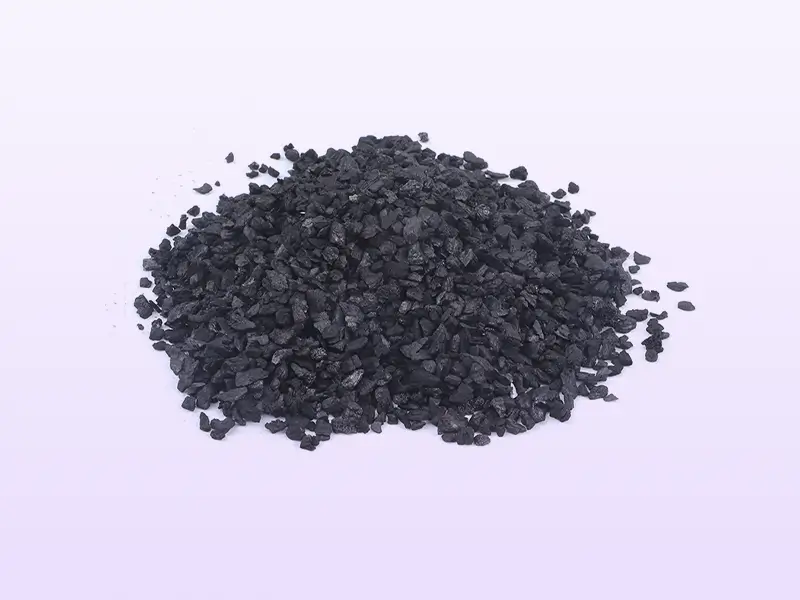
Extruded or Pelletized Carbon
Pelletized forms provide lower pressure drop and improved mechanical strength, particularly useful in specialized applications.
| Type | Advantages | Common Applications |
|---|---|---|
| Powdered | Fast adsorption | Emergency dosing |
| Granular | Reusable beds | Municipal treatment |
| Pelletized | High strength | Industrial systems |
How Is Activated Carbon Applied in Industrial and Municipal Systems?
Activated carbon is widely integrated into municipal plants, industrial water systems, ultrapure water production, and wastewater treatment processes.
Municipal systems commonly use carbon filtration after clarification stages to remove residual organics and improve water taste.
Industrial applications frequently require activated carbon to protect downstream equipment and maintain product quality.
Major Application Areas
- Drinking water treatment
- Wastewater polishing
- Food processing water
- Pharmaceutical production
- Ultrapure water preparation
- Industrial process water
What Factors Affect Activated Carbon Performance?
Adsorption performance depends heavily on carbon properties, water chemistry, operating conditions, and system design.
Even high-quality carbon may perform poorly if process parameters are not optimized.
Critical Performance Factors
Pore Structure
Micropores primarily capture small molecules, while mesopores improve transport and larger contaminant adsorption.
Contact Time
Longer residence time generally improves adsorption efficiency.
Water Temperature
Higher temperatures can reduce adsorption capacity for some compounds.
Competitive Adsorption
Multiple contaminants compete for adsorption sites, potentially reducing performance.
Particle Size
Smaller particles increase adsorption speed but may increase pressure loss.
What Are the Advantages and Limitations of Activated Carbon Filtration?
Activated carbon offers excellent contaminant removal capabilities but also has operational limitations that must be managed properly.
Advantages
- High removal efficiency
- Wide contaminant compatibility
- Improved taste and odor
- Scalable systems
- Regeneration potential
Limitations
- Finite adsorption capacity
- Replacement costs
- Limited heavy metal removal
- Potential microbial growth if unmanaged
- Performance sensitivity to water quality
How to Select Activated Carbon for Water Treatment Applications?
Selecting activated carbon requires matching pore structure, feed characteristics, contaminant profile, and operational objectives.
Improper material selection may reduce removal efficiency and increase operating costs.
Selection Checklist
- Identify target contaminants
- Evaluate influent concentration
- Determine required contact time
- Consider hydraulic conditions
- Assess regeneration requirements
- Calculate lifecycle cost
Important Technical Parameters
- Iodine number
- Surface area
- Pore volume
- Ash content
- Particle size distribution
- Hardness
Conclusion
Activated carbon remains one of the most effective and versatile technologies for water purification because of its unique adsorption properties and broad contaminant removal capabilities. From chlorine removal to advanced organic contaminant control, activated carbon supports both municipal and industrial treatment systems.
Understanding adsorption mechanisms, carbon types, operating conditions, and application requirements is essential for maximizing filtration efficiency and optimizing long-term operating costs. As water quality standards continue evolving, activated carbon will remain a core component of modern purification strategies.
For water treatment applications, selecting the appropriate activated carbon type and operating conditions is just as important as the material itself.