
How Is Granular Activated Carbon Used in Water Treatment?
Water treatment is one of the most critical industrial and municipal processes in modern society, ensuring safe drinking water, efficient wastewater management, and sustainable industrial operations. As concerns over chemical contamination, organic pollutants, unpleasant odors, and emerging contaminants continue to rise, advanced filtration technologies have become essential. Among these technologies, granular activated carbon (GAC) has become one of the most widely used and reliable materials for water purification due to its exceptional adsorption capacity and versatile performance.
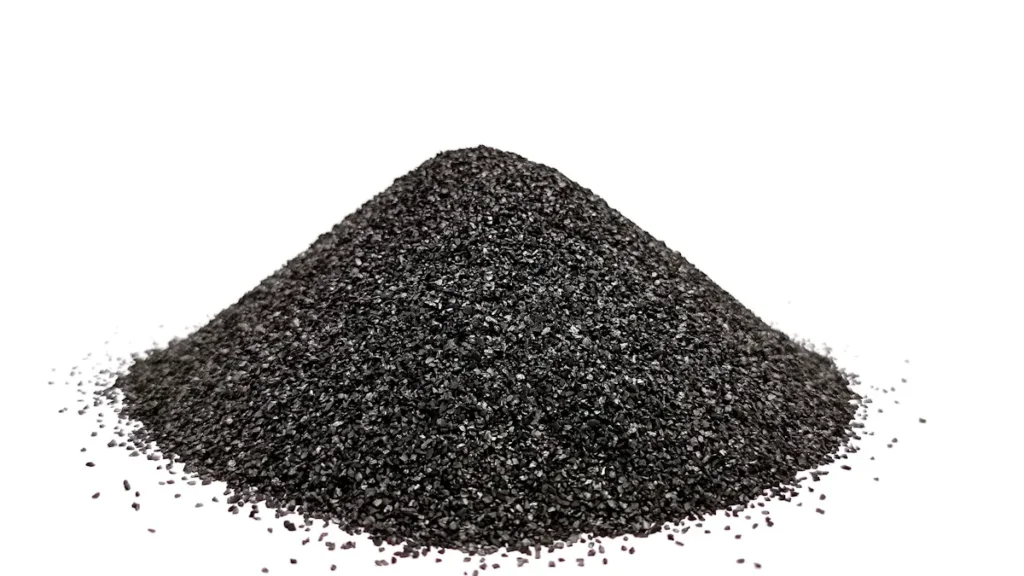
Granular activated carbon is extensively used in water treatment because it effectively removes chlorine, volatile organic compounds (VOCs), taste and odor compounds, pesticides, industrial chemicals, and a broad range of dissolved organic contaminants through physical adsorption and catalytic reduction.
Its highly porous structure, large surface area, and customizable pore distribution make GAC suitable for municipal drinking water plants, industrial process water systems, wastewater treatment facilities, and point of use filtration systems. Whether used as a primary purification medium or as part of a multi stage filtration process, GAC significantly improves water quality, protects downstream equipment, and supports compliance with strict environmental standards.
Understanding how granular activated carbon functions, where it is applied, and what advantages it offers can help businesses choose the right water treatment strategy while improving operational efficiency and sustainability.
Table of Contents
- What Is Granular Activated Carbon and Why Is It Effective in Water Treatment?
- How Does Granular Activated Carbon Remove Contaminants from Water?
- What Are the Main Applications of GAC in Different Water Treatment Systems?
- What Contaminants Can Granular Activated Carbon Remove?
- What Are the Operational Benefits of Using GAC in Water Purification?
- How Is GAC Maintained, Regenerated, and Replaced?
- What Factors Should Businesses Consider When Selecting GAC?
- Conclusion
What Is Granular Activated Carbon and Why Is It Effective in Water Treatment?
Granular activated carbon is a highly porous carbon based filtration medium designed to adsorb contaminants from water through its extensive internal surface area and optimized pore structure.
GAC is typically produced from carbon rich raw materials such as coal, coconut shells, or wood, which are thermally activated to create millions of microscopic pores. These pores dramatically increase surface area, often exceeding 500 to 1500 square meters per gram, allowing GAC to capture dissolved contaminants efficiently.
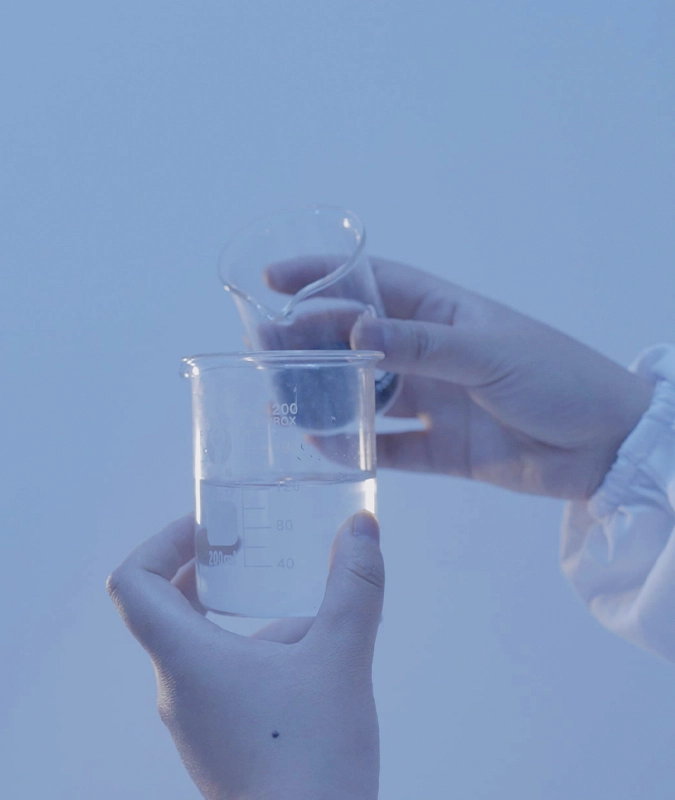
Its effectiveness in water treatment stems from several key properties:
- High adsorption capacity for organic molecules
- Large internal pore volume
- Ability to reduce chlorine and chloramines
- Removal of taste and odor causing compounds
- Compatibility with large scale filtration systems
- According to the U.S. Environmental Protection Agency (EPA), activated carbon is particularly valuable for reducing synthetic organic chemicals and disinfection byproducts in drinking water treatment.
Source: U.S. EPA Drinking Water Treatability Database
Physical Structure Advantages
The granular form provides practical operational benefits over powdered alternatives because it supports fixed bed filtration, longer contact time, and easier regeneration.
| Property | Benefit in Water Treatment |
|---|---|
| Micropores | Adsorb small organic molecules |
| Mesopores | Capture medium sized contaminants |
| Macropores | Facilitate fluid transport |
How Does Granular Activated Carbon Remove Contaminants from Water?
Granular activated carbon removes contaminants primarily through adsorption, where pollutants adhere to the carbon’s internal pore surfaces, along with catalytic reactions for certain chemicals like chlorine.
Adsorption occurs when dissolved organic molecules are attracted to the surface of GAC by Van der Waals forces. Because of the massive surface area, contaminants become trapped within the pore network.
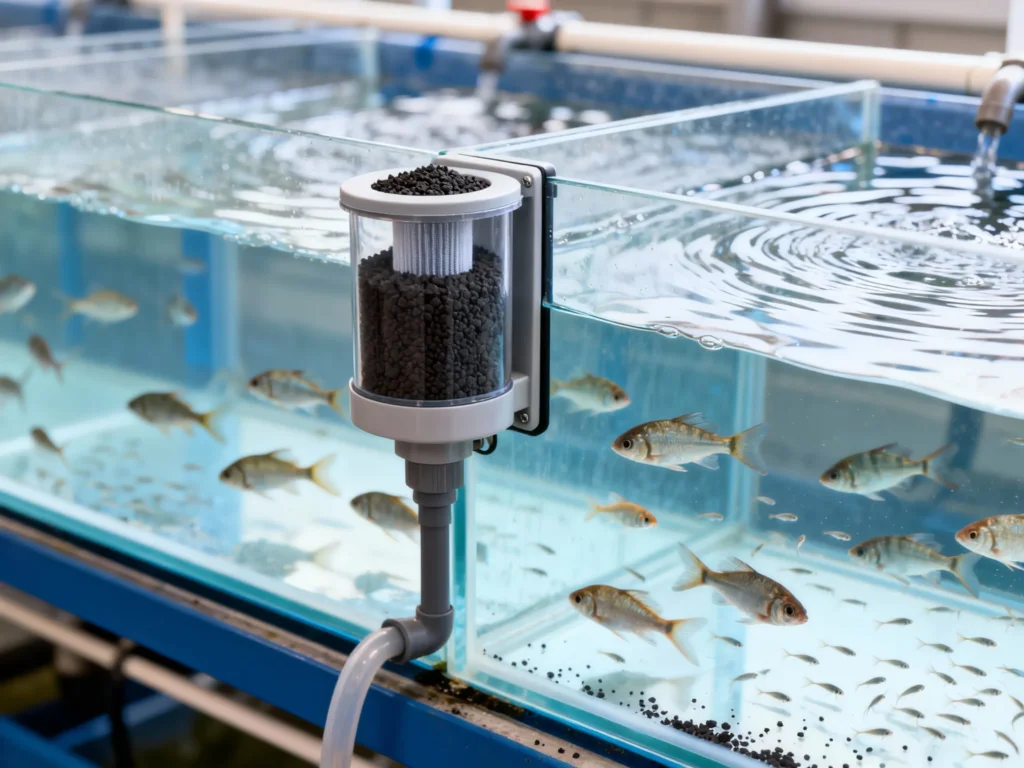
There are two major removal mechanisms:
Adsorption
This is most effective for:
- Volatile organic compounds
- Pesticides
- Herbicides
- Industrial solvents
- Taste and odor compounds
Catalytic Reduction
GAC can also chemically reduce oxidants such as:
- Free chlorine
- Chloramines
- Ozone residues
For example, in municipal systems, GAC often follows sand filtration to remove residual disinfectants and dissolved organics before final distribution.
Importance of Empty Bed Contact Time
Performance depends heavily on contact time, often measured as Empty Bed Contact Time (EBCT). Longer EBCT generally increases removal efficiency, especially for trace organic contaminants.
What Are the Main Applications of GAC in Different Water Treatment Systems?
Granular activated carbon is used across municipal, industrial, residential, and wastewater systems to improve water purity, regulatory compliance, and process reliability.
Its flexibility makes it one of the most broadly adopted filtration media globally.
Municipal Drinking Water Treatment
Municipal facilities use GAC to remove:
- Disinfection byproduct precursors
- Taste and odor compounds
- PFAS related compounds in some advanced systems
- Pesticides
Industrial Water Purification
Industries such as pharmaceuticals, food processing, electronics, and chemical manufacturing use GAC for:
- Process water purification
- Boiler feed water pre treatment
- Ultrapure water systems
- Wastewater recycling
Residential Point of Use Systems
Home filtration systems frequently incorporate GAC for better tasting, odor free water.
Wastewater Treatment
GAC polishes treated wastewater by removing residual organic compounds before discharge or reuse.
What Contaminants Can Granular Activated Carbon Remove?
Granular activated carbon is highly effective for removing a wide spectrum of organic and chemical contaminants, though its performance varies depending on molecular size, concentration, and water chemistry.
Common removable contaminants include:
| Contaminant Type | Examples |
|---|---|
| Chlorine Compounds | Free chlorine, chloramines |
| Organic Chemicals | Benzene, toluene, solvents |
| Agricultural Pollutants | Pesticides, herbicides |
| Aesthetic Compounds | Taste, odor, color |
| Industrial Pollutants | Phenols, VOCs |
However, GAC is generally less effective for dissolved salts, nitrates, and certain heavy metals unless specially modified.
Source: World Health Organization Water Safety Guidelines
What Are the Operational Benefits of Using GAC in Water Purification?
GAC offers high efficiency, operational flexibility, cost effectiveness over time, and compatibility with multiple treatment stages.
Key business advantages include:
- Long service life compared to disposable filters
- Regeneration potential reduces lifecycle cost
- Scalable for small and large systems
- Improved product water quality
- Protection for reverse osmosis membranes
For industrial users, GAC often lowers maintenance costs by reducing fouling and chemical damage to downstream equipment.
How Is GAC Maintained, Regenerated, and Replaced?
Proper maintenance of granular activated carbon involves monitoring breakthrough levels, periodic backwashing, thermal reactivation, and scheduled replacement.
Over time, adsorption sites become saturated. Once breakthrough occurs, contaminant removal declines.
Maintenance Practices
- Routine pressure drop monitoring
- Backwashing to remove particulates
- Sampling for contaminant breakthrough
- Thermal regeneration when feasible
Reactivated carbon can restore a significant portion of adsorption capacity, making it economically attractive for many industrial applications.
What Factors Should Businesses Consider When Selecting GAC?
Selecting the right granular activated carbon depends on raw material source, pore structure, contaminant profile, particle size, and system design requirements.
Important factors include:
- Iodine number
- Surface area
- Hardness
- Ash content
- Particle distribution
- Application specific contaminant targets
For example, coconut shell based GAC often performs well for low molecular weight contaminants, while coal based GAC may offer broader pore distribution.
Business Selection Strategy
Companies should evaluate:
- Water quality analysis
- Regulatory requirements
- Flow rate needs
- Budget and regeneration options
Conclusion
Granular activated carbon remains one of the most effective and widely adopted technologies in modern water treatment due to its exceptional adsorption performance, adaptability, and cost efficiency. From municipal drinking water systems to industrial purification and wastewater polishing, GAC plays a critical role in removing organic contaminants, chlorine compounds, and odor causing substances while improving water safety and operational performance.
For businesses seeking reliable water purification solutions, selecting the correct GAC grade, system design, and maintenance strategy is essential for maximizing treatment efficiency and long term return on investment. As water quality standards continue to evolve, granular activated carbon will remain a cornerstone technology for sustainable and high performance water treatment systems.
Sources:
U.S. Environmental Protection Agency Drinking Water Treatability Database
World Health Organization Guidelines for Drinking Water Quality
American Water Works Association Water Treatment Principles and Practices