

You can make soil better in farming by using activated carbon. Farmers get more crops and healthier plants. Activated carbon makes soil stronger and keeps water in the soil. It helps take away bad things like pesticides and heavy metals. Studies show activated carbon helps farming last longer and stops nutrients from leaving the soil.
Nutrient Type | Loss Rate Decrease (%) | Proportion of Activated Carbon |
|---|---|---|
Nitrate Nitrogen (NO3−–N) | High | Increasing |
Ammonium Nitrogen (NH4+–N) | High | Increasing |
Available Phosphorus (PO43−–P) | High | Increasing |
Available Potassium (K+) | Lower | Increasing |
Activated carbon keeps more nutrients in the soil and makes soil better.
You stop nutrients from leaving and help plants grow.
Key Takeaways
Activated carbon makes soil better by keeping water and nutrients. This helps plants grow stronger.
Using activated carbon means you need less synthetic fertilizer. This saves money and helps the environment.
Activated carbon takes out bad chemicals from soil. This makes it safer for crops and nature.
Adding activated carbon can help more seeds sprout and crops grow. Farms become healthier and produce more food.
Using activated carbon helps farmers use good farming methods. This keeps soil and the environment healthy for a long time.
Activated Carbon In Agriculture
Soil Structure And Fertility
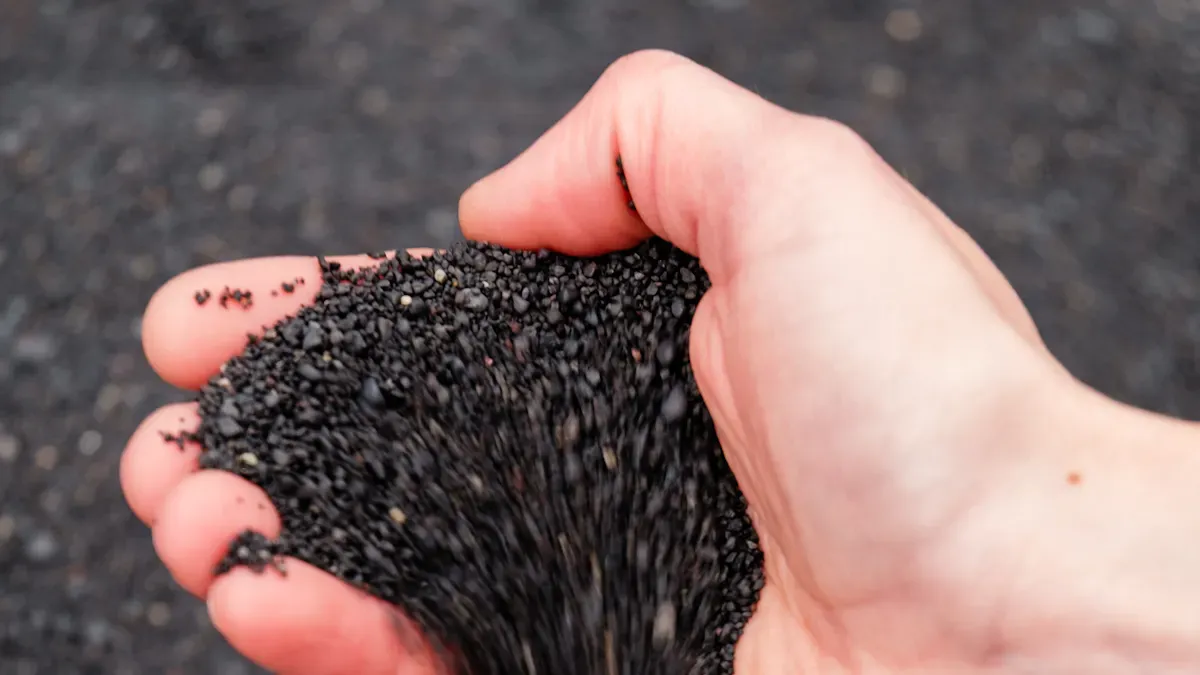
Activated carbon can help your soil. It has a big surface area. This lets it hold many things. Granular activated carbon makes soil less packed. It helps soil stay loose and airy. Roots can grow deeper and stronger. Plants get more water because soil keeps moisture.
Activated carbon helps soil fertility in different ways:
It grabs and holds bad things like pesticides and heavy metals.
It gives homes to good microbes and keeps away things that hurt them.
It keeps nutrients in the soil so they do not wash away.
Farming tests show these effects. Activated carbon takes in toxins. You need less synthetic fertilizer. Soil stays healthy and fertile longer. Granular activated carbon also helps soil hold important minerals.
Mechanism | Effect |
|---|---|
Soil Structure Improvement | Activated carbon makes soil less dense and improves structure. |
Nutrient Enhancement | Has nutrients that help soil fertility. |
Cation Exchange Capacity | Holds mineral elements, keeping nutrients in soil. |
Granular activated carbon makes soil better for all crops. Roots grow well. Nutrients stay in place. Soil stays healthy.
Pollutant Removal
Activated carbon helps remove bad things from soil. Granular activated carbon traps pesticides, herbicides, and chemicals. Its big surface area lets it grab lots of harmful stuff. This protects crops and soil.
Granular activated carbon holds toxins on its surface. It stops chemicals from touching plant roots. It keeps them out of water sources. This keeps soil safe and plants healthy.
You can see how activated carbon works by looking at adsorption capacity. Khalas seeds have a maximum adsorption capacity of 165 mg/g. This is 71% compared to commercial activated carbon. Granular activated carbon cleans soil well.
Seed Type | Maximum Adsorption Capacity (mg/g) | Comparison to Commercial Activated Carbon (%) |
|---|---|---|
Khalas | 165 | 71% |
Other Types | Varies | N/A |
Better ways to make granular activated carbon help even more. These ways use physical, chemical, and microwave methods. You get more pollutant removal and better results.
Tip: Granular activated carbon protects soil and crops from harmful chemicals. This helps you grow healthy plants and keeps your farm safe.
Activated carbon is a strong tool for soil and pollutant removal. It helps farming last longer and keeps crops safe.
Crop Growth And Yield
Seed Germination
You can help seeds sprout and grow by using activated carbon in soil. Activated carbon grabs harmful chemicals and plant inhibitors. This lets seeds grow faster and stronger. It also stops some soil diseases by trapping root exudates. These exudates can wake up bad spores. Seeds get a better start, so you see more healthy seedlings.
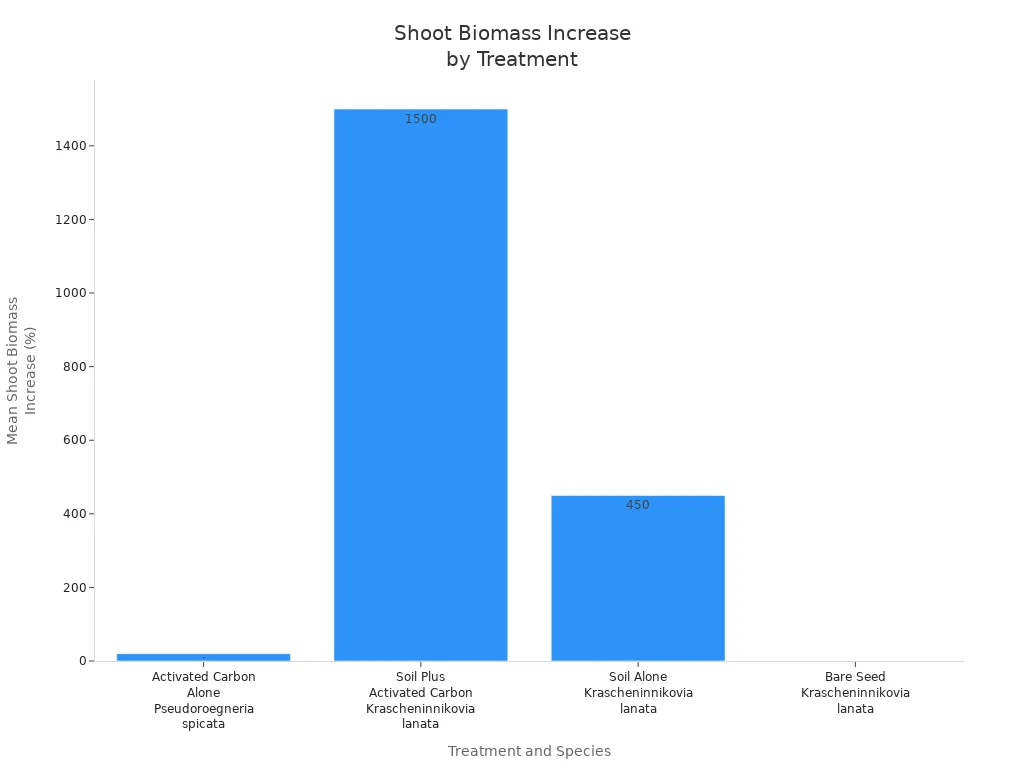
Research shows activated carbon helps seed germination a lot. For example, adding activated carbon to soil makes shoot biomass go up for some plants. The table below shows how different treatments change shoot and root growth:
Treatment Type | Species | Mean Shoot Biomass Increase | Mean Root Biomass Increase |
|---|---|---|---|
Activated Carbon Alone | Pseudoroegneria spicata | 20% | N/A |
Soil Plus Activated Carbon | Krascheninnikovia lanata | 1500% | N/A |
Soil Alone | Krascheninnikovia lanata | 450% | N/A |
Bare Seed | Krascheninnikovia lanata | 0% | 0% |
Activated Carbon Alone | Krascheninnikovia lanata | N/A | Greater than Bare Seed |
Soil Plus Activated Carbon | Pseudoroegneria spicata | N/A | Greater than Bare Seed |
Tip: Activated carbon can help your seeds sprout faster and grow stronger. This means you get better crop growth.
Plant Health And Quality
Activated carbon does more than help seeds. It also makes plants healthier all season. Plants get stronger and fight off stress and disease better. Activated carbon grabs bad chemicals and keeps nutrients in the soil. This means crops get what they need to grow well.
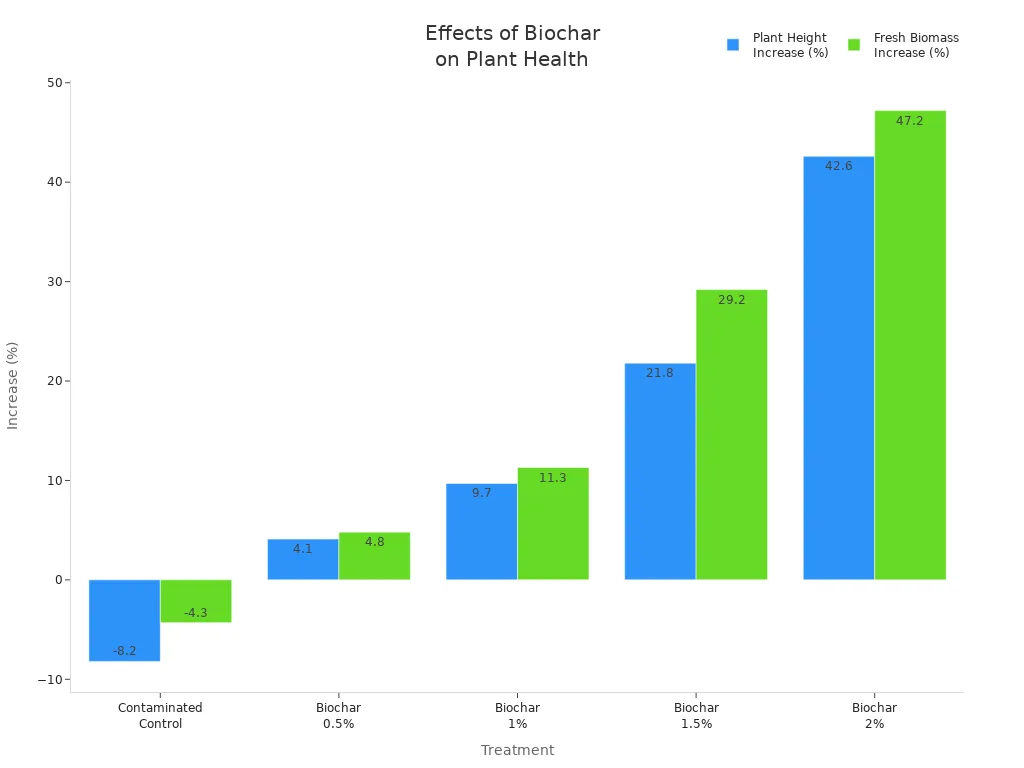
You can see this in the table below. When you add more activated carbon (biochar), plants get taller and have more fresh weight. Soil nutrients like nitrogen, phosphorus, and potassium also go up.
Parameter | Contaminated Control | Biochar 0.5% | Biochar 1% | Biochar 1.5% | Biochar 2% |
|---|---|---|---|---|---|
Plant Height Increase (%) | -8.2% | 4.1% | 9.7% | 21.8% | 42.6% |
Fresh Biomass Increase (%) | -4.3% | 4.8% | 11.3% | 29.2% | 47.2% |
Soil N Increase (%) | N/A | N/A | N/A | N/A | 75.0% |
Soil P Increase (%) | N/A | N/A | N/A | N/A | 14.7% |
Soil K Increase (%) | N/A | N/A | N/A | N/A | 30.8% |
Activated carbon also helps crops fight diseases like Fusarium wilt. It keeps soil healthy and holds nutrients for plants. This leads to better crop yield and quality.
Note: Activated carbon gives plants a strong base for growth. It helps you get higher crop yield and better quality.
The table below shows why activated carbon works so well:
Factor | Description |
|---|---|
Makes soil structure better, adds air, and keeps water because it has many tiny holes (50-80%). | |
Crop Growth Promotion | Helps seeds sprout and boosts crop yield and quality. You can see big jumps in growth numbers. |
Nutrient and Water Retention | Holds nutrients and stops them from washing away. This lets you use fertilizer better. |
Environmental Remediation | Grabs heavy metals and bad chemicals, making soil better and helping farms stay healthy. |
Activated carbon helps you grow better crops, improve quality, and get more from your farm.
Water And Nutrient Retention
Water Conservation
You can help your farm keep more water in the soil with activated carbon. This material has a big surface and lots of tiny holes. These holes let it hold water for a long time. When you add activated carbon, the soil stays wet even on dry days. Wood activated carbon is best for holding water for many days. If you use more activated carbon, you get better results.
The table below shows how water stays in the soil longer:
Evidence Type | Findings | Time Frame |
|---|---|---|
Water Retention | Water stays in soil longer with activated carbon, especially wood type. | 37 to 187 days |
Saturated Water Content | More activated carbon means more water in soil, most with wood type. | 7 to 187 days |
Tip: Activated carbon helps your soil stay wet. This helps your plants grow during dry weather.
Nutrient Loss Prevention
Activated carbon helps keep nutrients in your soil. Its surface grabs and holds nutrients like nitrate, ammonium, and phosphorus. You lose fewer nutrients when you use activated carbon. This means your plants get more food to grow strong.
Studies show activated carbon lowers nutrient loss. The table below shows how much less you lose:
Nutrient Type | Reduction (%) |
|---|---|
Total Phosphate | 20.6% |
Nitrate | 34% |
Ammonium | 34.7% |
Nitrate Leaching (Peanut Shell Biochar) | 34% |
Ammonium Leaching (Peanut Shell Biochar) | 14% |
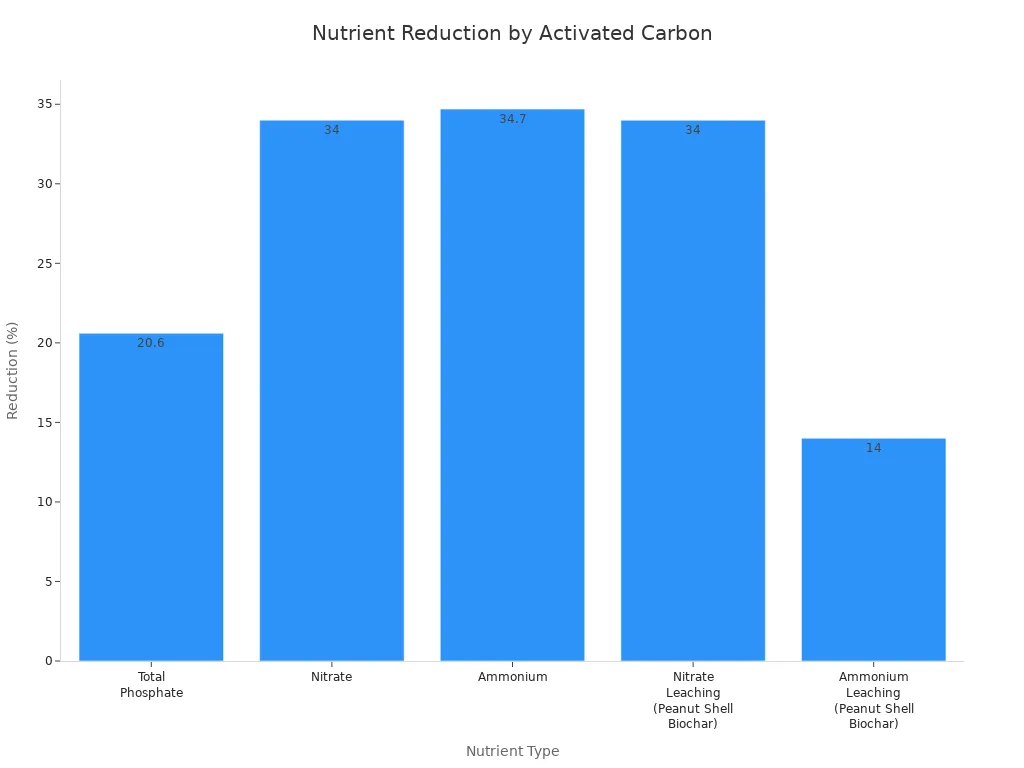
Activated carbon uses its special surface to stop nutrients from washing away. Its surface is negative, so it holds cations like ammonium better than anions. Modified activated carbon can grab nutrients in other ways too. Potassium does not stick as well because it cannot make hydrogen bonds with the surface.
Note: Activated carbon protects your soil and keeps nutrients for your crops. This helps your plants grow better and gives you more crops.
Environmental Remediation
Heavy Metal And Toxin Adsorption
Activated carbon can keep your soil safe from heavy metals and toxins. It has a big surface that grabs and holds bad things. When you put activated carbon in your field, it acts like a sponge. It traps metals and chemicals that can hurt your crops. This is important because new farm rules say soil must be clean and safe.
Small particle activated carbon works best with organic fertilizers.
It locks up heavy metals, so crops take in less copper and zinc.
It also helps break down antibiotics in the soil, so they are less harmful.
Using activated carbon helps your farm stay healthy and grow well. Clean soil means safer food and better crops.
Note: Activated carbon helps farming last longer by keeping bad things away from your plants.
Sustainable Farming Practices
Activated carbon does more than just clean the soil. It helps you make your farm last longer. When you add activated carbon, it changes how soil organisms and plants work together. This helps native plants grow and stops invasive plants from spreading.
Activated carbon changes the mix of microbes in the soil to help native plants.
It lowers the number of invasive species, so your fields are easier to care for.
These changes in plant growth come from new soil communities, not just blocking chemicals.
When you use activated carbon, you help your farm stay healthy for a long time. Your soil gets better, and your farm stays balanced. This helps you reach your farming goals and keeps your land good for many years.
Tip: Activated carbon is a smart way to get a cleaner and better farm.
Specialized Applications
Anther Culture
Activated carbon can help anther culture in plant labs. This process lets you grow new plants from pollen. Activated carbon keeps the culture medium clean. It helps embryos form and grow. It stops browning and toxic compounds. You get healthier young plants.
Researchers tried different mixes in anther culture. The table shows their results:
Treatment Combination | Embryo Numbers | Embryogenesis Percentages | Regenerated Plantlets |
|---|---|---|---|
NBC + NEAA (16.66 mg L⁻¹) | 5–5.6 | 50–56% | 4.2–4.5 |
NEAA (33.33 mg L⁻¹) + NBC | Highest Regeneration Percentage | N/A | N/A |
Studies found activated carbon helps in many ways:
Study | Findings |
|---|---|
Kim, Lee & Na (2020) | Activated carbon helps make anther embryos. |
Luz et al. (1999) | Activated carbon makes anther culture work better. |
Pan and van Staden (1998) | Activated carbon lowers oxidation and browning. |
Chutipaijit and Sutjaritvorakul (2018) | Activated carbon helps callus and plant growth in rice. |
Lambe et al. (1999) | Activated carbon helps somatic embryos in pearl millet. |
Buter et al. (1993) | Activated carbon boosts anther culture in maize. |
Dumas and Monteuuis (1995) | Activated carbon helps plants grow and regenerate. |
Biddington, Sutherland & Robinson (1988) | Activated carbon increases anther embryo formation. |
Liang et al. (2006) | Activated carbon with AgNO3 lowers anther browning. |
Tip: Activated carbon can help you get more healthy plants in your lab.
Innovative Uses
Activated carbon has new uses in modern farming. Farmers and scientists use it to fix problems and help farms last longer.
Activated carbon makes soil healthier.
It helps crops grow more.
You need less fertilizer and water.
It lowers greenhouse gas emissions.
Activated carbon stores CO₂ from the air.
It grabs pollutants like pesticides and heavy metals.
Some farms use activated carbon made from orange peels. This cleans water and helps manage waste. The table shows how these uses work:
Application Area | Description |
|---|---|
Environmental Remediation | Activated carbon from orange peel cleans water and wastewater. |
Waste Management | Orange peel waste turns into activated carbon, so less waste is thrown away. |
Economic Benefits | Activated carbon adds value to farm leftovers and helps the circular economy. |
Note: Activated carbon can help your farm be cleaner, greener, and more productive.
You can make your farm better with activated carbon. It helps soil get stronger and keeps water and nutrients safe. Activated carbon removes bad chemicals and helps the environment.
Activated carbon holds water in soil and helps good microbes live.
It helps crops grow bigger and healthier.
You lose less water and nutrients from your soil.
It helps plants breed faster and cleans up the environment.
Benefit Type | Description |
|---|---|
Soil Health | Makes soil better and easier to manage. |
Carbon Sequestration | Stores carbon and helps slow climate change. |
Water Quality Improvement | Makes water cleaner and fixes water cycles. |
Biodiversity Conservation | Brings more kinds of life to soil and uses less fertilizer. |
New ideas let you use activated carbon again and again. This helps your farm and also helps the earth.
FAQ
What is activated carbon and how does it help your soil?
Activated carbon is a special form of carbon with many tiny holes. You can add it to soil to hold water, keep nutrients, and trap harmful chemicals. This helps your plants grow stronger and healthier.
Can you use activated carbon with any crop?
Yes, you can use activated carbon with most crops. It works well in vegetable gardens, fruit orchards, and grain fields. You may see better root growth and higher yields.
How much activated carbon should you add to your soil?
You should start with a small amount, like 1–2% by weight of your soil. You can adjust the amount based on your soil type and crop needs. Always mix it well for best results.
Does activated carbon reduce the need for fertilizer?
Yes, activated carbon helps keep nutrients in the soil. You may use less fertilizer because your plants can access more of what they need. This saves you money and helps the environment.
Is activated carbon safe for organic farming?
You can use activated carbon in organic farming. It does not add harmful chemicals to your soil. Always check that your activated carbon comes from natural sources and meets organic standards.