
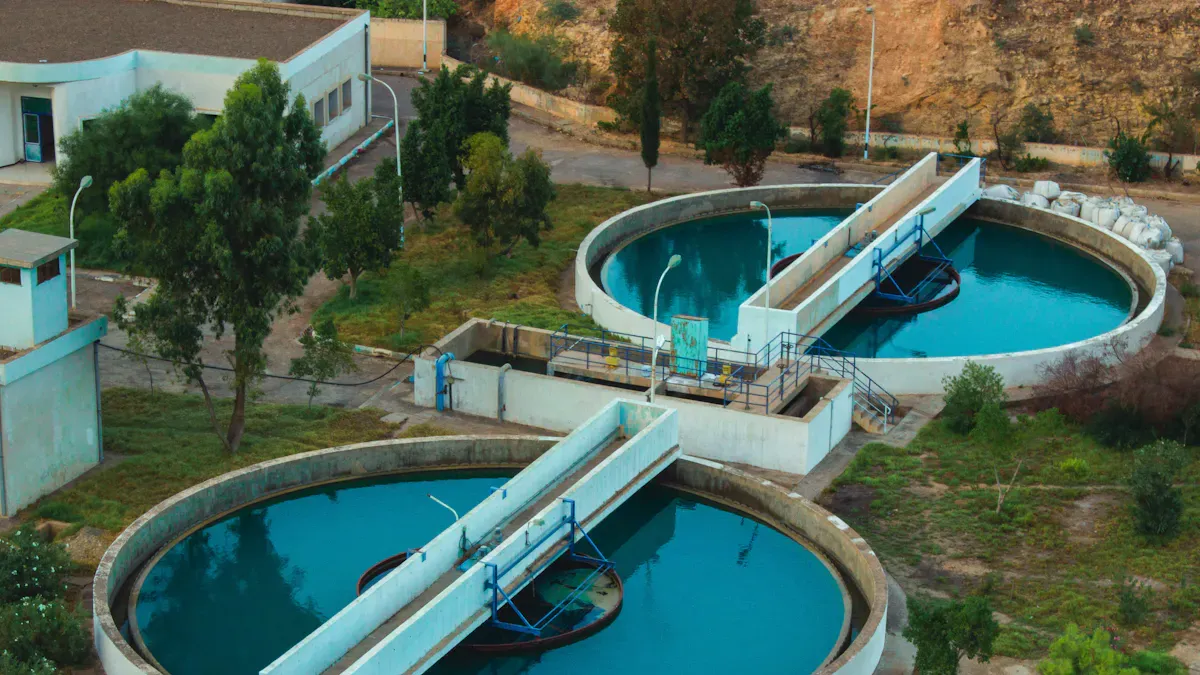
You rely on activated carbon during desalination to remove harmful contaminants from water. Activated carbon helps you achieve better water quality and protects membranes from damage. You can choose cost-effective alternatives that deliver reliable results. Many facilities now use advanced options like super activated carbon and biomass-derived activated carbon to further improve performance. Activated carbon stands out as an essential tool for desalination.
Key Takeaways
Activated carbon effectively removes harmful contaminants from seawater, ensuring cleaner water and protecting your desalination system.
Using activated carbon during pre-treatment extends the lifespan of reverse osmosis membranes, reducing maintenance costs and improving efficiency.
Super activated carbon enhances water quality by capturing smaller particles and trace chemicals, making desalinated water taste and smell better.
Biomass-derived activated carbon offers an eco-friendly option for desalination, supporting sustainability while effectively reducing total dissolved solids.
Choosing the right type of activated carbon, such as granular or powdered, can optimize performance based on specific water treatment needs.
Activated Carbon Role In Desalination
Contaminant Removal
You depend on activated carbon to remove a wide range of contaminants during desalination. This material works especially well in granular form. It traps organic compounds, heavy metals, and even microbiological contaminants from seawater. For example, granular activated carbon can achieve over 99% removal of chemical oxygen demand. It also lowers the levels of metals like zinc, copper, and cadmium. When you use activated carbon, you also see a big drop in total and fecal coliforms. This means you get cleaner water and reduce the risk of harmful bacteria. Super activated carbon offers even higher adsorption capacity, making it a strong choice for advanced desalination systems. You can rely on these materials to keep your water safe and your system running smoothly.
Water Quality Improvement
Activated carbon plays a key role in improving water quality at different stages of desalination. You see the benefits both before and after the main treatment process. In the pretreatment stage, activated carbon removes chlorine and organic matter. This step protects your reverse osmosis membranes and helps lower the silt density index. Cleaner feed water means fewer problems later. After desalination, activated carbon improves taste and removes odors. This is important when you treat brackish water or recycled water for drinking. Super activated carbon can further enhance these results by capturing even smaller particles and trace chemicals.
Here is a table showing how activated carbon helps at each stage:
Stage | Benefits |
|---|---|
Pretreatment | Removes chlorine, adsorbs organic matter, improves silt density index, reduces fouling |
Post-treatment | Enhances taste, removes odors, eliminates trace organics and chloroform |
You can also expect activated carbon to lower total dissolved solids and improve the overall drinking experience. When you use super activated carbon, you boost desalination efficiency and get even better water quality.
Membrane Protection
You need to protect your reverse osmosis membranes to keep your desalination system working well. Activated carbon acts as a shield. It removes chlorine and chloramines, which can damage membranes. It also adsorbs organic compounds that cause fouling and scaling. This protection extends the lifespan of your equipment and lowers maintenance costs. Super activated carbon and other advanced forms provide even stronger defense against harmful substances.
Tip: Using activated carbon as a pre-treatment step helps you avoid expensive repairs and downtime. It keeps your system efficient and reliable.
Biological activated carbon goes a step further. It uses both adsorption and microbial action to reduce organic content. This process lowers the risk of biofouling and supports sustainable operations. When you focus on membrane protection, you improve desalination performance and make removing salt from water more cost-effective.
Activated carbon gives you a powerful tool for every stage of desalination. You can count on it to remove contaminants, improve water quality, and protect your system. Super activated carbon and other advanced options help you meet strict standards and achieve better results.
Benefits Of Activated Carbon
Odor And Taste Removal
You notice a big difference in water quality when you use activated carbon in desalination. This material adsorbs trace contaminants that slip through reverse osmosis membranes. It removes residual organic matter and eliminates odors that often come from water storage systems. You get water that tastes better and smells fresher. Activated carbon works in the post-treatment phase to make desalinated water more appealing for drinking. You can rely on it to improve the overall experience for users and ensure that water meets high standards.
Salt Ion Adsorption
You depend on activated carbon to boost salt adsorption capacity during desalination. This material attracts and holds salt ions, helping lower total dissolved solids in treated water. You see this effect in both traditional and advanced systems. Activated carbon supports the removal of salt ions, making water safer for consumption and industrial use. You achieve better desalination performance when you combine activated carbon with other technologies. This process helps you meet strict water quality targets and reduces the need for extra chemical treatments.
Tip: Activated carbon helps you cut energy demands and chemical use in desalination. You protect your equipment and lower operational costs.
Protects reverse osmosis membranes from degradation by removing chlorine and chloramines.
Adsorbs organic compounds that cause fouling, enhancing system efficiency.
Reduces maintenance needs and extends equipment lifespan, leading to lower operational costs.
Enhanced Performance In CDI
You improve desalination results when you use activated carbon in the capacitive deionization method. This material removes humic acid and other organic matter, reducing fouling on CDI electrodes by about 40%. You also see better electrical conductivity because activated carbon forms electrical double layers. This process decreases internal resistance and optimizes capacitance. You get more efficient salt removal and longer-lasting equipment.
Here is a table showing how activated carbon enhances CDI systems:
Contribution of Activated Carbon | Description |
|---|---|
Adsorption of Organic Matter | Activated carbon effectively removes humic acid (HA), reducing fouling on CDI electrodes by about 40%. |
Improved Electrical Conductivity | The presence of activated carbon enhances the conductivity of the CDI system by forming electrical double layers (EDLs). |
Reduced Internal Resistance | Activated carbon decreases the internal resistance of the CDI system, optimizing capacitance and overall performance. |
You support sustainable desalination operations when you use activated carbon. This material protects membranes, improves water quality, lowers maintenance, and decreases chemical use. You also cut energy demands, making your system more eco-friendly.
Benefit | Description |
|---|---|
Protects RO membranes | Removes chlorine and chloramines to prevent degradation of membranes. |
Reduces fouling | Adsorbs organic compounds that can cause fouling, enhancing system efficiency. |
Improves water quality | Enhances taste and odor in treated water. |
Lowers maintenance | Reduces fouling and maintenance needs, extending equipment lifespan. |
Decreases chemical use | Supports sustainable operations by minimizing the need for additional chemicals. |
Cuts energy demands | Contributes to lower energy requirements in the desalination process. |
You gain many advantages when you use activated carbon in desalination. You improve water quality, boost salt adsorption capacity, and enhance the performance of the capacitive deionization method. You also make your operations more sustainable and cost-effective.
Desalination Process Stages
Pre-Treatment With Activated Carbon
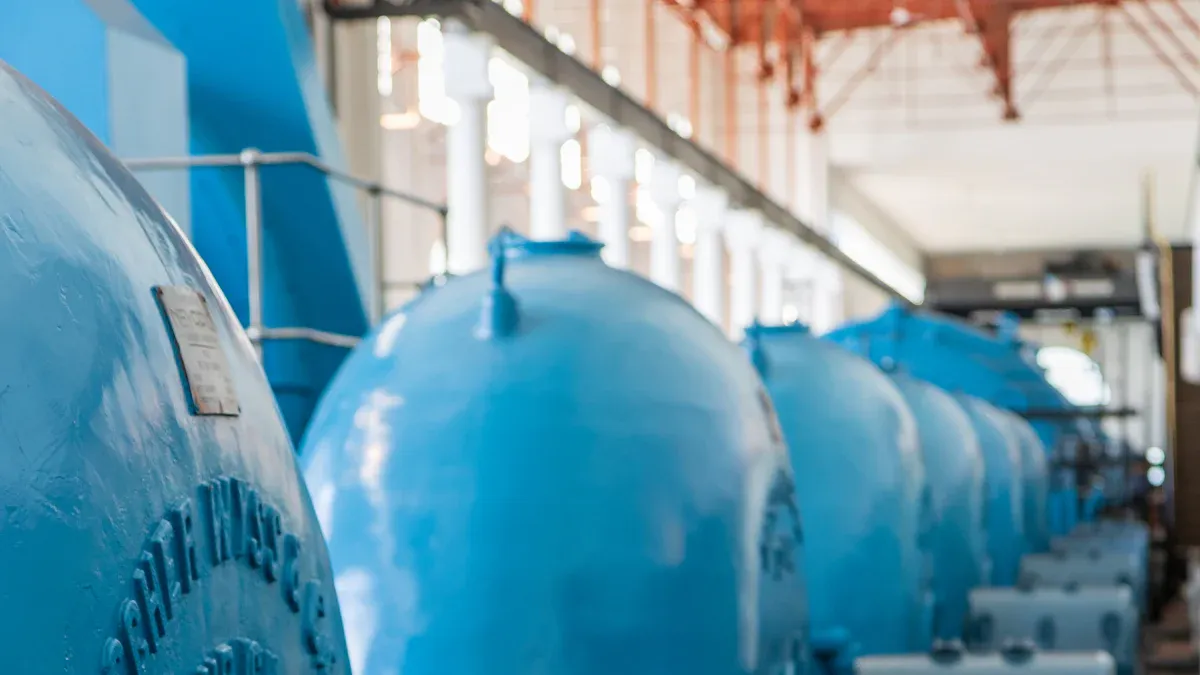
You start the desalination process by preparing feedwater. Activated carbon plays a vital role in this stage. You use it to remove residual chlorine and adsorb organic matter. This step protects your reverse osmosis membranes and boosts desalination efficiency. You see fewer problems with fouling and scaling. Activated carbon helps you lower total dissolved solids before the main desalination step.
You can adjust ozone dosage and contact time to improve salt adsorption capacity. Here is a table showing typical values:
Ozone Dosage (g/m³) | Contact Time (min) |
|---|---|
3 | 10 |
10 | 20 |
6.03 | 20 |
You achieve better desalination performance when you optimize these parameters. You also notice that activated carbon works well with brackish water, making it easier to treat challenging sources.
Tip: Pre-treatment with activated carbon extends membrane life and reduces maintenance costs. You get more reliable operation and higher water quality.
Post-Treatment Applications
After the main desalination step, you use activated carbon for post-treatment. This stage ensures your water meets strict drinking standards. You rely on activated carbon to enhance the removal of pesticides and disinfection byproducts. You also improve salt adsorption capacity, which helps polish the water and make it safer.
You often use granular activated carbon for this purpose. It removes taste- and odor-producing compounds, natural organic matter, and volatile organic compounds. You see that upstream oxidation followed by activated carbon adsorption controls disinfection byproduct concentrations. Biological activity on activated carbon leads to microbial degradation, which further improves water quality.
You benefit from pre-ozonation, which converts larger organic compounds into smaller, more biodegradable molecules. This process increases the efficiency of activated carbon. You produce high-quality water with low total dissolved solids, ready for drinking or industrial use.
Note: Post-treatment with activated carbon ensures compliance with water standards and delivers water that tastes and smells fresh.
You use activated carbon at both pre-treatment and post-treatment stages. This approach maximizes salt adsorption capacity and improves desalination efficiency. You achieve consistent results and protect your system from contaminants.
Activated Carbon Types
Granular Activated Carbon
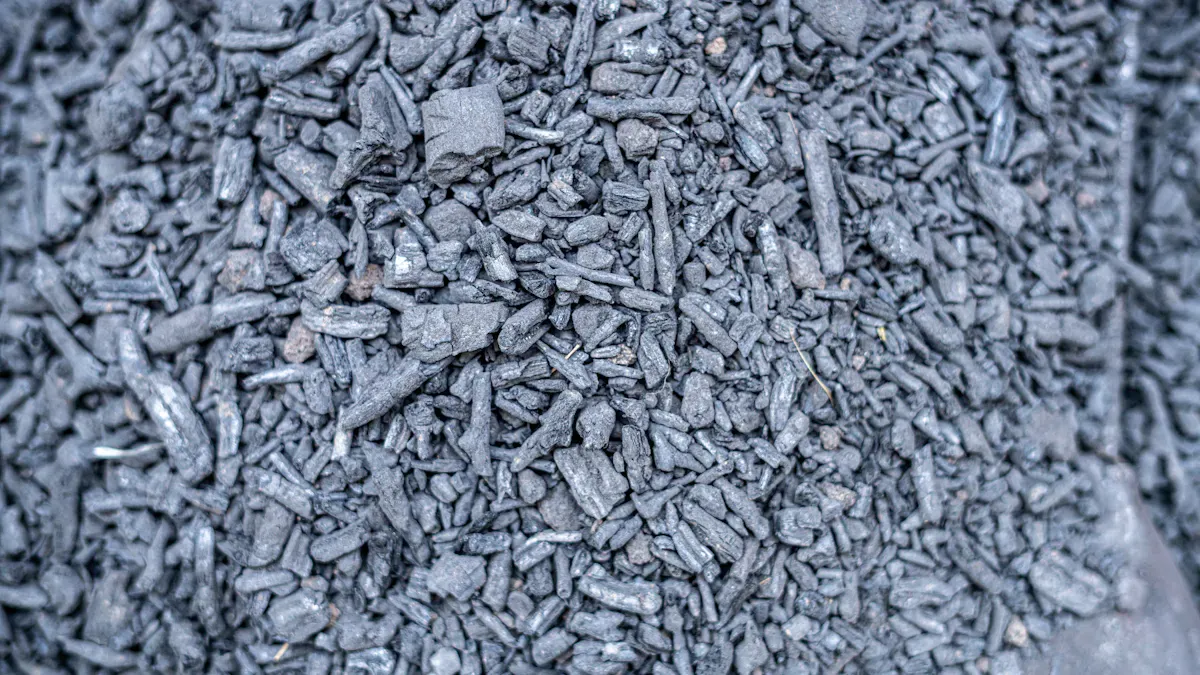
You use granular activated carbon in desalination to remove contaminants and improve water quality. This type works well for both pre-treatment and post-treatment. Granular activated carbon has a broad carbon usage rate, which lets you adjust it for different water sources. You see large variations in adsorption capacity, but it handles a wide range of organic compounds. Powdered activated carbon offers better removal efficiency for individual compounds and uses a lower dosage. It helps you retain smaller particles in seawater and boosts microfiltration performance. You remove organic matter, odors, and residual chlorine, which protects your membranes.
Parameter | Granular Activated Carbon | Powdered Activated Carbon |
|---|---|---|
Carbon Usage Rate | <28 to 230 mg/L | 15–20 mg/L |
Adsorption Capacity Variation | Large variation | Better for individual compounds |
Removal Efficiency | Variable | 95% removal with fresh dose |
Powdered activated carbon improves pretreatment efficiency.
You remove more organic matter and odors with powdered activated carbon.
Super Activated Carbon
You choose super activated carbon for advanced desalination systems. This material has a super-hydrophilic nature, which enhances water interaction and absorption. You benefit from high water absorption capacity and a fast water absorption rate. The unique honeycomb structure helps you reject salt and remove volatile organic compounds. Super activated carbon increases salt adsorption capacity and lowers total dissolved solids. You get reliable results and improve desalination efficiency.
Property | Description |
|---|---|
Super-hydrophilic nature | Enhances water interaction and absorption |
High water absorption capacity | Effective uptake of water, improving desalination efficiency |
Fast water absorption rate | Quick processing of water |
Honeycomb structure | Facilitates salt rejection and VOC removal |
Tip: Super activated carbon gives you high adsorption capacity and boosts salt adsorption capacity in desalination.
Activated Carbon Cloth
You use activated carbon cloth for specialized desalination needs. This material offers flexibility and fast adsorption. You can customize it for specific contaminants. Activated carbon cloth works well in compact systems and helps you remove trace organics. You see improved salt adsorption capacity and lower total dissolved solids. You protect your membranes and achieve better water quality.
Biomass-Derived Activated Carbon
You select biomass-derived activated carbon for eco-friendly desalination. This material comes from renewable sources and supports sustainability. You manage waste by converting biomass into valuable activated carbon. Ongoing research improves production efficiency and quality. Biomass-derived activated carbon absorbs solar energy, which helps you lower total dissolved solids and boost salt adsorption capacity.
Environmental Benefit | Description |
|---|---|
Sustainability | Recognized for its sustainable nature compared to coal-based methods |
Waste Management | Converts biomass into valuable activated carbon |
Efficiency Improvements | Research aims to enhance production efficiency and quality consistency |
Solar Energy Absorption | High porosity and light absorption capabilities |
Note: You can customize activated carbon types for your desalination system. Eco-friendly options help you meet sustainability goals.
You gain many benefits when you use activated carbon in desalination. This material gives you:
Effective removal of contaminants
Versatile options for different systems
Eco-friendly choices for sustainability
Consider testing different types to find the best fit for your needs. You can improve water quality and protect your equipment with the right solution.
FAQ
What does activated carbon do in desalination?
You use activated carbon to remove harmful chemicals and organic matter from water. This step helps you get cleaner water and protects your equipment during desalination.
Can you reuse activated carbon after desalination?
You can sometimes reuse activated carbon by cleaning it. However, you should replace it when it loses its ability to absorb contaminants. Always check the manufacturer’s guidelines for best results.
Is activated carbon safe for drinking water?
You can trust activated carbon to make water safer. It removes many unwanted substances and improves taste. Many water treatment plants use it to meet safety standards.
How do you choose the right type of activated carbon?
You should look at your water source and the contaminants you want to remove. Granular, powdered, and cloth forms each work best for different needs. Ask a water treatment expert for advice.
Does activated carbon remove salt from water?
You should know that activated carbon does not remove most salts. It works best for organic compounds and some chemicals. For salt removal, you need other desalination methods.