
You need a reliable solution for biogas purification. Activated Carbon stands out because it removes harmful compounds like hydrogen sulfide, which can damage engines and pipelines. This process protects your equipment and keeps your workplace safe. Studies show that over 99% of hydrogen sulfide can be removed, which leads to cleaner energy and lower maintenance costs. You also benefit from higher production efficiency and longer equipment life.
Key Takeaways
Activated carbon effectively removes harmful gases like hydrogen sulfide, ensuring safer biogas and protecting your equipment.
Using activated carbon can increase biogas production by up to 32%, enhancing energy efficiency and profitability.
Regularly monitor and replace activated carbon to maintain optimal purification performance and prevent equipment damage.
Activated carbon is versatile and can be used for various biogas sources, making it a reliable choice for purification.
Choosing the right type of activated carbon, such as granular or pelletized, can improve the effectiveness of your biogas system.
Activated Carbon In Biogas Purification
Purification Role
You need a dependable way to clean your biogas. Activated Carbon stands out as a leading technology for this job. It works by trapping harmful gases and chemicals on its surface. The material has a high porosity and a large surface area, which means it can hold many contaminants at once. This makes it more effective than other purification methods. You can use activated carbon made from different sources, including agricultural waste, and still get strong results.
Activated carbon systems keep working well even when humidity changes. Some chemical scrubbers lose efficiency in wet conditions, but activated carbon does not. You can rely on it to remove hydrogen sulfide and carbon dioxide, which are two of the most common and harmful contaminants in biogas.
Here is a quick look at how activated carbon removes key pollutants:
Mechanism | Description |
|---|---|
Removal of Siloxanes | Activated carbon captures siloxanes, stopping them from forming silicon dioxide during combustion. This protects your engines and equipment. |
Removal of Hydrogen Sulphide (H2S) | Granular activated carbon converts H2S into elemental sulfur. This makes your biogas safer to use. |
Activated carbon also removes ammonia. This step is important because ammonia can cause corrosion and damage to catalysts in your system. By using activated carbon, you protect your equipment and keep your operation running smoothly.
Impact On Biogas Quality
When you use activated carbon, you improve the quality of your biogas. The removal of hydrogen sulfide is especially important. Hydrogen sulfide is highly corrosive and can damage pipes, engines, and other infrastructure. By taking it out, you make your biogas safer and more reliable.
Activated carbon also helps you get a higher energy content from your biogas. Cleaner gas means better performance in engines and turbines. You can use the purified biogas for more applications, such as injecting it into the grid or using it as vehicle fuel.
Activated carbon removes harmful trace contaminants before the biogas enters the upgrading system.
This pre-treatment step extends the life of your equipment and ensures efficient operation.
You get high-quality biomethane that meets strict standards for energy use.
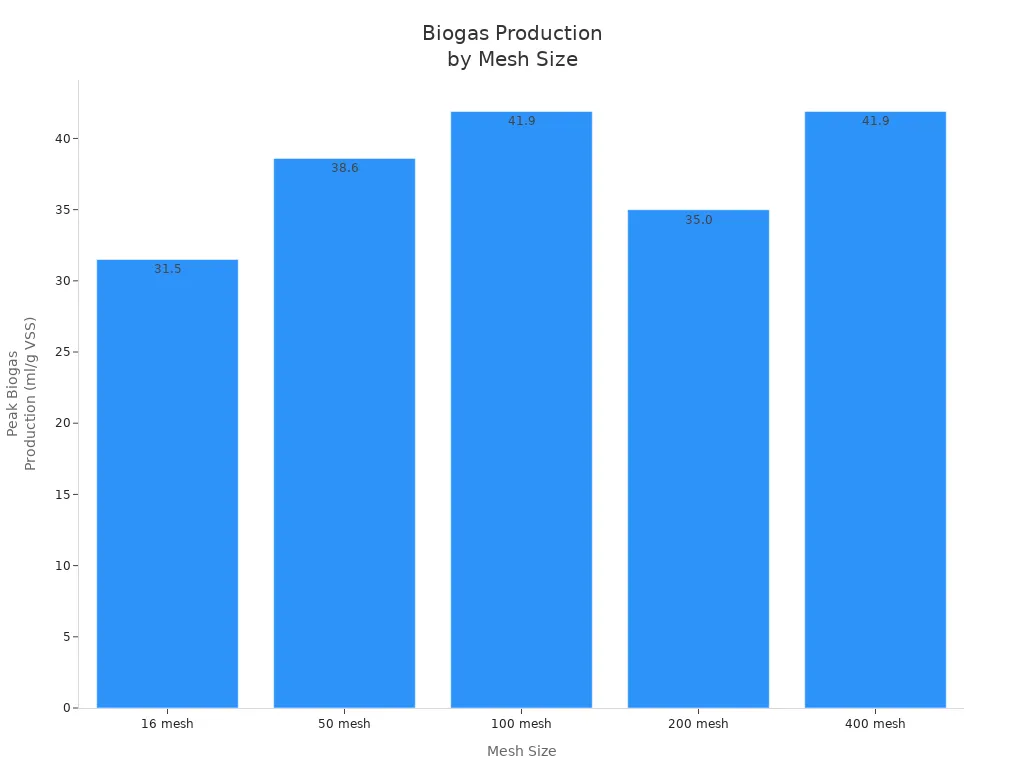
You can see the effect of activated carbon on biogas production in the chart below. Different mesh sizes of activated carbon lead to different levels of gas production. Finer mesh sizes tend to give you higher peak production and better daily efficiency.
Activated carbon gives you a simple, reliable, and effective way to upgrade your biogas. You get cleaner energy, safer operations, and better performance from your system.
Biogas Contaminants
Raw biogas contains several contaminants that you need to remove for safe and efficient use. These impurities can harm your equipment and pose health risks. The most common contaminants in biogas include:
Siloxanes
Ammonia (NH₃)
Volatile organic compounds (VOCs)
Halocarbons
Water vapor
Hydrogen Sulfide (H2S)
Hydrogen sulfide is one of the most dangerous impurities in biogas. You often find it in concentrations ranging from 50 to 10,000 parts per million (ppm). If you use manure digesters, H₂S levels can reach between 0.1% and 0.4%. This gas is highly toxic and can damage your respiratory system. It also irritates your eyes, nose, and throat. H₂S is very corrosive. It can eat away at engines, pipelines, and other metal parts. If you do not remove it, you risk costly repairs and unsafe working conditions.
Tip: Always monitor H₂S levels in your biogas system to protect both your health and your equipment.
Siloxanes And Organics
Siloxanes are another group of harmful contaminants. You usually find them in biogas from wastewater treatment plants, with average levels around 2.55 ppm. These compounds come from products like detergents and cosmetics. When you burn biogas containing siloxanes, they turn into silicon dioxide. This forms hard deposits inside engines and turbines. Over time, these deposits can cause overheating, abrasion, and even engine failure. You may need to clean or replace parts more often if siloxanes are present.
Contaminant | Source | Impact on Equipment |
|---|---|---|
Siloxanes | Detergents, cosmetics | Silicon dioxide deposits, abrasion |
Organics | Industrial waste, landfill gas | Corrosion, catalyst poisoning |
Why Removal Is Critical
You must remove contaminants like hydrogen sulfide and siloxanes to keep your biogas system safe and efficient. H₂S can cause severe corrosion and health problems. Siloxanes can damage engines and increase maintenance costs. By cleaning your biogas, you improve its heating value and make sure it meets quality standards for use in engines, boilers, or for grid injection. Removing these impurities helps you avoid equipment failure, reduce downtime, and ensure safe energy production.
Contaminant Removal Mechanisms
When you use activated carbon to clean biogas, two main processes work together: chemisorption and physisorption. These processes help you remove harmful gases and keep your system safe.
Chemisorption
Chemisorption happens when a chemical reaction takes place on the surface of activated carbon. You can think of it as the carbon “grabbing” a contaminant and changing it into something safer. For example, when hydrogen sulfide (H₂S) touches the activated carbon, it reacts and forms elemental sulfur. This reaction locks the sulfur onto the carbon, so it cannot harm your equipment.
Key facts about chemisorption:
You get strong, permanent bonds between the contaminant and the carbon.
Chemisorption works best for gases like hydrogen sulfide and ammonia.
The process does not reverse easily, so the contaminant stays trapped.
Tip: You should check your activated carbon regularly. When it fills up with sulfur, you need to replace or regenerate it to keep your system working well.
Physisorption
Physisorption works differently. Here, the activated carbon attracts contaminants using weak forces, like magnets pulling metal. The gas molecules stick to the surface of the carbon, but no chemical reaction happens. This method works well for removing siloxanes, volatile organic compounds (VOCs), and other trace gases.
Mechanism | How It Works | Best For |
|---|---|---|
Chemisorption | Chemical reaction on carbon surface | H₂S, ammonia |
Physisorption | Physical attraction, no reaction | Siloxanes, VOCs, halides |
You can rely on physisorption for fast and efficient removal of many contaminants. The process is simple and does not need extra chemicals or energy.
Note: If you want the best results, you should use activated carbon with a large surface area. This gives more space for contaminants to stick.
By understanding these two mechanisms, you can choose the right activated carbon and keep your biogas clean and safe.
Types Of Activated Carbon

When you choose a purification system, you need to know the different types of activated carbon. Each type works best for certain biogas applications. You can match the right type to your needs for better results.
Granular Activated Carbon (GAC)
Granular activated carbon comes in small, loose grains. You often see it in fixed-bed filters. The grains have a large surface area, so they trap many contaminants. You can use GAC for removing hydrogen sulfide, siloxanes, and volatile organic compounds. GAC is easy to handle and replace. You can pour it into filter vessels or columns without special tools.
Tip: You should check the color and smell of GAC to know when it needs replacement. Spent GAC often turns yellow or gray.
Main benefits of GAC:
High adsorption capacity
Simple installation and replacement
Good for high-flow systems
Pelletized Activated Carbon
Pelletized activated carbon comes in uniform cylindrical shapes. You find it in systems where you need low dust and high mechanical strength. The pellets allow air and gas to flow smoothly. This type works well in pressure swing adsorption and deep-bed filters. You can use pelletized carbon for both small and large biogas plants.
Feature | Benefit |
|---|---|
Low dust | Cleaner operation |
Strong pellets | Less breakage |
Uniform shape | Even gas distribution |
Specialty Grades
You can also choose specialty grades for unique needs. These grades have special coatings or additives. Some remove specific contaminants like mercury or ammonia. Others work better in wet conditions or at high temperatures. Specialty grades help you solve tough purification problems.
Note: Ask your supplier about specialty grades if you have unusual contaminants or harsh operating conditions.
You can improve your biogas purification by picking the right type of activated carbon for your system.
Benefits Of Activated Carbon
Efficiency And Purity
You want your biogas system to run smoothly and produce clean energy. Activated carbon helps you reach high levels of gas purity. It removes more than 99% of hydrogen sulfide, which means you get biogas that meets strict quality standards. You can use activated carbon made from agricultural waste, which works well and supports sustainability.
You achieve high removal rates for hydrogen sulfide and other harmful gases.
You keep your biogas free from odors and toxic compounds.
You support environmental goals by using eco-friendly purification materials.
When you use activated carbon, you do not need complex equipment or harsh chemicals. The process is simple and reliable. You can trust it to deliver consistent results, even when the biogas composition changes.
Safety And Corrosion Protection
You need to keep your equipment safe and your workplace healthy. Hydrogen sulfide is toxic and can cause serious health problems. It also damages engines, pipelines, and other metal parts. Removing this gas is critical for safe biogas use.
You protect your team from exposure to dangerous gases.
You prevent corrosion in engines, turbines, and pipelines.
You reduce the risk of costly repairs and downtime.
Activated carbon acts as a shield for your system. It traps corrosive gases before they can reach your equipment. You get peace of mind knowing your biogas plant is safer and more reliable.
Production Enhancement
You want to get the most energy from your biogas plant. Activated carbon does more than just clean the gas. It can boost your biogas production by improving the efficiency of your system. Studies show that adding granular activated carbon to digesters can increase biogas output by up to 32%.
Type of Carbon Used | Improvement Percentage |
|---|---|
Granular Activated Carbon | 78% |
Switchgrass Biochar | 72% |
Ashe Juniper Biochar | 71% |
Straw Digestate Biochar | 32% |
Biochar from Holm Oak Residues | 5% |
Powdered Activated Carbon | 108% |
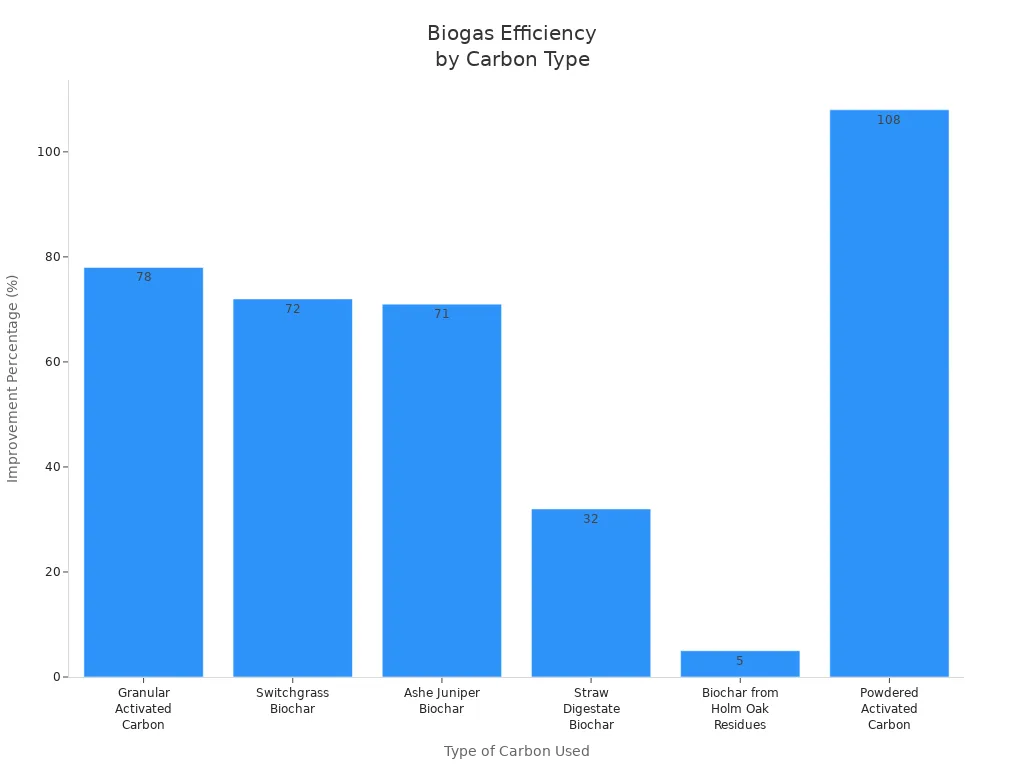
You can see that different types of carbon materials lead to different levels of improvement. Granular activated carbon and powdered activated carbon show the highest gains. Even a 32% increase in production can make a big difference for your operation.
Using activated carbon helps you get more energy, reduce waste, and lower your costs. You make your biogas plant more efficient and profitable.
You gain many advantages when you use activated carbon for biogas purification.
Advantage | Description |
|---|---|
Removes harmful gases for safer biogas | |
Lower operational costs | Saves money and reduces waste |
Extended equipment life | Protects engines and pipelines from corrosion |
Enhanced biogas quality | Improves gas for grid injection and energy use |
Purifying biogas keeps your system safe and efficient.
Removing impurities like H₂S and CO₂ boosts methane content and meets strict standards.
Activated carbon technology increases biogas production and supports reliable operations.
You can trust activated carbon as the best solution for biogas treatment.
FAQ
What is activated carbon?
Activated carbon is a special material with many tiny pores. You use it to trap and remove harmful gases from biogas. It works like a sponge for contaminants.
How often should you replace activated carbon?
You should check your system regularly. Replace the activated carbon when you see a drop in purification performance or when the carbon changes color.
Can you use activated carbon for all types of biogas?
Yes, you can use activated carbon for biogas from landfills, wastewater plants, and farms. It works well for many sources and removes a wide range of contaminants.
Is activated carbon safe for the environment?
Activated carbon is safe. You can use grades made from renewable materials. After use, you can often regenerate or recycle it, which reduces waste.
How do you know when activated carbon is spent?
You may notice more odors or higher contaminant levels in your biogas. You can also test the carbon or watch for color changes to know when to replace it.