
You can rely on activated carbon for industrial waste gas treatment because it captures harmful substances from the air. This material removes pollutants like volatile organic compounds, hydrogen sulfide, sulfur dioxide, ammonia, formaldehyde, and mercury. Many industries, such as chemical engineering and electronics, use activated carbon to keep the air clean. You help your facility meet strict environmental standards and improve industrial air treatment by using this technology. Activated carbon stands out in air treatment for its high removal rates and proven effectiveness.
Key Takeaways
Activated carbon effectively captures harmful pollutants from industrial air, helping facilities meet environmental standards.
The unique porous structure of activated carbon allows it to trap a wide range of gases, making it a versatile choice for air treatment.
Industries like chemical manufacturing and power plants rely on activated carbon to improve air quality and remove toxic emissions.
Different forms of activated carbon, such as honeycomb and impregnated types, cater to specific industrial needs for enhanced pollutant removal.
Using activated carbon not only cleans air but also plays a crucial role in treating industrial wastewater, promoting overall environmental health.
Activated carbon in waste gas treatment
How adsorption works
You can use activated carbon to clean industrial air because of its unique structure. This material has many tiny pores. These pores come in different sizes: micropores, mesopores, and macropores. The large surface area and well-developed pore structure help activated carbon trap many types of gases. When you pass waste gases through activated carbon, the molecules stick to the surface. This process is called adsorption.
Adsorption works well for industrial air treatment because it captures both large and small molecules. The molecular sieve effect lets activated carbon select which gases to trap based on their size. For example, micropores can confine small molecules, making the process more efficient. The specific surface area and pore size also play a big role. If the size of the gas molecules matches the pore diameter, you get better results. Higher concentrations of pollutants can also increase the amount of adsorption.
Note: Activated carbon adsorption is especially effective for non-polar gases like VOCs. It works less well for polar chemicals such as ammonia and hydrogen sulfide. Still, the overall performance in industrial waste gas treatment is strong, especially compared to other waste gas technologies.
Pollutants removed by activated carbon
You can rely on activated carbon to remove a wide range of contaminants from industrial air. The table below shows some of the main pollutants that activated carbon targets in industrial air treatment:
Pollutant Type | Description |
|---|---|
Dioxins | Carcinogenic compounds with strong environmental persistence, posing long-term health threats. |
Acidic gases | Includes sulfur dioxide (SO₂) and hydrogen chloride (HCl), harmful to health and the environment. |
Heavy metals | Such as mercury (Hg) and lead (Pb), known for bioaccumulation and high toxicity. |
Organic pollutants | Incompletely burned compounds that may contain carcinogenic and teratogenic substances. |
You can also use activated carbon for the removal of VOCs, hydrogen sulfide, ammonia, formaldehyde, and other harmful emissions. These pollutants often come from chemical plants, power stations, and other factories. Activated carbon helps you meet air treatment standards and protect the environment.
Activated carbon stands out in industrial air treatment because it can handle many types of contaminants at once. You get high removal rates for VOCs, acidic gases, and heavy metals. This makes activated carbon a top choice for controlling emissions and improving air quality in your facility.
Why choose activated carbon
Key properties and benefits
You can count on activated carbon for industrial air treatment because of its unique features. This material has a highly porous structure and a large surface area. These qualities let it capture many types of pollutants through adsorption. You get high efficiency and adaptability when you use activated carbon in your facility.
Porous structure allows for high adsorption capacity.
Large surface area helps trap more contaminants.
Customizable forms fit different industrial needs.
Effective at removing VOCs, odors, and hazardous gases.
The porosity and surface area of activated carbon play a big role in how well it removes pollutants. Studies show that the right activation methods and surface modifications can boost adsorption performance. You can see removal rates as high as 98% for certain pollutants.
Activated carbon also works well for both physical and chemical adsorption. This means you can remove a wide range of harmful substances from the air. You help your facility meet strict standards and reduce emissions.
Comparison with other technologies
You have several options for air treatment, but activated carbon stands out for its efficiency and flexibility. When you compare it to other waste gas treatment methods, you see some clear differences.
Feedstock | Raw Material Cost ($/ton) | Energy Use | Surface Area (m²/g) | Key Advantage |
|---|---|---|---|---|
Cotton Waste | $0–$50 | Lower | Up to 1,370 | Abundant, low-cost byproduct |
Coconut Shells | $100–$200 | Higher | 900–1,200 | High performance |
Wood | $50–$150 | Moderate | 500–1,500 | Readily available |
Coal | $80–$200 | Highest | 800–1,500 | Proven industrial reliability |
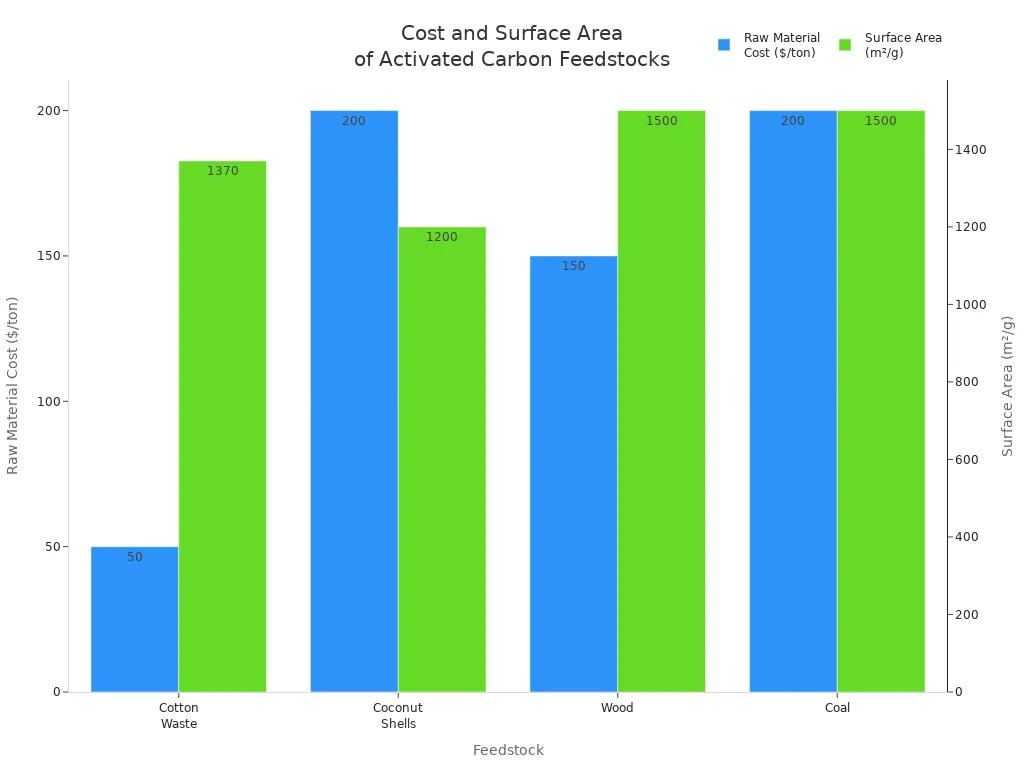
You can achieve pollutant removal rates greater than 90% for many organic pollutants with activated carbon. Advanced oxidative processes also remove toxic substances, but activated carbon offers a simple and reliable solution. Some types, like PET-based activated carbon, even help reduce emissions in a sustainable way.
Using waste-based activated carbon saves resources and energy. This method uses materials that would otherwise become waste, making it a smart choice for the environment.
You get a cost-effective, adaptable, and powerful tool for air treatment when you choose activated carbon.
Industrial applications
Air purification uses
You can find activated carbon in many industries that need clean air. This material works well in chemical plants, power plants, food processing, and natural gas processing. Each industry uses activated carbon to remove harmful gases and improve air quality. The process relies on adsorption, where pollutants stick to the surface of the carbon.
Here is how different industries use activated carbon for air purification:
Industry | Application Description |
|---|---|
Chemical Manufacturing | Removes oil vapors, odors, and hydrocarbons from the air. |
Power Plants | Captures mercury and other harmful substances from coal-fired emissions. |
Food Processing | Improves air quality by removing contaminants and odors. |
Natural Gas Processing | Purifies gases by eliminating impurities and enhancing air quality. |
You also see activated carbon in electronics factories, spray painting workshops, and smelting plants. It helps remove organic waste gases like benzene, toluene, and xylene, as well as acidic and alkaline gases such as hydrogen sulfide and phosgene. Municipal waste management centers use it for deodorization. The high adsorption capacity makes it a top choice for industrial air treatment.
Tip: Catalytic activated carbon can even convert some harmful gases into less dangerous substances, making your air treatment system more effective.
Wastewater treatment role
Activated carbon does more than clean the air. You can use it to treat industrial wastewater as well. The same adsorption process removes organic compounds, heavy metals, and some inorganic substances from water. This helps you meet strict environmental regulations and keeps water quality stable.
Removes up to 90% of certain contaminants.
Works well for industries that need reliable clean water.
Prevents pollution of soils and drinking water sources.
Activated carbon plays a dual role in pollution control. You get cleaner air and water, which protects both the environment and public health.
Forms of activated carbon
You can choose from several forms of activated carbon for industrial air treatment. Each type has special features that make it useful for different situations. The main forms include powdered, granular, pelletized, honeycomb, and columnar types. You also find specialized options like impregnated activated carbon.
Honeycomb and columnar types
Honeycomb activated carbon stands out for its unique structure. You see it shaped like a honeycomb, which gives it a large surface area and low resistance to airflow. This design helps you achieve efficient adsorption of pollutants in large-scale, continuous systems. Honeycomb modules are easy to replace or regenerate, so you spend less time on maintenance and reduce long-term costs.
Columnar activated carbon, also called cylindrical or pelletized, works well in smaller or intermittent systems. You might pick this type when you want flexibility and lower initial costs. It is easy to handle and produces less dust, making it a good choice for many air treatment setups.
Tip: Honeycomb activated carbon is best for high-load, long-term adsorption in tough industrial environments. Columnar types suit short-term or localized treatment where you need quick changes.
You benefit from these forms because they offer high adsorption capacity, strong mechanical strength, and can be customized for your needs.
Impregnated activated carbon
Impregnated activated carbon is a special type that you use when you need to target specific pollutants. Manufacturers treat this carbon with chemicals like sulfur, potassium hydroxide, or silver. These agents boost the carbon’s ability to capture gases such as hydrogen sulfide, mercury, and other toxic emissions.
You can see the different impregnation agents and their uses in the table below:
Type of Impregnation Agent | Specific Examples | Applications |
|---|---|---|
Metal impregnated | Silver, Copper, Manganese | Antibacterial, pollutant adsorption, redox reactions |
Acid and alkali impregnated | Sodium hydroxide, Phosphoric acid | Adsorption of acidic and alkaline gases |
Oxidant impregnated | Potassium permanganate, Hydrogen peroxide | Adsorption and oxidation of organic compounds |
Composite impregnated | Potassium iodide with Sodium hydroxide | Removal of complex pollutants |
You get better results in industrial air treatment when you use impregnated activated carbon for challenging gases. This form helps you meet strict air quality standards and keeps your facility safe.
You see the importance of pollution control growing as urban air quality worsens and emission standards become stricter. Industries rely on new forms and enhanced impregnation techniques to improve filtration and adsorption. Metal nanoparticles and polymer coatings boost removal efficiency and expand the range of contaminants you can target.
Air filters and water treatment solutions are in high demand due to health awareness and regulatory compliance.
Reactivation processes make filtration more sustainable and cost-effective.
Cleaner air and water help protect public health and support sustainable practices.
You help your facility meet environmental goals and ensure a safer workplace by choosing advanced filtration solutions.
FAQ
What is activated carbon made from?
You find activated carbon made from coconut shells, wood, coal, or even waste materials. Manufacturers heat these materials to create a network of tiny pores. This process gives activated carbon its strong adsorption power.
How often should you replace activated carbon filters?
You should check your filters every few months. Replace them when you notice a drop in performance or increased odors. Heavy use or high pollution may require more frequent changes.
Tip: Always follow the manufacturer’s guidelines for best results.
Can activated carbon remove all types of industrial gases?
Activated carbon removes many gases, like VOCs and sulfur compounds. Some gases, such as very polar chemicals, may need special treatment. You can use impregnated activated carbon for better results with tough pollutants.
Is activated carbon safe for the environment?
Yes, you can use activated carbon safely. It does not release harmful substances during use. You can also recycle or reactivate it, which helps reduce waste and supports green practices.