
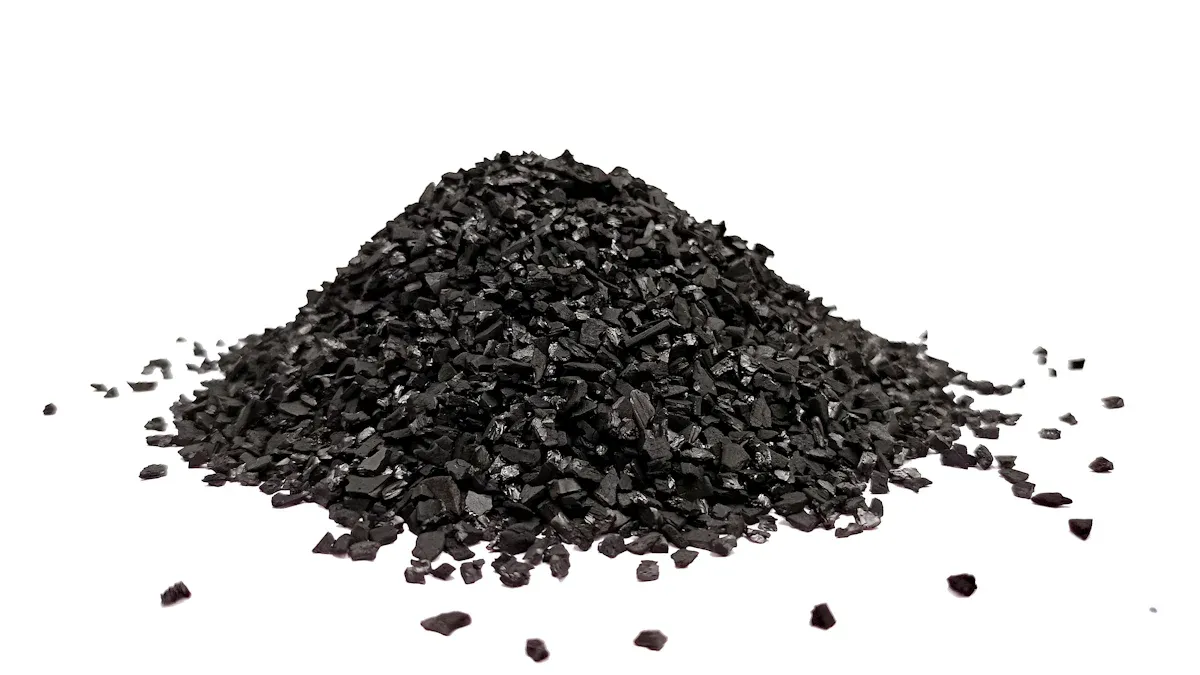
You use coal based activated carbon in many important ways because it works well for cleaning and purifying. This material helps you make water safe to drink, improves air quality, removes odors, and keeps products pure in food, beverage, and industrial settings.
Application Area | Description |
|---|---|
Removes organic compounds, chlorine, and contaminants for clean drinking water. | |
Air Purification | Removes VOCs, odors, and pollutants to improve indoor air quality. |
Industrial Processes | Purifies and recovers chemicals and solvents in many industries. |
Food and Beverage | Decolorizes and purifies products like sugar and oils for better quality. |
Pharmaceuticals | Purifies drugs to meet safety standards. |
You see growing demand for coal-based activated carbon because people want cleaner water and air. The market is getting bigger every year as more industries need high-quality purification products.
Key Takeaways
Coal-based activated carbon effectively purifies water by removing harmful substances, making it essential for safe drinking water.
This material improves air quality by capturing pollutants and odors, making it a key component in air purification systems.
Industries use coal-based activated carbon for its versatility, including applications in food processing, pharmaceuticals, and chemical recovery.
Activated carbon’s unique structure allows it to adsorb a wide range of contaminants, enhancing its effectiveness in various purification processes.
Choosing coal-based activated carbon can save costs for large-scale applications while providing reliable purification solutions.
Coal Based Activated Carbon Overview
What is Coal-Based Activated Carbon
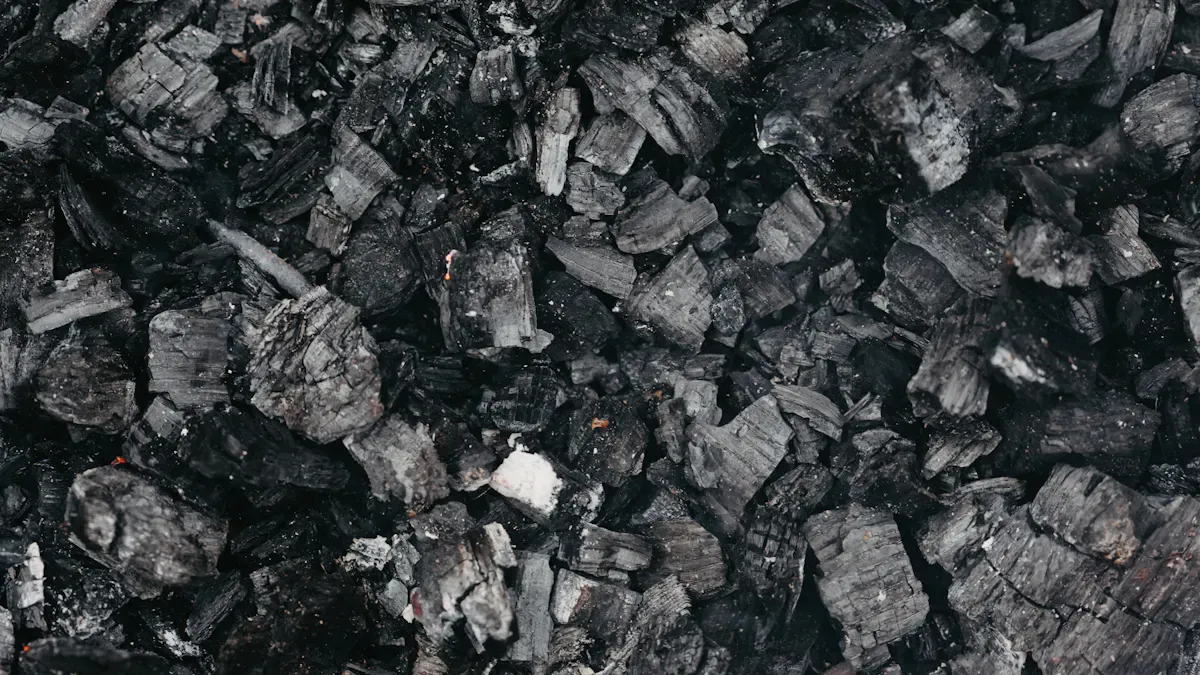
You find coal-based activated carbon in many industries because it works as a powerful adsorbent. Manufacturers create this material from high-grade bituminous coal. They heat the coal at temperatures between 600 and 900 degrees Celsius in an oxygen-free environment. This process, called carbonization, removes volatile compounds and leaves behind a char material. Next, they activate the char with steam at even higher temperatures, up to 1100 degrees Celsius. This step forms millions of tiny pores inside the carbon, giving it a huge internal surface area—sometimes up to 1500 square meters per gram.
The structure of coal-based activated carbon includes graphitic plates connected by carbon-carbon bonds. These plates form a network of pores. This network allows the material to attract and trap many types of molecules. You benefit from this unique structure when you need to remove contaminants from water, air, or chemicals. The high carbon content and loss of impurities during production make it especially effective for purification.
Key Properties and Forms
Coal based activated carbon stands out because of its physical and chemical properties. The two-step heating process creates a microporous structure. Micropores help adsorb small molecules, while larger pores allow fluids to reach the adsorption sites quickly. The specific surface area and pore volume determine how much material the carbon can adsorb. Smaller particle sizes, such as 0.15–0.25 mm, offer higher surface areas and pore volumes, making them more effective for many uses.
You can choose from several forms of coal-based activated carbon, depending on your needs:
Powdered Activated Carbon (PAC)
Pellets
Each form works best for different applications. For example, GAC is common in water treatment, while PAC is often used for quick mixing and removal of impurities. Pellets are useful in air purification systems. This versatility makes coal based activated carbon a popular choice for industries that require reliable purification solutions.
Main Uses of Coal Based Activated Carbon
Water Purification and Wastewater Treatment
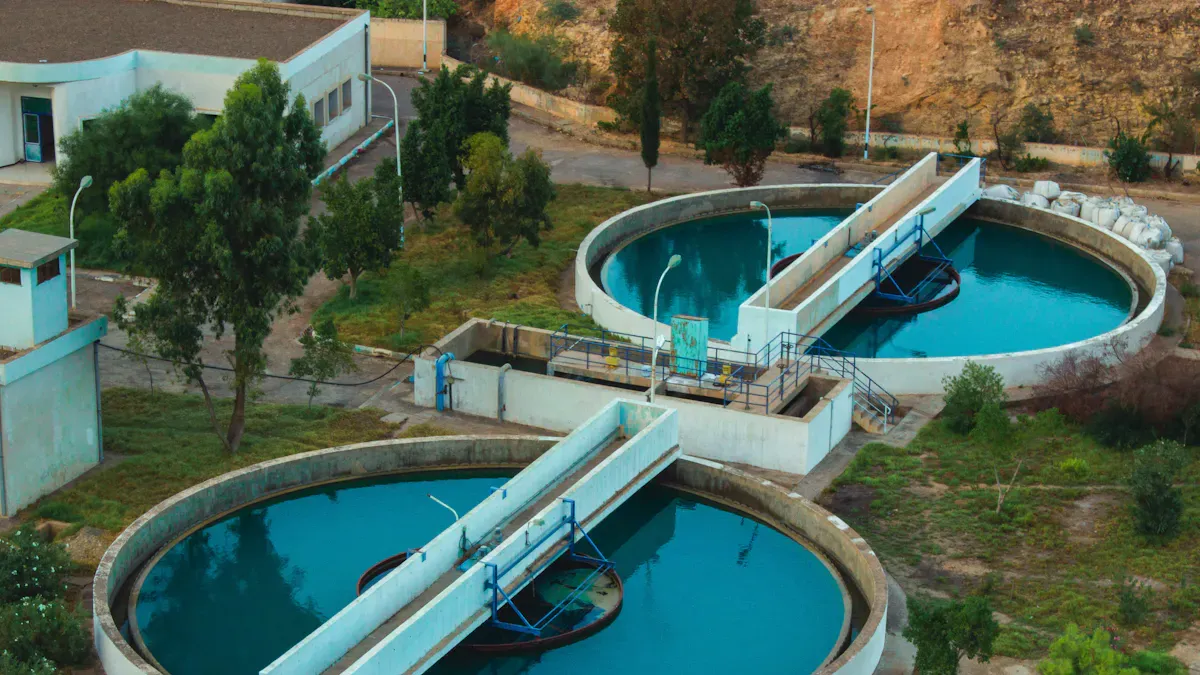
You rely on coal based activated carbon for water purification because it removes harmful substances from drinking water and wastewater. This material works well in water treatment plants and home filters. You use it to trap organic contaminants, chlorine, and taste compounds. The porous structure gives it exceptional adsorption capacity, so it captures various pollutants and improves water quality.
You can see how activated carbon helps in wastewater treatment. It removes:
Volatile organic compounds (VOCs)
Chlorinated solvents
Pharmaceuticals and personal care products
Heavy metals (in certain forms)
Pesticides and herbicides
Odors and taste compounds
Synthetic dyes
You also use activated carbon to filter out bacteria and disinfection byproducts. It makes water safer for you and your family. You benefit from its powerful adsorption capabilities, which help you meet strict water quality standards.
Tip: You can use granular activated carbon in large water treatment systems, while powdered activated carbon works well for quick removal of contaminants in smaller filters.
Air Purification and Odor Control
You use coal-based activated carbon in air purification systems to improve indoor air quality. This material captures VOCs, odors, and harmful gases. You find it in purifiers for homes, offices, and factories. The market share of coal-based activated carbon in air purification systems is around 15%. You choose it because it removes pollutants like formaldehyde, benzene, and sulfur gases.
Application | Effectiveness |
|---|---|
VOC removal | High |
Odor control in industrial areas | High |
Biogas purification | Effective |
Air quality improvement in HVAC | Significant improvement |
You benefit from its complex internal pore structure and vast surface area. These features enhance adsorption and help you control odors in industrial environments. You also use activated carbon to filter out bacteria and improve air quality in HVAC systems.
Industrial Applications
You use coal based activated carbon in many industrial applications. It helps you purify chemicals, recover solvents, and meet air and water quality standards. You find it in mining, chemical processing, and municipal water plants. You rely on activated carbon to remove organic contaminants, chlorine, and VOCs from water and air.
Industry | Applications |
|---|---|
Pharmaceutical and Biotech | Purification of gases, solvents, and liquids; crucial in biopharmaceuticals for removing contaminants. |
Food and Beverage | Color removal, odor removal, and purification of additives and ingredients. |
Municipalities and Water Plants | Utilization for drinking water and wastewater treatment. |
Air Purification and Industrial | Required for meeting air and water quality standards in sectors like mining and chemical processing. |
You use activated carbon to capture mercury from flue gases and control odors in factories. You also rely on it for biogas purification and air quality improvement in industrial HVAC systems. Its wide range of applications makes it a popular purification solution.
Food and Beverage Processing
You use coal based activated carbon in food and beverage processing to keep products pure and safe. It helps you decolorize sugar and purify syrups. You also use it to remove pigments, free fatty acids, and odors from edible oils. Activated carbon maintains taste and quality in beverages by removing unwanted flavors and trace organic impurities.
Sugar decolorization and purification of sugar syrups
Purification of edible oils by eliminating pigments and reducing free fatty acids
Removal of undesirable odors to enhance shelf life and stability
Maintenance of taste and quality in beverages
Food grade activated carbon meets strict regulatory standards. You can trust it because it is produced in controlled environments and complies with international standards, including those set by the FDA.
Medical Uses
You use activated charcoal in medical settings to treat poisoning and drug overdoses. It adsorbs toxins from the body and helps you eliminate poisons from circulation. You also use it in hemodialysis to remove toxins during medical procedures.
Medical Application | Clinical Outcome |
|---|---|
Effective in adsorbing toxins from the body | |
Drug overdoses | Successful in eliminating poisons from circulation |
Hemodialysis | Employed in medical procedures for toxin removal |
You administer activated charcoal within one hour of poisoning for best results. It works for certain drugs and toxins but does not help with cyanide, corrosive agents, iron, lithium, alcohols, or malathion. You may use multiple doses for life-threatening ingestions of specific drugs. Activated charcoal gives you a reliable way to manage toxins and protect patient health.
Note: You should always follow medical advice when using activated charcoal for poisoning or overdose.
Coal based activated carbon offers you a wide range of applications. You benefit from its filtration, purification, and adsorption abilities in water, air, industrial, food, and medical settings. Its exceptional adsorption capacity and powerful adsorption capabilities make it a trusted choice for removing various pollutants and toxins.
Advantages of Coal-Based Activated Carbon
Effectiveness Compared to Other Activated Carbon Types
You notice that coal-based activated carbon stands out when you compare it to other types like coconut shell or wood-based activated carbon. Its mesoporous structure lets you trap larger molecules, which is important for many industrial uses. You can see the differences in the table below:
Advantage | Description |
|---|---|
Mesoporous structure traps bigger molecules, useful for industrial applications. | |
Cost-Effectiveness for Industrial-Scale Applications | More affordable for large-scale needs than coconut shell activated carbon. |
Durability for Long-Term Use in Industrial Settings | Robust nature suits heavy-duty applications in various industries. |
You benefit from coal-based activated carbon because it is made from materials that are easy to find. The production process gives you a high adsorption substance that works well in both acidic and basic conditions. You can use it in many environments. Studies show that coal-based activated carbon performs better in humid conditions, especially when you need to remove acetic acid. Its structure helps you get reliable results in water and air purification.
Coal-based activated carbon is favored for its high adsorption capacity and stability in various conditions. The preparation process enhances its microporous structure, making it an effective adsorbent.
Versatility and Cost Benefits
You choose coal-based activated carbon because it fits many needs. You use it in water treatment to remove contaminants and make drinking water safe. You rely on it in air purification to eliminate pollutants and improve indoor air quality. You also use it in food processing and industrial applications. Its flexibility comes from the ability to source different types of coal, which makes it easy to adapt for various uses.
Coal-based activated carbon is more affordable than coconut shell activated carbon, especially for large-scale industrial processes.
You save money when you use it for wastewater treatment and other industrial applications.
Coconut shell activated carbon costs more and works better for residential uses, but coal-based activated carbon gives you the best value for big projects.
The market for coal-based activated carbon keeps growing. You see more industries adopting it because they need high-quality products with strong adsorption abilities. Advances in production methods help you get better results in specialty applications like odor control and gas separation. You benefit from its versatility and cost savings, making it a smart choice for many industries.
You see coal-based activated carbon used in many industries because it works well and saves money. You rely on it for water treatment, air purification, and process purification in food and chemical plants.
High mechanical strength gives you long-lasting performance.
Its cost-effectiveness helps you manage budgets.
Experts say it removes almost 90% of pollutants from wastewater.
The market keeps growing as more people want cleaner water and air.
You can trust coal-based activated carbon to meet your purification needs.
FAQ
What is the difference between coal-based and coconut shell activated carbon?
You find that coal-based activated carbon has a larger pore size. This makes it better for removing bigger molecules in water and air. Coconut shell activated carbon works best for smaller molecules and is often used in home water filters.
Is coal-based activated carbon safe for drinking water?
You can safely use coal-based activated carbon in water filters. Manufacturers test and process it to meet safety standards. It does not add harmful chemicals to your water.
How do you dispose of used activated carbon?
You should follow local waste rules. Used activated carbon may contain trapped pollutants. You can often send it to a landfill or a special disposal facility. Some companies offer recycling services.
Can you reuse coal-based activated carbon?
You cannot reuse it at home. Industrial plants can reactivate it with high heat, but this process is not practical for home use. You should replace it when it stops working.