
An activated carbon mask uses a special inner filter made from pure activated carbon cloth. You get advanced protection because mask activated carbon traps over 90% of pollution, gases, and germs. These masks can filter harmful gases like COx, NOx, and SOx better than regular masks. You will also find features like adjustable straps, long usage time, and stylish designs. The layers in these masks help you breathe cleaner air, especially in places with smoke or chemicals.
Key Takeaways
Activated carbon masks filter out over 90% of harmful pollutants, gases, and germs, providing better protection than standard masks.
The unique porous structure of activated carbon allows it to trap a wide range of contaminants, including odors and toxic gases.
Choose masks with multiple layers and a good fit to ensure effective filtration and comfort during use.
Regularly check and replace filters every 2 to 4 weeks to maintain mask effectiveness, especially in polluted environments.
Activated carbon masks are especially beneficial in areas with high pollution or chemical exposure, helping you breathe cleaner air.
Activated Carbon Explained
What Is Activated Carbon
You may wonder what makes activated carbon so special. Activated carbon is a form of carbon that has been treated to create millions of tiny pores. These pores give it a huge surface area, sometimes as large as 1,500 square meters per gram. This structure works like a sponge, trapping gases, odors, and even tiny particles from the air. You can think of activated carbon as a magnet that attracts and holds onto air impurities. This unique property makes it a powerful tool for air filtration.
Activated carbon has a porous structure that boosts its ability to filter.
The large surface area helps it capture more contaminants.
Different pore sizes allow it to target various pollutants.
How It’s Made
You get activated carbon by heating carbon-rich materials, such as coconut shells, wood, or coal, in an environment without oxygen. This process is called carbonization. After that, the material goes through activation, where it is exposed to steam or chemicals at high temperatures. This step opens up the pores and increases the surface area. Manufacturers follow strict quality standards, like NIOSH and OSHA certifications, to make sure the activated carbon is safe and effective for use in masks.
Tip: Recycling used masks into activated carbon helps reduce environmental waste and supports pollution control.
Environmental Impact | Description |
|---|---|
Waste Valorization | Recycling masks into activated carbon reduces persistent environmental waste. |
Pollution Mitigation | Activated carbon filters out chemical pollutants and microfibers. |
Resource Utilization | Masks made of polypropylene are suitable for conversion into activated carbon. |
Why It’s Used in Masks
You benefit from mask activated carbon because it can trap a wide range of harmful substances. The activated carbon cloth in these masks filters out pollutants, gases, bacteria, and viruses. This means you get better protection compared to standard masks. Mask activated carbon combines mechanical filtration with chemical adsorption, making it ideal for places with smoke, dust, or chemical fumes. You will find these masks especially useful in polluted cities or workplaces with airborne contaminants.
Activated carbon masks filter airborne pollutants, allergens, and harmful gases.
They are essential in environments with chemical fumes, smoke, and odors.
Mask Activated Carbon Filtration
Adsorption Mechanism
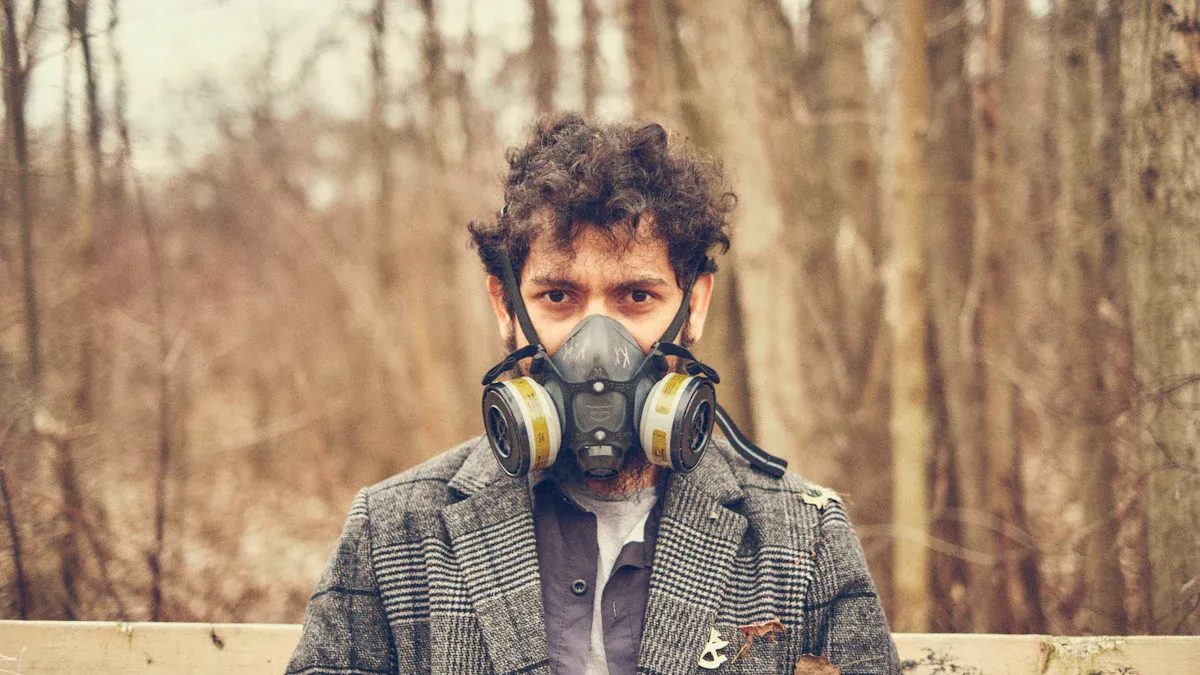
You might wonder how mask activated carbon actually works to clean the air you breathe. The secret lies in a process called adsorption. When you wear a mask with activated carbon, the air passes through a layer filled with millions of tiny pores. These pores act like sticky traps for harmful substances. As you inhale, organic vapors, odors, and gases stick to the surface of the activated carbon instead of entering your lungs. This process does not just block particles; it captures them on a molecular level.
Adsorption is regarded as the most reliable technology for gaseous pollutant removal. Activated carbon is a widely used adsorbent due to its good adsorption capacity and low price. However, substantial ultrafine particles (UFPs) in the air cannot be effectively removed even if a high-efficiency particulate air filter is located before the adsorption stage. The adhesion of UFPs to the porous surface of activated carbon affects the removal of gaseous pollutants and shortens its service life.
Scientists use special tests to measure how well activated carbon works. For example, they use nitrogen adsorption and desorption to check the surface area and pore size. The more pores and surface area, the better the mask can trap harmful substances.
Method | Description |
|---|---|
Nitrogen adsorption/desorption | Measures surface area and porosity of activated carbon samples. |
BET isotherms | Shows how much gas the carbon can adsorb, comparing different samples. |
Contaminants Removed
Mask activated carbon can trap a wide range of contaminants. You get protection from:
Organic vapors, such as paint fumes and cleaning chemicals
Odors from smoke, food, or pollution
Harmful gases like carbon monoxide, nitrogen oxides, and sulfur oxides
Some viruses and bacteria
Dust, pollen, and other allergens
The porous structure of activated carbon increases its ability to capture these substances. You benefit from extra protection in places with high pollution or strong smells. However, not all contaminants are removed equally well. For example, the removal rates for bacteria and viruses can be low, depending on the mask design.
Contaminant Type | Removal Rate | Notes |
|---|---|---|
Bacteria | < 0.01% | Standard and antimicrobial-treated filters show low rates. |
Viruses | 0.15% – 1.1% | Effectiveness varies with mask fit and seal. |
Fungal Spores | N/A | Not specifically measured. |
Comparison to Standard Masks
You may ask how mask activated carbon compares to regular masks. Standard masks, like surgical or cloth masks, mainly use mechanical filtration. They block larger particles, such as dust and droplets, but do not trap gases or odors well. Mask activated carbon adds a chemical adsorption layer, which means you get protection from both particles and harmful gases.
Activated carbon masks are designed to adsorb gases and chemicals, which standard masks typically do not filter effectively. This dual mechanism of mechanical filtration and chemical adsorption allows activated carbon masks to offer superior protection against a wider range of airborne contaminants. The porous structure of activated carbon significantly increases its surface area, enhancing its capacity to capture harmful substances, thus providing additional protection against pollutants that standard masks may overlook. Filtration efficiency is a measure of how effectively a mask removes contaminants from the air, and high-efficiency masks, such as those with activated carbon, offer superior protection in environments with higher risks.
Activated carbon masks filter out bacteria and viruses, providing enhanced protection in various environments.
They are particularly effective in urban areas with high pollution and healthcare settings.
Activated carbon masks often have a multi-layer design that includes a mechanical filtration layer to trap tiny particles, including viruses.
The carbon layer is specifically designed to handle gases and odors.
Look for masks that meet recognized standards like N95, KN95, or FFP2 for reliable virus protection.
Activated carbon masks provide some level of protection against viruses, but effectiveness varies based on factors like fit and seal.
You should choose a mask with activated carbon if you need extra protection from gases, odors, and fine particles. In places with high pollution or chemical exposure, these masks can help you breathe easier and stay safer.
Benefits of Activated Carbon Masks
Enhanced Protection
You get stronger protection from toxic pollutants when you use an activated carbon mask. The special filter traps harmful gases and chemicals that regular masks often miss. Studies show that these masks can filter out dangerous gases like carbon monoxide (CO), nitrogen oxides (NOx), and sulfur oxides (SOx). The table below shows how well activated carbon masks work in different studies:
Study Title | Findings | Pollutants Filtered | P-Value |
|---|---|---|---|
Active Carbon Respiratory Masks as the Adsorbent of Toxic Gases in Ambient Air | Activated carbon masks effectively filter COx, NOx, and SOx due to their large surface area and micropore structure. | COx, NOx, SOx | p < 0.05 |
Four-type of Masks and its Effectiveness Based on Reduced Level of Expiratory Carbon-monoxide | Significant reduction of CO levels after 8 hours of use, showing activated carbon’s superior absorption. | CO | p < 0.001 |
What Is Activated Carbon in Face Masks and How Does It Work | Activated carbon masks provide extra protection against pollutants that regular masks may not filter out. | Various harmful gases | N/A |
You lower your risk of breathing in toxic air. This means you protect your lungs and overall health, especially in places with lots of pollution.
Comfort and Breathability
You might think that extra layers make masks hard to wear. However, activated carbon masks are designed for comfort. The material is lightweight and allows air to flow easily. You can wear these masks for long periods without feeling stuffy or hot. Many people find that they can breathe better and feel less irritation compared to thicker, less breathable masks.
Use in Polluted or Chemical Environments
You benefit most from activated carbon masks in places with poor air quality or chemical exposure. These masks help filter out harmful substances in areas with car exhaust, smoke, or strong odors. In poorly ventilated rooms, you can reduce your exposure to volatile organic compounds (VOCs) and other pollutants. Research shows that people with chemical sensitivities feel better when they use these masks indoors and in cities.
The masks work well in environments with car exhaust and hydrocarbon emissions.
CocoCarb filters show high chemical adsorption efficiency.
You get relief from symptoms like headaches and dizziness caused by poor air quality.
Mask Activated Carbon gives you a practical way to improve the air you breathe, especially when you face pollution or chemical risks.
Practical Considerations
Effectiveness and Limitations
You may hear that activated carbon masks block every harmful substance. This is not true. These masks can absorb many gases and odors, but they struggle with very small particles. Viruses and ultrafine particles can slip through the mask. You should know that activated carbon masks do not provide full protection from biological aerosols. Some people believe that wearing two masks doubles the protection, but this can make breathing harder and does not increase safety. High humidity can also lower the mask’s filtration power.
Note: Activated carbon masks reduce some exposures, but they cannot filter out all germs or chemicals. Always use the right mask for your environment.
Choosing the Right Mask
You want to pick a mask that fits your needs and keeps you comfortable. Here are important things to check:
Filter Layers: Choose masks with several layers, including an activated carbon layer, for better filtration.
Breathability: Make sure you can breathe easily while wearing the mask.
Fit and Seal: Pick a mask that fits your face well and forms a tight seal.
Comfort: Look for features like adjustable straps or exhalation valves for long wear.
Certification: Check for safety standards like NIOSH N95, KN95, or FFP2.
Humidity Resistance: Select masks that work well even in humid conditions.
Factor | Why It Matters |
|---|---|
Pore Structure | Affects how well the mask traps pollutants |
Moisture Level | High moisture lowers performance |
Particle Size | Smaller particles are harder to filter |
Care and Maintenance
You need to care for your mask to keep it working well. Here are some tips:
Check your mask every day for dirt, damage, or bad smells.
Replace the filter if breathing gets hard or you notice odors.
Clean reusable mask bodies with mild soap and water. Dry them fully before adding a new filter.
Follow the instructions from the manufacturer for your mask model.
Most filters last about 28 days, but you may need to replace them sooner if you use the mask in heavy pollution or smell chemicals.
Tip: If you notice any irritation or smell, change your mask right away to stay safe.
You now know that activated carbon masks offer strong protection against gases, odors, and pollutants. These masks help you breathe cleaner air, especially in polluted or chemical environments. Before you choose a mask, think about your exposure risks and personal health. The table below shows key points to consider:
Consideration | Why It Matters |
|---|---|
CO₂ buildup | Masks may increase carbon dioxide, which can affect pregnant women and children. |
Exposure time | Longer use raises risk, so check how long you need to wear the mask. |
Always match your mask choice to your environment and health needs.
FAQ
How long can you use an activated carbon mask before replacing it?
You should replace the filter every 2 to 4 weeks. If you notice odors or breathing becomes difficult, change it sooner. Heavy pollution may require more frequent changes.
Can you wash and reuse an activated carbon mask?
Most activated carbon filters are not washable. You can clean the outer mask if it is reusable, but always replace the carbon filter with a new one.
Tip: Check the manufacturer’s instructions for your specific mask.
Do activated carbon masks protect against viruses?
Activated carbon masks can reduce some virus exposure, but they do not guarantee full protection. For best results, choose masks that meet standards like N95 or KN95.
Mask Type | Virus Protection |
|---|---|
Cloth Mask | Low |
Activated Carbon | Moderate |
N95/KN95 | High |
Are activated carbon masks safe for children?
You can find child-sized activated carbon masks. Make sure the mask fits well and does not make breathing hard. Always supervise children while they wear masks.