
You can use Desalination Activated Carbon to improve water quality in desalination systems. This material traps organic contaminants, chlorine, odors, and some metals. It protects your equipment and makes water taste better. Many desalination plants use activated carbon as a filter or as an electrode in advanced systems. Coconut shell and super activated carbon types work well because they have high adsorption capacity and a strong pore structure.
Contaminant | Before Treatment | After Treatment | |
|---|---|---|---|
Low molecular weight compounds | 3 mg L-1 (ferric chloride) | 1 mg L-1 | >70% |
Dissolved organic carbon (from oil) | Varies (weathered oil) | Up to 2% | 98% |
Transparent exopolymer particles | Varies | Reduced significantly | Not specified |
Key Takeaways
Activated carbon improves water quality by removing contaminants like chlorine, odors, and organic compounds.
Choosing the right pore size in activated carbon enhances its ability to trap harmful substances effectively.
Regularly replace activated carbon filters every 6 to 12 months to maintain optimal performance and water quality.
Using activated carbon as a pre-treatment protects desalination equipment and extends the life of membranes.
Coconut shell and super activated carbon are the best choices for effective contaminant removal in desalination.
Activated Carbon in Desalination
Key Properties and Structure
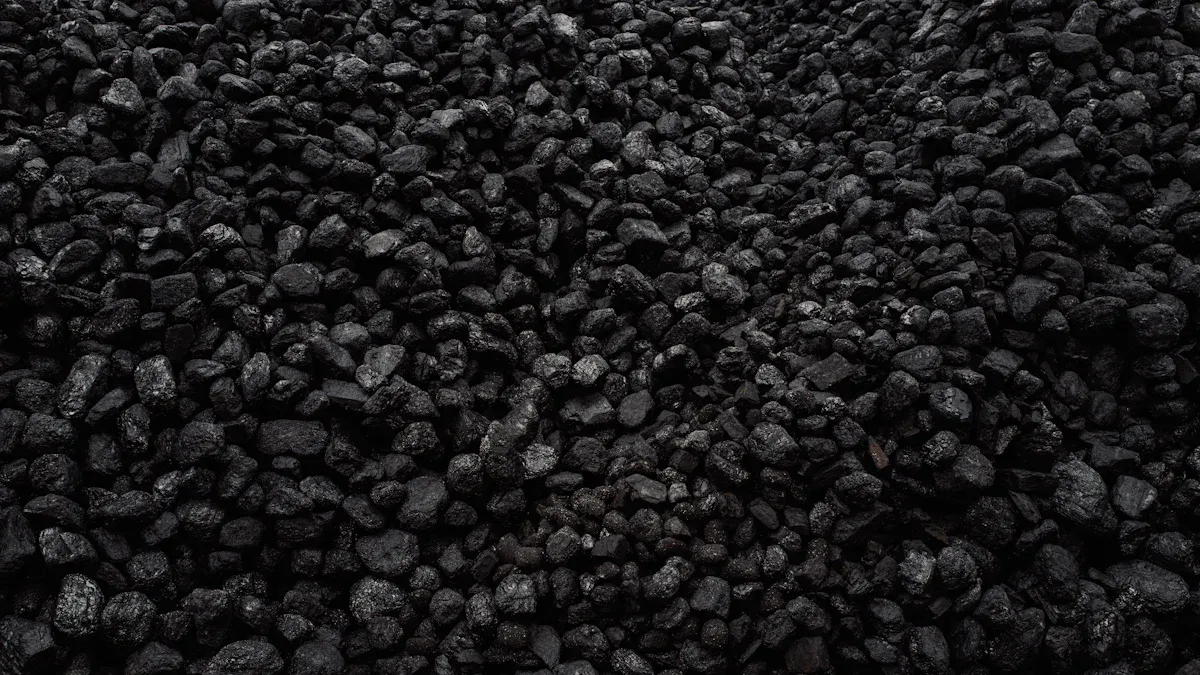
You will find that Desalination Activated Carbon stands out because of its unique structure. This material has a very large surface area, often around 1,000 square meters per gram. This means you get more space for contaminants to stick to. The high pore volume allows water to flow through easily, so more unwanted substances get trapped.
Large surface area boosts adsorption capacity.
High pore volume improves contaminant removal.
The ability to adsorb many types of contaminants makes it a strong choice for pre-treatment.
The pore size in Desalination Activated Carbon also matters. Smaller pores can block larger organic molecules, which helps target specific contaminants. Larger pores may let in more natural organic matter, which can compete for space and reduce efficiency. When you use activated carbon with smaller pores, you see less natural organic matter getting through. If you use larger pores, you may notice faster breakthrough of certain chemicals because of this competition.
Tip: Choosing the right pore size helps you remove the most harmful substances from your water.
How Adsorption Works
Adsorption is the main process that makes Desalination Activated Carbon effective. When water passes through the carbon, contaminants stick to the surface and inside the pores. This process works best for organic contaminants, especially those with higher molecular weight. Lower pH levels and higher concentrations of contaminants can also improve removal rates.
Factor | Description |
|---|---|
Pore Size | Micropores 1.3 to 1.8 times larger than the contaminant work best for adsorption. |
Contaminant | Different chemicals need different pore sizes for best removal. |
Hydrophobicity | Hydrophobic carbon removes some chemicals better because water does not block the surface. |
You can use granular or powdered forms. Granular carbon works well in filter beds, but it acts slower. Powdered carbon acts faster and costs less, but you cannot regenerate it once used with sludge.
Desalination Activated Carbon Applications
Organic and Chemical Removal
You can use Desalination Activated Carbon to remove many organic compounds and chemicals from seawater and brackish water. This material traps low molecular weight compounds, dissolved organic carbon from oil, and biodegradable organics. It works less effectively for humics-type molecules. You see the results in the table below:
Type of Organic Compound | |
|---|---|
Low molecular weight compounds | >70% |
Dissolved organic carbon from oil | up to 98% |
Biodegradable organics | Effective |
Humics-type molecules | Less effective |
Desalination Activated Carbon also removes chlorine and metals. You protect your equipment by removing residual disinfectants like chlorine and chloramine. The removal happens quickly, often in seconds during the first stage of filtration. You get a high chlorine capacity, about one pound of chlorine per pound of carbon at a flow rate of 3 to 5 gallons per minute per cubic foot.
You remove chlorine and chloramine through a catalytic reduction reaction.
You see rapid chlorine removal in the initial filtration stage.
You achieve high chlorine capacity with new activated carbon.
Odor and Taste Improvement
You notice that water from desalination systems sometimes has unpleasant odors or tastes. Desalination Activated Carbon helps you solve this problem. It adsorbs compounds that cause bad smells and tastes, such as volatile organic chemicals and some metals. You get water that tastes fresh and smells clean. This improvement makes desalinated water more appealing for drinking and cooking.
Tip: If you want better-tasting water, use activated carbon in your filtration system. You will notice the difference right away.
Use as Electrode in Capacitive Desalination
You can use super activated carbon as an electrode in advanced desalination systems. These systems use capacitive deionization to remove salts and ions from water. When you use activated carbon electrodes, you increase the specific surface area and capacitance. You also decrease the viscosity of flow electrodes, which improves flow dynamics and lowers intrinsic impedance. This change boosts the energy efficiency and desalination capacity of the system.
Metric | Value Before | Value After | Improvement |
|---|---|---|---|
Specific Surface Area | 213.5 m²/g | 616.1 m²/g | Increased |
Capacitance | 93 F/g | 178 F/g | Increased |
Viscosity of Flow Electrodes | 127 Pas | 21 Pas | Decreased |
Desalination Capacity | N/A | N/A | 70% Increase |
You benefit from pseudocapacitive effects in composite electrodes.
You get more ion channel exposure because of the porous structure.
You see enhanced conductivity and ionic capacity in the FCDI system.
You notice reduced viscosity, which improves flow and efficiency.
Desalination Activated Carbon gives you a powerful tool for improving water quality and system performance in desalination processes.
Types of Activated Carbon for Desalination
Granular and Powdered Forms
You can choose between granular and powdered activated carbon for desalination. Granular carbon has larger particles, so it works well in filter beds. It lets water flow easily and removes contaminants over time. Powdered carbon has smaller particles. This increases the contact area with membranes and electrolytes. You get better desalination performance because ions move faster and stick more easily to the carbon. Smaller particles also help reduce concentration differences at the surface, making ion migration more effective. Hydrophilic and oxygenated groups on the carbon attract ions and improve filtration.
Tip: If you want faster adsorption and higher efficiency, powdered activated carbon is a smart choice.
Coconut Shell and Super Activated Carbon
You see coconut shell activated carbon used often in desalination plants. It has high carbon content and low ash, which makes it strong and reliable. Coconut shell carbon shows an electrosorption capacity of 64.1 mg/g in membrane capacitive deionization at 1.2 V with a 500 mg/L NaCl solution. This is one of the highest performances among carbon materials. Super activated carbon stands out even more. It has a specific surface area of 2869 m²/g and a pore volume of 2.26 cm³/g. These features boost its electrosorption capacity and help it keep charge efficiency over many cycles. You get excellent results with both coconut shell and super activated carbon because their pore structures trap more contaminants and ions.
Coconut shell activated carbon offers high adsorption and electrosorption.
Super activated carbon provides outstanding surface area and pore volume for advanced desalination.
Selection Criteria
You need to select the right activated carbon for your desalination process. Look at the pore structure, production materials, and operational parameters. The table below shows important criteria:
Criteria for Activated Carbon Selection | Description |
|---|---|
Pore Structure | Critical for desalination efficiency in CDI systems. |
Materials for Production | Includes sunflower seeds, peanut shells, rice husks, coconut shells, wood chips, and agricultural residues. |
Operational Parameters | Voltage, flow rate, and total dissolved solids (TDS) concentration are key factors affecting performance. |
You can also choose from different production materials. Coconut shells, wood chips, fruit pits, agricultural residues, and bone char all offer unique characteristics. Coconut shells give you high carbon and low ash. Wood chips produce high-quality carbon. Fruit pits and agricultural residues are rich in carbon and easy to activate.
Materials for Activated Carbon Production | Characteristics |
|---|---|
Coconut Shells | High carbon content, low ash content. |
Wood Chips and Sawdust | Readily available, produces high-quality carbon. |
Fruit Pits (e.g., Olive, Cherry) | Rich in carbon, suitable for activation. |
Agricultural Residues (e.g., Corn Stover) | Abundant and often underutilized. |
Bone Char | Unique composition for specific adsorption applications. |
You must consider water quality requirements. Activated carbon removes dissolved organic matter, color, and odor. If you do not remove these substances, they can clog membranes and contaminate ion exchange resins. Even small amounts of chlorine can damage sensitive equipment. Desalination Activated Carbon protects your system and keeps water clean.
Note: Always match the carbon type to your water quality needs and system design for best results.
System Integration and Performance
Pre-Treatment and Post-Treatment Placement
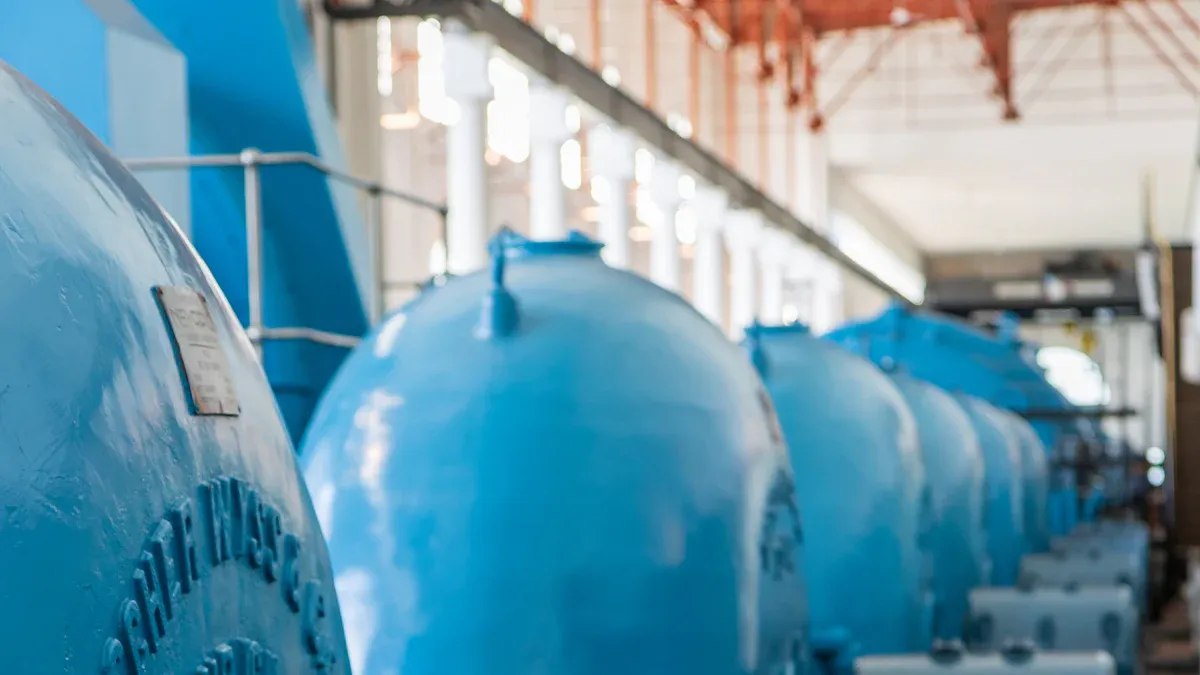
You usually find activated carbon in the pre-treatment stage of desalination systems. Here, it removes residual chlorine, organics, and suspended impurities from the water. This step prepares the water for reverse osmosis and protects sensitive equipment. When you use activated carbon before the main desalination process, you help prevent pollution and extend the life of reverse osmosis membranes. You can also place activated carbon after desalination to remove any remaining tastes or odors, making the water better for drinking.
Activated carbon filters serve as a strong defense against membrane oxidation. They remove over 99% of residual chlorine, which protects polyamide membranes from damage. You also see a reduction in organic fouling because activated carbon adsorbs humus, pesticide residues, odors, and pigments by 40% to 60%. This means you need to clean your membranes less often, which helps them last longer.
Evidence Type | Description |
|---|---|
Activated Carbon Filters | Remove >99% of residual chlorine, protect RO membranes from oxidation. |
Organic Matter Removal | Adsorb 40%-60% of humus, pesticides, odors, and pigments. |
Cleaning Intervals | Prolong cleaning intervals, extend membrane lifespan. |
Maintenance and Replacement
You need to replace activated carbon filters regularly to keep your system working well. Most desalination plants recommend changing the activated carbon cartridge every 6 to 12 months. This keeps chlorine removal and taste improvement at their best. The actual replacement time depends on several factors, such as the adsorption capacity of the carbon and the quality of the water you treat. If your water has more contaminants, you may need to replace the carbon more often.
Component | Recommended Interval | Purpose |
|---|---|---|
Activated Carbon Cartridge | 6–12 months | Replace to remove chlorine; improves taste. |
The service life of activated carbon usually ranges from 1 to 3 years, but its performance drops over time. You will notice that the filter removes less odor, color, and organic matter as it ages. Make sure to check and replace your filters on time to keep your water clean and your equipment safe.
Advantages and Limitations
You gain many advantages when you use activated carbon in desalination. It removes over 70% of low molecular weight organic compounds, which helps reduce biofouling on membranes. You also use less flocculant, which lowers your costs and makes the system easier to run. With activated carbon as a pre-treatment, you use less energy in reverse osmosis and can produce up to 35% more potable water.
Activated carbon reduces organic fouling and protects membranes.
You save money on chemicals and energy.
You get more clean water from your system.
However, you should know that activated carbon has some limitations. Over time, non-removable organic matter can build up and cause membrane fouling. This reduces the performance of your system and may require more frequent cleaning or even membrane replacement.
By understanding where to place activated carbon, how to maintain it, and its strengths and weaknesses, you can get the best results from your desalination process.
You improve desalination by using activated carbon to capture trace pollutants and heavy metals. Nano-activated carbon offers a large surface area and many functional groups, which help remove harmful substances through physical adsorption and ion exchange. Choosing the right type and integration method matters. You can see key factors in the table below:
Key Factor | Description |
|---|---|
Type of Activated Carbon | Granular, pellet, and fiber forms suit different needs. |
Customization Capabilities | Tailor size, shape, and activation process for your system. |
Matching to Water Quality | Test water to select the best carbon type. |
Staged Filtration | Combine types for better efficiency and longer lifespan. |
You will benefit from new composite electrodes and improved pore structures. Innovations in filtration, such as granular activated carbon and flow-electrode systems, make desalination more efficient and cost-effective.
FAQ
What does activated carbon remove in desalination?
You remove organic compounds, chlorine, odors, and some metals using activated carbon. This improves water quality and protects your equipment. You also reduce taste and smell issues in drinking water.
How often should you replace activated carbon filters?
You should change activated carbon filters every 6 to 12 months. If your water has more contaminants, you may need to replace them sooner. Check your filter’s performance regularly.
Can you use activated carbon with reverse osmosis systems?
You can use activated carbon as a pre-treatment for reverse osmosis. This protects membranes from chlorine and organic fouling. You extend membrane life and improve water quality.
Which type of activated carbon works best for desalination?
Coconut shell and super activated carbon work best. They have high adsorption capacity and strong pore structure. You get better removal of contaminants and longer filter life.
Does activated carbon remove salt from water?
Activated carbon does not remove salt. You need reverse osmosis or capacitive deionization to remove salt. Activated carbon helps by removing other contaminants before or after desalination.