
You use wood based activated carbon when you need a strong adsorbent for removing impurities. This material comes from wood, bamboo, or nutshells and has a unique porous structure with a large surface area. These features help it trap larger molecules better than other types. It also supports environmental sustainability by using waste materials. See how it compares below:
Aspect | Wood-Based Activated Carbon | Other Types of Activated Carbon |
|---|---|---|
Textural Properties | Unique porous structure | Varies widely |
Surface Area | Comparable to commercial | Often lower |
Pore Volume | Significant for large molecules | Varies |
Production Process | Cleaner and cost-effective | Often more complex |
Environmental Impact | Utilizes waste materials | Varies |
Key Takeaways
Wood based activated carbon is an effective adsorbent made from natural materials like wood and bamboo. It removes impurities from air and water efficiently.
The production process involves carbonization and activation, which create a porous structure that enhances its ability to trap larger molecules.
Using wood based activated carbon supports environmental sustainability by utilizing renewable materials and producing less pollution compared to other types.
This carbon is versatile, with applications in water treatment, air purification, and various industries like food and pharmaceuticals.
For odor removal, wood based activated carbon is a good choice, but coconut shell carbon may be more effective for stronger odors.
Wood Based Activated Carbon Overview
Definition and Properties
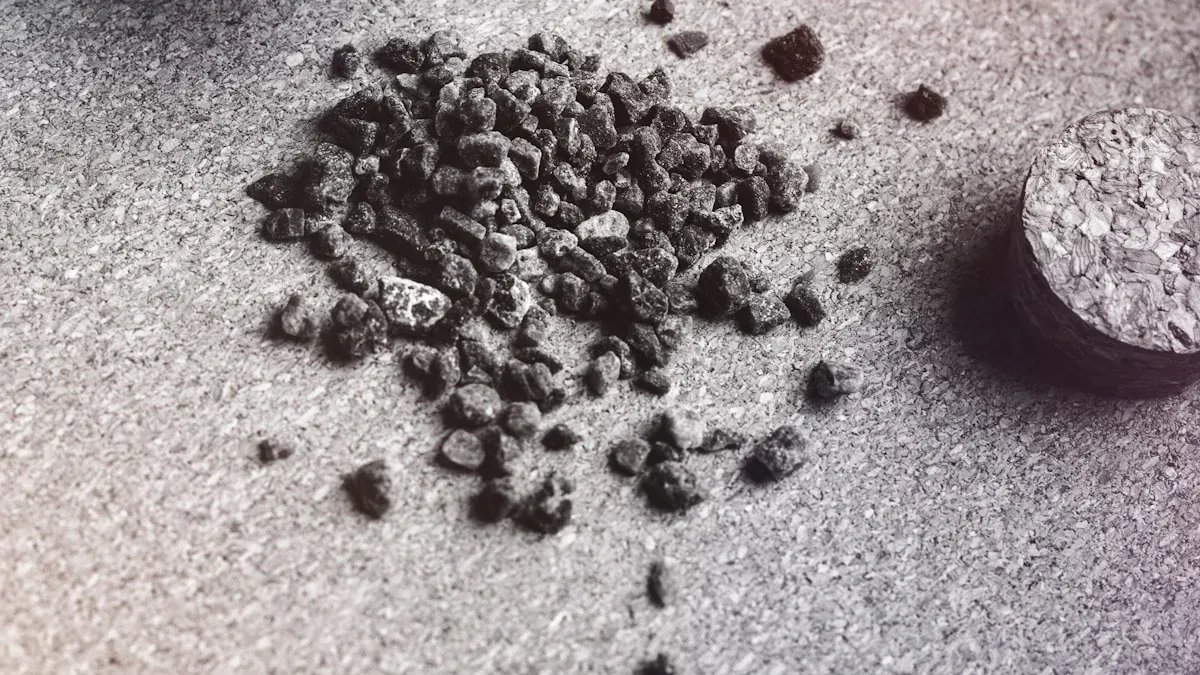
You can think of wood based activated carbon as a powerful filter made from natural materials like wood, bamboo, or nutshells. This material stands out because it has a well-developed porous structure. These tiny pores give it a high specific surface area, which means it can trap a lot of unwanted substances. You will notice that its large pore volume and high permeability make it easy for liquids and gases to pass through while catching impurities.
Tip: If you need to remove color or odors from water, you can choose phosphoric acid or steam activation methods. Phosphoric acid works well for decolorization, while steam activation removes color precursors and odors.
Here is a quick look at the main properties:
Property | Description |
|---|---|
High porosity | Contains many large pores for trapping substances |
Large adsorption capacity | Holds a significant amount of impurities |
Permeability | Allows fluids to move through easily |
Purity | Suitable for specialty uses due to high cleanliness |
The production process uses high temperatures in an inert atmosphere to create this structure. You get a material that works well for catalyst support and as an adsorbent for many compounds.
Comparison with Other Activated Carbons
When you compare wood based activated carbon to other types, you see some clear differences. Wood based activated carbon has a higher proportion of larger pores. This makes it great for liquid phase adsorption, especially when you need to remove bigger molecules.
Type of Activated Carbon | Pore Structure Characteristics | Specific Surface Area (m²/g) | Best for |
|---|---|---|---|
Wood-based | Higher proportion of larger pores | 500-1000 | Liquid phase adsorption |
Coal-based | Mainly microporous, well-developed | 800-1200 | Gaseous substances |
Coconut shell | Unique pore diameter distribution | N/A | Smaller molecules |
You also benefit from a lower environmental impact when you choose wood based activated carbon. Studies show that its production creates about 50% less global warming potential than coal-based types. This makes it a smart choice for both performance and sustainability.
Production Process
Raw Materials Selection
You start the journey of making Wood Based Activated Carbon by choosing the right raw materials. You can use many types of wood, bamboo, nutshells, and sawdust. These materials are easy to find and cost less than other options. They also help protect the environment because they come from renewable sources.
Here are some common raw materials you can use:
Hardwoods: oak, beech, elm
Soft hardwoods: poplar, willow, linden
Softwoods: pine
Bamboo: grows fast and is sustainable
Sawdust: low-cost and widely available
Hardwoods like oak give you activated carbon with a uniform pore structure and higher density. Softwoods like pine are also popular. Bamboo stands out because it grows quickly and is friendly to the environment. Nut shells and sawdust help keep costs down and make the process more sustainable.
Tip: Using these materials helps you create activated carbon that is both effective and eco-friendly.
Carbonization
Next, you heat the raw materials in a space without oxygen. This step is called carbonization. You usually use temperatures between 500°C and 700°C. The heat removes water and other substances, leaving behind a black, carbon-rich material.
Material Source | Temperature Range (°C) |
|---|---|
Eucalyptus wood chips | 500 – 700 |
Charcoal making | 500 – 550 |
During carbonization, the structure of the material changes. The process forms many tiny openings, or pores, inside the carbon. These pores are important because they help trap impurities later. The temperature and time you use affect how many pores form and how well the carbon works. For example, heating at 500°C gives you a good balance between yield and pore development.
Carbonization usually takes 20–30 minutes.
The process creates pores by breaking down organic compounds.
The final material, called biochar, has many openings but still needs more treatment to become activated carbon.
Activation Methods
After carbonization, you need to activate the carbon. This step makes the pores larger and increases the surface area. You can choose from different activation methods:
Activation Method | Characteristics | Environmental Impact | Yield and Applications |
|---|---|---|---|
Gas Activation | High temperatures, minimal wastewater, large pore size range | Minimal pollution, waste gas as CO2 and water | High yield (30%-50%), suitable for various carbon sources |
Chemical Activation | Acidic conditions, complex process, corrosion issues | Significant pollution from wastewater | Difficult to control, expensive equipment |
Chemical Physical Activation | Combination of chemical and physical methods, varying conditions | Varies based on specific methods used | Varies based on the process |
You often use steam or phosphoric acid for activation. Gas activation uses high heat and steam to open up the pores. This method creates less pollution and works well for many types of carbon. Chemical activation uses acids or other chemicals. It can make more pores but may cause pollution and needs special equipment.
Note: Gas activation is cleaner and gives you a high yield. Chemical activation can be more complex and costly.
Drying, Washing, and Screening
Once you finish activation, you need to clean and prepare the carbon for use. You follow these steps:
Washing: You wash the activated carbon to remove leftover chemicals and impurities. You can use water or acid washing. This step makes sure your product is pure and works well.
Drying: You dry the washed carbon carefully. You control the temperature and humidity to keep the carbon stable and prevent cracks. Drying removes moisture, which can affect how well the carbon works.
Screening: You crush and screen the dried carbon. This step sorts the carbon into different particle sizes. You can use machines or air flow to do this. The right size helps the carbon work better in different applications.
Washing improves purity and performance.
Drying keeps the carbon stable and ready to use.
Screening ensures you get the right size for your needs.
By following these steps, you create Wood Based Activated Carbon that is pure, effective, and ready for many uses.
Applications of Wood Based Activated Carbon
Water and Air Purification
You can use Wood Based Activated Carbon to clean water and air. This material removes impurities, odors, and harmful substances. In water treatment, it helps you get rid of chlorine, organic compounds, lead, radon, and disinfection byproducts like trihalomethanes. You also find it in air purifiers and gas masks. It traps harmful gases and odors, making the air safer to breathe. Industrial air filtration systems rely on this carbon to keep workplaces clean.
Water treatment removes chlorine, VOCs, heavy metals, and organic compounds.
Air purification eliminates harmful gases and odors.
Industrial air filters use it to protect workers.
Studies show that Wood Based Activated Carbon works well for removing contaminants, especially larger molecules. It outperforms granular activated carbon in treating water with high levels of chemical oxygen demand, phosphate, and ammonium.
Industrial Uses
You see Wood Based Activated Carbon in many industries. The food and beverage industry uses it to filter liquids and improve taste. Pharmaceutical companies rely on it to purify ingredients. Biotechnology and fermentation processes use it to remove unwanted compounds. Chemical and fine chemical industries depend on it for cleaning and separating substances. Water treatment and environmental protection sectors use it to keep water safe. Cosmetics and personal care products also benefit from its filtering power.
Food and Beverage Industry
Pharmaceutical Industry
Biotechnology and Fermentation
Chemical and Fine Chemical Industry
Water Treatment and Environmental Protection
Cosmetics and Personal Care
The global market for Wood Based Activated Carbon is growing fast. Experts expect it to reach USD 4.27 billion by 2033, with a growth rate of about 5.37% each year.
Odor Removal
You can use Wood Based Activated Carbon to remove odors in homes and workplaces. It is cost-effective and easy to find. However, coconut shell activated carbon works better for capturing odor molecules, especially volatile organic compounds. Coconut shell carbon has a larger surface area and more effective pores. If you need basic odor removal, Wood Based Activated Carbon is a good choice. For stronger odor control, you may want to use coconut shell carbon.
Tip: Choose Wood Based Activated Carbon for general odor removal. For tough odors, consider coconut shell activated carbon.
You see Wood Based Activated Carbon as a natural filter made from wood, bamboo, or nutshells. The production steps include impregnation, carbonization, activation, cooling, and washing:
Process Step | Main Operation | Key Parameters |
|---|---|---|
Impregnation | Mixing with phosphoric acid | H₃PO₄: 40–60%, 12–24 hours |
Carbonization & Activation | High-temperature treatment | 400–600 ℃, 2–3 hours |
Cooling & Washing | Cooling and hot water washing | 80–90 ℃, 3–5 cycles |
You benefit from its low cost, high recycling rate, and ability to remove impurities without affecting taste or quality. Understanding its production helps you choose safe, eco-friendly solutions for clean air and water.
FAQ
What makes wood based activated carbon different from other types?
You get larger pores and higher permeability with wood based activated carbon. This helps you trap bigger molecules. You also support the environment because you use renewable materials.
Can you use wood based activated carbon for drinking water?
Yes, you can use it to remove chlorine, organic compounds, and odors from drinking water. It helps you make water safer and improves taste.
How do you store wood based activated carbon?
You should keep it in a dry, airtight container. Moisture can reduce its effectiveness. Avoid direct sunlight and extreme temperatures.
Is wood based activated carbon safe for home use?
You can safely use it in air filters, water purifiers, and odor removers. It does not release harmful chemicals. Always follow product instructions.