
Coal Based Activated Carbon gives you a powerful way to trap unwanted chemicals and odors. You see millions of tiny pores in this material. These pores create a huge surface area that can catch and hold impurities from water and air. You can use it to make your water cleaner or your air fresher. This makes it a smart choice for many cleaning tasks.
Key Takeaways
Coal based activated carbon has millions of tiny pores that trap impurities, making it effective for cleaning water and air.
Choose the right type of coal for better quality activated carbon; bituminous coal is often the best option.
Use coal based activated carbon in various forms—granular, pelletized, or powdered—depending on your cleaning needs.
This carbon effectively removes contaminants like chlorine, VOCs, and odors, improving the quality of air and water.
Handle and store coal based activated carbon properly to maintain its effectiveness; keep it dry and away from strong chemicals.
Coal Based Activated Carbon Overview
Definition And Structure
You can think of coal based activated carbon as a sponge with millions of tiny holes. These holes, called pores, cover the surface and go deep inside each particle. This structure gives the material a very large surface area, even though it looks small to your eyes. The pores come in different sizes. Some are very tiny, called micropores, while others are larger, called mesopores and macropores.
Coal based activated carbon has a well-developed pore structure.
You will find a wide range of pore sizes, including micropores, mesopores, and macropores.
Micropores help trap small molecules. Mesopores and macropores let larger molecules move in and out more easily.
This unique structure makes coal based activated carbon very good at trapping many types of unwanted substances.
Key Properties And Features
You will notice several important features when you use coal based activated carbon. The most important is its high surface area. This means there is a lot of space for impurities to stick to. The pore volume usually ranges from 0.7 to 1.2 milliliters per gram, which shows how much space is available inside the material.
Pore Volume (ml/g) |
|---|
0.7 – 1.2 |
Coal based activated carbon can remove many different contaminants from water and air. You can use it to get rid of:
Organic compounds
Heavy metals
Chlorine
Pesticides
Industrial solvents
Pharmaceuticals
This makes it a great choice for cleaning up both water and air in homes, factories, and other places.
Comparison With Other Activated Carbons
You might wonder how coal based activated carbon compares to other types, like coconut shell or wood-based activated carbon. The main difference comes from the types and sizes of pores in each material. Here is a simple table to help you see the differences:
Type of Activated Carbon | Micropores | Mesopores | Macropores |
|---|---|---|---|
Coal-based | Present | Present | Present |
Coconut shell | Predominant | Absent | Absent |
Wood | Absent | Present | Present |
Coal based activated carbon gives you a balance of all three pore types. This means you can use it for a wide range of cleaning tasks. Coconut shell activated carbon works best for small molecules because it has mostly micropores. Wood-based activated carbon has more mesopores and macropores, so it is better for larger molecules.
Tip: If you need to remove many different types of contaminants, coal based activated carbon is often the most versatile choice.
Manufacturing Process
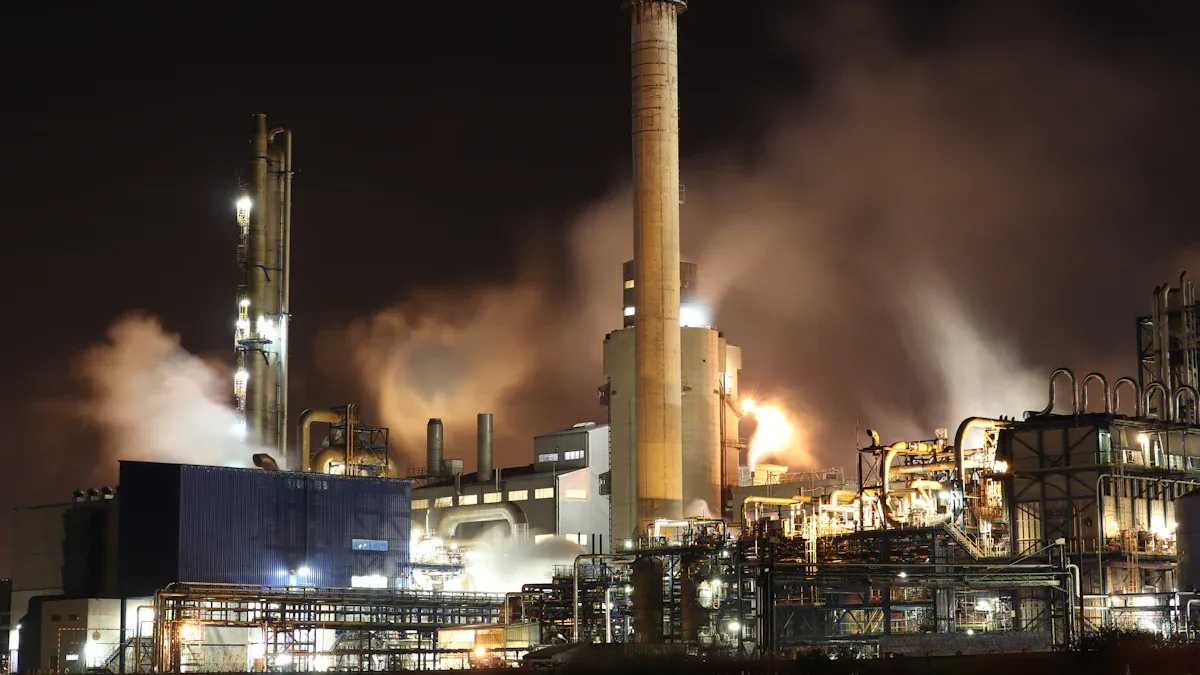
Types Of Coal Used
You start by choosing the right type of coal. The kind of coal you use will change the quality of the activated carbon you get. Here are the main types:
Bituminous coal: This is the most common choice. It gives you a good balance of strength and pore structure.
Sub-bituminous coal: You can use this for a wide range of applications. It also creates a strong and porous product.
Low-rank coals: These have higher reactivity and more natural pores. You get activated carbon with increased porosity, which means it can trap more pollutants.
You need to pick the right coal to match your needs. The coal type affects how well the final product works.
Activation Methods
You turn coal into activated carbon using two main steps: carbonization and activation. First, you heat the coal in a low-oxygen environment. This removes unwanted parts and leaves behind a carbon-rich material. Next, you activate the carbon to open up the pores.
There are two main activation methods:
Activation Method | Advantages | Disadvantages |
|---|---|---|
Physical Activation | Produces high-quality activated carbon with large surface area and well-developed pore structure. Environmentally friendly process. | Requires high temperatures and long activation times, increasing production costs. |
Chemical Activation | Faster and more energy-efficient, can produce activated carbon with higher specific surface area and uniform pore size distribution. | Use of hazardous chemicals, potential residual chemicals in activated carbon, and higher costs. |
You can also use new methods like one-step ammonia activation. This creates a wider range of pore sizes, which helps trap more types of pollutants.
Quality And Performance Factors
You want your activated carbon to work well and last long. Several factors affect its quality:
Type of coal: Different coals give you different pore structures.
Activation method: Physical or chemical activation changes the surface area and pore size.
Activation temperature and time: Higher temperatures and longer times usually create more pores but can lower strength.
Ratio of activating agent to coal: This changes how many pores form.
Manufacturers check quality using these indicators:
Quality Indicator | Optimal Value | Impact on Performance |
|---|---|---|
900 to 1100 mg/g | Shows how much the carbon can adsorb. Important for water and gas cleaning. | |
Moisture Content | Less than 5% | Too much water lowers efficiency. |
Ash Content | Less than 10% | High ash can block pores and reduce cleaning power. |
BET Surface Area | 800 to 1500 m²/g | Larger surface area means better pollutant removal. |
Note: Making high-quality activated carbon costs a lot of energy. You also need to follow environmental rules to keep the process safe and clean.
Forms And Physical Characteristics
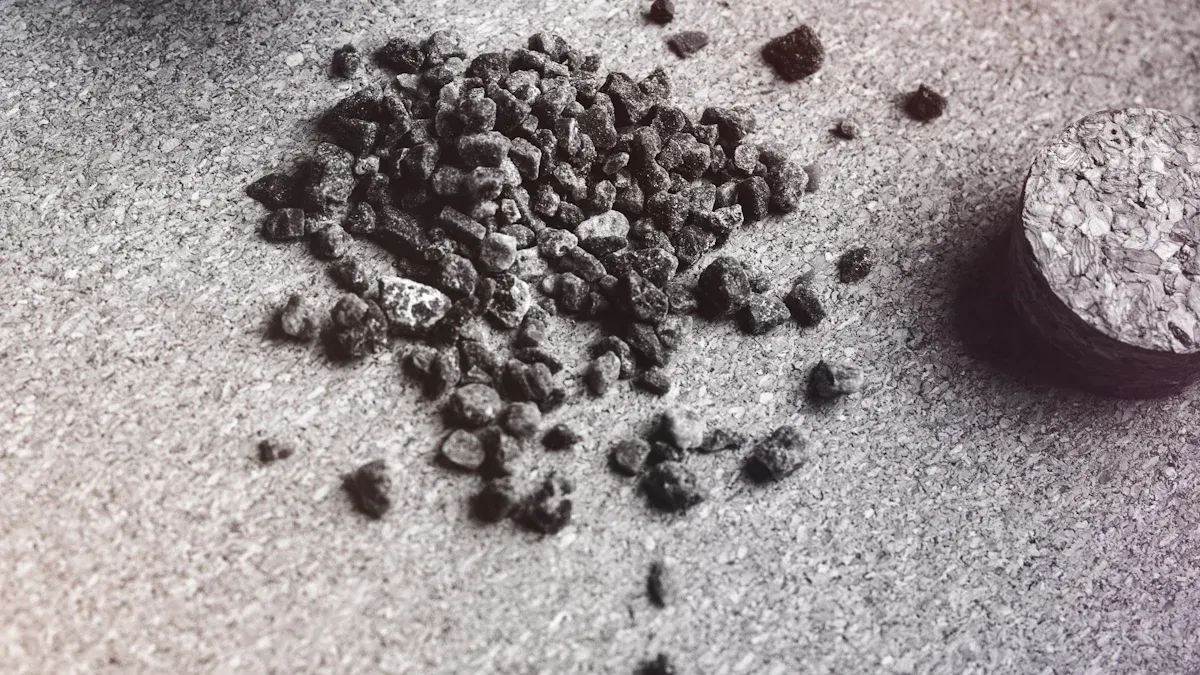
Granular, Pelletized, And Powdered Forms
You can choose coal based activated carbon in three main forms: granular, pelletized, and powdered. Each form works best for certain tasks. Granular activated carbon has larger particles and fits well in filters for water and air. Pelletized carbon comes in small, solid cylinders. You often use pellets in air purification systems because they pack tightly and resist breaking. Powdered activated carbon has tiny particles. You use it when you need fast adsorption, such as in emergency water treatment.
Here is a table showing typical applications for each form:
Physical Form | Typical Applications |
|---|---|
Granular | Water treatment, air purification, catalyst support |
Pelletized | Removal of exhaust gases, odors, industrial air cleaning |
Powdered | Decolorization of syrups, pharmaceutical purification |
You get a balanced mix of pores, high hardness, and cost-effective performance with coal based activated carbon. This makes it a smart choice for many uses.
Surface Area And Pore Structure
You will notice that each form has a different surface area and pore structure. Granular activated carbon gives you a very high surface area with a rich mix of micropores and mesopores. Pelletized carbon also offers high surface area and works well for organic compounds. Powdered activated carbon has the highest surface area and fine particles, so it adsorbs contaminants quickly.
Type of Activated Carbon | Surface Area Characteristics | Pore Structure Characteristics |
|---|---|---|
Granular | Very high surface area | Rich in micro, meso, few macropores |
Pellet | High surface area | Developed pores, good for organics |
Powdered | Extremely high surface area | Fine particles, rapid adsorption |
Tip: If you need fast results, powdered activated carbon works best. For long-term filtration, granular or pelletized forms are more durable.
Handling And Storage
You need to handle and store coal based activated carbon carefully to keep it working well. Always store it in a dry place with less than 60% humidity. Moisture can fill the pores and lower its effectiveness. Keep it away from strong acids and oxidizing agents to prevent dangerous reactions. Use sealed containers or bags to protect the carbon from moisture and dust.
Wear dust masks, goggles, and gloves when handling the material.
Minimize dust by using enclosed systems or slightly wetting the carbon.
Store in a humidity-controlled area.
Keep away from incompatible substances.
You protect both the carbon and yourself by following these steps. Proper handling keeps the carbon ready for your next cleaning task.
Applications And Uses
Water Purification
You can use coal based activated carbon to clean water in many ways. The material works well because its pores trap chemicals and unwanted substances. When you run water through a filter with this carbon, you remove chlorine quickly. The carbon changes chlorine into a harmless chloride ion in just seconds. This happens in the first layers of the filter. You can remove about one pound of chlorine for every pound of carbon at a flow rate of 3 to 5 gallons per minute per cubic foot.
Coal based activated carbon also removes organic compounds from water. These are often non-polar molecules, like pesticides or industrial chemicals. The carbon attracts these molecules and holds them inside its pores. You can expect to remove about 0.1 pound of organics for every pound of carbon at a flow rate of 1 to 2 gallons per minute per cubic foot. This makes your water taste and smell better.
Removes chlorine fast and completely
Traps organic compounds, including pesticides and solvents
Improves taste and odor of drinking water
Note: You will find this carbon in home water filters, municipal water plants, and even in bottled water production.
Air And Gas Purification
You can use coal based activated carbon to clean the air you breathe. The material has a large surface area and many pores. These features help it trap gases and volatile organic compounds (VOCs) as air passes through. You will see this carbon used in air purifiers, face masks, and industrial exhaust systems.
Coal based activated carbon works well for VOCs because it has both hydrophilic and hydrophobic sites. This means it can attract and hold both polar and non-polar gases. The carbon’s structure lets it capture a wide range of chemicals, making indoor air safer and fresher.
Traps odors and harmful gases in factories
Used in masks to protect workers and the public
Tip: If you want to reduce chemical smells or pollution in your home or workplace, this carbon is a reliable choice.
Industrial And Chemical Uses
You will find coal based activated carbon in many industries. Its ability to trap different chemicals makes it valuable in factories, water plants, and even gold mines. Here is a table showing where you might see it used:
Application | Industrial Sector |
|---|---|
Removal of volatile organic compounds | Environmental and Chemical Industry |
Hydrogen Sulfide removal | Oil and Gas Industry |
Waste gas removal | Industrial Processing |
Bacteria inhibition in drinking water filters | Water Treatment |
Removal of taste and odor causing compounds | Food and Beverage Industry |
Recovery of gold | Mining Industry |
Removal of chlorine and chloramine | Water Treatment |
You can use coal based activated carbon to recover precious metals like gold and silver. It also helps remove hydrogen sulfide from natural gas and stops bacteria from growing in water filters. The food and beverage industry uses it to improve taste and remove unwanted smells.
Used in mining to recover gold
Cleans gases in oil and chemical plants
Improves water and food quality
Odor Control
You can control bad smells with coal based activated carbon. The material works well for small molecules that cause odors. You will see it used in pet litter boxes, refrigerators, and even hunting gear to keep things smelling fresh.
Here is a table comparing different types of activated carbon for odor control:
Type of Activated Carbon | Cost-Effectiveness | Adsorption Capability | Suitability for Odor Control |
|---|---|---|---|
Coal-based | High | Good for small molecules | Effective in various applications |
Coconut shell | Moderate | Excellent for gas molecules | Very effective for odor removal |
Wood-based | Low | Moderate | Less effective for odor control |
Coal based activated carbon is versatile. You can use it in powdered, granular, or pelletized forms. It works in many places, from homes to factories.
Controls odors in homes, cars, and workplaces
Used in air filters and cleaning products
Helps keep pet areas and sports gear fresh
Tip: Choose coal based activated carbon if you need a cost-effective and reliable solution for odor problems.
Advantages And Limitations
Benefits Over Other Activated Carbons
You get strong adsorption power when you use coal-based activated carbon. This material has a high specific surface area and a balanced pore structure. You can see how it compares to other types in the table below:
Type of Activated Carbon | Specific Surface Area (m²/g) | Pore Structure | Adsorption Capacity |
|---|---|---|---|
Coal-based | 800-1200 | Microporous | Strong for gases |
Wood-based | 500-1000 | Higher proportion | Better for liquids |
Coal-based activated carbon works well for gases and a wide range of pollutants. You can use it in many industries because it handles both small and large molecules. You also benefit from its durability and ability to be regenerated for reuse.
Tip: If you need a versatile adsorbent for both air and water, coal-based activated carbon is a reliable choice.
Cost And Sustainability
You often find that coal-based activated carbon costs less at first. The production process uses coal, which is widely available. However, you should think about long-term costs and environmental impact. Here are some important points:
Mining coal can damage landscapes and destroy habitats.
The production process uses a lot of energy and creates high CO₂ emissions.
Coal is a non-renewable resource, so prices can change quickly.
New rules and carbon taxes may increase costs in the future.
Choosing sustainable alternatives can help you avoid future risks.
Note: Investing in greener options can protect your business from rising costs and help the environment.
Limitations And Considerations
You need to know the limits before you choose coal-based activated carbon. The pore structure is not always uniform, so it may not remove very small contaminants as well as other types. High ash content can block pores and even cause leaching in sensitive uses. Used carbon can be hard to dispose of and may become hazardous waste.
Regeneration works, but efficiency drops a little after each cycle.
After five cycles, you lose only about 3% efficiency.
Partial oxidation during regeneration can lower performance.
Performance Impact | |
|---|---|
Thermal Treatment | Keeps adsorption strong and allows for reuse. |
Iodine Number Boost | Improves ability to trap pollutants. |
Environmental Gains | Meets rules and supports green practices. |
Tip: Always check the ash content and regeneration method to get the best results for your application.
You have learned that this material traps pollutants with its porous structure and large surface area. The manufacturing process includes these steps:
Select the right coal.
Grind and shape the material.
Heat it without oxygen.
Activate with steam.
Dry and cool.
Screen by size.
Test and package.
You can use it in water, air, and food industries. The table below shows its benefits:
Application Area | Benefits |
|---|---|
Water Treatment | Removes tough pollutants and improves safety. |
Air Purification | Adsorbs harmful gases and makes air cleaner. |
Industrial Wastewater | Treats complex pollutants and helps meet regulations. |
You should consider particle size, taste, and environmental impact before choosing this material for your needs.
FAQ
What is the main use of coal based activated carbon?
You use coal based activated carbon mainly to clean water and air. It traps chemicals, odors, and pollutants in its tiny pores. You find it in water filters, air purifiers, and many industrial systems.
How do you know when to replace activated carbon?
You should replace activated carbon when you notice a drop in cleaning performance. Water or air may start to smell or taste bad again. Some filters have indicators to help you know when to change them.
Is coal based activated carbon safe for drinking water?
Yes, you can safely use coal based activated carbon in drinking water filters. It removes harmful chemicals and improves taste. Make sure you follow the manufacturer’s instructions for use and replacement.
Can you reuse coal based activated carbon?
You can sometimes regenerate and reuse coal based activated carbon. However, each cycle lowers its efficiency a little. For best results, you should use fresh carbon for critical cleaning tasks.