
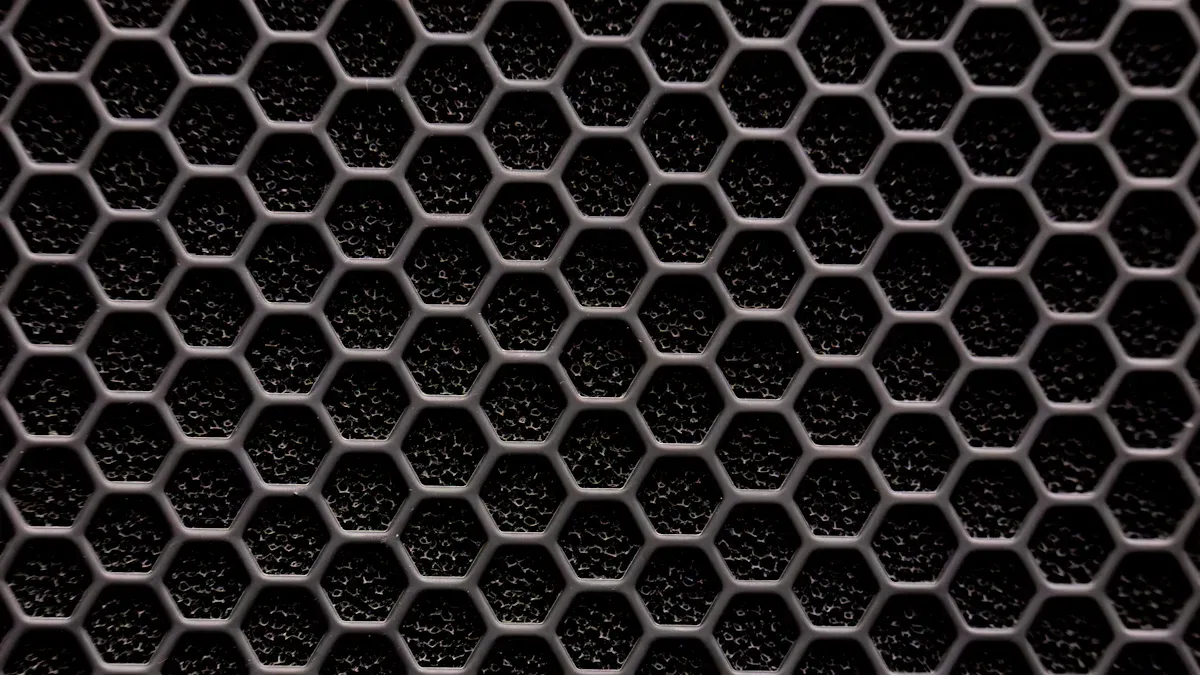
Honeycomb activated carbon helps you clean air by trapping harmful gases and odors. You see its eco-friendly benefits because it comes from renewable materials like agricultural waste. Its honeycomb design lets air flow easily, so it removes pollutants quickly. You find this material in air purifiers and filters, and it works better than other forms because it covers more surface area. You get clear answers about its uses and why people choose it for cleaner, safer environments.
Key Takeaways
Honeycomb activated carbon effectively cleans air by trapping harmful gases and odors, making it a great choice for air purifiers and filters.
The unique honeycomb design allows for better airflow and a larger surface area, enhancing its ability to remove pollutants quickly and efficiently.
Using honeycomb activated carbon supports eco-friendly practices, as it is made from renewable materials and has a long service life, reducing waste.
Regularly check and replace your honeycomb activated carbon filter every 6 to 12 months to maintain optimal air quality and performance.
Choose the right type of activated carbon based on your needs; coconut shell carbon is best for air purification, while coal-based carbon suits industrial applications.
Honeycomb Activated Carbon Overview
What It Is
You use honeycomb activated carbon to clean air and remove harmful substances. This material comes from high-quality sources like coal, coconut shells, and wood. You see it shaped into a honeycomb pattern, which gives it many small channels. These channels let air pass through easily and help trap pollutants. You find honeycomb activated carbon in air purifiers, factory exhaust systems, and even in places that treat wastewater.
You choose this material because it is eco-friendly. It reduces odors and pollutants in homes, factories, and public spaces. The strong structure resists water, acids, and alkalis, so you can use it in many different environments. You also benefit from its long service life, which means you do not need to replace it often.
Tip: You can use honeycomb activated carbon in both air and water purification systems. Its design makes it strong and reliable for many uses.
Key Features
You notice several features that make honeycomb activated carbon stand out:
The honeycomb structure gives you a much larger surface area than granular or powdered carbon. This means it can trap more harmful gases and odors.
The many through holes in the honeycomb design lower air resistance. You get better airflow and higher mechanical strength.
You find that the contact area for adsorption is up to four times larger than with granular carbon, especially in high-density honeycomb blocks.
The filter lasts between 6 to 12 months in most air purification systems. If you use it in areas with a lot of pollution, you may need to replace it more often.
You can install and maintain these filters easily. This is important for places like restaurants, hospitals, and factories where regular upkeep is needed.
Here is a table showing the main uses for honeycomb activated carbon:
Application Type |
|---|
Indoor Air Purification |
Catering Fume Exhaust Gas Treatment |
Factory Organic Waste Gas Treatment |
Organic Solvent Adsorption and Recovery |
Catalyst Carrier |
Daily Waste Gas Treatment |
Air Purification |
Others |
You also benefit from its eco-friendly properties:
Eco-Friendly Property | Description |
|---|---|
Odor and Pollutant Reduction | Reduces odors and pollutants in many settings. |
Material Composition | Made from coal, coconut shell, and wood activated carbon powders. |
Water and Chemical Resistance | Strong, water-resistant, and resists acids and alkalis. |
Applications | Used in wastewater treatment, gas purification, and as a catalyst carrier. |
Adsorption Capacity | Large surface area and high adsorption capacity. |
Service Life | Lasts a long time due to durable materials. |
You see that honeycomb activated carbon works well in many industries. You get a reliable, eco-friendly solution for air and water purification.
Structure and Materials
Honeycomb Design
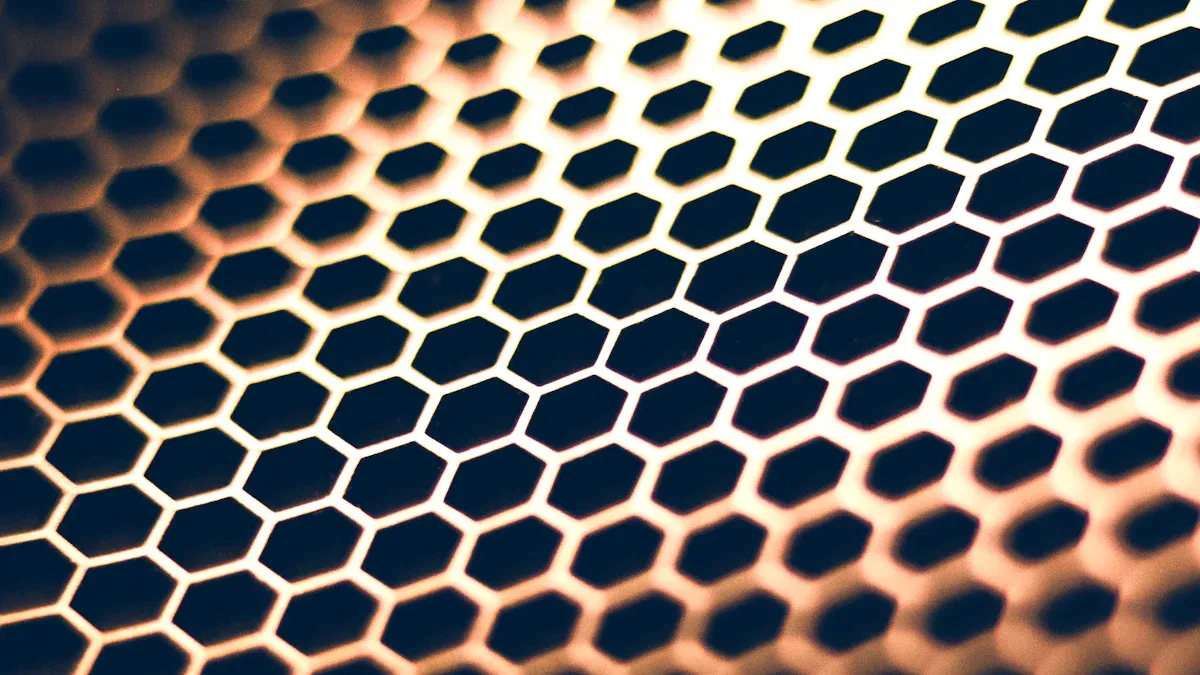
You notice that the honeycomb design looks like a grid with many small, square or hexagonal channels. This special shape gives you several advantages. The open channels let air move smoothly through the filter. You do not see much resistance, so your air system does not have to work as hard. This means you save energy and lower your electricity bills.
The honeycomb structure also gives you a much larger surface area compared to traditional filters. More surface area means more places for harmful gases and odors to stick. You get cleaner air with less effort. The design also makes the filter lightweight and easy to fit into different machines.
Here is a table that shows how honeycomb filters compare to traditional filters:
Feature | Honeycomb Filters | Traditional Filters |
|---|---|---|
Surface Area | Higher surface area for effective adsorption | Lower surface area, limiting efficiency |
Airflow Resistance | Reduced airflow resistance, enhancing performance | Higher resistance, straining systems |
Flexibility | Lightweight and flexible for integration | Rigid structure, less adaptable |
Lifespan | Longer lifespan, fewer replacements | Shorter lifespan, more frequent changes |
Note: The honeycomb structure can reduce energy use by up to 30% in large air systems. You help the environment and save money at the same time.
Material Sources
You find that honeycomb activated carbon uses different raw materials. The most common sources are coal, coconut shells, and sometimes wood or even cork. Each material gives you unique benefits.
Coconut shell activated carbon has a high surface area and strong mechanical strength. You use it for air and water purification because it traps small molecules like VOCs (volatile organic compounds) very well.
Coal-based activated carbon has larger pores. You use it for bigger molecules, such as in industrial wastewater or flue gas treatment.
Cork offers a uniform pore structure and comes from a renewable source. You can harvest cork without harming the tree, making it a green choice.
Here is a table that compares coconut shell and coal-based activated carbon:
Property/Characteristic | Coconut Shell Activated Carbon | Coal-Based Activated Carbon |
|---|---|---|
Mechanical Strength | High, unbreakable | Lower, easy to break |
Ash Content | Low (around 3%) | Higher (around 12%) |
Pore Structure | Microporous, fine pores | Mesoporous/macroporous, fewer micropores |
Specific Surface Area | Lower (500-1200 m²/g) | |
Adsorption Capacity | Best for small molecules (e.g., VOCs) | Good for larger molecules |
Common Applications | Air and water purification | Wastewater, flue gas treatment |
Tip: If you want the best performance for air purification, choose coconut shell activated carbon. For heavy-duty industrial use, coal-based carbon works well.
You see that the right material and design help you get the cleanest air with the least energy and cost.
How It Works
Adsorption Process
You rely on honeycomb activated carbon to clean air through a process called adsorption. In this process, harmful molecules stick to the surface of the carbon. When polluted air passes through the honeycomb structure, gases like volatile organic compounds (VOCs) and hydrogen sulfide (H₂S) attach to the carbon’s surface. This happens because of weak forces called van der Waals forces. You see this effect when the carbon traps odors and chemicals from the air.
Sometimes, chemical reactions also take place on the surface. For example, when hydrogen sulfide meets oxygen on the carbon, it changes into sulfur and water. The reaction looks like this:
2H₂S + O₂ → 2S + 2H₂O
Over time, sulfur builds up on the carbon, which can reduce how much more it can adsorb. You need to replace or regenerate the filter when this happens.
You get strong performance from honeycomb activated carbon because of its large surface area. The structure gives you many tiny spaces where pollutants can stick. You find that the specific surface area usually ranges from 700 to 1200 square meters per gram. This means you have many places for harmful molecules to attach, making the filter very effective.
Here are some key points about the adsorption process:
You remove VOCs efficiently because the honeycomb design offers a large surface area and high micropore volume.
You experience almost no pressure drop, so air moves easily through the filter.
You benefit from dynamic adsorption, which means the filter works well even when air flows quickly.
Tip: You should check your filter regularly. If you notice strong odors or less airflow, it may be time to replace the honeycomb activated carbon.
Airflow and Efficiency
You notice that the honeycomb structure helps air move smoothly through the filter. The open channels reduce resistance, so your air system does not have to work as hard. This design saves energy and keeps your air cleaner for longer.
The unique hexagonal or square pores give you more contact points for pollutants. You get better adsorption because the air touches more of the carbon surface. The uniform pore size also means that air and gases flow evenly, which helps the filter capture more pollutants.
You find that honeycomb activated carbon works better than traditional filters because it has more surface area and less airflow resistance.
You see that the filter removes VOCs and odors quickly, even in places with high pollution.
You get reliable performance in both home and industrial settings.
Humidity can change how well your filter works. When the air is humid, the carbon can trap more sulfur dioxide (SO₂), especially if the carbon has a lot of oxygen. However, too much moisture can cause problems. The filter may become heavy, and the binding materials can break down. This leads to higher airflow resistance and can make your air system use more energy.
Here is a table that shows how humidity affects honeycomb activated carbon:
Humidity Level | Adsorption Efficiency | Airflow Resistance | Filter Durability |
|---|---|---|---|
Low | Normal | Low | High |
Moderate | Improved for SO₂ | Low | High |
High | May increase | High | Can decrease |
Note: You should avoid using honeycomb activated carbon in very damp places unless the filter is designed for high humidity. This helps you keep your air system running smoothly and saves energy.
You get the best results when you use honeycomb activated carbon in clean, dry air systems. The special design gives you high adsorption capacity, low energy use, and long-lasting performance.
Uses & Benefits
Main Applications
You can use honeycomb activated carbon in many places where clean air matters. You see it most often in industrial air purification systems. Factories use it to treat organic waste gases and keep the air safe for workers and the environment. Recent market surveys show that more industries now choose this material for their air systems. The U.S. Environmental Protection Agency reports a 20% rise in its use for industrial air purification over the past five years.
You also find honeycomb activated carbon in residential and commercial exhaust systems. It helps remove odors and harmful gases from kitchens, offices, and public spaces. This keeps the air fresh and helps meet local emission rules. In places like offices and transportation hubs, it removes dangerous chemicals such as benzene and formaldehyde, making indoor air healthier.
The honeycomb structure works well in low concentration, low flow resistance systems. You get strong removal of VOCs, odors, chlorine, and other organic matter. The filter captures and neutralizes harmful gases, so you breathe cleaner air every day.
Tip: You can use honeycomb activated carbon in both large factories and small homes. Its design fits many types of air systems.
Advantages Over Other Forms
You gain several benefits when you choose honeycomb activated carbon over other types. The filter gives you higher adsorption efficiency and lower pressure drops than granular activated carbon. This means your air system works better and uses less energy. You also save money over time because the filter lasts longer and needs fewer replacements.
Here is a table that compares honeycomb activated carbon with granular activated carbon:
Factor | Honeycomb Activated Carbon | Granular Activated Carbon |
|---|---|---|
Pressure Drops | Lower | Higher |
Adsorption Efficiencies | Higher | Lower |
Total Cost of Ownership | More Cost-Effective | Less Cost-Effective |
You help the environment when you use honeycomb activated carbon. It has a lower environmental footprint because you replace it less often. The filter can be regenerated, which reduces waste. It is made from renewable plant-based materials, so it is more sustainable for large-scale use. The non-toxic nature keeps your indoor air safe, and the long service life means less waste goes to landfills.
Made from renewable materials, supporting eco-friendly choices.
Non-toxic, so you do not add harmful substances to your air.
Regeneration extends the filter’s life and cuts down on waste.
Note: You make a smart choice for both your wallet and the planet when you pick honeycomb activated carbon for air purification.
You have learned that honeycomb activated carbon gives you powerful air purification with an eco-friendly design. The honeycomb structure boosts airflow and surface area, making it strong and efficient. You can see why it stands out in the table below:
Reason | Benefit |
|---|---|
Removes hazardous gases, odors, and VOCs quickly | |
Pollutant Trapping Efficiency | Absorbs up to 95% of formaldehyde from indoor air in one day |
Structural Advantages | Maximizes surface area while staying light and durable |
To get started, you should:
Set a schedule for filter replacement.
Explore new options like composite honeycomb carbons for better results.
Honeycomb activated carbon will help you create cleaner, safer spaces and support a greener future.
FAQ
How often should you replace honeycomb activated carbon filters?
You should replace your filter every 6 to 12 months. If you notice strong odors or reduced airflow, change it sooner. Heavy pollution may require more frequent changes.
Can you recycle or regenerate honeycomb activated carbon?
You can regenerate some honeycomb activated carbon by heating or washing it. Always check the manufacturer’s instructions. Not all filters allow safe regeneration.
Is honeycomb activated carbon safe for home use?
Yes, you can use honeycomb activated carbon safely at home. It does not release harmful chemicals. You improve indoor air quality without adding toxins.
What pollutants does honeycomb activated carbon remove?
You remove volatile organic compounds (VOCs), odors, formaldehyde, and some industrial gases. The filter also traps smoke and certain chemicals from the air.
Tip: You get the best results when you use the right filter size for your space.