
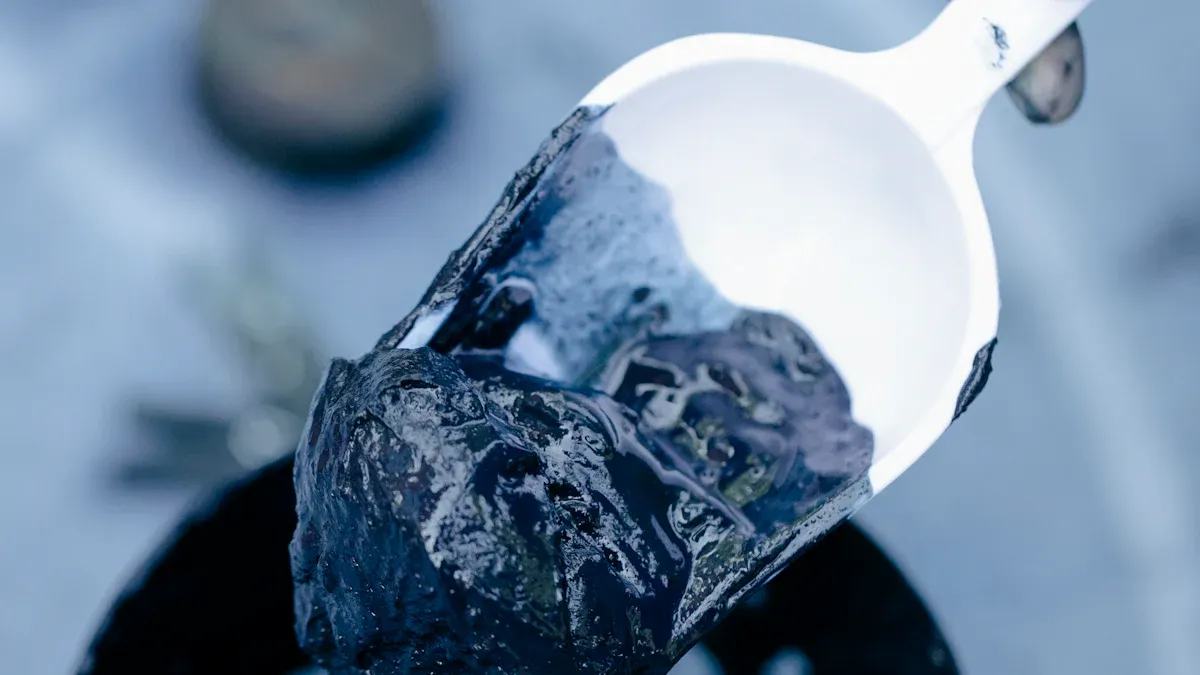
You can use activated carbon to trap mercury from water and air, making your environment safer. Mercury is dangerous because it can build up in your body and cause serious problems.
Pregnant women who eat fish with high mercury can harm their unborn babies.
Children exposed to mercury may struggle with movement or thinking.
Mercury can damage your nerves, cause memory loss, and even hurt your skin.
Many laws require you to keep mercury levels low. For example:
Regulatory Standard | Description |
|---|---|
Maximum Contaminant Level (MCL) | Drinking water must have less than 0.002 mg/L inorganic mercury. |
Mercury and Air Toxics Standards | Power plants must lower mercury emissions to protect health. |
You can rely on Mercury Removal Activated Carbon because its special surface traps mercury particles through adsorption. This helps you meet safety standards and keep your water and air clean.
Key Takeaways
Activated carbon effectively traps mercury from water and air, making environments safer.
Choose activated carbon with a high surface area and micropores for better mercury removal.
Using the right type of activated carbon and ensuring proper contact time boosts mercury capture efficiency.
Activated carbon filters are widely used in municipal water treatment and air purification systems.
Consider combining activated carbon with other methods for improved mercury removal results.
Activated Carbon Basics
Structure and Surface Area
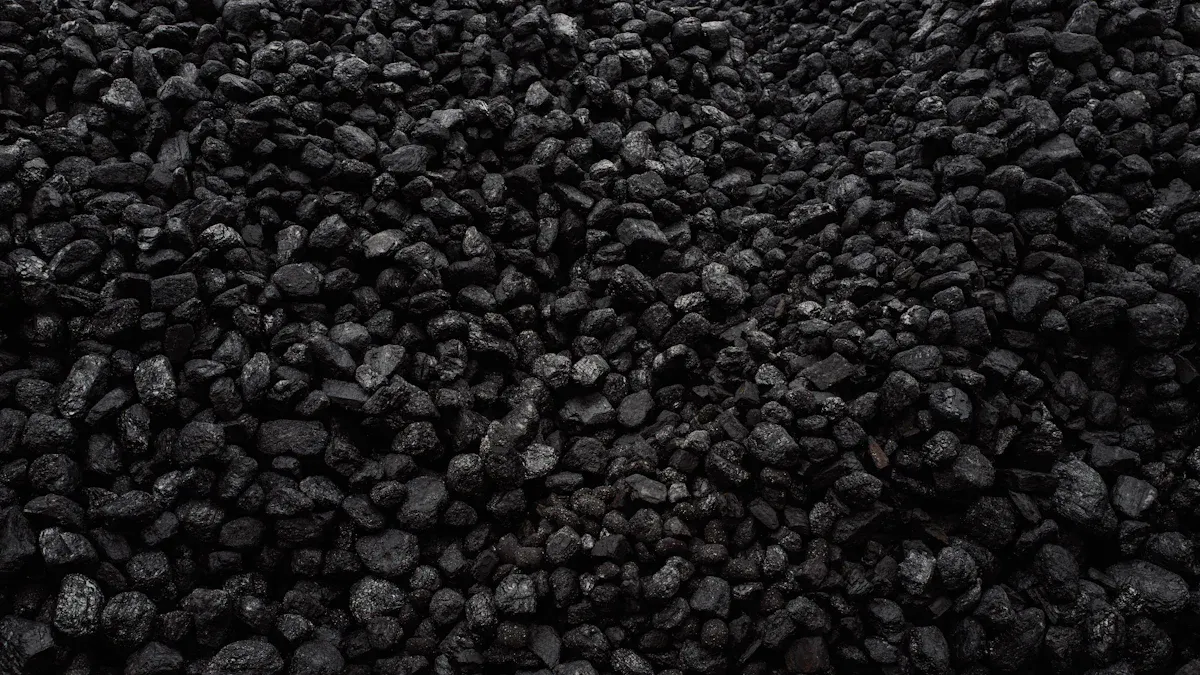
You can think of activated carbon as a sponge with millions of tiny holes. These holes, called pores, give activated carbon a huge surface area. The more surface area, the more places mercury can stick. Some types of activated carbon, like MERSORB® LW, have a surface area of 1,000 square meters per gram. Other types, such as prepared PAMC, have surface areas around 348 to 372 square meters per gram.
A high surface area means you get more spots for mercury to attach. This makes activated carbon very good for cleaning water and air.
The pore structure also matters. When you use activated carbon with lots of micropores, you get better mercury removal. Micropores are tiny holes that trap small particles like mercury. If you choose activated carbon with more micropores and acidic groups, you will see higher mercury adsorption. The process works in two steps: first, mercury sticks quickly to the surface, then it moves slowly into the pores.
More micropores = better mercury removal
Higher total pore volume = more mercury can be trapped
Surface chemistry is important for capturing mercury
Types of Activated Carbon
You can find different types of activated carbon for mercury removal. Each type has special features:
Type of Activated Carbon | Key Properties |
|---|---|
Powdered Activated Carbon | Used for waste incineration and wastewater treatment; fine size; good for mixing with liquids |
Sulfur Impregnated Activated Carbon | Used in coal-fired power plants; contains sulfur; very effective for both elemental and oxidized mercury |
Silver Impregnated Activated Carbon | Contains silver; captures both elemental and oxidized mercury; used in special air and water filters |
Coconut shell activated carbon stands out for mercury removal. Its microporous structure makes it highly effective for trapping small contaminants like mercury. Coal-based activated carbon works well for larger organic compounds, but not as well for mercury. Wood-based activated carbon is best for bigger molecules, not for fine particles like mercury.
If you want the best results, you should choose Mercury Removal Activated Carbon with a high surface area and lots of micropores. This will help you remove mercury from water and air more efficiently.
Mercury Removal Activated Carbon Mechanisms
Adsorption Process
You can rely on Mercury Removal Activated Carbon to trap mercury using two main methods: physical adsorption and chemical adsorption. Physical adsorption happens when mercury sticks to the surface of activated carbon through weak forces. Chemical adsorption forms stronger bonds between mercury and special groups on the carbon surface.
Activated carbon adsorbs mercury through both physisorption and chemisorption.
Chemisorption uses surface groups like oxygen, sulfur, or chlorine to bond with mercury.
Water increases the number of exposed oxygen groups, making chemisorption stronger.
Tip: If you want better mercury removal, choose activated carbon with more oxygen and sulfur groups. These groups help mercury stick more tightly.
You can see the difference between physical and chemical adsorption in the table below:
Type of Adsorption | Characteristics | Effectiveness in Mercury Capture |
|---|---|---|
Physical Adsorption | Mediated by weak van der Waals interactions | Ineffective |
Chemisorption | Involves strong bonding with functional groups on activated carbon surface | Significantly enhances efficiency |
You get better results when you use Mercury Removal Activated Carbon that supports chemisorption. Oxygen and sulfur groups play a big role. HCl and O2 can boost mercury adsorption by helping oxidation and chemisorption reactions. SO2 can also improve mercury capture by forming sulfur spaces on the carbon surface.
Functional Groups and Impregnation
You can improve mercury removal by adding special functional groups to activated carbon. Oxygen groups like carbonyl and ester make the carbon surface more attractive to mercury. When you increase these groups, you see higher mercury removal efficiency. Each functional group works differently at different temperatures, so you need to match the carbon to your needs.
Carbonyl and ester groups enhance mercury capture.
The combined effects of surface area and functional groups determine overall performance.
Different groups influence mercury adsorption in unique ways.
If you want even better results, you can use impregnation agents. These agents add extra chemicals to the carbon surface, making it more effective for mercury removal. The table below shows some common impregnation agents and their impact:
Impregnation Agent | Mercury Adsorption Capacity | Notes |
|---|---|---|
CuCl2-impregnated AC | Three times higher than raw | Better elemental mercury oxidation performance than commercial brominated AC. |
FeCl3-impregnated AC | Enhanced performance | Higher efficiency in simulated flue gas conditions. |
HCl-impregnated AC | Approximately 4 times higher | Effectiveness varies based on concentration and conditions. |
You can choose Mercury Removal Activated Carbon with the right functional groups and impregnation agents to match your water or air treatment needs. This helps you capture more mercury and keep your environment safer.
Applications in Water Treatment
Mercury Removal Efficiency
You can achieve high mercury removal rates from water when you use activated carbon. The amount of activated carbon you add makes a big difference. If you use a small amount, you can still remove most of the mercury. When you increase the dosage, you can reach almost complete removal. The table below shows how different amounts of activated carbon affect mercury removal:
Mercury Removal Rate (%) | Mercury Concentration (mg/l) | |
|---|---|---|
0.5 g | 59% – 95% | 1.17 – 0.2 |
5 g | 85% – 100% | 1.17 – 0.2 |
You can see that higher doses of activated carbon give you better results. Other factors also play a role in how well Mercury Removal Activated Carbon works. These include how long the water stays in contact with the carbon, the type of carbon you use, the size of the particles, the water temperature, the pH level, and the design of your treatment system. The table below lists these important factors:
Factor | Description |
|---|---|
Contact time | Longer contact improves mercury removal efficiency. |
Carbon type | Different sources (e.g., coconut shell, wood) vary in effectiveness. |
Particle size | Smaller particles enhance treatment but may reduce flow. |
Water temperature | Higher temperatures generally improve adsorption. |
pH levels | Affects the efficiency of heavy metal removal. |
System design | Proper design is crucial for optimal performance. |
Tip: You can boost mercury removal by choosing the right type of activated carbon and making sure your system has enough contact time.
Practical Uses in Filtration
You can find activated carbon filters in many water treatment systems. These filters help keep your water safe by removing mercury and other harmful substances. Here are some common ways you might see activated carbon used:
Application Type | Description |
|---|---|
Municipal Water Treatment | Activated carbon filters are used to treat drinking water at municipal plants, ensuring clean and safe water. |
Wastewater Treatment | Employed in treating wastewater by adsorbing pollutants before water is released back into the environment. |
Point-of-Use Systems | Often used in household water filters to improve water quality by removing impurities. |
You can use activated carbon in packed beds or contactors for effective mercury removal. Some advanced systems combine activated carbon with other processes to improve results. If you want to protect your home or community, you can rely on these filters to reduce mercury in your water.
Applications in Air Purification
Mercury Capture in Flue Gas
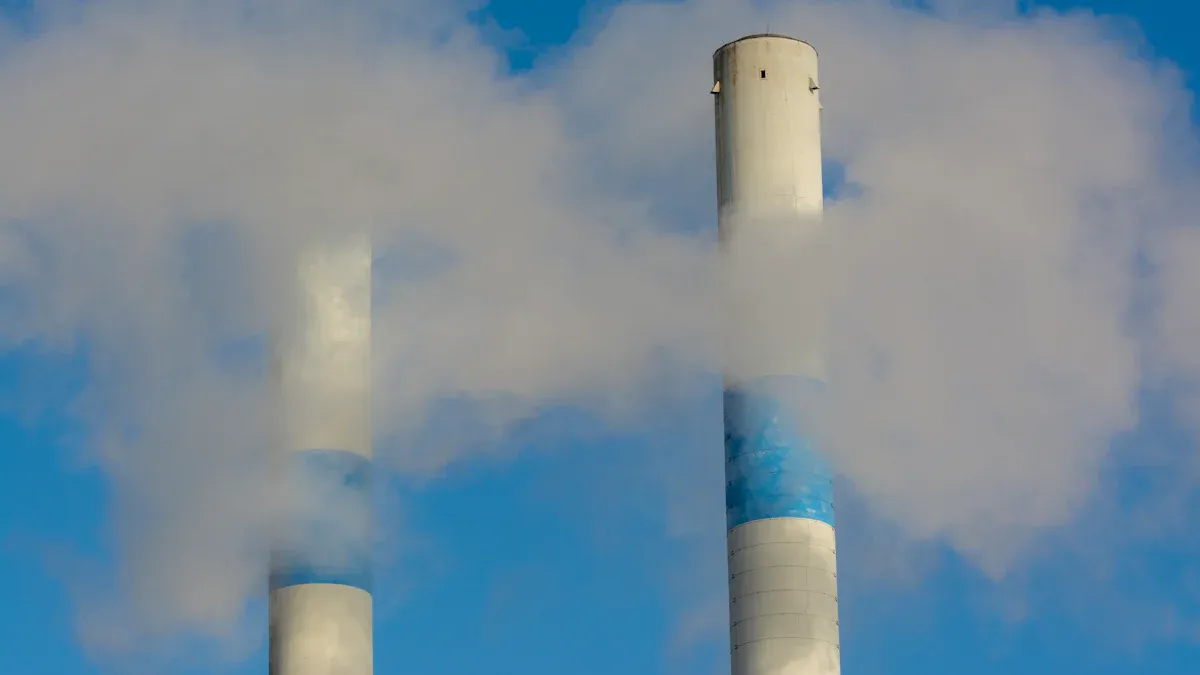
You can use activated carbon to remove mercury from the air, especially in places like power plants. When you inject activated carbon into the flue gas stream, it grabs mercury and holds it in the waste fly ash. This process helps you meet strict rules for mercury emissions. In many cases, you can reduce mercury emissions by 90% or more with this method.
You will find different air pollution control devices that use activated carbon. Here is how they perform:
Fixed-bed absorbers, wet scrubbers, and fabric filters can remove 75% to 82% of mercury from the air.
Electrostatic precipitators remove less mercury, with rates up to 22%.
The type of dry sorbent injection in fabric filters does not change the removal rate much.
You need to control the combustion process carefully to keep unburnt carbon in the flue gas. This helps the activated carbon work better. You also need to inject adsorbents actively to boost mercury capture. Sometimes, the cost of activated carbon can be high, and the amount of mercury in the air can change. You should check the quality of your activated carbon to make sure it works well.
Tip: Combining adsorbents with good filtration systems can help you get the best mercury removal results.
Combined Treatment Methods
You can improve mercury removal by using combined treatment methods with activated carbon. Many power plants use special types of activated carbon or mix it with other technologies. The table below shows some common methods:
Method | Description |
|---|---|
Impregnated Activated Carbon | You can inject sulfur- or metal-modified activated carbon to boost mercury removal in coal-fired power plants. |
Hybrid Filter Systems | You can combine activated carbon powder injection with hybrid filters for better mercury capture. |
Oxidation of Carbon Surfaces | You can use ozone to oxidize carbon surfaces, making them better at grabbing mercury from flue gas. |
Some new materials, like MoS2-based nanocomposites, can remove even more mercury than traditional activated carbon. These advanced methods show that you can keep improving air purification by combining different technologies.
If you want to get the most out of Mercury Removal Activated Carbon, you should consider using it with other treatment methods. This approach helps you reach higher mercury removal rates and keeps the air cleaner for everyone.
Benefits and Limitations
Advantages of Activated Carbon
You can count on activated carbon for many reasons when you want to remove mercury from water and air. Here are some key advantages:
Activated carbon has a large surface area and many tiny pores. This structure lets it trap mercury very well.
You can use activated carbon in many places, such as factories, power plants, and even home water filters.
Activated carbon works for both water and air, making it a flexible choice for different needs.
The process does not create sludge, so you do not have to worry about messy waste.
You can choose from different types of activated carbon or add special materials to improve mercury removal.
Activated carbon is cost-effective compared to many other methods.
It shows good selectivity for mercury and other heavy metals, which means it targets the right pollutants.
Note: Mercury is a global pollutant. Even small amounts can harm people and the environment. Removing mercury from wastewater and air is important for health and safety.
You can also reuse activated carbon if you use regeneration technologies. This helps you save money and reduce waste. Advances in regeneration make activated carbon more sustainable and lower its impact on the planet.
Challenges and Alternatives
You should know that activated carbon has some challenges. The cost can be high, especially if you need to remove a lot of mercury. The price for removing one kilogram of mercury can reach $150,000. Activated carbon can also have low mechanical strength and a short working life. The production process may cause environmental issues.
You may want to look at other options. Sulfur-impregnated carbons and sulfide minerals can remove mercury even better than regular activated carbon. Nano-ZnS is another material that works well because it has many sulfur sites for mercury to stick to. You can also use membrane technologies, which remove mercury with high selectivity. Adsorption methods like activated carbon are usually easier to use and cost less than membranes.
Tip: You can improve mercury removal by adding special groups, such as thiols, to your adsorbent. This makes both adsorption and membrane methods work better.
If you want the best results, compare different materials and methods. Choose the one that fits your needs, budget, and environmental goals.
You can rely on Mercury Removal Activated Carbon for strong mercury capture. Studies show activated carbon with high surface area and pore volume can adsorb up to 289 mg/g of mercury, even after five regeneration cycles. The table below highlights key performance factors:
Parameter | Value |
|---|---|
Maximum Adsorption Capacity | 289 mg/g |
Regeneration Cycles | 5 |
Affinity for Mercury | Strong |
Choose activated carbon based on your water or air quality, activation method, and pH needs. Always compare options to find the best fit for your mercury removal goals.
FAQ
How do you know when to replace activated carbon filters?
You should replace your filter when you notice a drop in water or air quality. Some filters have indicators. Check the manufacturer’s instructions for guidance.
Can you reuse activated carbon after mercury removal?
You can reuse activated carbon if you regenerate it. Special processes heat or treat the carbon to remove trapped mercury. Always follow safety guidelines.
Is activated carbon safe for home use?
Yes, you can safely use activated carbon in home water and air filters. Make sure you buy certified products and follow the instructions for best results.
What types of mercury does activated carbon remove?
Activated carbon removes both elemental and oxidized mercury. Impregnated carbons with sulfur or other agents work best for all mercury types.
Tip: Check the product label to see which mercury forms the filter targets.