
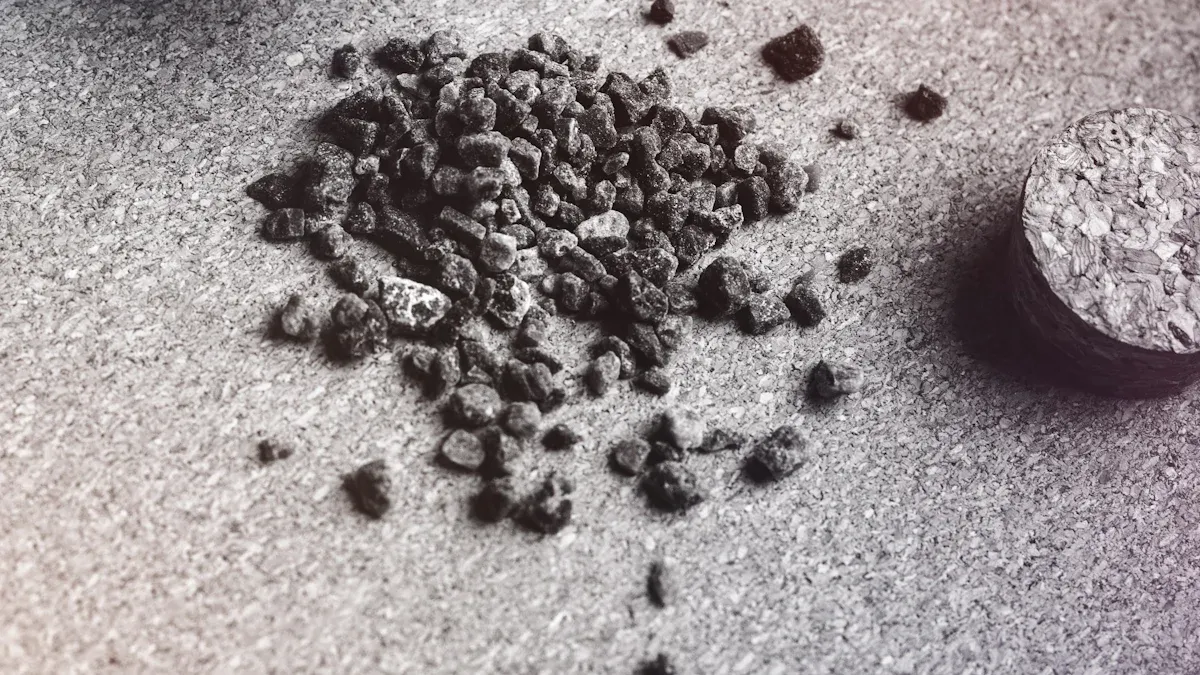
You use several types of activated carbon for food decolorization. The most common types include powdered, granular, pellet, coconut shell-based, chemically activated wood-based, and high-purity activated carbon. These types work well because they offer strong adsorption, high purity, and safety for food products. Certifications and regulatory compliance help you make sure the activated carbon meets strict food standards.
Activated Carbon Type | Mesopores | Supermicropores | Surface Basic Groups | Decolorization Effectiveness |
|---|---|---|---|---|
Carbon A | High | Medium | High | Excellent |
Carbon B | Medium | Low | Medium | Good |
Carbon C | Low | High | Low | Fair |
Food Decolorization Activated Carbon can remove up to 95% of color from sugar, making it a key material in many food processes.
Key Takeaways
Activated carbon types vary, including powdered, granular, and coconut shell-based. Each type suits different food processes.
High-purity activated carbon is essential for food safety. Look for certifications like FDA and NSF to ensure quality.
Proper removal of activated carbon after use is crucial. Use methods like filtration or centrifugation to avoid residue in food.
Sustainable options, like coconut shell-based carbon, help reduce environmental impact while maintaining food quality.
Follow best practices, such as optimizing pH and temperature, to enhance the effectiveness of activated carbon in food processing.
Main Types of Food Decolorization Activated Carbon
Powdered Activated Carbon (PAC)
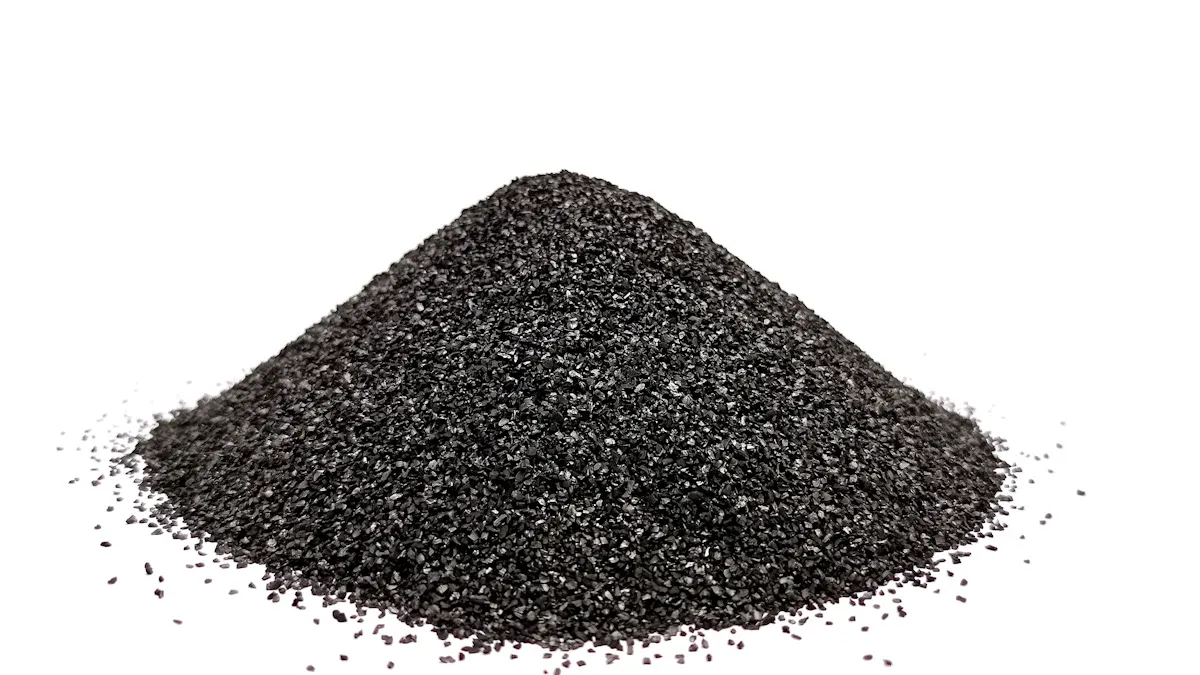
You will find powdered activated carbon as a fine, black powder with particle sizes less than 0.18 mm. This structure gives it a very large surface area, which means it can adsorb unwanted colors and impurities quickly. PAC comes from materials like coal, wood, or coconut shells. In food decolorization, you often use PAC because it works fast and removes pigments efficiently.
Tip: You can use PAC for decolorizing edible oils, juices, and alcoholic beverages. It is also the top choice for removing color from glycyrrhizin, a sweetener from licorice.
The optimal dosage of PAC usually ranges from 0.1% to 1.0% of the food material’s weight. For example, breweries use about 0.3% PAC to clear brown pigments from beer without changing its taste. PAC is not usually regenerated after use, so you dispose of it after one cycle.
Granular Activated Carbon | Pellet Activated Carbon | Powdered Activated Carbon | |
|---|---|---|---|
Particle Size | 0.2–5 mm | Diameter 1–5 mm | <0.18 mm |
Shape Features | Irregular granules | Regular cylindrical | Fine powder |
Adsorption Performance | Moderate speed, suitable for liquid adsorption | Ideal for gas adsorption, especially VOCs | Fastest adsorption rate, significant effect |
Mechanical Strength | High | Highest | Low |
Regeneration Ability | Multiple regenerations possible | Multiple regenerations possible | Usually not regenerated |
Main Applications | Water treatment, air filtration, food industry | Air purification, gas treatment | Emergency treatment, food processing |
Granular Activated Carbon (GAC)
Granular activated carbon comes in irregular granules with particle sizes between 0.2 and 5 mm. You use GAC when you need a material that can be regenerated and reused many times. Its large surface area and developed pore structure make it excellent for removing a wide range of pollutants, including organic compounds and heavy metals.
GAC is strong and resists acids and alkalis, so it stays stable in many food processing environments. You can use GAC for long-term or continuous decolorization processes, such as in sugar refining or syrup purification. Smaller GAC particles work faster but may require more energy to move liquids through them. Larger particles slow down adsorption but allow for easier flow.
Note: GAC is a popular choice for Food Decolorization Activated Carbon because it balances speed, strength, and reusability.
Pellet Activated Carbon
Pellet activated carbon has a regular cylindrical shape, usually 1–5 mm in diameter. You see it more often in air purification and gas treatment than in food processing. However, you might use it in food factories to control odors during production.
Pellet carbon stands out for its high mechanical strength and ability to be regenerated many times. It is not as common as PAC or GAC for Food Decolorization Activated Carbon, but it can play a role in specialized odor removal tasks.
Coconut Shell-Based Activated Carbon
Coconut shell-based activated carbon is made from coconut shells, a renewable by-product of the coconut industry. This type has a highly porous structure with surface areas over 1,000 m²/g. Its micropores (smaller than 2 nm) make it perfect for capturing small organic molecules, such as pigments and colorants in food.
You benefit from its high hardness (95–99%) and low ash content (less than 3%), which means it lasts longer and does not add unwanted minerals to your food. Coconut shell-based carbon also has a high iodine number (1,000–1,200 mg/g), showing its strong adsorption power.
🌱 Sustainability Tip: Using coconut shell-based Food Decolorization Activated Carbon helps reduce agricultural waste and lowers the environmental footprint compared to coal-based carbons.
Chemically Activated Wood-Based Carbon
Chemically activated wood-based carbon comes from wood that has been treated with chemicals and steam at high temperatures. This process creates both micropores and mesopores, which help capture a wide range of pigment molecules. The activation process also adds surface groups like carboxyl and phenolic hydroxyl, which improve the carbon’s ability to attract and hold color molecules.
Pore Type | Size Range | Main Function in Decolorization |
|---|---|---|
Micropores | < 2 nm | Capture small/mid-sized pigment molecules |
Mesopores | 2–50 nm | Improve diffusion rate and reduce adsorption resistance |
You can use this type of Food Decolorization Activated Carbon when you need enhanced effectiveness, especially for removing stubborn colors from syrups, juices, or plant extracts.
High-Purity Activated Carbon
High-purity activated carbon is specially engineered to meet strict food safety standards. You use it when you need to remove even the smallest traces of impurities, such as chlorine, dissolved ions, or gases. This type achieves very low levels of total organic carbon (TOC), often measured in parts per million or billion.
High-purity carbon ensures your food products meet the Food Chemicals Codex (FCC) standards. It is the best choice for applications where purity and safety are critical, such as in baby foods, pharmaceuticals, or high-end beverages.
Type of Activated Carbon | |
|---|---|
Coal-based Activated Carbon | Coal |
Coconut Shell-based Activated Carbon | Coconut Shells |
Wood-based Activated Carbon | Wood |
Peat-based Activated Carbon | Peat |
Remember: Choosing the right Food Decolorization Activated Carbon depends on your process, the type of food, and your purity requirements.
Key Properties and Selection
Purity and Safety
You must choose activated carbon with high purity for food processing. High purity means the carbon does not add unwanted chemicals or odors to your food. This is important because you want to keep your food safe and tasty. You use high-purity carbon in many food industries:
In sugar refining, it removes pigments and impurities, making sugar look and taste better.
In beverage production, it clears up colors and odors, so drinks are bright and fresh.
In liquor manufacturing, it takes out harmful substances and helps the product stay stable.
In edible oil processing, it removes impurities and pigments, improving both quality and taste.
You should always check safety considerations before choosing Food Decolorization Activated Carbon. The table below shows what you need to look for:
Description | |
|---|---|
Purity and Compliance | Must meet food safety rules and have certifications from trusted authorities. |
Adsorption Capacity | Needs to trap contaminants well, especially when you want to remove many impurities. |
Particle Size | Affects how fast and well the carbon works. Powdered carbon works fast, granular lasts longer. |
Target Impurities | You need to know what you want to remove to pick the right carbon. |
Cost and Longevity | Think about how long the carbon lasts and how much it costs over time, not just the first price. |
Adsorption Capacity
You want activated carbon with high adsorption capacity. This means it can hold more color and impurities. Different types of carbon work best for different jobs. For example, you use some types for sugar, others for oil, and others for water. Carbon made from hard fruit shells has a large surface area and strong adsorption. If you need to remove a lot of color, pick a carbon with a dense microporous structure. This helps you get better results in less time.
Pore Size and Particle Size
Pore size and particle size change how well the carbon works. Small pores (micropores) trap tiny molecules, while bigger pores (mesopores) help larger molecules move in and out. Powdered carbon has small particles and works fast. Granular carbon has bigger particles and lasts longer. You should match the pore and particle size to your food process for the best effect.
Certifications and Standards
Food-Grade Certification
You need to make sure the activated carbon you use in food processing has the right certifications. Food-grade certification shows that the product is safe for food contact and meets strict health standards. Many companies, like Huamei Activated Carbon, follow international rules to keep their products safe. The most widely recognized certifications include:
FDA (Food and Drug Administration) approval for the United States
EU regulations for Europe
NSF International certification for food safety
Food Chemicals Codex (FCC) compliance
These certifications help you trust that the activated carbon will not add harmful substances to your food.
Regulatory Compliance
You must follow different rules depending on where you make or sell your food products. Each region has its own governing body and requirements for food-grade activated carbon. The table below shows some key differences:
Region | Governing Body | Key Requirements |
|---|---|---|
United States | Food and Drug Administration (FDA) | Must use GRAS (Generally Recognized As Safe) materials; limits on migration into food. |
Europe | European Food Safety Authority (EFSA) | Must follow good manufacturing practices (GMP); strict limits on heavy metals. |
Asia | Various (Japan, China) | Japan uses food hygiene laws; China requires strict control of raw materials and production steps. |
You should always check the local rules before choosing an activated carbon for your process. This helps you avoid problems and keeps your food safe.
Quality Assurance
You want to use activated carbon that meets high quality standards. Manufacturers use several quality assurance steps to make sure their products are safe and effective. These steps include:
Quality Assurance Measure | Description |
|---|---|
Testing Standards | Special tests measure adsorption and physical properties, often developed with A.S.T.M. and others. |
Finished Product Inspection | Each batch gets checked to meet customer and industry needs. |
Third-Party Certifications | Groups like SGS and Intertek test products to confirm they meet standards. |
Raw Material Quality Inspection | Raw materials get strict checks before production starts. |
Detailed Production Process Standards | Every step in production has clear rules and quality checks. |
Tip: Always ask your supplier for proof of certification and quality checks. This helps you make safe choices for your food products.
Applications in Food Decolorization
Sugar Refining
You use activated carbon in sugar refining to make sugar look clear and pure. The carbon removes unwanted color and impurities from sugar solutions. This process improves the quality of sugar for food and drinks. You can see how activated carbon works in the table below:
Mechanism | Description |
|---|---|
Physical adsorption | The large surface area and tiny pores attract color molecules. |
Hydrogen bonding | Specific groups on the carbon bind to color molecules. |
Orifice screening | The pores function like a sieve, allowing sugar to pass while blocking larger color molecules. |
When you use activated carbon, you get sugar that is brighter and safer for eating.
Edible Oils and Fats
You can use wood powder activated carbon to decolorize edible oils and fats. This type of carbon works well because it has strong adsorption, low ash content, and does not add toxins. It helps keep the oil’s nutrition and taste. You often use it to make cooking oils look clear and fresh. This process also removes substances that can cause bad smells or shorten shelf life.
Beverage Clarification
Activated carbon helps you make drinks look and taste better. You use it to remove pigments that cause discoloration in juices, sodas, and alcoholic beverages. It also takes away unpleasant odors from raw materials and processing. When you use activated carbon, you reduce turbidity by removing colloids and suspended solids. Your drinks become clearer, more stable, and have a better flavor.
Activated carbon removes pigments and odors.
It improves clarity and taste.
It helps drinks meet color standards.
Glycyrrhizin and Other Ingredients
You use powdered activated carbon to decolorize glycyrrhizin, which comes from licorice. This type of carbon removes unwanted colors and impurities. It also works in white wine production, where it keeps the taste and aroma while making the wine clear. In MSG processing, it helps you get a pure white product by removing dark pigments.
Using the right activated carbon in each process helps you create food products that look appealing, taste good, and stay safe for consumers.
Impact and Safety
Effect on Food Quality
You want your food to look good and taste fresh. Activated carbon helps you reach this goal. When you use activated carbon, you remove phenolic compounds from foods like vinegar. These compounds can cause bad colors and strange tastes. By taking them out, you improve the taste and make the color brighter. Your food also lasts longer because it becomes more stable. For example, sugar looks whiter and drinks taste cleaner after you use activated carbon. You can trust that your final product will have a better appearance and flavor.
Tip: Always check the type of activated carbon you use. Some types work better for certain foods.
Residual Carbon Removal
You do not want any leftover carbon in your food. After decolorization, you must remove all traces of activated carbon. You can use filtration, centrifugation, or settling to separate the carbon from your product. If you skip this step, your food might look cloudy or feel gritty. Most food factories use fine filters to catch even the smallest particles. You should always test your product to make sure no carbon remains.
Removal Method | How It Works | Common Use |
|---|---|---|
Filtration | Passes liquid through filter | Juices, syrups |
Centrifugation | Spins out solid particles | Oils, extracts |
Settling | Lets carbon sink to bottom | Large batches |
Sustainability Considerations
You can choose activated carbon made from renewable sources like coconut shells or wood. These options help you lower your impact on the environment. When you use coconut shell-based carbon, you support recycling and reduce waste. You should also look for suppliers who follow green production methods. Safe handling is important too. Always wear gloves and masks when working with activated carbon to protect your health. Store carbon in a dry, cool place to keep it safe and effective.
🌱 Note: Choosing sustainable activated carbon helps you protect both your customers and the planet.
You can choose from several types of activated carbon for food decolorization. Each type works best for different foods and processes. Always select the right type and check for certifications like ISO22000:2018, HACCP, and GMP. These certifications help keep your food safe.
Certification | Contribution to Safety |
|---|---|
ISO22000:2018 | Ensures adherence to the highest food safety standards, with monitored and controlled processes. |
HACCP | Guarantees that all production aspects meet stringent hazard analysis standards for safety and reliability. |
GMP | Confirms rigorous guidelines for production and control, ensuring safety and quality in every batch. |
To use activated carbon safely and effectively, follow these best practices:
Select the right type of activated carbon.
Optimize pH levels between 4.5 and 6.5.
Control temperature from 35 to 45°C.
Allow enough contact time, about 90 minutes.
Manage spent carbon according to environmental rules.
By following these steps, you help ensure your food stays clean, safe, and high quality.
FAQ
What is the safest type of activated carbon for food?
You should choose high-purity, food-grade activated carbon. Look for products with certifications like FDA or NSF. These types do not add harmful chemicals or odors to your food.
How do you remove activated carbon after decolorization?
You can use filtration, centrifugation, or settling. Fine filters work best for juices and syrups. Always test your product to make sure no carbon remains.
Can you reuse activated carbon in food processing?
You can reuse granular or pellet activated carbon after proper regeneration. Powdered activated carbon is usually single-use. Always follow safety guidelines for each type.
Does activated carbon change the taste of food?
Activated carbon removes unwanted tastes and odors. You get a cleaner, fresher flavor. It does not add any taste if you use the right type and remove all residues.