
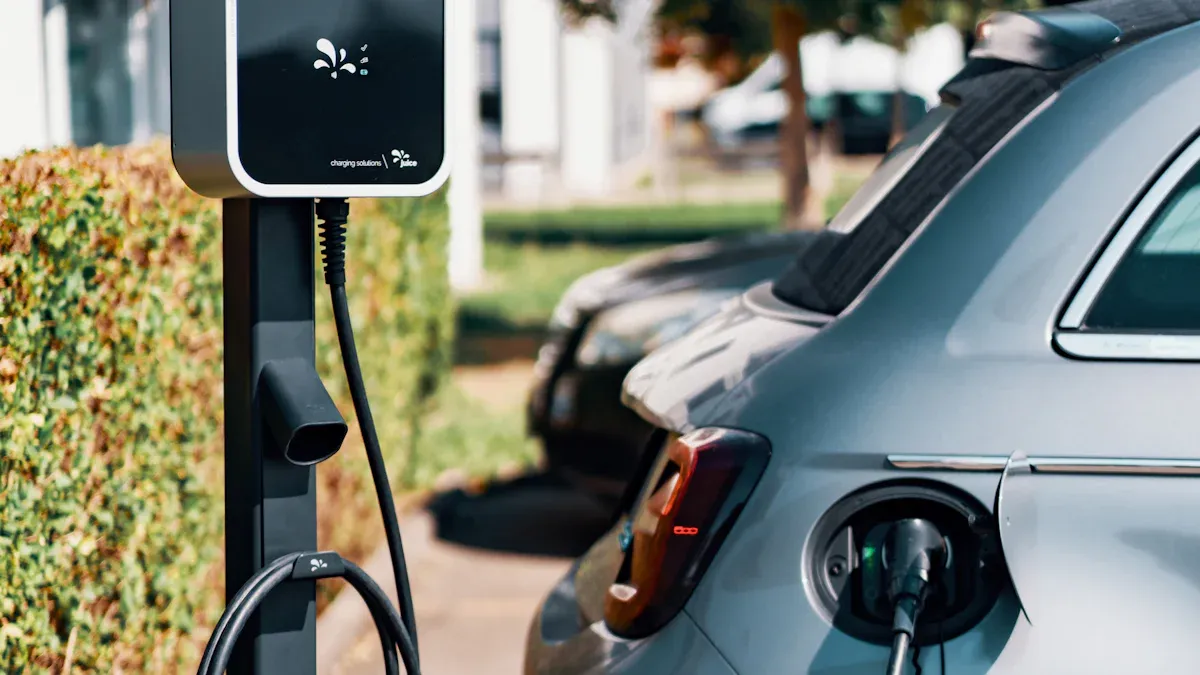
You use super capacitor activated carbon to help devices charge fast. Activated carbon keeps energy by holding ions in its small pores. This special structure lets energy move in and out quickly. Your devices can charge much faster because of this. The material is made from things found in nature, so it is good for the environment. Companies pick it because it works well and is very reliable. Activated carbon has both micropores and mesopores. This helps you store more energy and use it faster.
Key Takeaways
Supercapacitor activated carbon helps devices charge fast. It holds ions in tiny pores.
Activated carbon is good for the environment. It is made from natural things. It also helps cut down waste.
Supercapacitors charge quicker than batteries. This makes them great for things that need fast energy.
Activated carbon has a big surface area. This helps store more energy and charge faster.
The special pore structure of activated carbon helps balance charge storage. It also helps ions move better for good performance.
Supercapacitors with activated carbon last a long time. They can be charged thousands of times without getting worse.
Using activated carbon in supercapacitors saves money. It gives good performance at a lower cost.
Supercapacitors are used in electric vehicles, consumer electronics, and renewable energy storage.
Supercapacitor Basics
What Is a Supercapacitor
You might ask how a supercapacitor works and why it is special. A supercapacitor keeps energy by holding electric charges on its surface. It has a design that lets you charge and use energy very fast. This is not like batteries. Batteries store energy with chemical reactions and take more time to charge.
A supercapacitor has a few main parts that work together:
Electrodes: These use activated carbon. They have a very big surface area, so they can hold more charge.
Electrolyte Solution: This is a liquid, like potassium hydroxide or sulfuric acid. It lets ions move between the electrodes.
Separator: This is a thin layer. It stops the electrodes from touching but lets ions go through.
Current Collectors: These are metal layers, often made of aluminum. They help move electricity in and out.
Supercapacitors keep energy in two main ways. The first way is electric double-layer capacitance. Charges build up at the electrode’s surface without any chemical change. The second way is pseudocapacitance. Small chemical reactions at the surface help hold more energy.
You can look at the table to see how supercapacitors and traditional capacitors are different:
Characteristic | Supercapacitors | Traditional Capacitors |
|---|---|---|
Energy Storage Capacity | Up to 1000F | Microfarads to millifarads |
Charging Speed | 10 seconds to 10 minutes | Slower charging times |
Cycle Life | 10,000 to 500,000 cycles | Limited cycles |
Power Density | 300W/KG to 5000W/KG | Lower power density |
Maintenance | Maintenance-free | Requires maintenance |
Temperature Range | -40℃ to +70℃ | -20℃ to +60℃ |
Need for Advanced Electrode Materials
You need better materials to make supercapacitors work well. The electrode material changes how much energy you can store. It also changes how fast you can charge and how long the device lasts. Scientists found that using carbon-based materials, metal oxides, or polymers can make supercapacitors better.
If you change the electrode material, you can store more energy and charge faster.
A good design helps you charge and use energy quickly.
Good materials also help your supercapacitor last for many cycles.
When you pick the best materials, your device charges fast, stores more energy, and works longer. This is why activated carbon is very important in today’s supercapacitors.
Activated Carbon in Supercapacitors
Activated carbon for supercapacitor is used in most fast-charging devices. This material is special because it works well, costs less, and lasts long. When you compare activated carbon for supercapacitor with other materials, you see it has clear benefits. Look at this table:
Property | Activated Carbon | Metal Oxides/Sulfides/Phosphides |
|---|---|---|
Surface Area | Highest | Lower |
Cost | Low | Higher |
Conductivity | Good | Varies |
Activated carbon electrode gives you the highest surface area and good conductivity. It also saves money because it is not expensive. These reasons make activated carbon for supercapacitor the best choice for supercapacitor electrodes.
High Surface Area
A high surface area helps your device store more energy. Activated carbon for supercapacitor gives you this feature. The surface area can be from 800 to 3270 m²/g. Most activated carbon for supercapacitor works best between 800 and 2050 m²/g. Some special types, like NCM-R, can reach up to 3270 m²/g. With a large surface area, you can hold more charge on the activated carbon electrode. Your device charges faster and lasts longer.
Controllable Pore Size
Activated carbon for supercapacitor has a unique pore structure. The pores have different sizes. Small pores let ions get close to the surface, so you can store more charge. Large pores act like highways for ions, helping them move fast. This balance gives you high energy storage and quick charging. Here is a table that shows how pore size affects performance:
Key Insights | Explanation |
|---|---|
Charge Storage Mechanism | Smaller pores let ions get closer, so capacitance goes up. |
Steric Hindrance | Very small pores can block ion movement, which lowers performance. |
Ion Transport | Larger pores act as highways for ions to move easily. |
Micropores help store charge. Mesopores and macropores make ion movement easy. This design helps you get the best results from your activated carbon electrode.
Electrical Conductivity
You want your supercapacitor to last for many years. Activated carbon for supercapacitor gives you good electrical conductivity. Electrons move easily through the activated carbon electrode. You get high stability and strong resistance to corrosion. Other materials, like carbon nanotubes and graphene, also have good conductivity, but they cost more and are harder to make. Activated carbon for supercapacitor gives you the right mix of performance and price.
Activated carbon for supercapacitor comes from renewable sources and biowaste. Common sources include:
Seeds
Nuts
Leaves
Stems
Roots
Fruits
Flowers
Bones
Waste chicken fat oil
Sheep manure
Cow dung
Human hair
Human urine
You help the planet by using super capacitor activated carbon. You use waste and natural materials to power your devices. This makes activated carbon in supercapacitors eco-friendly and efficient.
Activated Carbon Structure
Porous Architecture
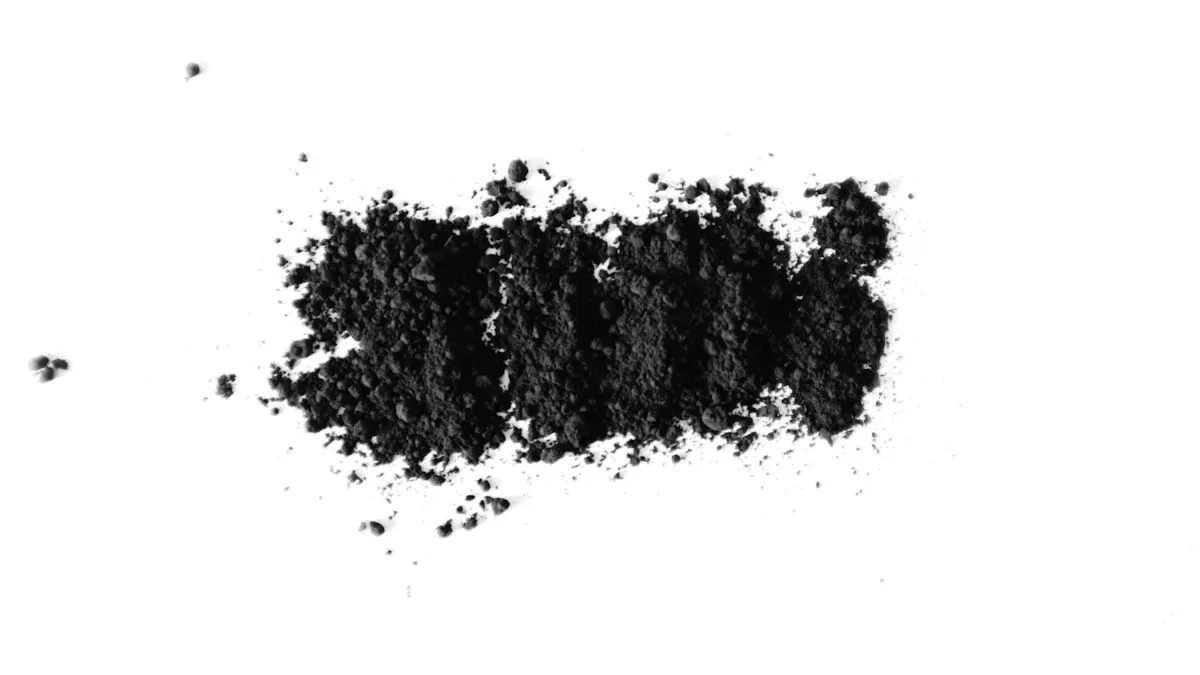
Activated carbon is like a sponge with lots of tiny holes. These holes are called pores and make the material special. In a supercapacitor, these pores let ions move in and out fast. This helps your device charge quickly and store more energy.
Micropores and Mesopores
There are two main types of pores in activated carbon. Micropores are very tiny and give a large surface area inside. They help ions stick to the material. Mesopores are bigger and act like tunnels for ions to travel through. When both types are present, you get fast charging and high energy storage.
Tip: Having both micropores and mesopores is important. Micropores help ions stick, and mesopores help ions move faster.
Surface Area Impact
The surface area of activated carbon matters a lot. More surface area means more spots for ions to stick. This lets your supercapacitor hold more energy. The table below shows how these features help performance:
Key Feature | Description |
|---|---|
High Surface Area | More surface area means more ions can stick, so more charge is stored. |
Optimized Pore Size Distribution | Pores of the right size help ions move easily, which is important for supercapacitors. |
Microstructural Tailoring | Changing the structure helps ions move and stick better. |
Choosing activated carbon with the right pores gives better results. The mix of micropores and mesopores helps with fast charging and storing lots of energy. Porosity also helps the material last through many charges and discharges.
Surface Chemistry
The surface chemistry of activated carbon is also important. Different chemical groups on the surface change how ions stick to the material. Here are some ways surface chemistry helps store charge:
Certain oxygen groups can make the material work better or worse.
The way the carbon is built changes how well it stores charge.
You want the right surface chemistry to help ions stick and improve your device. When porosity and surface chemistry work together, activated carbon becomes a great choice for supercapacitors. Knowing how these things work helps you see why activated carbon is so good for energy storage.
Charge Storage Mechanism
Electric Double-Layer Capacitance
The electric double-layer is a special way to store energy. When you charge a supercapacitor, ions move to the activated carbon electrode. These ions line up very close to the carbon atoms. This makes two layers of charges. One layer is from the ions in the electrolyte. The other layer is from the carbon surface. This double-layer is why supercapacitors can hold so much charge.
Activated carbon has many tiny pores. These pores give a huge surface area. More ions can stick to the surface because of this. The table below shows what affects the double-layer and how it changes capacitance:
Variable | Description |
|---|---|
ε₀ | Dielectric constant of vacuum |
εᵣ | Dielectric constant of electrolyte |
SA | Accessible surface area of porous carbon (m²/g) |
d | Distance between adsorbed ions and carbon surface |
A bigger surface area (SA) gives more room for ions. If the ions are closer to the carbon (smaller d), capacitance goes up. When the nanopores are just the right size, ions get very close to the carbon wall. This makes the double-layer stronger and lets you store more energy. You get high capacitance because the ions are packed tightly together.
Note: The double-layer does not always get bigger with more surface area. How the carbon atoms are arranged also matters. The way ions stick to the surface is important too. Stronger sticking means better charge storage.
Rapid Ion Movement
You want your device to charge quickly. Fast ion movement in activated carbon helps with this. The special pore network lets ions move in and out fast. If the pores are well connected, ions do not get stuck. They travel smoothly to the surface and make the double-layer. This fast movement gives you more power and energy. You can use your device again and again without waiting long.
Tip: If you make the pore structure better, ions move even faster. This means your device works better and has more power.
Comparison to Battery Storage
Supercapacitors and batteries store energy in different ways. In a battery, energy is stored by chemical reactions. This takes more time and can wear out the battery after many uses.
Supercapacitors use the double-layer to store charge. This lets you charge and discharge in seconds or minutes. Supercapacitors have more power than batteries. They can be used many more times before wearing out. Batteries usually last for only a few thousand cycles.
Here are some main differences:
Supercapacitors have higher power but lower energy than batteries.
Supercapacitors lose less energy when charging and discharging. This is good for things like regenerative braking.
Supercapacitors give you fast charging and good energy storage. The activated carbon electrode is very important for this. Its structure and surface help make a strong double-layer. This gives high capacitance and great power. Supercapacitors are a smart choice if you need quick energy and long life.
Manufacturing Process for Activated Carbon
You may wonder how activated carbon for supercapacitors is made. The process starts with things like coconut shells, seeds, or biowaste. These natural items help make a strong and green product. The steps in making it change the carbon’s structure. This affects how well your supercapacitor works.
Calcination and Pickling Steps
First, you heat the raw material in a step called calcination. This removes things you do not want and turns it into carbon. Sometimes, you add potassium hydroxide to make more pores. You heat the mix to very high temperatures, about 800°C. This step is called pyrolysis.
After heating, you might use a pickling step. Pickling uses hydrochloric acid to clean the carbon. You boil the carbon in a 5% acid mix. Then you wash it with water until the pH is between 5 and 7. This makes sure the carbon is clean and safe. You dry the carbon until it has about 10% water left. These steps give you activated carbon with a high surface area, sometimes up to 3270 m²/g.
Here is a table that shows the main steps:
Step | Description |
|---|---|
1 | Heat raw material with KOH at 800°C (pyrolysis) |
2 | Pre-carbonize at 300°C (optional) |
3 | Treat with acid (pickling) to remove impurities |
4 | Wash and dry to reach correct pH and moisture |
5 | Test with tools like BET and Raman spectroscopy |
Tip: Using both chemical and physical activation gives you both micropores and mesopores. This helps your supercapacitor charge fast and store more energy.
Deposition on Aluminum Foil
When the activated carbon is clean, you turn it into an electrode. You mix the carbon with other things to make a thick liquid called slurry. The slurry can have carbon black, graphite flakes, or graphene. You spread the slurry on aluminum foil with special machines. Sometimes, you use chemical vapor deposition for a thin, even layer.
The aluminum foil holds the carbon and helps move electricity. How you coat the foil changes how well the supercapacitor works. A good coating gives strong conductivity and a long life.
Quality Control
You want every batch of activated carbon to work the same. Quality control checks each step. You use tools like Raman microscopy to look for problems and check the coating. You also test the surface area and pore size with BET analysis. These tests make sure your activated carbon is right for fast charging.
You dry, activate, and heat the material in careful steps.
You check the pH and water after washing.
You measure the surface area and pore size for supercapacitor needs.
Note: Careful quality control means your supercapacitor will charge fast, last longer, and stay safe.
Benefits of Super Capacitor Activated Carbon
Fast Charging
You want your devices to charge fast. Super capacitor activated carbon helps with this. It has a large surface area and special pores. These let ions move quickly to the electrode. This gives you higher specific capacitance, between 100 and 300 F/g in water-based electrolytes. Your supercapacitor can hold more energy and release it faster. The size of the pores and the electrolyte type also matter. With super capacitor activated carbon, your device charges faster and has more power.
Tip: Picking activated carbon with the right pore size makes charging faster and helps store energy better.
Long Cycle Life
You want your energy storage to last long. Activated carbon helps your supercapacitor work for many cycles. Its porous structure lets ions stick without hurting the material. This keeps the energy storage strong and stable. The material does not break down easily. Low resistance and good chemical stability lower energy loss. Your device works well even after thousands of uses. You can trust super capacitor activated carbon to last and perform well.
Eco-Friendly and Cost-Effective
You care about the planet and saving money. Activated carbon comes from things like coconut husks and biowaste. This makes it good for the environment. Using it helps cut down waste and supports sustainability. Activated carbon is cheap and easy to make. You get good energy storage without spending a lot. Making it uses less energy and makes less pollution, especially with the KOH method. Choosing super capacitor activated carbon helps the earth and saves money.
Here is a table that compares supercapacitors with activated carbon to other energy storage devices:
Parameter | Supercapacitors with Activated Carbon | Other Carbon Electrodes |
|---|---|---|
Power Density | 25 kW L-1 (50 kW kg-1) | Lower |
Energy Density | Depends on operation potential | Varies |
Configuration | Asymmetric with special materials | Standard carbon |
Note: Super capacitor activated carbon gives you high power and good energy storage. It also helps the environment and saves you money.
Applications of Activated Carbon for Supercapacitor
Electric Vehicles
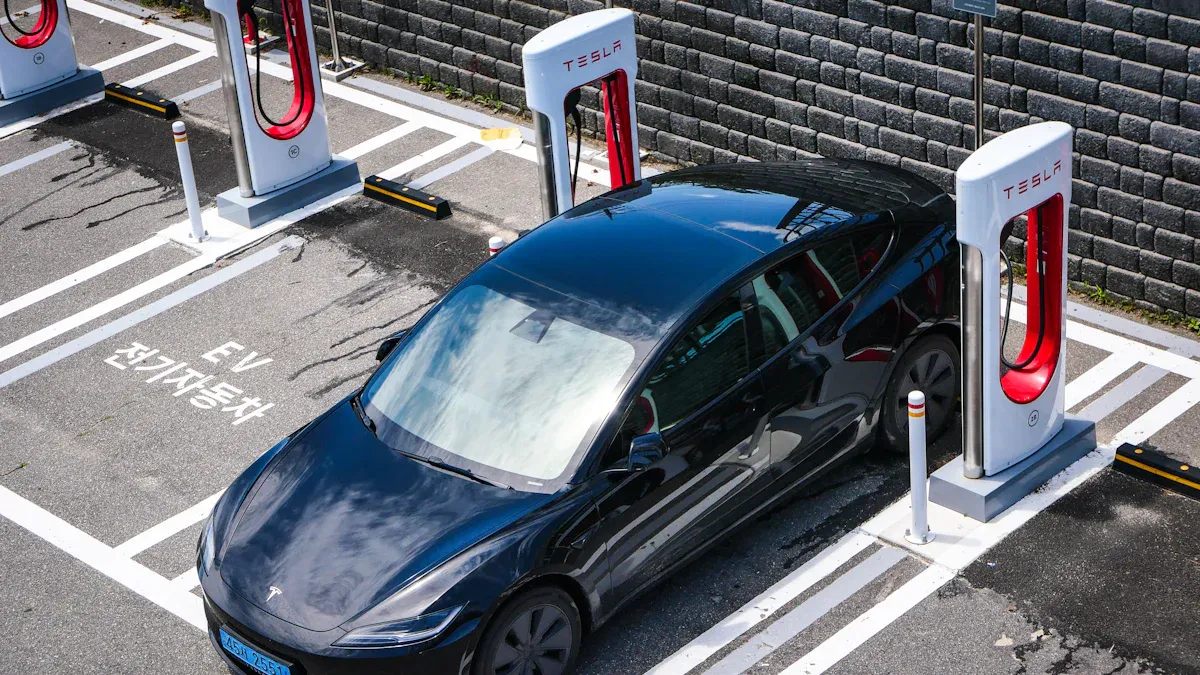
You see electric vehicles on the road a lot now. They need energy storage that is fast and works well. Supercapacitor technology with activated carbon helps these cars do better. You get quick power for speeding up and smooth energy when stopping. Activated carbon has lots of tiny holes and a big surface area. This lets it store and release energy very fast. Your car can charge in less time and last longer.
Here is a table that shows why activated carbon is good for this:
Characteristic | Description |
|---|---|
High specific surface area | Lets you store more energy and deliver it quickly. |
Fast charge/discharge rates | Gives your vehicle the power it needs right away. |
Electrochemical stability | Keeps your car running safely and reliably for a long time. |
You find supercapacitors in hybrid cars, buses, and electric trains. They help save energy and make your ride smoother.
Consumer Electronics
You use things like phones, tablets, and cameras every day. These need to charge fast and last a long time. Supercapacitors with activated carbon electrodes give you both. You can charge your device in just a few minutes and use it for hours. Supercapacitors have high power density, which makes this happen.
Check out this table to see how supercapacitors help your devices:
Aspect | Details |
|---|---|
Power Density | Gives your device lots of power quickly. |
Applications | Used in phones, cameras, and other gadgets for fast charging and energy storage. |
Future Prospects | More devices will use supercapacitors as technology improves. |
You get good performance and do not have to wait long. Supercapacitors last longer than normal batteries, so you do not need to replace them as often.
Renewable Energy Storage
You want clean energy from the sun and wind. These do not always give steady power. Supercapacitors with activated carbon help fix this problem. They store extra energy when there is a lot of sun or wind. When the weather changes, they release energy fast to keep things working.
Here are some ways supercapacitors help with renewable energy:
They smooth out the ups and downs of solar and wind power.
They respond quickly to changes in the grid, keeping voltage and frequency steady.
They improve power quality by buffering sudden changes.
They help microgrids work better and make the whole system stronger.
You see supercapacitors in solar farms, wind turbines, and home energy systems. They make renewable energy more reliable and easier to use. This is one of the best uses for activated carbon in energy storage.
Industrial Power Backup
Factories, data centers, and hospitals need power all the time. If the power goes out, machines can stop and data can be lost. Sometimes, people’s lives are in danger if power fails. Supercapacitors with activated carbon help by giving backup power fast. They store energy and can release it right away when needed.
These supercapacitors work well as backup for UPS systems. If the main power stops, the supercapacitor starts working right away. This quick action keeps machines running until power comes back or a generator turns on.
Tip: Supercapacitors react in less than one second. You do not have to worry about waiting or losing power.
Here are some reasons to pick activated carbon supercapacitors for backup:
Fast Response: They give power almost right away.
Long Life: You can use them many times without problems.
Low Maintenance: You do not need to change them often.
Safe Operation: They do not leak bad chemicals.
Eco-Friendly: They use things from nature and waste.
You can see how they compare to other backups in this table:
Feature | Activated Carbon Supercapacitor | Lead-Acid Battery | Flywheel System |
|---|---|---|---|
Response Time | < 1 second | 5-10 seconds | 2-5 seconds |
Cycle Life | 500,000+ cycles | 1,000-2,000 | 20,000 |
Maintenance | Very low | High | Medium |
Environmental Impact | Low | High | Medium |
Factories use supercapacitors to protect robots and machines. Data centers use them to keep computers working during short power loss. Hospitals use them to power important machines until the generator starts.
You can also use supercapacitors with batteries. The supercapacitor gives power first. The battery helps if the power stays off longer. This way, you get the best from both.
Note: Supercapacitors with activated carbon last a long time. You save money because you do not need to replace them often.
You can trust activated carbon supercapacitors for backup. They keep your work safe, running well, and good for the planet. You do not have to worry about losing power when you need it most.
You can see that super capacitor activated carbon helps devices charge fast and store energy well. This material lets supercapacitors give quick power and last longer. Many companies pick it because it is good for the earth and works well. More people are using supercapacitor technology every year. In the future, you might see new things like carbon nanotubes, better lithium-sulfur batteries, and hydrogen storage systems. Material science makes energy safer and stronger.
Some future trends are:
Using carbon nanotubes to hold more energy.
Making lithium-sulfur batteries better with activated carbon.
Trying new ways to store hydrogen with special carbon materials.