
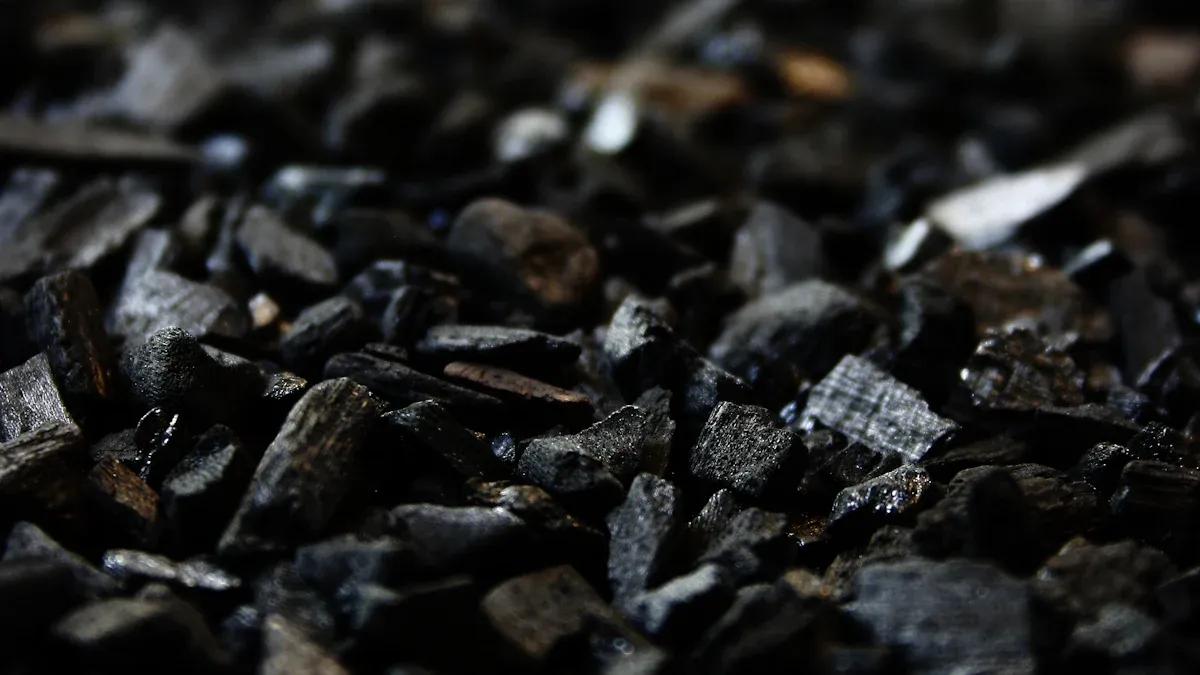
You use activated carbon to help keep air clean and safe in many jobs. Activated carbon catches harmful things like VOCs, mercury, and bad smells from gas streams. This material works by adsorption, which means gas molecules stick to the surface of activated carbon.
Gas Treatment Activated Carbon works well because it has a very large surface area with lots of tiny pores. You think of activated carbon as a strong tool for keeping people healthy and protecting the environment.
Key Takeaways
Activated carbon cleans air and gas by trapping bad substances like VOCs and heavy metals. This happens through a process called adsorption.
Activated carbon has a big surface area and tiny pores. These features help it catch contaminants well. It is a strong tool for protecting the environment.
There are different types of activated carbon, like granular and powdered forms. Each type works best for certain uses. This helps gas treatment work better.
Activated carbon systems need regular maintenance and monitoring. This keeps them working well and meeting safety rules.
Activated carbon can be used again after regeneration. This saves money and cuts down on waste in gas treatment.
Picking the right activated carbon for each contaminant makes gas treatment more effective.
Activated carbon is important in many industries. It is used in biogas purification, air quality control, and cleaning carbon dioxide.
Using activated carbon helps companies follow environmental laws. It makes air cleaner and workplaces safer.
Gas Treatment Activated Carbon Overview
What Is Activated Carbon?
Activated carbon is a special kind of carbon. It has a very big surface area and lots of tiny holes. People make activated carbon from things like coconut shells, wood, coal, and peat. They use two main ways to make it. One way is steam activation. This uses hot gases and high heat. The other way is chemical activation. This uses chemicals at lower heat. These methods build a structure that can trap many molecules.
Activated carbon is different because of its special properties:
It has a large surface area (1000–2000 m²/g)
Its tiny holes help it adsorb lots of things
It holds gases well
It adsorbs gases even if there is moisture
It lets gas flow easily
It can release trapped things at different temperatures and pressures
Its surface can attract both polar and nonpolar molecules
Why Use Activated Carbon in Gas Treatment?
Gas treatment activated carbon works better than many other materials. It cleans gases by trapping many harmful things. These include volatile organic compounds, bad smells, and heavy metals. You can use it for cleaning both gases and liquids. Some types can be used again after cleaning. This saves money and cuts down on waste. It also helps your equipment last longer. You avoid expensive repairs. Gas treatment activated carbon helps you follow strict safety and environmental rules.
Here are reasons to use gas treatment activated carbon:
It adsorbs many contaminants
It works for different jobs
Some types can be reused
It saves money by protecting equipment
It helps you follow rules
Key Applications in Industry
Gas treatment activated carbon is used in many industries. It is important for removing harmful things from gas streams. The table below shows some common uses:
Industry/Application | Description |
|---|---|
Biogas | Removes impurities like hydrogen sulfide and siloxanes from biogas. |
Carbon Dioxide Purification | Cleans CO2 for the food industry by removing odorous hydrocarbons and sulfur compounds. |
Pressure Swing Adsorption (PSA) | Produces pure gases such as hydrogen and nitrogen. |
Compressed Gas | Protects compressor parts by removing oil traces from air streams. |
Mercury Removal from Natural Gas | Removes trace mercury to prevent corrosion in LNG production. |
Gas Desulphurisation | Removes sulfur compounds to protect pipelines and catalysts. |
Gas treatment activated carbon helps many industries keep air and gas clean. It protects people and equipment.
Adsorption Mechanism in Gas Treatment
When you use activated carbon for gas treatment, it grabs gas molecules on its surface. Adsorption means gas molecules stick to the outside of a solid. This is not the same as absorption, where molecules go inside. There are two main types of adsorption in gas treatment: physical and chemical. Each type removes different contaminants from gas streams.
Physical Adsorption Process
Physical adsorption happens when gas molecules stick to activated carbon without making new bonds. The process depends on how the material is built and how much surface area it has.
Pore Structure and Surface Area
Activated carbon is like a sponge with lots of tiny holes. These holes are called pores. The size and number of pores decide how much gas it can hold. More surface area and pore volume mean more gas molecules can stick.
Here is how pore structure and surface area help adsorption:
Evidence Summary | Description |
|---|---|
Pore Size Distribution | Micropores, mesopores, and macropores let gas molecules reach adsorption spots. |
Specific Surface Area | Bigger surface area gives more space for gas molecules. |
Surface Chemistry | Special atoms on the surface pull certain gas molecules. |
Correlation with Pore Volume | Benzene sticks best when pores are 0.6–0.9 nm wide. |
Correlation with Surface Area | More surface area helps reversible adsorption for pores wider than 1 nm. |
Micropore Volume |
Activated carbon works best when it has lots of micropores and a big surface area. This helps trap gases like benzene and carbon dioxide.
Interaction with Gas Molecules
Physical adsorption uses weak forces, like van der Waals and dipole-dipole interactions. These forces pull gas molecules such as SO2 and NO to the surface. Micropores hold these molecules so they cannot escape easily. This process can be reversed. You can release trapped gases by changing temperature or pressure. This is called desorption.
This process follows a type I adsorption isotherm. Most adsorption happens at low gas concentrations. This is common for materials with lots of micropores like activated carbon.
Chemical Adsorption and Impregnated Carbon
Chemical adsorption is different. Gas molecules react with special groups on the surface of activated carbon. These reactions make new chemical bonds and hold molecules tightly.
Impregnated activated carbon is used to remove certain contaminants better. Chemicals like metals, acids, or oxidants are added to the carbon. These chemicals help trap gases that physical adsorption cannot catch.
Here is a table showing how different impregnation types help:
Type of Impregnation | Examples and Applications |
|---|---|
Metal impregnated activated carbon | Silver (kills bacteria), Copper (traps ammonia), Manganese (helps redox reactions) |
Acid and alkali impregnated carbon | Alkali (traps acidic gases like SO2, H2S), Acid (traps alkaline gases like NH3) |
Oxidant impregnated activated carbon | Potassium permanganate (breaks down organics), Hydrogen peroxide (boosts oxidation) |
Composite impregnated activated carbon | Mixes agents for tough pollutants (e.g., KI and NaOH for mercury) |
Impregnated activated carbon can hold more inorganic contaminants than regular carbon. For example, it can trap 20–25% hydrogen sulfide, while regular carbon holds only 10%. For methyl mercaptan, it holds 9.5% compared to 4.1% for regular carbon. Chemicals inside the pores lock contaminants in place and make the adsorbent stronger.
Tip: Pick the right impregnation type to target certain gases in your process. This makes your gas treatment system work better and more reliably.
Physical vs. Chemical Adsorption: Key Differences
Type of Adsorption | Mechanism Description |
|---|---|
Physical Adsorption | Uses weak forces like van der Waals and dipole-dipole. Micropores trap molecules by size and shape. No new bonds form. |
Chemical Adsorption | Uses chemical reactions with surface groups. Makes new bonds. Can change the gas into something else, like turning SO2 into H2SO4. |
Physical adsorption is used for many organic gases and odors. Chemical adsorption is used for tough inorganic gases, like sulfur compounds and mercury. Both methods help keep air and gas streams clean and safe.
When you know how activated carbon adsorption works, you can build better gas treatment systems. You can remove many contaminants and meet strict environmental rules.
Contaminants Removed by Activated Carbon
VOCs and Hazardous Air Pollutants
Gas treatment often needs to remove volatile organic compounds and hazardous air pollutants. These impurities can hurt people and the environment. Activated carbon is a strong adsorbent because it has a big surface area and many pores. Adsorption traps these contaminants on the surface of activated carbon.
You can check how well activated carbon works by looking at removal efficiency in different systems. The table below shows how much VOCs drop after treatment:
System Type | Initial VOC Concentration (μg/m³) | Final VOC Concentration (μg/m³) | Removal Efficiency (%) |
|---|---|---|---|
ACI + FF | 90.7 ± 44.8 | 417.6 ± 147.8 | -360.4 |
WDT | 417.6 ± 147.8 | 52.4 ± 11.9 | 87.5 |
The WDT system removes 87.5% of VOCs. This means activated carbon can remove benzene, toluene, and xylene. These pollutants come from factories and other places.
You can make activated carbon work again by heating it to 150 °C. This brings back 70–80% of its removal power. Using unheated outdoor air gives you 50–60% efficiency. Formaldehyde is harder to remove, with only 25–30% efficiency. Different methods help activated carbon last longer.
Tip: You should check your system often and pick the best way to regenerate activated carbon. This keeps adsorption rates high.
Sulfur Compounds and Odors
Sulfur compounds are common in gas streams. They cause strong smells even at low levels. Activated carbon helps remove these compounds by adsorption. It works best when the carbon has a big surface area and special surface groups.
Adding oxygen groups to the surface improves sulfur compound removal. This does not change the number of pores. You get better removal of hydrogen sulfide and mercaptans. Not all sulfur odor compounds are removed the same way. Powdered activated carbon works for some odors but not all. You need to test your system to see which odors are removed best.
Activated carbon is used for desulphurisation in many industries. This keeps air clean and stops equipment from rusting. It also helps you follow environmental rules by lowering odor emissions.
Mercury and Heavy Metals
Mercury and heavy metals in gas streams are dangerous. They can harm health and the environment. Activated carbon is a strong tool for removing mercury and heavy metals. Adsorption traps mercury vapors and ions in the pores.
You can remove over 90% of mercury from flue gas with standard activated carbon.
Sulfur-impregnated activated carbon can remove over 97% in controlled systems.
The big surface area and pore network help trap many impurities.
Mercury removal systems are used in industries like natural gas processing and waste incineration. This protects people and the environment. It also helps you follow strict air quality rules.
Note: Pick the right type of activated carbon for your job. Impregnated types often work better for tough contaminants.
Activated carbon is important for removing impurities from gas streams. Adsorption keeps air and gas safe for people and the planet.
Carbon Dioxide Purification
You need to clean carbon dioxide in many gas jobs. Activated carbon helps by catching CO2 on its surface. This is called adsorption. Activated carbon has lots of tiny pores and a big surface area. These things help it hold a lot of CO2.
Carbon dioxide is found in many gas streams. If you do not take it out, CO2 can cause problems. In cryogenic air separation plants, CO2 can freeze and block heat exchangers. This can stop machines from working and cost a lot to fix. You want your systems to work well, so you must remove CO2 before it causes trouble.
Activated carbon also cleans biogas. Biogas comes from waste and has CO2 and other gases. When you take out CO2, the biogas becomes a better fuel. You get more energy when you burn it. You also help the environment by using waste to make clean energy.
In flue gas treatment, you remove CO2 to lower greenhouse gases. This helps you follow environmental rules and protect the planet. Activated carbon makes this job simple and works well.
Here are some places where you use activated carbon for CO2 cleaning:
Application Area | Why You Remove CO2 | Benefit for You |
|---|---|---|
Cryogenic Air Separation | Stops freezing and blockages in machines | Keeps your plant safe and working well |
Biogas Upgrading | Makes fuel better and gives more energy | Makes your biogas more useful |
Flue Gas Treatment | Lowers greenhouse gases | Helps you follow environmental rules |
You can pick different kinds of activated carbon for CO2 removal. Many plants use pellets made from coconut shells. These pellets have strong pores and last a long time.
Tip: Check your activated carbon beds often. When they fill up with CO2, you need to change or clean them. This keeps your system working its best.
Activated carbon is a good way to take out carbon dioxide from gas streams. You protect your machines, make better fuel, and help the environment. You can trust activated carbon to make your gas treatment safer and better.
Gas Treatment Process with Activated Carbon
Gas Collection and Pre-Treatment
First, you collect gas from places like factories or biogas units. You must clean the gas before it goes to the main system. Filters and separators take out dust, water, and oil. These steps stop the activated carbon beds from getting blocked. Clean gas helps the next steps work better. You also check the gas temperature and humidity. This makes sure the gas adsorption system works well.
Tip: Good pre-treatment helps your equipment last longer and saves money.
Passage Through Activated Carbon Beds
After cleaning, the gas moves into activated carbon beds. Here, the process takes out harmful things from the gas. The gas goes through a thick layer of activated carbon. The carbon catches bad stuff using adsorption. You see this step in systems like biogas cleaning and vent gas treatment.
Many things change how well the beds work:
Activated carbon can have a surface area over 1000 m²/g. More surface area means more spots for contaminants.
Pore size and volume decide how much gas the bed can clean.
Special groups on the carbon help catch certain chemicals.
Gas flow rate changes how long gas touches the carbon. Slower flow gives better cleaning.
Bed depth shows how much carbon is there for adsorption.
You use this process for air cleaning, odor control, and mercury removal. Activated carbon works best when you match the bed design to your needs.
Monitoring, Maintenance, and Regeneration
You need to check your system often to keep it working well. Regular checks show when the activated carbon is full. You can test gas quality before and after the beds. If you see more contaminants in the clean gas, it is time for maintenance.
Here are some best ways to keep your system working:
Control how much activated carbon you use for each job.
Manage the gas flow rate to keep treatment strong.
Clean the beds to stop clogging and keep gas moving.
Check all equipment to find problems early.
Regenerate or replace the carbon when it is full. Some systems let you heat the carbon to release trapped gases. Others need you to change the old carbon.
Dispose of used carbon the right way to follow rules.
You see these steps in real systems like vapor recovery units and biogas plants. Good maintenance keeps your gas filtration and processing safe and reliable.
Note: A well-managed waste gas treatment process protects workers, equipment, and the environment.
Types and Forms of Activated Carbon
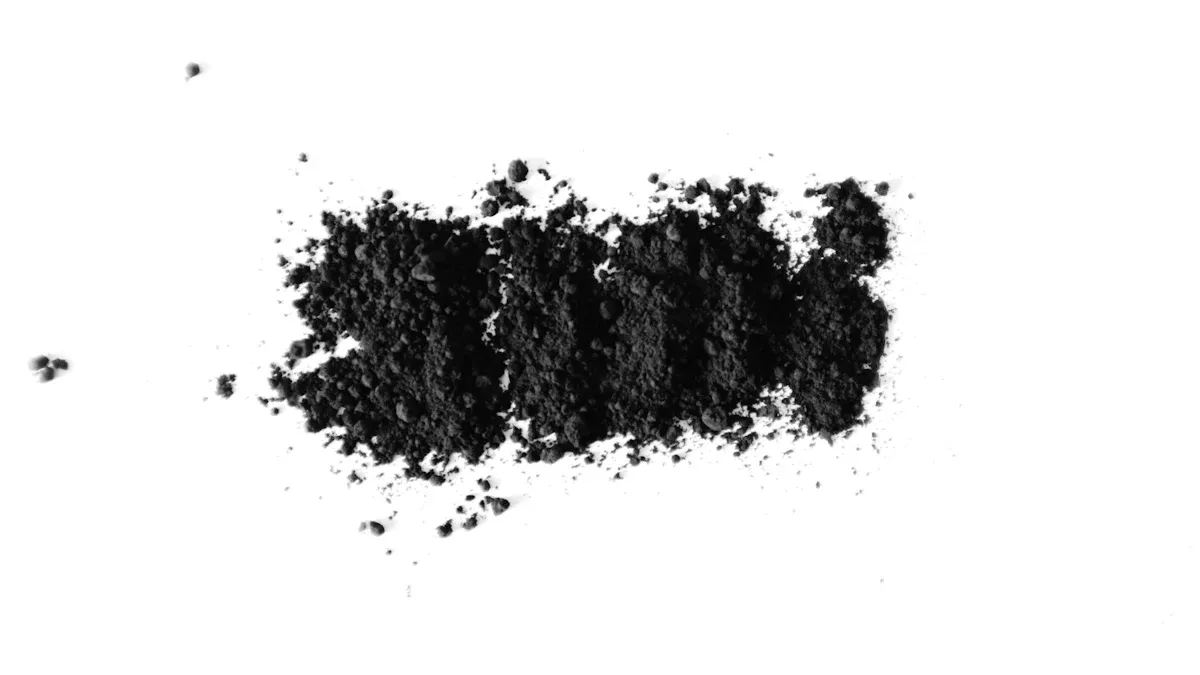
You can pick from different activated carbon types for gas treatment. Each type has special features for certain jobs. Knowing these forms helps you choose the best one.
Granular Activated Carbon (GAC)
Granular activated carbon is made of small, uneven granules. You use it in many gas systems because it works well for steady flow. The granules have lots of surface area and many pores. This lets them trap lots of harmful gases and chemicals.
Here is a table showing where you might use granular activated carbon:
Application Area | Description |
|---|---|
Removes mercury, hydrogen, and BTX | |
Exhaust gas cleaning | Takes out dioxins and heavy metals |
Air purification | Removes organic impurities from air |
Process gas purification | Cleans CO2 and cools compressed air |
Air conditioning systems | Removes pollutants in ventilation |
Kitchen extractor hoods | Takes away bad smells |
Emission control | Used in bottling plants and car tanks |
Car interior ventilation | Removes pollutants from inside cars |
Respirators | Used in protective masks |
Cigarette filters | Filters smoke |
Carrier material | Holds special chemicals or catalysts |
You see granular activated carbon in factories, cars, and kitchen hoods. It helps keep air and gas clean and safe.
Tip: GAC works for big and small jobs. It removes many kinds of pollutants.
Powdered Activated Carbon (PAC)
Powdered activated carbon has tiny grains. These small particles give it a huge surface area. You use PAC when you need fast adsorption, like in emergencies or batch jobs.
PAC works fast because the small grains touch more gas.
You can add PAC right to gas or liquid streams.
It is easy to use for short or one-time treatments.
Here are some ways PAC is different from GAC:
PAC acts faster, but GAC holds more over time.
You use PAC for emergencies or quick results.
GAC is better for systems that run all the time.
Note: Use PAC when you need to fix a problem quickly. For regular cleaning, GAC is a better choice.
Pelletized and Specialty Carbons
Pelletized activated carbon comes in cylinder-shaped pellets. You get less dust and steady gas flow with these pellets. They work well in gas systems, like air cleaning and VOC control.
Specialty carbons include extruded pellets, beads, and monoliths. These forms have special shapes and features for tough jobs. You might use them when you need high strength, low pressure drop, or special chemical treatments.
Here is a table showing the benefits of pelletized and specialty carbons:
Benefit | Description |
|---|---|
Captures more contaminants | |
Engineered pore size | Targets certain molecules |
Consistent performance | Works the same every time |
Lower carbon loss | Less waste during use |
Extended service life | Lasts longer than powdered forms |
Thermal regeneration possible | Can be reused after cleaning |
Reduced waste | Needs less frequent replacement |
Lower pressure drop | Gas flows easily through the bed |
Predictable flow patterns | Gas contacts more carbon for better cleaning |
Callout: Pick pelletized or specialty carbons for high-flow systems or when you need strong, long-lasting filters.
You can find the right activated carbon type for your gas treatment by looking at your needs and the features of each form.
Benefits of Activated Carbon in Gas Treatment
High Efficiency and Selectivity
You want your air and gas system to work well. Activated carbon is very good at trapping many contaminants. It uses adsorption to catch both big and small molecules. The large surface area and many pores help it grab tiny things. You can remove organic and inorganic pollutants from gas streams. This means you get cleaner air and gas with fewer cycles.
Granular activated carbon is special because it can target certain contaminants. You can pick the right type for your needs. For example, one kind works best for VOCs. Another kind is better for sulfur compounds. This helps you meet strict cleaning goals. Using adsorption gives you steady results and keeps your equipment safe.
Cost-Effectiveness
Activated carbon helps you save money in gas cleaning. You can clean and reuse the adsorbent after it fills up. This means you throw away less and buy less new material. You do not need to replace the adsorbent as often. This lowers your operating costs.
Many companies make granular activated carbon from waste. This makes it cheaper and helps the planet. Using these products saves resources and cuts costs. Granular activated carbon lasts a long time. You do not have to stop your system for maintenance as much. This saves you time and money.
Tip: Cleaning your activated carbon helps you get more use from it.
Environmental Impact and Compliance
Activated carbon helps the environment by removing harmful substances. It takes out things like sulfur, mercury, and VOCs from gas streams. This makes your air and gas system safer for people and nature. Many industries use granular activated carbon to meet tough rules in the U.S. and EU.
Activated carbon helps you follow environmental laws. It removes dioxins, furans, and other hard-to-catch pollutants. Using adsorption shows you care about health and the planet. Meeting these rules also helps your company look good and builds trust.
Granular activated carbon helps you follow rules and protect the earth. It keeps your system working well and helps the environment.
Versatility Across Applications
Activated carbon is used in many gas treatment jobs. It works well in lots of places because it traps many contaminants. You see it in homes, factories, and hospitals. Activated carbon helps fix air and gas problems in different ways.
You may want to clean air in your house. You might need to get rid of strong smells in the kitchen or bathroom. Activated carbon can do this job. It grabs odor molecules and keeps air fresh. You can use it in air purifiers and vents. These systems trap smoke, pet smells, and cooking odors.
Factories use activated carbon to keep workers safe. You find it in gas filters. These filters remove harmful chemicals from air. Activated carbon traps VOCs and other dangerous gases. This keeps air clean and protects people from breathing bad stuff.
Hospitals and labs use activated carbon too. It filters out germs, chemicals, and smells. This keeps air safe for patients and staff. Activated carbon works in medical devices and air cleaning systems.
You can see how useful activated carbon is in the table below:
Application Type | Description |
|---|---|
Odor Removal | Activated carbon adsorbs VOCs and odor molecules, so it is great for air purification systems. |
VOC Capture | It traps harmful VOCs from factories and indoor jobs, making air better. |
Gas Filtration | Used in factories to clean gases, keeping people safe by removing bad substances. |
Air and Gas Treatment | Helps clean air and gas by removing pollutants from streams. |
Activated carbon comes in different forms. You can pick granular, powdered, or pelletized types. Each form works best for certain jobs. Granular activated carbon is good for big filters in factories. Powdered activated carbon is used for quick fixes or emergencies. Pelletized carbon works well in systems that need steady airflow.
Tip: Pick the right form of activated carbon for your job. This helps you get the best results and keeps your system working well.
Activated carbon works in many situations. It helps you follow safety rules and keeps air and gas clean. You can use it for small jobs at home or big jobs in factories. This flexibility makes activated carbon a smart choice for gas treatment.
Activated carbon fits your needs. You can use it to fix many air and gas problems. This makes it one of the best tools for keeping your environment safe and healthy.
Industry Applications and Case Examples
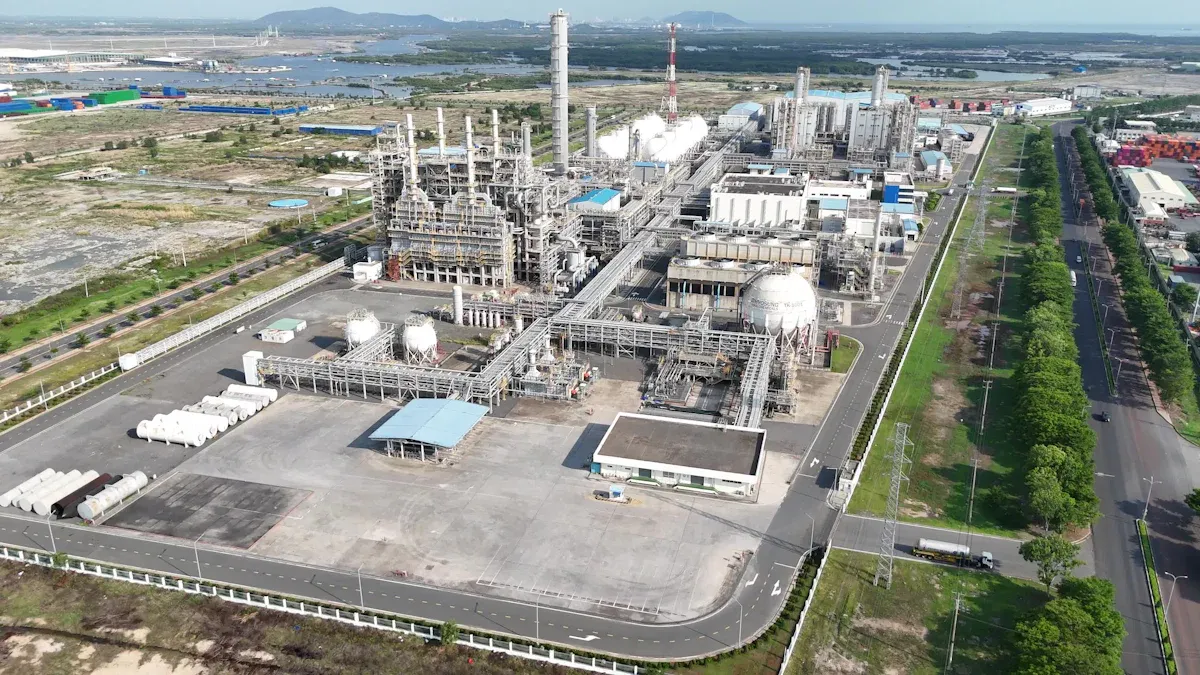
Vapor Recovery and Vent Gas Treatment
Activated carbon is used in vapor recovery and vent gas treatment. These systems catch harmful vapors before they get into the air. Factories and plants use this to protect workers and the environment. Activated carbon traps chemicals from gas streams by adsorption.
In the pharmaceutical industry, activated carbon fiber helps recover toluene. This fiber has a high surface area, so it holds more vapors.
The process uses two adsorbers. One adsorber collects vapors. The other releases them for recovery. This setup lets the system run without stopping.
Activated carbon fiber adsorbs faster and holds more than regular carbon. You can recover up to 97% of toluene. This shows the process works well.
Activated carbon keeps emissions low. It also recovers valuable chemicals from waste gases.
Natural Gas and Biogas Purification
You must clean natural gas and biogas before using them. Activated carbon removes unwanted parts by adsorption. This makes the gas safer and better for energy. You see this in gas plants and biogas facilities.
Here is a table showing how activated carbon works for different gas components:
Component | Adsorption Capacity (mg/(N m³)) | Notes |
|---|---|---|
Methane | 0-25 | Found in natural gas |
Carbon Dioxide | High | Important for carbon dioxide purification |
Nitrogen | Moderate | Useful in biogas purification |
Ethane | Varies | Part of natural gas |
Propane | Varies | Part of natural gas |
Butane | Varies | Part of natural gas |
Tert-butyl mercaptan | Low | Used as a natural gas odorant |
Tetrahydrothiophene | Low | Used as a natural gas odorant |
This process removes carbon dioxide, sulfur compounds, and odorants. It makes gas cleaner and helps equipment last longer. Activated carbon helps you meet safety and quality standards in gas processing.
Industrial Air and Odor Control
Factories, food plants, and hospitals need clean air. Activated carbon filters control odors and remove harmful gases. Adsorption traps pollutants from the air.
Factories use activated carbon filters to clean exhaust gases. You can remove over 90%. This helps you follow air quality rules.
Food facilities use these filters to control odors. You can cut emissions by up to 70%. This stops contamination.
Healthcare and labs use activated carbon to remove toxins in the air. This keeps air sterile and safe for everyone.
Activated carbon systems remove odors right away.
These systems are efficient, often removing 90% or more of odorous compounds.
You can meet rules and avoid fines by using these systems.
Activated carbon systems work well for air and odor control. You can trust this process to keep your workplace safe and emissions low.
Carbon Dioxide Purification Systems
You often need to clean carbon dioxide (CO₂) before you use it in different industries. Activated carbon helps you do this job well. You can find CO₂ in many gas streams, such as biogas, natural gas, and air from factories. If you do not remove impurities from CO₂, you can damage your equipment or lower the quality of your products.
You use activated carbon to catch unwanted chemicals and odors in CO₂ streams. The carbon has many tiny pores. These pores trap things like sulfur compounds, hydrocarbons, and water vapor. You get pure CO₂ that works better for your needs.
Here are some places where you use purified CO₂:
Food and Beverage Industry: You need clean CO₂ for making soda, beer, and sparkling water. Pure CO₂ keeps drinks safe and tasty.
Medical and Laboratory Use: You use CO₂ in labs and hospitals. Pure gas helps you run tests and treat patients.
Greenhouses: You add CO₂ to help plants grow faster. Clean CO₂ gives you healthy crops.
Welding and Manufacturing: You use CO₂ as a shield gas. Pure CO₂ makes welding safer and stronger.
Tip: Always check the purity of your CO₂. High-quality gas protects your machines and your products.
You can see how activated carbon works in CO₂ purification in the table below:
Step in Purification | What Activated Carbon Removes | Why It Matters |
|---|---|---|
Pre-filtration | Dust, oil, and large particles | Stops clogging and damage |
Main adsorption | Sulfur, VOCs, and odors | Makes CO₂ safe and odor-free |
Final polishing | Water vapor and trace chemicals | Gives you high-purity CO₂ |
You can use different forms of activated carbon for CO₂ systems. Pelletized carbon works well because it lets gas flow smoothly. Granular carbon is good for big jobs. You pick the type that fits your system best.
You need to watch your carbon beds. When they fill up, you must change or clean them. This keeps your CO₂ pure and your system running well.
Note: Clean CO₂ helps you meet food, safety, and environmental rules. You protect your business and your customers.
You can trust activated carbon to give you pure CO₂ for any job. You get better results, safer products, and a cleaner environment.
You learned that activated carbon helps clean gas well. It catches many harmful things by adsorption. Many industries use it to follow rules and keep air safe.
Activated carbon works really well and can be used in many ways.
There are new improvements in activated carbon technology.
Gas cleaning will get even better in the future.