
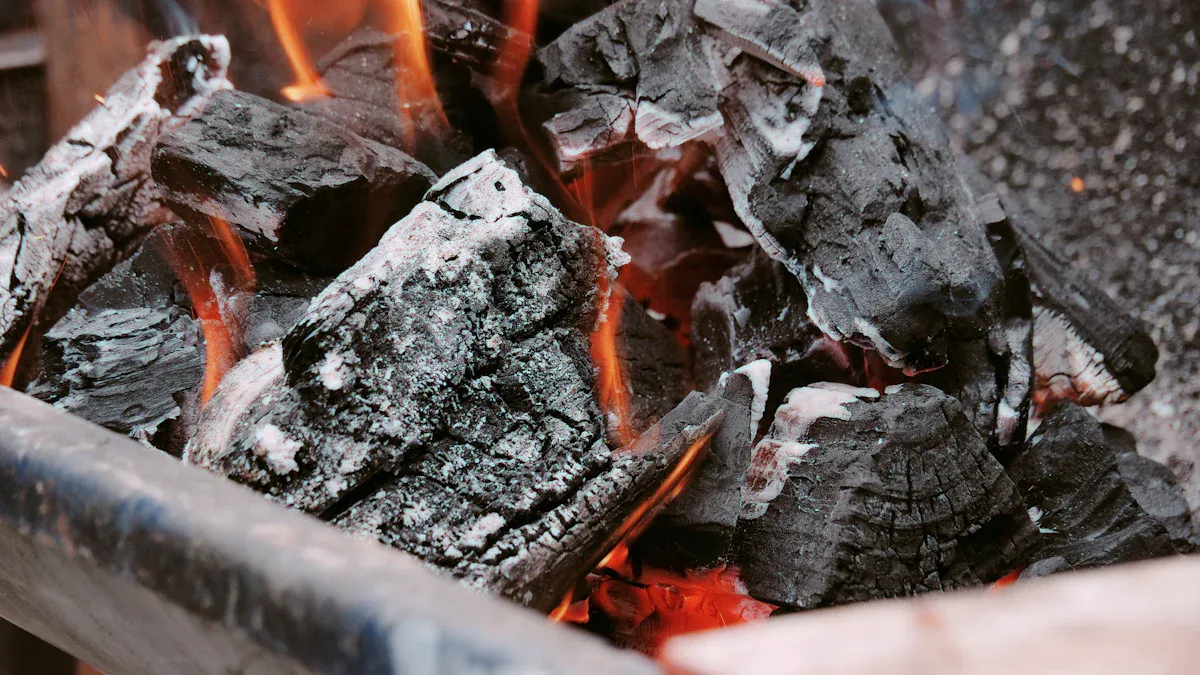
You can see wood based activated carbon in many filters and purifiers. This material is made from wood that can grow back, so it is good for the environment. Its special structure gives it a big surface area. This helps remove bad stuff from water or air very well. It has less ash, so it works well when you need things to be very clean. Many businesses use wood based activated carbon for cleaning water, cleaning air, and getting rid of smells. More people are using wood based activated carbon every year, as you can see below:
Year | Market Size (USD Billion) | CAGR (%) |
|---|---|---|
2023 | – | |
2033 | 4.27 | 5.37 |
Key properties are:
It has lots of tiny holes for strong adsorption.
It comes from wood that grows back.
It lasts a long time.
Key Takeaways
Wood-based activated carbon is good for the environment. It is made from wood that can grow back. Its special tiny holes help it trap things well. This makes it great for cleaning air and water. The material lasts a long time. You do not need to change filters often. Wood-based activated carbon has different hole sizes. These holes catch many kinds of pollution. Using it can make water look clearer. It also helps air become cleaner. It costs less than some other types, like coconut shell-based carbon. Picking the best way to make it can help it work better. More people want clean water and air now. So, more people are buying wood-based activated carbon.
Wood Based Activated Carbon Properties
Definition
Wood based activated carbon is a type of carbon with many tiny holes. It is made from wood that can grow back, so it is good for the planet. The process to make it uses heat and steam. This helps it catch more things in water or air. It has more pores and works better than coal-based types. These features make it great for cleaning the environment.
Wood based activated carbon comes from renewable wood.
Making it boosts how much it can adsorb.
It works very well and is very active.
You can use it to clean water and air.
Hierarchical Porous Structure
Wood based activated carbon is special because it has pores of many sizes. These different pores help it clean and remove color from things. The pores let the carbon trap many kinds of molecules and particles.
The way the pores are set up helps remove both big and small contaminants. This makes wood based activated carbon very good for cleaning water and air.
Here is a table that shows its main structure features:
Characteristic | Description |
|---|---|
Surface Area | High BET surface area of 1578 m²/g |
Total Pore Volume | Total pore volume of 0.929 cm³/g |
Contribution of Small Mesopores | 45% of the total pore volume is from small mesopores (2–3 nm) |
Role of Fe3O4 Nanoparticles | Fe3O4 nanoparticles are crucial for the formation of hierarchical pores |
Magnetic Properties | WMACFs show favorable magnetic properties when Fe3O4 content exceeds 1.5% |
Meso And Macro Pores
There are three main pore types in wood based activated carbon. These are micropores, mesopores, and macropores. Each one helps with cleaning in a different way.
Pore Type | Size Range (nm) | Role in Electrochemical Performance |
|---|---|---|
Micropores | <2 | Give a big area for ions to touch the electrolyte. |
Mesopores | 2–50 | Help ions move and spread faster inside the pores. |
Macropores | >50 | Make it easier for ions to get inside the carbon, which helps power. |
Microporosity catches small molecules like ethyl phenols and geosmin.
Mesoporosity holds medium-sized compounds such as tannins and anthocyanins.
Macropores help things flow and stop filters from clogging.
Having all these pores together makes cleaning better and helps filters last longer.
Surface Area And Adsorption
Wood based activated carbon can have different surface areas. This depends on what wood is used and how it is made. For example, Acacia mangium wood can reach 1161.29 m²/g. Wood-based spent mushroom substrate can get close to 3000 m²/g. Using KOH at high heat also makes surface areas near 3000 m²/g.
It can adsorb a lot because it has many micropores. This helps remove bad things and smells from air and water. Many industries use wood based activated carbon to clean water and air. They also use it in wastewater treatment.
The large surface area and strong adsorption make wood based activated carbon a top pick for many cleaning jobs.
Service Life And Reactivity
You want a filter that works for a long time. Wood-based activated carbon does this well. It does not clog easily and stays active for many uses. You can use it in water and air filters for a long time before changing it.
Wood-based activated carbon reacts fast with many pollutants. This helps it clean better. It can remove hard-to-clean things like dyes and heavy metals. It is strong and can handle lots of pollution.
Here are some reasons why wood-based activated carbon works well:
Macropores stop clogging and let water move fast.
Micropores catch small molecules for cleaner water and air.
You can change the pore size to target certain pollutants.
It removes synthetic dyes and heavy metal ions that are hard to clean.
Its big surface area helps it adsorb more and last longer.
You see these features when you use it for cleaning dirty water in factories. It works better than synthetic materials for toxic elements. You get a filter that lasts longer and keeps working even with high pollution.
Feature | Benefit for You |
|---|---|
Long Service Life | Fewer filter changes, less maintenance |
High Reactivity | Removes tough pollutants quickly |
Adjustable Structure | Targets specific contaminants |
Eco-Friendly | Safe for you and the environment |
You can trust wood-based activated carbon for strong adsorption and long use. It keeps your filters working and your water or air clean.
Conductivity
You might wonder if wood-based activated carbon can carry electricity. It can, but not as much as metals. Its carbon structure gives it some conductivity. You can use it in special filters or devices that need a little electric flow.
Wood-based activated carbon works in supercapacitors and batteries. It helps ions and electrons move. This gives better energy storage. The pores let ions travel fast, so charging and discharging is quick.
Here is a simple table showing how conductivity helps:
Application | Role of Conductivity |
|---|---|
Supercapacitors | Fast ion movement, quick energy flow |
Batteries | Helps electrons move, boosts power |
Sensors | Detects changes, sends signals |
You can use wood-based activated carbon in energy devices. It has good conductivity and strong adsorption. This makes it good for cleaning and powering technology.
Wood-Based Activated Carbon Production

Raw Materials
Wood is the main thing used to make wood based activated carbon. The kind of wood you pick changes how the final product works. Hardwoods like oak, beech, and elm make the pores more even and the carbon stronger. Softwoods, such as pine, are also used but make a different pore pattern. Some companies use soft hardwoods like poplar, willow, and linden. Each wood type has its own good points.
Here is a table to show common wood choices:
Category | Examples |
|---|---|
Hardwoods | Beech, Oak, Elm |
Soft Hardwoods | Poplar, Willow, Linden |
Softwoods | Pine |
You can choose the wood type for what you want your activated carbon to do. Hardwoods usually make a stronger and longer-lasting carbon.
Steam Activation
Steam activation is an important step in making wood based activated carbon. First, you heat the wood in a special oven with little or no air. Then, you add steam at high heat. This step opens the wood and makes lots of tiny pores. These pores help the carbon catch more bad stuff.
The heat and time you use for steam activation change how the carbon works. For example, at 850°C, you can get a surface area of 2024 m²/g and a micropore volume of 0.569 cm³/g. This means your activated carbon can catch more pollution from water or air.
Activation Temperature (°C) | Surface Area (m²/g) | Micropore Volume (cm³/g) | Adsorption Values (Iodine, Methylene Blue) |
|---|---|---|---|
850 | 2024 | 0.569 | Maximum values observed |
How long you activate the wood also matters. Shorter times make small pores that are good for catching tiny molecules like CO2. Longer times make bigger pores that can catch larger molecules like butane.
Activation Time (min) | Pore Diameter (nm) | Adsorption Properties | Observations |
|---|---|---|---|
0 | Up to 0.7 | Highest CO2 uptake | Narrow micropores dominate |
10 | Up to 0.7 | Highest CO2 uptake | Similar to 0 min |
30 | Up to 1.0 | Highest ethene uptake | Widening of narrow micropores |
60 | Up to 2.5 | Highest butane uptake | Further widening of pores |
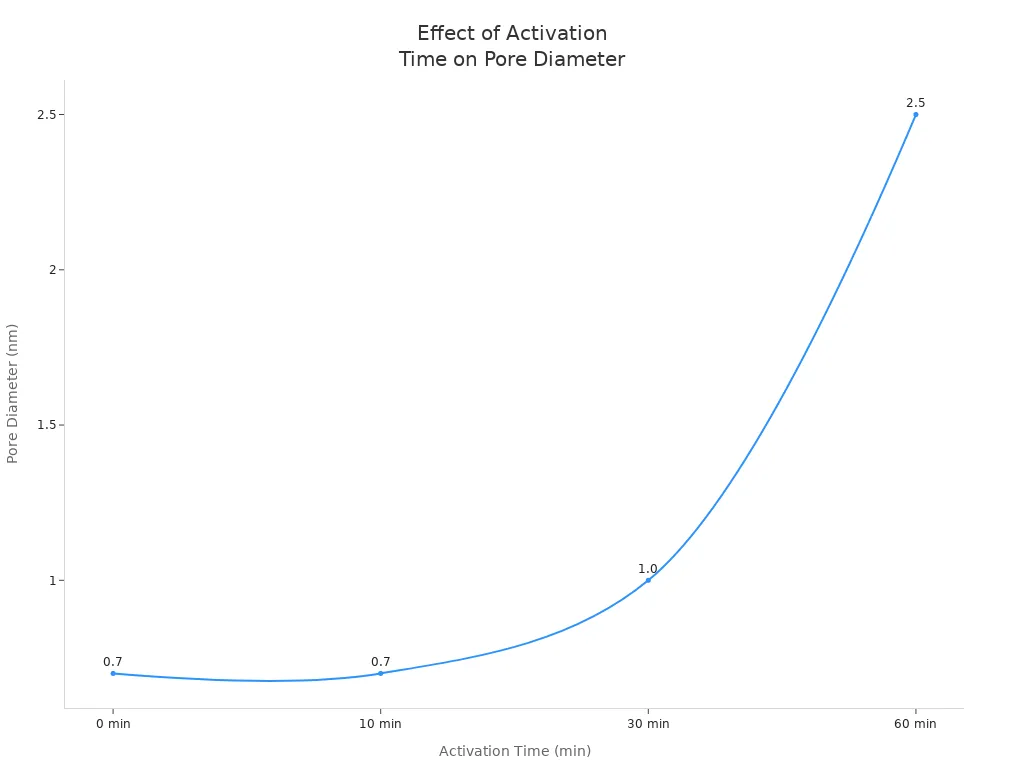
Steam activation lets you change the pore size and surface area. This helps your activated carbon work better for different jobs.
Phosphoric Acid Activation
Phosphoric acid activation is another way to make wood based activated carbon. You soak the wood in phosphoric acid before heating it up. This method makes the carbon strong and full of pores. It also gives good adsorption and hardness.
Here is a table that shows the good and bad points:
Advantages | Disadvantages |
|---|---|
Good adsorptive properties and hardness | Lower yield with higher phosphoric acid concentration |
Better for the environment than zinc chloride methods | Possible issues with mechanical strength |
You get a product that works well for cleaning, but using too much acid can lower how much you make. This process is safer for the environment than some old ways. You can use phosphoric acid activation if you want good cleaning and care about the planet.
Tip: Pick the activation method that fits your needs. Steam activation lets you control pore size more, while phosphoric acid activation is good for adsorption and is better for the environment.
Achieving Key Properties
You want wood-based activated carbon to clean well. How you make it changes how strong and porous it is. The right method gives you the properties you need for your job.
Different ways of making it change the pores and how much it can adsorb. Steam activation makes lots of tiny holes. These holes catch small molecules and help the carbon last longer. Phosphoric acid activation builds many mesopores. Mesopores let water and air move fast through the carbon. This means you get quick filtering and strong adsorption.
You can see how the way you make it changes its properties in this table:
Production Method | Key Properties |
|---|---|
Phosphoric Acid Method | Developed mesopore structure, large adsorption capacity, fast filtration speed, no zinc salts. |
Zinc Chloride Method | Developed mesoporous structure, large adsorption capacity, rapid filtration. |
If you use phosphoric acid, you do not get zinc salts. This makes the carbon safer for the planet. You also get carbon that filters fast and holds more pollution. If you use steam, you can change the pore size. You do this by changing the heat and how long you activate it.
Here are some ways to get the properties you want:
Change the activation temperature. Higher heat makes more pores and a bigger surface area.
Change the activation time. Shorter times make small pores. Longer times make bigger pores for large molecules.
Pick the right wood. Hardwoods make stronger carbon. Softwoods make different pore shapes.
Choose the activation method. Phosphoric acid gives fast filtering and strong adsorption. Steam lets you control the pore size.
Tip: If you want to remove dyes or heavy metals, pick a method that makes more mesopores. If you want to filter small molecules, focus on micropores.
You can also add nanoparticles to make the carbon better. For example, Fe3O4 nanoparticles help make special pores. This helps the carbon adsorb more and gives it magnetic properties.
When you make wood-based activated carbon, you decide how it will work. You can make it last longer, adsorb more, and filter faster. You get a product that fits what you need and works in many ways.
If you want eco-friendly carbon, use phosphoric acid activation. If you need special pore sizes, use steam activation. You can also mix methods to get the best results.
Note: Always test your activated carbon to make sure it works for you. The right way of making it gives you the best cleaning and longest use.
Applications
Water Decolorization
Wood-based activated carbon can take color out of water. This is important in city water plants. The carbon grabs dyes and other things that make water look dirty. Its big surface area and many pores help trap these molecules. After using the carbon, the water looks clear.
Many factories use this carbon to clean water. Textile and food plants use it before letting water go. You get better cleaning because it holds more bad stuff. It works for both small and big water systems.
Tip: Use wood-based activated carbon if you want cleaner water. It is strong at taking out color and cleaning water.
Air Purification
Wood-based activated carbon helps clean air in homes and factories. It has lots of pores and a big surface area. This lets it catch many pollutants. You can put it in air filters to take out dust, smoke, and gases. It works for both inside and outside air.
Big air cleaning systems use this carbon. It costs less than coconut shell-based activated carbon. You get almost the same results but save money. Many businesses use wood-based activated carbon because it is easy to find and works well.
Wood-based activated carbon catches many kinds of pollution.
It works like coconut shell-based carbon.
Its low price is good for big air cleaning jobs.
You can trust wood-based activated carbon to keep your air safe and clean.
Odor Removal
You might smell bad odors in mines, factories, or waste plants. Wood-based activated carbon helps get rid of these smells. It traps odor molecules and keeps them from spreading. Many industries use this carbon because it is easy to get.
Wood-based activated carbon does not cost much for odor removal. You can use it in exhaust systems to clean air before it leaves. It works for smells in both gases and liquids. Many companies pick it because it is simple and works well.
Wood-based activated carbon is used in mines and factories to remove smells.
It is cheap and easy to buy.
You get good results in many places.
Note: You can use wood-based activated carbon for odor removal in small or big systems. It helps keep your space fresh and clean.
Industrial Uses
You can find wood-based activated carbon in many industries. It helps solve hard cleaning problems in factories. The special pores and strong adsorption make it popular for production lines. Water treatment plants use it to clean water and take out bad stuff. This makes water safe to drink or use in factories. Air treatment systems use it to trap gases and pollution. Food and drink companies use it to get rid of colors and smells they do not want. Pharmaceutical factories use it to make sure their products are pure.
Here is a table that shows where wood-based activated carbon is used:
Industry | Purpose of Use |
|---|---|
Water Treatment | Purification and contaminant removal |
Air Treatment | Purification and environmental applications |
Food and Beverage | Decolorization, removing unwanted pigments and odors |
Pharmaceuticals | Purification processes to meet regulatory standards |
Water treatment is one of the biggest uses. The carbon catches chemicals, metals, and other things in water. This keeps water clean for people and factories. Air systems use it to take out harmful gases and dust. This gives you cleaner air in buildings.
Food and drink companies use it to make juices and syrups look and taste better. It removes colors and bad smells from these products. You get a clear and fresh drink or syrup. Pharmaceutical companies need very pure ingredients. Wood-based activated carbon helps them follow safety rules by taking out impurities.
You can use wood-based activated carbon in filters, columns, or reactors. It works quickly and lasts a long time. You do not need to change filters often, so you save money.
Tip: If you have a factory, you can pick wood-based activated carbon. It is strong at adsorption and good for the environment. It helps you keep your products safe and meet quality rules.
You also see wood-based activated carbon in mining and chemical plants. It takes out metals and toxic things from process streams. This protects workers and nature. Because it works in many ways, it is a smart choice for many jobs.
You can trust wood-based activated carbon for tough cleaning. It works in water, air, food, and medicine. You get good results and help keep people and the planet safe.
Comparison
Wood Vs. Coal Activated Carbon
You might want to know how wood-based activated carbon is different from coal-based activated carbon. Both types clean water and air, but each has its own strengths. Wood-based activated carbon comes from wood that can grow back. Coal-based activated carbon is made from coal, which cannot be replaced.
Here is a table that shows the main differences:
Aspect | Coal-Based Activated Carbon | Wood-Based Activated Carbon |
|---|---|---|
Raw Materials and Process | Made from coal at high temperatures (800-1000 °C) | Made from wood at lower temperatures (500-800 °C) |
Pore Structure and Adsorption | Mostly micropores, surface area 800-1200 m²/g, best for gases | More mesopores, surface area 500-1000 m²/g, best for liquids |
Physical Characteristics | High strength (≥90%), dense (0.45-0.55 g/cm³) | Lower hardness (70-85%), fast adsorption rate |
Application Field | Industrial gas and air cleaning | Drinking water, food, and medicine purification |
Wood-based activated carbon is better for cleaning liquids. Coal-based activated carbon is stronger and works well for cleaning gases.
Wood-based activated carbon works fast and is good for short cleaning jobs.
Think about the environment too. Wood-based activated carbon is better for nature. It comes from wood that grows back and does not hurt the planet as much. Coal-based activated carbon needs mining and makes more pollution.
Type of Activated Carbon | Environmental Impact | Sustainability Aspect |
|---|---|---|
Wood-Based Activated Carbon | Lower carbon footprint, renewable sourcing, less ecosystem damage | More sustainable due to renewable sources |
Coal-Based Activated Carbon | Higher environmental impact from mining and carbon emissions | Non-renewable, less sustainable |
Wood Vs. Coconut Shell Activated Carbon
You might also see coconut shell activated carbon in filters. Coconut shell carbon has lots of micropores. This helps it catch tiny molecules, like those in air or some chemicals. Wood-based activated carbon has more mesopores. These help it trap bigger molecules in water.
Here is a table to show the difference:
Type of Activated Carbon | Pore Structure | Adsorption Capacity |
|---|---|---|
Wood-Based Activated Carbon | Developed mesopore structure | Lower adsorption for small molecules |
Coconut Shell Activated Carbon | Micropore structure (<2 nm) | High adsorption, especially for small molecules |
If you need to clean water with big particles or color, use wood-based activated carbon. If you want to clean tiny molecules or gases, coconut shell carbon is better.
Tip: Use wood-based activated carbon for cleaning colored water. Use coconut shell carbon for air filters.
Unique Advantages
Wood-based activated carbon has some special good points:
It is made from wood that grows back, so it is better for the planet.
The mesopore structure helps remove color and big pollutants from water.
You can use it in many places, like food and medicine.
It works fast in filters because it adsorbs quickly.
You help the earth by picking a product that is sustainable.
You can trust wood-based activated carbon to clean well and protect nature. It works for many jobs and gives you both good cleaning and helps the environment.
Buying Tips
Quality Indicators
When you buy wood-based activated carbon, you want it to work well. You should check some quality indicators before you pick a product. These indicators show how good the carbon is at adsorbing pollutants and how pure it is.
Description | |
|---|---|
Iodine Number (mg/g) | Tells how much the carbon can catch small molecules. Higher numbers mean more micropores. |
Molasses Number | Shows how well the carbon catches big molecules. Higher numbers mean it removes color better. |
Methylene Blue Adsorption (mg/g) | Checks if the carbon can remove color using mesopores. Higher numbers are better for this job. |
Ash Content (%) | Tells how much ash is in the carbon. Less ash means stronger adsorption and cleaner results. |
Moisture Content (%) | Shows how much water is in the carbon. Less water means the carbon works better. |
pH | Affects how the carbon works in special jobs. Neutral pH is usually best. |
Particle Size Distribution | Helps you know if the carbon is fine enough for your filter or process. |
Tip: Always ask for a test report. This helps you see if the carbon is good enough for your needs.
Specifications
You need to look at the specifications before you buy wood-based activated carbon. These specs tell you if the product is right for your job, like water treatment.
Specification | Value |
|---|---|
Size | 200mesh, 325mesh |
Methylene blue (ml/g) | 6-12 |
pH | 8-10 |
Moisture (%) | ≤5 |
Iodine Value (mg/g) | 800-1000 |
Hardness (%) | ≥95 |
You can use these numbers to compare different products. A higher iodine value means the carbon can catch more small molecules. Hardness tells you how strong the carbon is, so it lasts longer in filters.
Note: Pick a size that fits your filter. Finer mesh is better for fast filtration. Bigger mesh is good for slower jobs.
Choosing For Your Needs
You should pick the right wood-based activated carbon for your job. How the carbon is made changes how well it works. General-purpose carbon costs less but may not clean as well because it has fewer pores. High-performance carbon is made for special jobs and lasts longer.
Here are some tips to help you choose:
Make sure the product meets standards like NSF or ISO for purity.
Check the surface area and pore size for what you need to remove.
Decide if you need granular, powdered, or pelletized carbon for your filter.
Look for suppliers who use eco-friendly methods.
Balance quality with your budget.
Make sure the carbon works with your current system.
Choose vendors who offer technical help and custom solutions.
For example, one refinery used less carbon after switching to a high-performance product. An electronics company made its filter last three times longer by picking the right supplier. You can get better results and save money by choosing the right carbon for your needs.
You can make a smart choice by checking quality indicators, looking at specifications, and matching the product to your job. This helps you get clean water or air and makes your filters last longer.
Trends And Importance
Sustainability
When you pick wood-based activated carbon, you help the planet. Companies now use things like coconut shells, bamboo, and other plants to make activated carbon. This change helps lower pollution and supports recycling. More companies use wood from trees that grow back fast. These trees grow quickly, so forests stay healthy and there is less waste.
By choosing wood-based activated carbon, you support green actions. You help keep the earth clean for people in the future.
Many companies also use leftover wood and farm waste. They turn this trash into useful cleaning products. This means less garbage goes to landfills and helps the earth every time you use these products.
Innovations
You get better results because of new ways to make wood-based activated carbon. Companies now use microwave activation. This saves energy and makes less pollution than old methods. Plasma technology lets them change the carbon’s surface very carefully. This helps the carbon catch more pollution.
Microwave Activation: Uses less energy and makes less pollution.
Plasma Technology: Changes the surface to adsorb better.
Nano-Engineered Carbon Materials: Has a very big surface area for special jobs.
You can also find new products like Haycarb RWAC catalytic carbon. This carbon comes from plants that grow back and uses special technology to change its surface. The process makes special pores and surfaces, so it removes more bad stuff from water.
You get cleaner water and air because these new ideas make activated carbon work faster and last longer.
Companies keep trying new materials. Now, some activated carbon is made from bamboo and mushroom waste. These materials help make carbon with bigger surface areas and better cleaning power.
Market Outlook
The market for wood-based activated carbon keeps getting bigger. Experts think it will grow by about 5-7% each year for the next five years. This is because more people need clean water, clean air, and better cleaning in factories.
The market was worth billions of dollars.
It should grow from 3,400 million dollars in 2025 to 5 billion dollars by 2035.
The market is expected to grow at a rate of 3.9% from 2025 to 2035.
Another guess says it will grow at 5.33% from 2025 to 2032.
More companies and cities are using wood-based activated carbon. The need for clean water and air is making this happen. You will see new products and better results as the market grows.
If you want good and green cleaning, wood-based activated carbon is a smart choice. You help this market grow every time you pick eco-friendly products.
Now you know wood-based activated carbon is made from wood that grows back. It has special pores that make it work well. It can adsorb things strongly and lasts a long time. It is also good for the environment. You can use it to clean water, air, and get rid of smells. When you buy some, look at the surface area and pore size. Pick the type that fits your needs so you get the best results.