
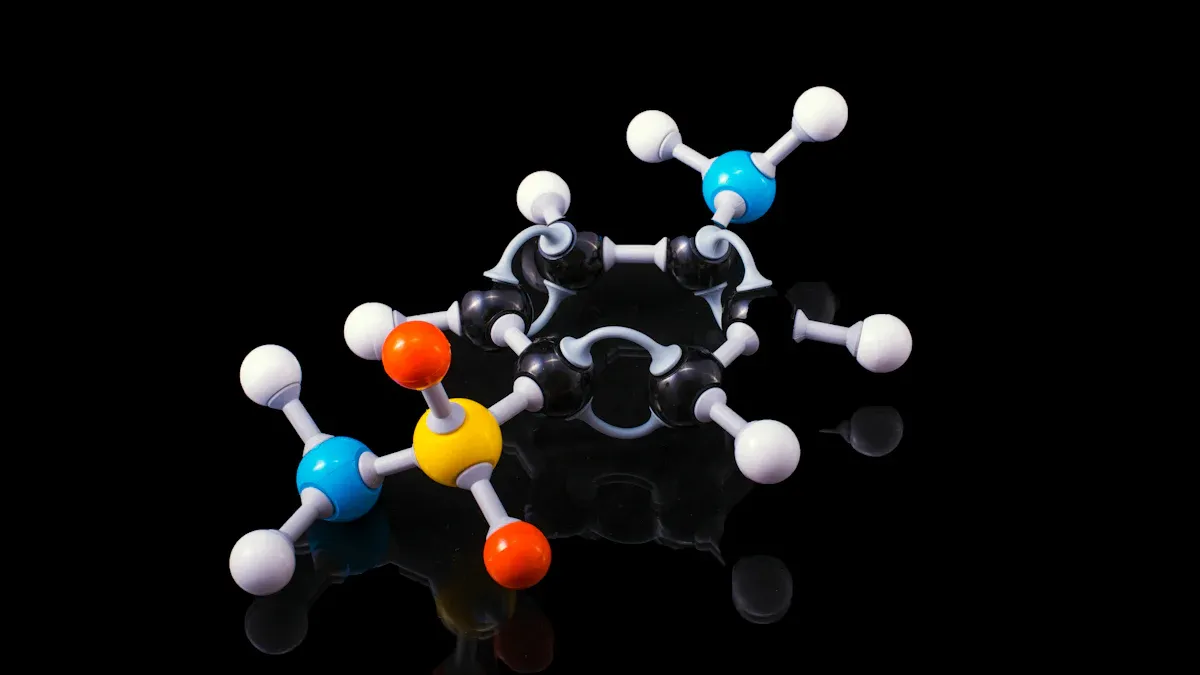
Chemical activation uses chemicals to make activated carbon. This process creates a material with many tiny holes. First, you pick raw materials like wood or coconut shells. Then, you treat them with chemicals like zinc chloride or phosphoric acid. These chemicals help open the material and make pores when heated. Here are the most common chemicals used:
Chemical | Description |
|---|---|
Zinc Chloride | Used to soak raw materials. It removes water strongly during activation. |
Phosphoric Acid | Often used to break bonds and protect the tiny holes inside. |
Chemical Activation Activated Carbon can have many pore sizes. It also has better ability to trap things. This process lets you control how the final product turns out.
Key Takeaways
Chemical activation uses chemicals like zinc chloride and phosphoric acid. These chemicals help make activated carbon with lots of tiny holes.
Picking the right raw material, like coconut shells or wood, is very important. This helps the activated carbon work better and have more surface area.
Chemical activation works well and is fast. It often needs only one step, so it saves time and energy compared to other ways.
It is important to control how much chemical is used and how much heat is added. This makes sure the activated carbon is good quality and works well.
Using leftover materials for raw materials helps save money. It also helps the environment by making less waste.
Chemical Activation Activated Carbon Overview
What Is Chemical Activation?
Chemical activation is a special way to make activated carbon. You mix raw materials with chemicals before heating them. The chemicals help break down the material. When you heat it, many tiny holes form inside the carbon. These holes are called pores. The pores give the carbon a huge surface area. Sometimes, the surface area can be 1000 to 2000 square meters for each gram. This means there is a lot of space to trap gases or liquids.
The process also changes the shape and size of the pores. You can pick different chemicals or amounts to control the pore size. This helps you make activated carbon that fits your needs. Chemical Activation Activated Carbon usually has both small and medium pores. This mix helps catch both big and small molecules.
Tip: The chemicals you use, like zinc chloride or phosphoric acid, are very important for the final product.
Why Use Chemical Activation?
People use chemical activation because it gives more control over the product. The process makes carbon with a high surface area and many active sites. These things help clean air or water. You can also get a good amount of carbon from this method. Sometimes, you can keep up to 40% or even 50–55% of the starting material. This depends on the temperature and chemicals.
Here are some main results of chemical activation:
You get a very high surface area and pore volume.
The process makes a mix of pore sizes, so it traps many kinds of molecules.
The carbon can adsorb things like toluene, benzene, and xylene very well.
You can change the process to get the pore structure you want.
Chemical Activation Activated Carbon is special because you can make it for many uses. You can use it for air filters, water cleaning, or gas masks. The process helps you make strong and useful activated carbon.
Chemical Activation Process Steps

Raw Material Selection
First, you pick the right raw material. The kind of material you choose is very important. It affects how much product you get and how much it costs. Good materials help make Chemical Activation Activated Carbon with a big surface area. Many byproducts from farms or factories can be used. Some examples are:
Palm kernel shell
Coconut shell
Gmelina arborea saw dust
Bagasse pith
Apricot kernel shells
Camellia oleifera shell
Bamboo
Cherry stones
Waste tea
Paulownia flower
Tip: Using byproducts saves money and helps the environment.
Chemical Impregnation
Next, you mix the raw material with a chemical. This step is called impregnation. The chemical goes into the material and gets it ready for heat. The most used chemicals are zinc chloride, phosphoric acid, and potassium hydroxide. How much chemical you use changes the final product. For example, more zinc chloride gives more pores and bigger surface area.
Here is a table that shows some ratios and what they do:
Activating Agent | Impregnation Ratio | Effect on Activation |
|---|---|---|
ZnCl2 | 1 to 4 | Increases surface area & pores |
KOH | 50 wt.% | Makes large pores |
You can change the type or amount of chemical to control the pores. This helps you make Chemical Activation Activated Carbon that works for you.
Pyrolysis and Activation
After impregnation, you heat the material in a special oven. This is called pyrolysis. You do this without oxygen so it does not burn. The heat breaks down the material and makes char and gases. This step forms many small holes, called pores, inside the carbon.
The temperature depends on the chemical you use. For example:
Process | Optimal Temperature Range |
|---|---|
General Activation | 600-800°C |
Phosphoric Acid Process | 350-500°C |
KOH Activation | 500-900°C (after 400°C dehydration) |
Heating like this makes the carbon strong and full of pores. No oxygen is important so the material does not get ruined.
Note: Pyrolysis without oxygen is needed for good Chemical Activation Activated Carbon.
Washing and Drying
The last step is washing and drying. You wash the carbon with acid and water. This takes away leftover chemicals and things like salts or metals. Clean pores help the carbon work better. After washing, you dry the carbon, often with a vacuum. This takes out water and solvents. It also keeps the carbon safe from air.
Here is a table that shows what each step does:
Process Step | Main Function | What It Removes | Impact on Carbon |
|---|---|---|---|
Acid Washing | Purifies | Salts, metals | Clears pores |
Vacuum Drying | Removes moisture | Water, solvents | Keeps chemistry and structure |
Both Steps | Maximizes capacity | Solid & liquid obstructions | Improves adsorption performance |
When you finish all the steps, you get pure Chemical Activation Activated Carbon. It is ready to trap gases, clean water, or filter air.
Chemicals and Materials Used
Common Activating Agents
To make activated carbon, you need special chemicals. These are called activating agents. They help make pores in the carbon. Pores give the carbon more surface area. Some chemicals work better with certain materials. The chemical you pick depends on what you want the carbon to do.
Here are some common activating agents:
Phosphoric acid: This works well with wood and other plants. You can use it at lower heat. It helps make many small and medium pores.
Zinc chloride: This gives a big surface area and lots of pores. People use it less now because it can hurt the environment if not handled right.
Potassium hydroxide: This makes large pores and works very well. It is better than sodium hydroxide for many jobs.
Potassium carbonate: This gives high yields and a big surface area. Many people like it more than potassium hydroxide for better results.
Note: Always be careful with these chemicals. Some, like zinc chloride, can harm the environment if not thrown away the right way.
Suitable Raw Materials
You can use many things to make activated carbon. The best ones have lots of carbon and not many impurities. What you choose changes how much carbon you get and how good it is.
Some good raw materials are:
Wood and bamboo
Coconut shells and fruit stones
By-products from farms like nutshells and bagasse
Petroleum coke and resins
Charcoals and some polymers
The raw material you pick changes the quality and amount of activated carbon. For example, coconut shells and fruit stones make carbon with lots of pores and a big surface area. Some materials with potassium can make even bigger pores. Bigger pores help the carbon trap more things.
Picking the right raw material is important. It helps you make activated carbon that works best for your job, like cleaning water, filtering air, or removing smells.
Chemical vs Physical Activation
Process Differences
There are two main ways to make activated carbon. These are chemical activation and physical activation. Each way uses different steps and heat levels. Chemical activation uses chemicals to make pores at lower heat. Physical activation uses gases and much higher heat to open the carbon.
Here is a table that shows how they are different:
Activation Method | Key Steps | |
|---|---|---|
Physical Activation | 500–1000 | 1. Carbon turns into gas or steam. 2. Gases like CO₂ and H₂O react with the material. 3. Pores open and surface area gets bigger. |
Chemical Activation | 400–700 (or 800–1000) | 1. Chemicals like phosphoric acid mix with the raw material. 2. Pyrolysis happens at lower heat. 3. Many pores form, and some chemicals stay on the surface. |
Tip: Chemical activation uses less heat and lets you control the pore shape better.
Resulting Properties
The method you pick changes how the activated carbon turns out. Chemical activation makes more pores and a bigger surface area. Physical activation makes smaller pores called micropores.
Here is a table that compares what you get:
Activation Method | Average Pore Size (nm) | Pore Volume (cm³/g) | Pore Type | |
|---|---|---|---|---|
CO₂ (Physical) | 717 | 2.56 | 0.2135 | Microporous (92%) |
KOH (Chemical) | 613 | 2.72 | 0.7426 | Mesoporous (70%) |
Chemically activated carbon has more mesopores. These help catch bigger molecules.
Physically activated carbon has more micropores. These are good for small molecules.
You can also see differences in how much gas they hold:
Chemically activated carbon (like with KOH) can hold lots of gases, like CO₂.
Physically activated carbon (like with CO₂) works well too, but using both ways together can give the best results.
Note: Pick the method that fits your needs. Use chemical activation for big molecules. Use physical activation for small molecules.
Advantages and Disadvantages
Benefits
Chemical activation has many good points when making activated carbon. You can make special pores that work well for cleaning water. These pores also help remove things that are dissolved in liquids. This method often uses phosphoric acid. It lets you use lower heat. Using less heat saves energy and money.
You also get more product from your raw materials. Chemical activation does not need a burn-off step. This means you keep more of what you start with. The process is usually just one step. This makes it faster and easier to do. You can finish making the carbon in less time and with less energy.
Here is a table that shows how chemical activation and physical activation are different:
Advantage | Chemical Activation | Physical Activation |
|---|---|---|
Production Costs | Lower | Higher |
Yields | Higher | Lower |
Process Steps | One-step | Two-step |
Other good things about chemical activation are:
You get a bigger surface area for better adsorption.
You can finish in just one step.
You use less energy and save time.
Lower costs help you give better prices to customers.
Tip: Chemical activation lets you control the final product. It also helps you save energy and materials.
Limitations
There are also some problems with chemical activation. You must control the process very carefully. The amount of chemical you use is very important. If you use too much or too little, the pores may not form right. The heat and time you use also change the carbon’s quality. You need to pick the right chemical and mix it well to get even pores.
Some chemicals, like zinc chloride, can hurt the environment if not handled right. You must follow strict rules to keep everyone safe. Environmental laws may make you use cleaner technology and better controls. These rules can make your costs go up and make production harder.
Other things to think about are:
The chemical you pick changes your carbon’s properties.
How you mix things affects how the pores form.
You may need to change your process for new environmental laws.
Note: Always check local rules and use safe ways to handle chemicals. This keeps people and the environment safe.
You now know that chemical activation makes activated carbon with lots of surface area and special pores. Chemical activation uses chemicals to work faster and save energy. Physical activation needs more heat and takes more time. Pick chemical activation if you want pores for bigger molecules or want to reuse waste like plastics. Think about these things before you pick a method:
What raw material you use and what pore size you want
How hot and how long you heat it
How it affects the environment and how you handle waste
New technology that helps make the process better and greener
Every year, new technology makes chemical activation cleaner and more efficient.