
Pelletized activated carbon is the preferred form for many industrial gas and vapor treatment systems because cylindrical pellets pack predictably into fixed beds, keep pressure drop under control, and resist dusting better than loose granular or powdered media. The product is used in VOC abatement, odor control, solvent recovery, biogas purification, and selected liquid-phase treatments, and in each of these services the carbon has to keep performing over months of continuous operation. The catch is that the pellet itself is only half of the purchasing decision. A grade that looks excellent on a data sheet can arrive inconsistent from one shipment to the next, and a supplier that cannot explain its own test methods cannot be held to them.
A reliable pelletized activated carbon supplier is one that matches a traceable product specification to your actual process conditions, backs every batch with verifiable test documentation, manufactures or directly controls the production line, quotes realistic commercial terms, and can reproduce the agreed quality across repeat orders; price per kilogram matters, but total cost per usable service result matters more.
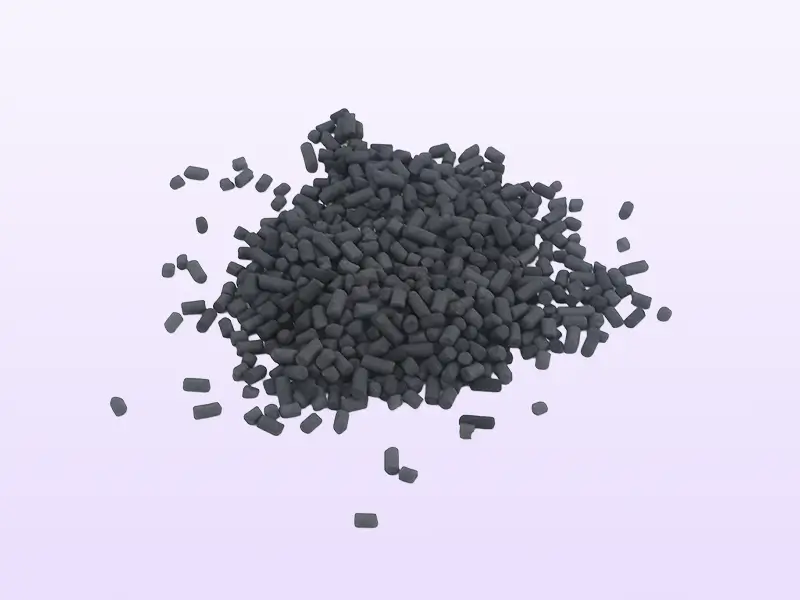
This guide gives you a practical evaluation path. It starts with the application data you need to prepare, walks through the product specifications worth comparing, explains which test methods and documents prove the claims, and shows how to separate a real manufacturer from a reseller. It then covers sample testing, commercial terms, red flags, and the routines that keep quality consistent after the first order. Each section stands alone, so you can use the checklist that matches your current stage of negotiation.
- What makes a pelletized activated carbon supplier reliable?
- Why does the application come before the supplier shortlist?
- Which product specifications should you compare?
- What test methods and documents prove the claims?
- How do you verify that a supplier is a real manufacturer?
- How should samples and pilot tests be run?
- What commercial terms need to be locked down?
- What red flags should disqualify a supplier?
- How do you keep quality consistent across repeat orders?
What makes a pelletized activated carbon supplier reliable?
A reliable supplier combines four things: technical competence to match carbon to your process, batch-level quality control with traceable certificates, stable supply capacity and honest commercial terms, and responsive support when operating conditions change.
Technical competence shows up in the first conversation. A supplier who asks about your contaminant, concentration, flow rate, temperature, humidity, and contact time is already behaving like an engineer. A supplier who only quotes a price per ton for a generic grade is treating your system like a commodity. The second pillar is quality control: batch-specific certificates of analysis, clearly stated test methods, and samples that represent routine production rather than a hand-picked premium lot.
Supply stability and commercial transparency form the third pillar. You need to know production capacity, minimum order quantity, lead time, packaging, and shipping terms in writing, because a carbon that performs perfectly in a trial but cannot be delivered on schedule is still an operational failure. The fourth pillar is after-sales support, which matters because influent quality, humidity, flow, and competing contaminants all drift over time, and a good supplier helps you interpret the change instead of arguing about it.
Why does the application come before the supplier shortlist?
Define what the carbon must remove and where it will operate before contacting any supplier, because pelletized carbon performance depends on the contaminant, the phase, the concentration, the flow, and the operating conditions, not on a single headline number such as iodine value.
The treatment objective should be written down before a single request for quotation goes out. For a gas application, record the contaminant name and inlet concentration, the required outlet limit if one exists, the gas flow in cubic meters per hour, the operating temperature, relative humidity, bed depth or empty bed residence time, and the planned replacement or regeneration cycle. For a liquid application, record the flow, pH, contact time, suspended solids, and the competing organics or salts in the stream.
High adsorption capacity is not enough on its own. A carbon with a strong iodine number may still underperform for a larger molecule, a humid gas stream, or a complex wastewater matrix, because capacity for one contaminant does not automatically represent performance for another. The correct pellet depends on the molecule size, polarity, concentration, and the pore structure that matches them, so treat the specification as a response to the process rather than a number to maximize.

Which product specifications should you compare?
Compare pellet diameter, iodine number or CTC activity, hardness, moisture, ash, bulk density, particle size distribution, and pH using consistent test methods, and review these values together instead of making a decision from one headline figure; a practical path for comparing complete pellet specifications under consistent test methods starts with the process data that determines which values actually matter.
| Specification | Why it matters | Typical buyer starting point |
| Pellet diameter | Affects pressure drop, contact area, bed packing, and dust formation | 2 mm, 3 mm, or 4 mm to match vessel and flow |
| Iodine number | Adsorption indicator for small pores, useful for comparison under one test method | 800 to 1200 mg/g depending on application |
| CTC activity | Gas-phase adsorption indicator, important for VOC and solvent services | Above 60% for many VOC applications |
| Dureza | Resistance to attrition during transport, handling, and operation | At least 90%, often 95% or higher |
| Humidade | Affects delivered net carbon and available adsorption capacity | 5% or lower so you are not paying for water |
| Ash content | Mineral residue that affects purity, disposal, and some liquid applications | 5% or lower for wood-based, up to about 12% for coal-based |
| Bulk density | Determines vessel loading, inventory, and shipping calculations | Declared range with measurement conditions |
| Particle size distribution | Fines and oversize affect bed hydraulics and dust generation | Fines limit stated on the data sheet |
Pellet diameter is the first decision because it interacts with your equipment. Smaller pellets offer shorter diffusion paths and more contact area but raise pressure drop, while larger pellets lower resistance but may need longer contact time. The right diameter can only be judged against the vessel dimensions, gas velocity, and acceptable pressure drop of your actual system. Hardness and fines go together: a pellet with high hardness sheds less dust, protects downstream equipment, and keeps pressure drop stable over the bed life.
The values on a data sheet must be read with care. Ask whether each number is typical, minimum, or maximum, and which test method produced it. Two suppliers can report the same iodine value using different preparation and reporting conventions, so a comparison is only meaningful when the units and methods match.
What test methods and documents prove the claims?
Ask for a technical data sheet, a batch-specific certificate of analysis, and a safety data sheet, and confirm that the reported values were measured according to recognized standards such as the ASTM test methods for pelletized activated carbon, which cover iodine number, ash, moisture, particle size, and hardness under defined laboratory procedures.
| Document or standard | What it provides | What to verify |
| Technical data sheet | Product grade, typical values, application notes | Units, test methods, tolerances, limitations |
| Certificate of analysis | Batch-specific measured values | Batch number, production date, actual results |
| Safety data sheet | Handling, storage, and hazard information | Correct for the specific grade |
| ASTM D4607 | Iodine number | Test edition and reporting basis |
| ASTM D2866 | Ash content | Sample preparation and units |
| ASTM D2867 | Moisture content | Drying conditions and basis |
| ASTM D2862 | Particle size distribution | Sieve sizes and fines limit |
| ASTM D3802 | Hardness or abrasion resistance | Acceptance limit and method |
A certificate of analysis is the most important document because it links the numbers to a real production batch. Confirm that the certificate carries the batch number, the date, and the actual measured values rather than a reprinted generic sheet. For critical applications, compare the certificate from the sample with certificates from later commercial lots, because a specially prepared laboratory sample can look better than routine production.
Test methods are part of the specification, not a technical detail to skip. The same pellet can report different hardness or moisture values depending on the method edition, sample size, and reporting convention, so write the test method into your purchase specification and require the supplier to state it on every certificate. If the values are important enough to decide an order, they are important enough to be reproducible.
How do you verify that a supplier is a real manufacturer?
Verify manufacturing control through documentary evidence, a factory audit, or at least a live video tour, and confirm production capacity, raw material sources, QC laboratory capability, and batch traceability before placing a volume order.
Start with the paperwork. The business license should show manufacturing in its registered scope, and the ISO 9001 quality management certificate should be valid and verifiable with the certification body. Request evidence of the production line, such as factory photos, a video tour, or an on-site visit, and confirm which raw materials and pellet sizes the supplier actually produces. A supplier that offers every carbon form plus unrelated products such as water pumps or air filters is usually a trader reselling from multiple factories.
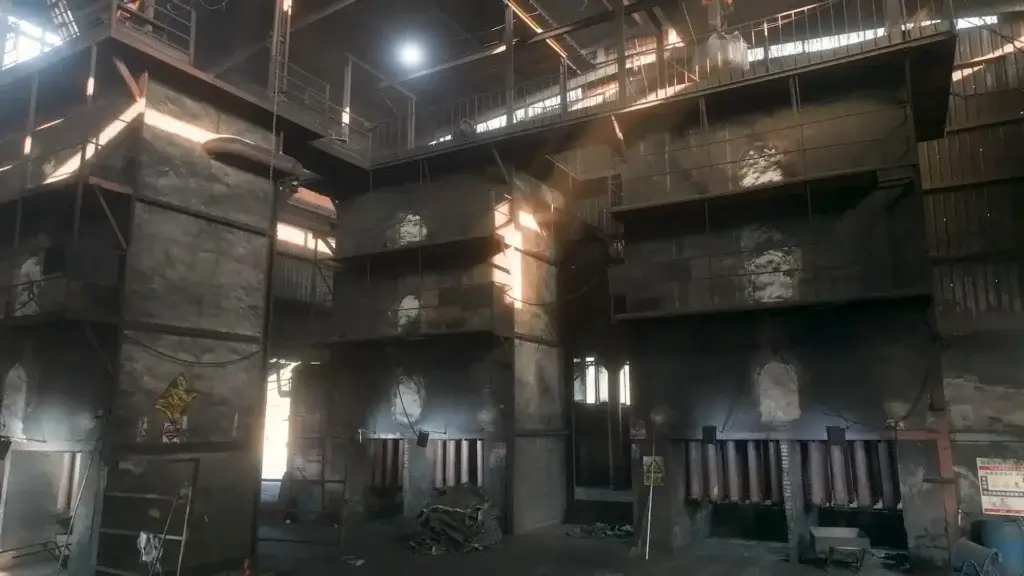
Capacity claims need numbers. Ask for verified monthly or annual production capacity in metric tons for the specific grade you need, and check the order book utilization because a factory running near full capacity is a higher risk for delays and quality slippage. The same level of scrutiny appears in factory audit and due diligence checklists for activated carbon manufacturers, which combine capacity verification, certification checks, and third-party inspection into a single qualification routine. During the audit, look at the activation furnace controls, the in-house QC lab, the raw material storage, and the packaging line. Traceability matters because a supplier that can link raw material lots to finished batches can investigate a quality complaint instead of guessing.
How should samples and pilot tests be run?
Obtain representative samples from actual production batches, run testing under your real or representative operating conditions, keep a sealed reference sample from the tested lot, and use an independent laboratory for critical parameters before approving bulk supply.
The sample must represent what you will actually receive. A lab-prepared sample tells you little about the consistency of routine production, so ask for material from the current batch line and keep the certificate that comes with it. Test the parameters that affect your process: iodine value or CTC activity, hardness, moisture, ash, particle size distribution, and for gas systems, the breakthrough behavior against your target contaminant.
Breakthrough testing is the closest thing to proof of performance. Run a pilot column with your actual flow rate, humidity, temperature, and contaminant mix, and record the breakthrough curve for the compound you need to remove. Keep a sealed reference sample from the same lot on both sides, define the tolerance bands for the two or three critical parameters, and include a clause that lets you send random bulk shipments to an independent laboratory of your choice. Blind testing a few commercial batches against the pilot results will tell you whether the approved quality holds at scale.
What commercial terms need to be locked down?
Lock down pricing at several order volumes, minimum order quantity, lead time, payment terms, packaging, and shipping terms in writing before the first order, and structure the agreement so that a quality failure has a defined consequence.
| Commercial term | What to confirm | Practical benchmark |
| Price structure | Separate product price, packaging, freight, documentation, and testing fees | Request quotes at 1, 5, and 20 metric tons |
| Minimum order quantity | Distinguish stock grades from made-to-order specifications | Trial MOQ near 1 metric ton is common |
| Lead time | Identify when the clock starts and whether stock or custom grade | 15 to 25 days for stock, 30 to 45 for custom |
| Payment terms | Avoid unreasonable exposure with new suppliers | 30% deposit plus 70% against documents is common |
| Embalagem | Match handling and moisture protection to your operation | Small bags for dosing, bulk bags for large volumes |
| Shipping terms | Clarify Incoterms, port, export documents, and responsibilities | Agree FOB, CIF, or EXW before ordering |
| Quality clause | Define the consequence for out-of-spec deliveries | Independent testing, credit, or replacement terms |
Price comparisons only work at equivalent order volumes and specifications. A low unit price at a twenty-ton minimum order is not a useful number for a plant that consumes three tons a year, so request quotations at volumes that reflect your actual consumption, and follow the same discipline used in supplier selection guides that compare MOQ, lead time, and total supply risk rather than accepting the first quote at face value. The supplier should separate product price from packaging, freight, documentation, and any customized testing fees, because a combined quote hides where the cost actually sits.
Lead time needs a clear starting point. Confirm whether the clock begins after purchase order approval, deposit receipt, artwork confirmation, or technical approval, and ask whether the supplier can hold buffer stock or offer a scheduled-release program for repeat orders. Supply risk is not limited to production capacity, so review port availability, packaging durability, export documents, storage conditions, and how the supplier communicates delays or specification changes.
What red flags should disqualify a supplier?
Disqualify a supplier that cannot produce batch certificates, refuses a factory audit, prices far below the market with no credible explanation, offers unrelated product lines, cannot explain its test methods, or demands unreasonable payment terms.
| Red flag | What it usually means |
| No batch-specific certificate of analysis | Quality cannot be traced or verified |
| Factory visit refused or address does not match registration | Production may not exist as described |
| Price 20 to 30 percent below market with no explanation | Substandard raw material, skipped activation, or fraud |
| Sells every carbon form plus unrelated equipment | Likely a trader without production control |
| Technical answers are vague or inconsistent | Sales team disconnected from engineering reality |
| Requests 100 percent advance payment from a new buyer | High risk of non-delivery |
| Cannot name raw material or activation method | No real control over the product |
A missing certificate of analysis is an immediate disqualifier because it means the supplier cannot show what was actually delivered. Refusal of an audit is equally serious: a legitimate manufacturer welcomes a pre-production audit or at least a live video tour, and a supplier that blocks access is hiding something about its operation. Prices significantly below market should trigger suspicion rather than excitement, because activation is energy-intensive and honest production has a floor cost.
Vague technical communication is a softer but still serious signal. If the sales team cannot explain how the recommended pellet relates to your humidity, flow, and contaminant conditions, or if their answers conflict with the technical department, the purchasing risk is higher than it appears. Payment terms matter as well, and a new supplier demanding full advance payment before any order has shipped is a structure that leaves you with no leverage if the product fails to arrive.
How do you keep quality consistent across repeat orders?
Keep quality consistent by writing the agreed specification and test methods into the purchase order, reviewing batch certificates across deliveries, tracking the trend of critical parameters, qualifying a backup supplier, and scheduling periodic independent verification.
Batch-to-batch consistency is the real test of a reliable supplier. Ask for a history of certificates of analysis covering the last several months for the grade you are buying, and look at the spread of the critical parameters rather than the averages. A tight distribution around the target iodine value and moisture means the process is under control; a wide distribution means the supplier blends batches to meet the sheet, and that variability will surface in your system.
| Practice | Why it works |
| Write specs and test methods into the purchase order | Gives you a contractual basis for rejection |
| Compare every shipment COA to the agreed specification | Detects drift before it affects operations |
| Track critical parameter trends over deliveries | Reveals process instability early |
| Keep a sealed reference sample per order | Supports dispute resolution with evidence |
| Send random lots to an independent lab | Verifies the supplier’s own numbers |
| Qualify a backup grade or second supplier | Covers production or logistics failures |
Change control is part of consistency. If a supplier proposes a substitute grade described as equivalent, ask for a side-by-side comparison against the incumbent specification and require approval through your technical change process, because two products called equivalent can differ in raw material, density, hardness, pore structure, and residual chemicals. For critical applications, qualify a backup grade or secondary supplier before your operating inventory runs low, because a carbon that performs perfectly is of little value when the plant cannot get the next shipment.
Summary
A reliable pelletized activated carbon supplier is selected through a structured process: define the application first, compare complete specifications under consistent test methods, verify manufacturing control through documents and audits, test representative samples under real conditions, lock down transparent commercial terms, and monitor batch consistency across repeat orders.
The decision is never one number. Pellet diameter, iodine value or CTC activity, hardness, moisture, ash, density, and particle size distribution must be reviewed together and matched to the contaminant, flow, temperature, humidity, and contact time of your actual system. The supplier should provide traceable certificates, explain its test methods, and welcome verification, because these behaviors are evidence of process control. Commercial terms deserve the same discipline as the technical specification, with pricing at your real volumes, clear MOQ and lead time, defined payment and shipping terms, and a quality clause that carries consequences. A supplier that passes all of these checks will cost more than the cheapest quote on paper. That extra cost usually comes back as fewer replacements, less downtime, and fewer rejected batches.