
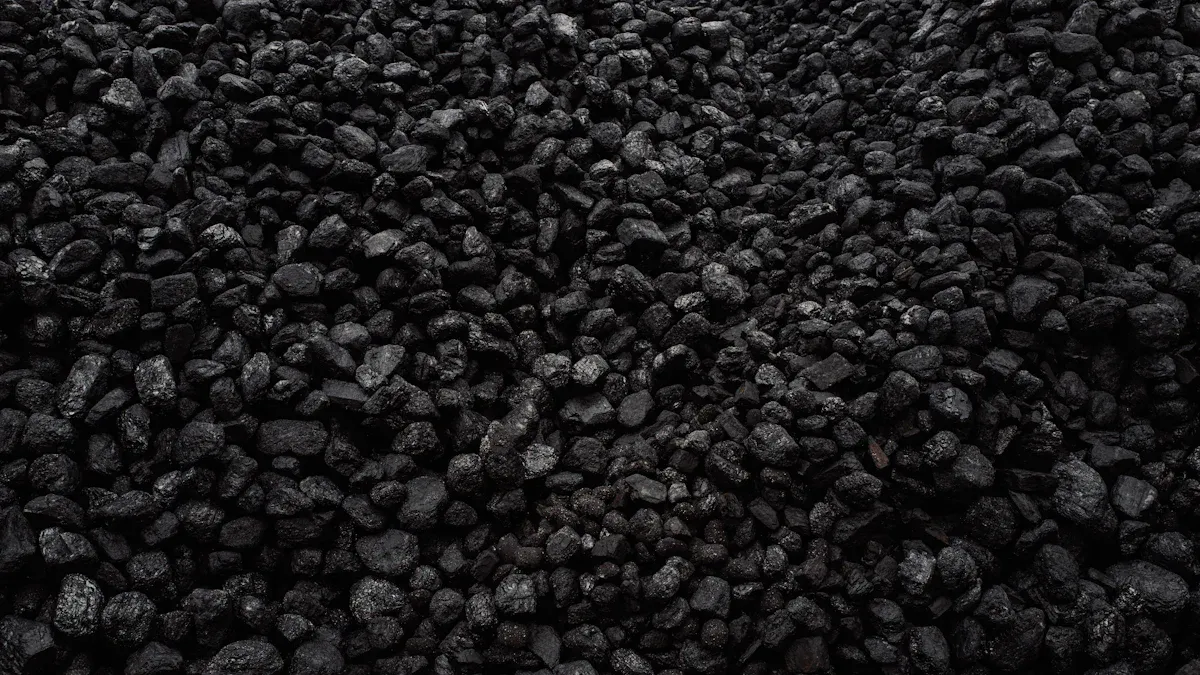
You use activated carbon in wastewater treatment to take out many contaminants. It removes organic compounds like fats, oils, pesticides, and medicines. These can be found in different amounts depending on where the water comes from. Activated carbon also helps get rid of leftover disinfectants, taste, smell, and color. Wastewater Treatment Activated Carbon works well in city and factory settings. It does this by adsorption and catalytic reduction.
Activated carbon is a strong tool to make water cleaner and safer for people and nature.
Key Takeaways
Activated carbon takes out bad things from wastewater, like organic compounds, heavy metals, and bad smells.
Activated carbon has a special sponge-like shape. This gives it a big surface area. It can catch more pollutants this way.
There are different kinds of activated carbon. Granular Activated Carbon and Powdered Activated Carbon help with different jobs in wastewater treatment.
You can use activated carbon again after cleaning it. This saves money and makes less waste during treatment.
Activated carbon works well with other treatment methods. This helps clean water better and faster.
People are finding new ways to make activated carbon from waste materials. This helps the environment.
Testing and checking activated carbon systems often makes sure they work well and remove pollutants.
New ideas in activated carbon technology are making it work better. This will help keep water clean in the future.
What Is Activated Carbon?
Activated carbon helps clean water by catching bad stuff. People use it in wastewater treatment because it works really well. It has special features that make it good for this job. Let’s see what makes activated carbon special and how you can use it.
Activated Carbon Properties
Activated carbon looks like a sponge when you look close. It has lots of tiny holes called pores. These pores give it a very big surface area. One gram of activated carbon can have more than 3,000 square meters of surface. Some types can reach up to 4,800 square meters for each gram. The surface is non-polar, so it pulls in many organic compounds. You can check the main features in the table below:
Property | Description |
|---|---|
Definition | Activated carbon, also called activated charcoal, is a kind of carbon used to filter out bad stuff. |
Porosity | It has small pores that make the surface area bigger for adsorption. |
Surface Area | One gram has over 3,000 square meters of surface, and some types reach 4,800 m²/g. |
Activated carbon’s sponge-like shape and huge surface area help it remove pollutants from water.
How Activated Carbon Is Made
You make activated carbon from things like coconut shells, wood, peat, or sawdust. The process uses heat and other steps to make pores. Here is how you make activated carbon:
Raw Material Selection: Pick coconut shells, wood, peat, or sawdust.
Carbonization: Heat the material without air at 600 to 900 °C to make char.
Activation: Treat the char with steam or chemicals at high heat to open the pores.
Washing and Drying: Clean out dirt and water.
Sizing and Packaging: Sort the pieces by size and pack them.
You can use chemical activation or physical activation. Chemical activation uses chemicals to open the pores. Physical activation uses gases and high heat.
Types: GAC vs. PAC
There are different types of activated carbon for cleaning water. The main types are granular activated carbon (GAC), powdered activated carbon (PAC), and special carbons.
Granular Activated Carbon (GAC)
GAC has bigger pieces, usually from 0.2 to 5 millimeters. People use GAC for long-term cleaning in city water plants and factories. GAC works well in systems that run all the time because you can clean and use it again.
Powdered Activated Carbon (PAC)
PAC has much smaller pieces, usually less than 0.18 millimeters. People use PAC for quick cleaning, like in emergencies or when there is a lot of pollution for a short time. PAC grabs bad stuff fast but you usually throw it away after one use.
Aspect | Granular Activated Carbon (GAC) | Powdered Activated Carbon (PAC) |
|---|---|---|
Particle Size | Bigger pieces (0.2 to 5 mm) | Smaller pieces (< 0.18 mm) |
Surface Area | Smaller surface area | Bigger surface area |
Adsorption Capacity | Works longer | Works faster |
Regeneration | Can use many times | Use once |
Application | For systems that run all the time | For short-term use |
Specialty Carbons
Specialty activated carbon is for special water cleaning jobs. Some types are extruded activated carbon for fast-moving water and impregnated activated carbon for removing certain chemicals. Specialty activated carbon helps get rid of hard-to-remove stuff like PFAS and heavy metals. It keeps water safe even when the water changes.
You can pick the best activated carbon type for your water cleaning needs and problems.
Wastewater Treatment Activated Carbon Applications
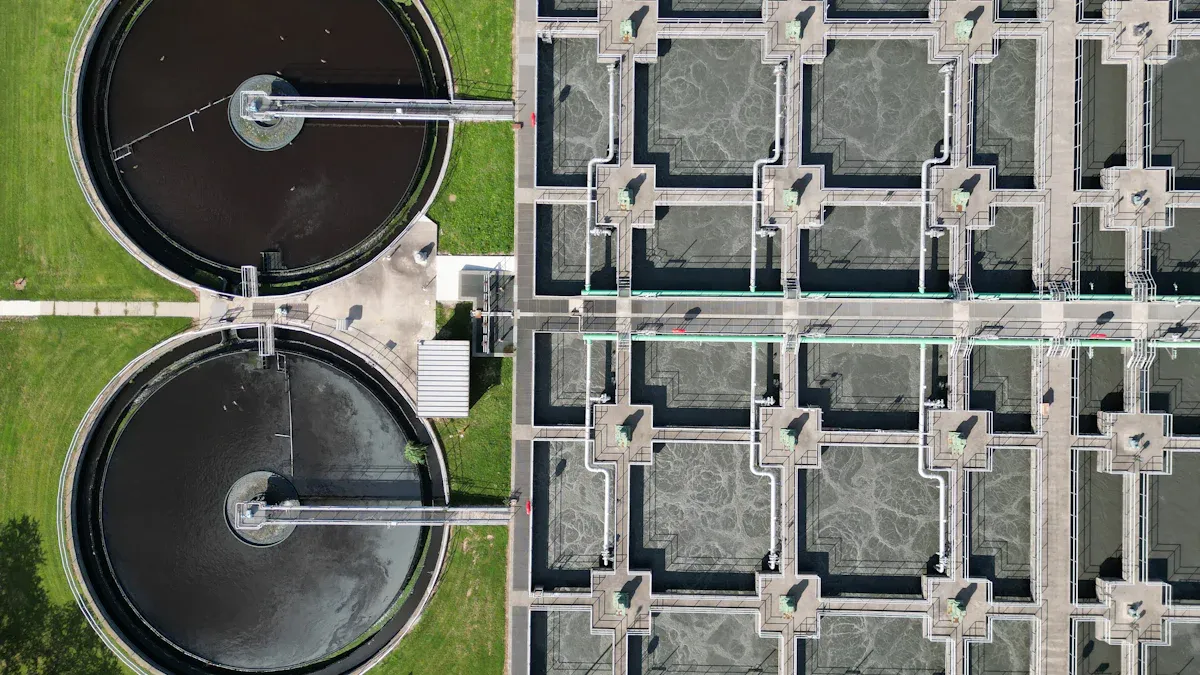
Removal of Organic Compounds
Wastewater treatment activated carbon helps take out many organic compounds from water. It catches pollutants that are hard to remove in other ways. These pollutants often come from homes, farms, and factories. Some of the main organic compounds it removes are:
Micropollutants like medicine and personal care leftovers
Pesticides and endocrine disrupting compounds
Organic contaminants that do not break down easily
Aromatic compounds such as BTEX and phenol
Organic impurities measured as chemical oxygen demand (COD)
Colors
Odors
Activated carbon is good for pollutants that other treatments cannot remove. Studies show phenol and 3,4-dimethoxybenzyl alcohol stick well to activated carbon. This means you can count on it to clean tough pollutants. Using activated carbon helps keep rivers and lakes safe.
Taste, Odor, and Color Control
Activated carbon in wastewater treatment also helps with taste, odor, and color. These problems make water bad to drink or use. Activated carbon grabs the molecules that cause bad smells and tastes. You can see how well it works in this table:
Removal Efficiency | Range (%) |
|---|---|
74 – 95 |
Powdered activated carbon works fast for most odor problems. But it does not work well for sulfur odors. Granular activated carbon is better for long-term taste and odor control. Activated carbon also makes water look clear and smell better by removing color.
Activated carbon makes water better by taking out things that change taste, odor, and color.
Municipal vs. Industrial Wastewater
You use activated carbon differently in city and factory wastewater. City wastewater usually has the same types of pollutants. Factory wastewater can have different pollutants depending on what is made there. Here is a table to compare them:
Aspect | Municipal Wastewater Treatment | Industrial Wastewater Treatment |
|---|---|---|
Composition | Usually the same, with common pollutants | Changes a lot, depends on what is made |
Treatment Process | Often simple, for common pollutants | Has many steps, made for special pollutants |
Use of Activated Carbon | Used for many pollutants like pesticides | Used for certain factory pollutants |
City treatment uses activated carbon for common things like pesticides and medicines. Factory treatment uses it for special pollutants from making products. You need to change your plan based on the type of water and what is in it. Activated carbon lets you handle both easy and hard mixes of pollutants.
Activated carbon can clean both city and factory wastewater. It changes to fit your needs and keeps water safe.
Adsorption Process in Wastewater Treatment
Activated carbon helps clean water by trapping pollutants. It does this through adsorption. Adsorption means contaminants stick to the surface of activated carbon. There are two main ways this happens: physical adsorption and chemical adsorption.
How Adsorption Works
Activated carbon attracts pollutants like a magnet. The surface has many pores and special groups. These features help catch different molecules. Pollutants stick to the surface and stay there.
Physical Adsorption
Physical adsorption uses natural forces between molecules. No chemical reaction is needed. The pores give activated carbon a big surface area. Small molecules stick to the surface by van der Waals forces. This works best for dissolved organic compounds and gases.
Mesopores let medium molecules reach inside.
Macropores help large molecules move in.
Physical adsorption removes many pollutants. It is simple and works well for lots of contaminants.
Chemical Adsorption
Chemical adsorption uses chemical bonds to hold pollutants. Activated carbon reacts with certain contaminants. The surface has functional groups that form bonds with metals or complex organic compounds. This process is stronger than physical adsorption. It removes pollutants that are hard to catch.
Chemical adsorption works for metals like chromium and lead.
Functional groups help form strong bonds.
The process can change the pollutant, like reducing Cr(VI) to Cr(III).
Mechanism/Factor | Description |
|---|---|
Activated carbon attracts negative ions at low pH. This improves adsorption. | |
Complexation | Chemical groups bond with pollutants. |
Pore filling | Pollutants fill the pores. This increases capacity. |
Reduction processes | Some pollutants change form. This makes removal easier. |
pH influence | Low pH helps the process, especially for metals. |
Adsorption kinetics | Chemisorption is the main process for tough pollutants. |
Maximum adsorption | Activated carbon can reach high capacity for some contaminants. |
Chemical adsorption targets specific pollutants. It makes the process stronger.
Factors Affecting Adsorption
Many things affect how well adsorption works. Surface area, pore size, water quality, and contaminant type matter. You can change these factors to make activated carbon work better.
Surface Area and Pore Size
Surface area and pore size decide how much you can remove. A large surface area and the right pore sizes help catch pollutants.
Micropores catch small molecules like benzene.
Mesopores grab bigger molecules like dyes and oils.
Macropores help big molecules move inside.
Factor | Description |
|---|---|
The total area of all pores is important for adsorption. | |
Molasses Value | Higher values mean more mesopores. This is good for large pollutants like dyes. |
Activated carbon with more mesopores is good for bigger molecules. Microporous activated carbon works best for small organic compounds. Macropores help large molecules reach the inner surface.
Water Quality and Contaminant Type
Water quality and contaminant type change how well adsorption works. pH, the number of pollutants, and contact time matter.
pH affects how well activated carbon removes pollutants. Low pH helps remove metals.
When there are many contaminants, the ones that stick best are removed first. This is called competitive adsorption.
Longer contact time means better removal.
You use less activated carbon for taste and odor problems than for complex pollutants.
pH affects adsorption efficiency.
Changing pH can help remove certain pollutants.
Chemical treatments can change the pH of activated carbon.
Higher molasses values mean more mesopores. This helps remove dyes and pigments.
The amount of activated carbon and contact time matter.
Activated carbon removes pollutants mainly through adsorption. The process depends on molecule size, polarity, surface area, and activation. You can improve the process by picking the right activated carbon and changing water conditions.
You get the best results when you match activated carbon to your water and contaminant needs.
Activated Carbon Regeneration
Why Regeneration Matters
Activated carbon helps take out many pollutants from wastewater. But after a while, its pores fill up with contaminants. When this happens, it cannot clean water well anymore. Regeneration lets you use the same activated carbon again. This saves money and cuts down on waste. You do not have to throw away so much used activated carbon. Regeneration also helps the environment by keeping waste out of landfills. Choosing to regenerate makes your wastewater treatment more sustainable and keeps things running smoothly.
Regeneration Methods
There are different ways to regenerate activated carbon. Each way works best for certain pollutants and situations. The table below lists the most common methods:
Method | Description | Application |
|---|---|---|
Water washing | Uses water flow to remove water-soluble organic matter. | Granular and columnar activated carbon for less contaminated water treatments. |
Thermal regeneration | High-temperature removal of organic pollutants. | Deep regeneration in industrial waste gas and wastewater treatment. |
Chemical regeneration | Uses acid-base solutions for desorption of pollutants. | Activated carbon used for adsorption of specific pollutants. |
Biological regeneration | Microbial decomposition of organic pollutants. | Suitable for long-term operation in wastewater treatment. |
Thermal
Thermal regeneration uses very high heat, between 700°C and 900°C. You put the used activated carbon in a special furnace. The heat burns away the trapped pollutants. This brings back most of the carbon’s cleaning power. It is good for tough pollutants in factory wastewater. But it uses a lot of energy and may not remove all chemicals, like PFAS.
Chemical
Chemical regeneration uses acids or bases to wash out pollutants. This method is good for certain contaminants that react with chemicals. It does not use as much energy as thermal regeneration. But you must be careful with the chemicals to stay safe and protect the environment.
Biological
Biological regeneration uses helpful microbes to break down pollutants inside the activated carbon. This method is good for long-term use and saves energy. It is also better for the environment. You need to take care of the microbes so the process works well.
Lifespan and Limitations
How long activated carbon lasts depends on water quality and your goals. You should test it often to know when to regenerate or replace it. Most activated carbon can be regenerated a few times, but not forever.
Regeneration is one of the biggest challenges for cost and the environment. Thermal regeneration uses a lot of energy and may not destroy all PFAS. Sometimes, harmful byproducts are made. After regeneration, activated carbon usually gets back only 70-85% of its original power. This means you will need to replace it sometimes.
There are some limits to regenerating activated carbon:
Carbon loss: You lose 5–10% of the material each time because of breakage, dust, or gas.
Contaminant restrictions: Regeneration does not work for some things, like mercury and lead.
Energy and resources: Thermal regeneration needs high heat. Chemical and biological methods need careful handling or good microbe management.
You need to think about these problems when you choose to regenerate. Knowing the limits helps you plan the best way to use activated carbon in your wastewater treatment.
Advantages of Activated Carbon in Treatment
High Efficiency
Activated carbon can take out many pollutants that other methods miss. It works well for dissolved contaminants that biological treatments cannot remove. For example, biologically activated carbon can get rid of over 90% of some medicines and personal care products. Sand filters only remove some of these substances. Activated carbon gives better results when water has tough chemicals.
Activated carbon is a good choice for cleaning water very well.
Sometimes, ozonation removes more pollutants than activated carbon. But activated carbon is still important for removing many harmful substances. It helps lower the total amount of particles in water. This makes water safer to use and release.
Versatility
Activated carbon works for many kinds of wastewater and pollutants. It removes organics, pigments, heavy metals, and odorants. Its large surface area and special pores help trap different molecules. You can pick granular activated carbon or powdered activated carbon. Granular activated carbon works for many pollutants. Powdered activated carbon works fast for certain problems.
Here are some pollutants you can remove with activated carbon:
Organic pollutants
Heavy metals
Colorants
Odors
This means you can use activated carbon in city and factory wastewater treatment. You can change the process to meet your water quality goals.
Compatibility with Other Methods
You can use activated carbon with other treatment methods for better results. In Powdered Activated Carbon Treatment, you add carbon to biological systems. The carbon grabs compounds that are hard to break down. This lowers chemical oxygen demand and reduces toxic effects. Using both biological and carbon adsorption makes the treatment stronger.
The Biological Activated Carbon process removes non-biodegradable substances and oxidizes biodegradable ones in the same reactor. You do not need separate systems. This saves money and energy. You also need to regenerate the carbon less often, which lowers costs.
Using activated carbon with other methods makes water treatment stronger and more efficient.
Limitations and Challenges in Wastewater Treatment
Cost and Disposal
You have to think about cost when using activated carbon. Buying activated carbon is expensive. Running the system also costs money. You need to replace the carbon after some time. The price depends on how much water you clean. It also depends on how often you change the carbon. Here is a table that shows the main cost factors:
Cost Factor | Cost Range |
|---|---|
Capital cost | $1.5-$3.0 million per MGD |
Operating cost | $200,000-$600,000 annually per MGD |
Carbon replacement frequency | 3-12 months depending on influent concentrations |
Disposal cost for spent media | $400-$800 per ton for incineration or secure landfill disposal, adding $100,000-$500,000 annually depending on treatment scale and media replacement frequency |
You also have to decide what to do with used activated carbon. There are different ways to get rid of it. Each way affects the environment in its own way. The table below explains these options:
Disposal Method | Description | Environmental Impact |
|---|---|---|
Thermal Reactivation | Restores up to 95% of original adsorption capacity, extending lifespan. | Significant reduction in waste, but initial investment in facilities is high. |
Chemical Regeneration | Less energy-intensive, but may have varying economic outcomes. | Potential for reduced capacity of regenerated sorbent, impacting long-term value. |
Biological Remediation | Advanced methods for regenerating spent sorbents and recovering materials. | Promotes circular economy principles, reducing overall environmental impact. |
You need to think about both cost and the environment when picking a disposal method. Thermal reactivation cuts down on waste but costs a lot to set up. Chemical and biological ways use less energy, but the carbon might not work as well after.
Performance Issues
Activated carbon does not always work the same every time. Sometimes, it does not remove all pollutants. Here are some common problems you might see:
Activated carbon can lose its power because different pollutants fight for space.
Powdered activated carbon (PAC) can cause membrane fouling. Some studies say PAC does not help and can make fouling worse.
Granular activated carbon (GAC) can help stop membrane fouling and lets water flow better than other materials.
Competition and Fouling
You face problems when many pollutants try to stick to activated carbon at once. Natural Organic Matter (NOM) is a mix of organic compounds. NOM can grab onto activated carbon better than smaller pollutants. This means you cannot remove as many harmful substances. Biological fouling makes things harder. Biofilms grow on the carbon and block the pores. This stops the carbon from trapping pollutants.
You should check your system often and change your process if needed. If you know about these problems, you can make better choices for cleaning wastewater.
Future of Activated Carbon in Wastewater
Material Innovations
New materials are changing how activated carbon works in wastewater treatment. Scientists are making activated carbon better at catching pollutants. They make the pores bigger and add special groups to the surface. This helps the carbon grab more bad stuff during cleaning. Some new materials mix activated carbon fibers with other things. These mixes work better and let you use activated carbon in more ways. Nano-structured fibers can hold even more pollutants. Some researchers change the surface so it targets certain contaminants. This makes it easier to remove tough pollutants.
Innovation Type | Description |
|---|---|
Focus on increasing pore volume and surface functionalization for better contaminant removal. | |
Hybrid Material Development | Combining activated carbon fibers with other materials enhances performance and application scope. |
Nano-Structured Fibers | Development of nano-scale enhancements for increased adsorption capacity. |
Functionalization for Specific Contaminants | Tailoring fiber surface chemistry to target particular pollutants enhances efficacy. |
New materials help you get better results and make water safer.
Integration with New Technologies
New technologies are making activated carbon work even better. Improved activation methods make the surface area and pores bigger. This lets you remove more pollutants. Scientists add chemical groups or mix activated carbon with metal oxides to target heavy metals. You can use waste from farms and plants to make activated carbon. This lowers costs and helps the environment. Nanotechnology changes activated carbon at a tiny scale. It gives more surface area and new abilities. Activated carbon is also used with advanced treatment methods like membrane filtration and advanced oxidation. These combos make cleaning water stronger and faster.
Improved activation methods increase capacity.
Adding chemical groups and mixing materials helps with tough pollutants.
Using waste materials lowers environmental impact.
Nanotechnology gives new abilities.
Combining with advanced methods makes systems work better.
These new technologies help you clean water more effectively and protect the environment.
Sustainability Trends
People are now focusing on sustainability when using activated carbon for wastewater treatment. Wastewater sludge can be turned into activated carbon, biogas, and other useful things. This gives you new ways to manage the treatment process. Used adsorbents can be reused for energy storage, which helps stop extra pollution. Many people use biosorbents made from natural waste. Activated sludge from wastewater is a green way to remove contaminants. Regular activated carbon uses lots of energy and chemicals, which hurts the environment. Using natural waste supports circular economy ideas and cuts down on waste and energy. New surface impregnation methods make activated carbon work better. Highly porous activated carbon from Acorus calamus is a friendly option for the planet. The way it is made uses both physical and chemical activation, helping sustainable water management.
Turning sludge into useful products helps.
Reusing adsorbents cuts pollution.
Biosorbents from waste are popular.
Circular economy ideas guide new methods.
Sustainability trends help you protect nature and make water treatment better for the future.
Activated carbon works well for cleaning wastewater. It takes out heavy metals and organic pollutants. Its large surface area helps it trap more contaminants. The cost is not too high, so it is good for the environment. Adsorption is how it holds onto bad stuff. Regeneration lets you use the same activated carbon again. This makes your system last longer. You can use thermal or steam methods to clean the carbon. These ways help you save money and lower pollution. Each time you clean the carbon, you might lose some particles. But new ideas are making activated carbon even better for cleaning water in the future.
Activated carbon keeps water safe and helps everyone have cleaner wastewater.
Regeneration Method | Temperature (°C) | Efficiency (%) | Notes |
|---|---|---|---|
Thermal | 800-900 | 90-95 | Most widely used, heats carbon to remove contaminants. |
Steam | 250-400 | 70-85 | Uses less energy, works for some volatile compounds. |
Chemical | N/A | Varies | Uses solvents, no heat needed, keeps particles strong. |