
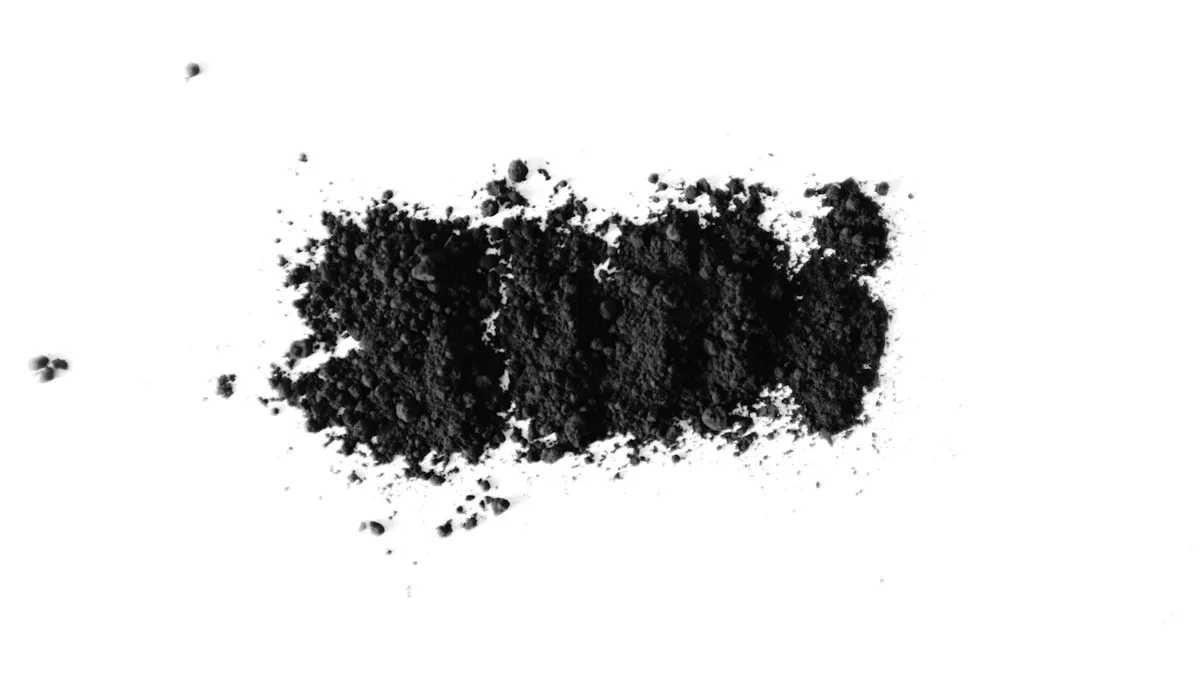
You use powder activated carbon for strong cleaning. This fine black powder works in water and air. It catches small particles, gases, and chemicals. You can trust it to take out free chlorine, chloramines, and tiny organic impurities from water. It also helps with taste and smell. Many people pick it because it works quickly and gets into small spaces that other carbons cannot reach.
Key Takeaways
Powder activated carbon (PAC) is a strong cleaner. It removes bad stuff from water and air fast.
PAC uses adsorption. It traps dirt on its big surface. This helps get rid of bad tastes and smells.
Pick the right activated carbon for your needs. Use PAC for quick cleaning. Use granular for longer use.
Use enough PAC and mix it with water well. Let it sit for the right time. This gives better cleaning.
PAC is often used in water plants. It takes out harmful chemicals. This makes water safe and nice to drink.
When you buy PAC, check for high purity. Look for certifications. This helps make sure it is safe and good.
Be careful when using PAC. Wear safety gear and follow rules. This helps stop accidents.
Throw away used PAC the right way. This keeps the environment safe. Follow local rules.
Powder Activated Carbon Overview
What Is Powder Activated Carbon
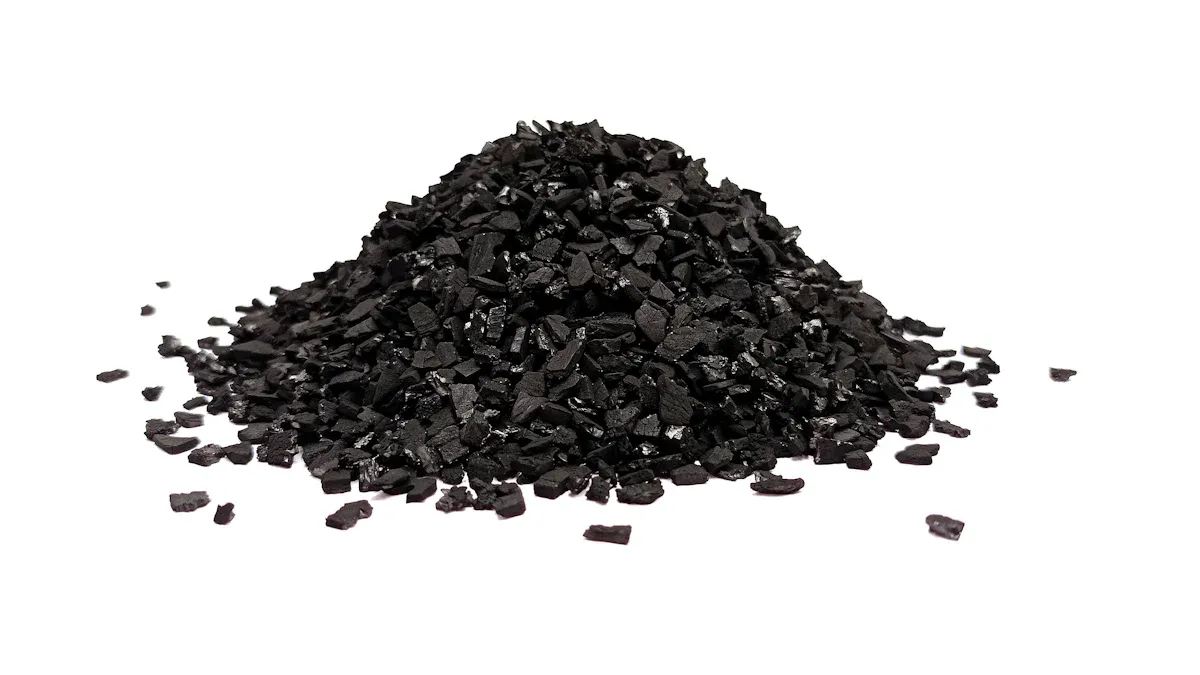
Powder activated carbon looks like a soft, black powder. It is made from things like coal, coconut shells, or wood. Factories crush it into very tiny pieces, smaller than 0.21 mm. The powder has lots of tiny holes, giving it a huge surface area. This helps it clean things well. People use powder activated carbon to catch and remove bad stuff from water, air, and other things. Its chemical structure is not neat or crystal-like. It has layers of carbon atoms in hexagons, mixed with odd shapes and chains. This special structure helps it work better as a cleaner.
Powder activated carbon is a very fine, porous type of activated carbon.
The pieces can be smaller than 1 micron or up to a few hundred microns.
The big surface area helps it grab more unwanted stuff.
It comes from coal, coconut shell, or wood, and each kind is a bit different.
People use powder activated carbon in many cleaning systems. It works fast and can reach small spaces that other carbons cannot.
Key Properties
Powder activated carbon is special because of its many tiny holes. These holes let it trap lots of different bad things. The way it is made, called activation, can use heat or chemicals. Heat uses things like steam or carbon dioxide. Chemicals like potassium hydroxide or phosphoric acid can also be used. These ways change how the carbon acts and help it soak up more stuff.
Powder activated carbon works well because it can quickly grab many types of impurities. Its small size lets you mix it easily with liquids or gases. This means it can catch more bad things faster. Its large surface area and quick action make it a top pick for cleaning.
Tip: If powder activated carbon has more tiny holes, it can remove more bad stuff.
Comparison with Other Activated Carbons
You may wonder how powder activated carbon is different from granular or pelletized activated carbon. The main differences are in size, surface area, and how you use them.
Feature | Granular Activated Carbon (GAC) | Pellet Activated Carbon | |
|---|---|---|---|
Particle Size | <0.18 mm | 0.2–5 mm | 1–5 mm |
Surface Area | Good balance | Large | |
Adsorption Rate | Fastest | Moderate | Lower than PAC |
Typical Use | Batch processes, emergencies | Continuous processes | Gas purification |
Cost | Lower upfront | Cost-effective long-term | Varies |
Regenerability | Not typically regenerated | Can be regenerated | Can be regenerated |
Applications | Water, air, emergency treatment | Long-term, large systems | Air and gas treatment |
Powder activated carbon is best when you need to clean things quickly. Its small size gives it the most surface area and the fastest cleaning speed. This means it can remove more bad stuff in less time. Granular activated carbon is better for cleaning over a long time. Pelletized activated carbon is often used for cleaning gases because of its shape.
Powder activated carbon has more surface area, so it cleans faster.
People use it for short-term or emergency cleaning.
Granular activated carbon is better for long-term use and bigger molecules.
Powder activated carbon is great for cleaning jobs that need fast results. Its quick action and strong cleaning power make it a top choice in many cleaning systems.
Raw Materials and Production
Sources (Coal, Wood, Coconut Shell)
Powder activated carbon comes from different things. The most common ones are:
Coal
Wood
Coconut shells
Coal-based activated carbon is used the most. Coconut shell-based carbon is used for special jobs like getting gold. Each kind has its own features. You should pick the one that works best for you.
Here is a table to help you compare the main types:
Type of Activated Carbon | Physical Properties | Chemical Properties | Applications |
|---|---|---|---|
Coal Activated Carbon | Black granules or powder, strong and tough, medium weight | Has lots of acidic oxide groups, resists acid well | Good for cleaning water and gas in factories |
Coconut Shell Activated Charcoal | Dark black grains, mostly tiny holes, very big surface area | Surface stays stable, resists acid and base well | Great for cleaning water very well and for air cleaning |
Wood Activated Charcoal | Black or gray-black powder, light, has bigger holes | Has more hydroxyl groups, resists acid better | Good for removing color, smell, and big gas molecules |
Each type has a special structure with lots of holes. These holes help catch different bad things in water, air, or food.
Activation Methods
How you activate the raw material is very important. Activation makes the surface area and holes that help powder activated carbon work. There are two main ways: physical activation and chemical activation.
Physical Activation
Physical activation uses steam or carbon dioxide and high heat. The raw material is heated to about 900–1200°C. This opens up the holes and makes more surface area. Steam activation is often used for coal and coconut shell carbon. The product is strong and works well for cleaning groundwater and other things.
Chemical Activation
Chemical activation mixes the raw material with chemicals like phosphoric acid before heating. This way uses lower heat. It makes more holes and a bigger surface area. Chemical activation is mostly used for wood-based carbon. The product is lighter and has many big holes. It is good for taking out color and smell.
Note: The way you activate the carbon changes how the powder activated carbon works in the end.
Particle Size and Effectiveness
The size of the particles changes how well powder activated carbon works. Smaller pieces have more surface area, so they catch bad stuff faster. You can use them to clean tiny things from water or air. But small pieces can block filters and slow down the flow.
Here is a table to show how particle size changes performance:
Particle Size Type | Adsorption Rate | Flow Rate & Contact Time | Contaminant Removal |
|---|---|---|---|
Smaller Particles (PAC) | Catches bad stuff faster because of more area | Can block filters and slow flow | Better for tiny pollutants and dissolved organics |
Larger Particles (GAC, EAC) | Slower but steady at catching bad stuff | Lets water flow better and longer | Best for cleaning large amounts over time |
Most powder activated carbon for liquids is between 8×30 and 20×50 U.S. sieve size. You should choose the right size for your system to get the best results.
How Powder Activated Carbon Works
Adsorption Mechanism
Powder activated carbon helps clean water and air by adsorption. When you put the powder in dirty water, bad stuff sticks to its surface. The powder has many tiny holes and tunnels. This gives it a very large surface area. As water or air moves past the powder, different contaminants attach to it. Adsorption keeps the bad stuff on the outside of the powder. It is not like absorption, where things go inside.
Powder activated carbon is great at trapping many things. It can catch chlorine, dirt, heavy metals, and chemicals. The tiny holes inside help it work fast. You get quick results when you need to remove bad tastes, smells, or harmful chemicals.
Tip: Using powder activated carbon with more surface area cleans better. More area means more places for bad stuff to stick.
Factors Influencing Performance
Many things change how well powder activated carbon works. You should think about what you want to remove, how much powder you use, and how long it mixes with the fluid.
Dosage and Contact Time
You need to use the right amount of powder activated carbon. If you use too little, some bad stuff will stay. If you use too much, you waste powder and money. The time the powder mixes with the fluid is important. More time lets more bad stuff stick to the powder. Less time means not all the bad stuff will attach.
Use enough powder activated carbon for your needs.
Let it mix long enough for good cleaning.
Contaminant Types and Water Quality
The type of contaminant changes how well the powder works. Some molecules are big, and some are small. Some are polar, and some are not. The powder’s surface and hole size help decide what gets trapped. Water quality matters too. If your water is very dirty, the powder fills up faster and stops working sooner.
Check what you want to remove from your water.
Test your water before picking your powder activated carbon.
Note: Powder activated carbon works best when you match it to your water and the contaminants you have.
Main Applications
Powder activated carbon is used for many cleaning jobs. People use it to clean water, air, and gases. Many factories also use it for different cleaning needs. It is good at trapping bad things, so many industries pick it for removing stuff they do not want.
Water Treatment
You can find powder activated carbon in water plants everywhere. It helps take out things like organic matter, pesticides, and medicine chemicals. It also removes things that make water taste or smell bad. The table below shows where it is used and how well it works:
Application Context | Specific Use Cases | Effectiveness Example |
|---|---|---|
Municipal Water Treatment | Removal of organic matter, pesticides, pharmaceuticals, taste/odor compounds | Adsorption of geosmin and MIB in drinking water plants |
Industrial Wastewater Treatment | Treatment of wastewater from textiles, petrochemicals, food processing | 95% removal of azo dyes from textile effluents using PAC |
Drinking Water
People use powder activated carbon to clean drinking water. It takes out many bad things, like stuff that makes water taste or smell weird. It works well for removing organic chemicals and chlorine. But it does not work as well as granular activated carbon for PFAS. Even if you use a lot, it only removes some PFAS. Getting rid of sludge with PFAS is also hard.
Powder activated carbon removes geosmin and MIB, which make water taste earthy.
It helps get rid of pesticides and medicine chemicals.
Cities use it to make water taste and smell better.
Wastewater and PACT
Factories use powder activated carbon to clean dirty water. It removes things like volatile organic compounds, chlorinated solvents, medicine chemicals, and personal care products. It also helps take out heavy metals, pesticides, weed killers, and dyes.
Powder activated carbon can remove mercury in some forms.
It helps get rid of smells and taste problems.
It is good for taking color out of water from making clothes and food.
Air and Gas Purification
Powder activated carbon is important for cleaning gases. People use it to filter gases and take out hydrogen sulfide from natural gas. It also helps remove bad smells, radon, and volatile organic compounds. In air conditioners, it cleans the air and takes away smells.
Powder activated carbon grabs volatile organic compounds.
It is used to remove mercury from flue gas.
It helps keep air clean in factories.
Tip: For cleaning air or gases, bigger particles are better because they do not block the flow. Smaller particles are better for cleaning liquids because they work faster.
Industrial and Food Uses
Powder activated carbon is used a lot in food and drink factories. It takes out colors, tastes, and smells that are not wanted from food liquids, syrups, acids, vitamins, alcohol, and glycerin.
It is used to clear up wine and take away smells.
It changes the taste of beer.
It helps clean and whiten gelatin.
Powder activated carbon is important for making food and drinks look and taste better.
It makes drinks safer and last longer.
Powder activated carbon is great because it can be used in many ways. You see it in water cleaning, gas cleaning, and food making. It is very good at removing mercury and other bad things, so it is used in gas cleaning and cleaning dirty water from factories.
Taste and Odor Control
You want your water to taste and smell clean. Sometimes, water can have earthy or musty flavors. These problems often come from natural compounds like geosmin and 2-Methylisoborneol (MIB). Even tiny amounts of these substances can make your water unpleasant. You might notice these tastes after heavy rain, during algae blooms, or in warm weather.
Powder activated carbon (PAC) helps you solve these problems. You add PAC to water to remove bad tastes and odors. It works by adsorption. This means PAC grabs and holds onto the unwanted compounds. The powder’s tiny holes and large surface area make it very good at this job.
Here is how PAC helps you control taste and odor in water:
PAC removes geosmin and MIB, which cause earthy and musty tastes.
It binds with organic compounds, lowering their levels in your water.
Under the right conditions, PAC can remove 80–95% of geosmin and MIB.
Your water tastes and smells better after treatment.
You can use PAC in both city water plants and home systems. Many cities add PAC during certain times of the year when taste and odor problems are worse. You might see this in late summer or after storms. PAC works quickly, so you get results fast.
Tip: If you notice a sudden change in your water’s taste or smell, PAC can often fix the problem within hours.
PAC does not just help with geosmin and MIB. It also removes other organic compounds that make water taste or smell bad. These can include byproducts from algae, decaying plants, or even some chemicals from factories. You can use PAC to treat both drinking water and water used in food production.
Here is a simple table to show how PAC improves water quality:
Problem Compound | Where It Comes From | How PAC Helps |
|---|---|---|
Geosmin | Algae, bacteria, soil | Removes up to 95% |
MIB | Algae, bacteria | Removes up to 95% |
Other Organics | Plants, pollution, runoff | Reduces taste and odor |
You should remember that the amount of PAC you use and how long it stays in contact with water both matter. Using the right dose gives you the best results. If you use too little, some bad tastes may remain. If you use too much, you might waste product.
Many water experts trust PAC because it works fast and does not add new chemicals to your water. You can rely on it to keep your water fresh and pleasant.
Standards and Guidelines
AWWA B600-24 Standard
You want to make sure your powder activated carbon (PAC) meets the right standards. The American Water Works Association (AWWA) B600-24 standard helps you do this. This standard sets the minimum requirements for PAC used in water supply services. You can use it when you buy or receive PAC for your water treatment system. It helps you know that the product is safe and works well.
The AWWA B600-24 standard covers several important areas. Here is a table to help you see what it includes:
Requirement Type | Description |
|---|---|
Physical Properties | Sets rules for the physical features of PAC, like size and appearance. |
Testing | Gives steps for testing PAC to make sure it meets quality standards. |
Packaging | Explains how to pack PAC so it stays clean and safe during transport. |
Shipping | Lists rules for shipping PAC to keep it effective and undamaged. |
You should always check if your PAC supplier follows the AWWA B600-24 standard. This helps you get a product that is safe for water treatment and easy to use.
You can also use this standard as a guide when you write purchase orders or check shipments. It gives you confidence that the PAC you use will work as expected.
Safety and Handling
You need to handle powder activated carbon with care. Even though PAC helps clean water and air, it can be dangerous if you do not follow safety rules. Always read and follow the instructions from the manufacturer. Make sure a trained engineer or technician supervises the design and use of PAC systems.
Here are some important safety tips for handling PAC:
Always follow the manufacturer’s instructions for using PAC systems.
Let a qualified engineer or technician supervise the setup and operation.
Check what chemicals or vapors will touch the PAC. Some can react and cause heat or fire.
Test new systems before you use them to see if any heat builds up.
Keep air away from the carbon bed if there is a fire risk.
Store PAC away from flammable materials. Make sure you can move containers if they get hot.
Control heat if you use PAC with high levels of organic chemicals.
Inspect your system often for hot spots or signs of fire.
Set up fire prevention and safety systems before you start using PAC.
Handle all flammable and combustible chemicals by following local rules and regulations.
Tip: Always wear gloves, a mask, and safety glasses when you handle PAC. This keeps you safe from dust and possible reactions.
You protect yourself and others when you follow these safety steps. Good handling keeps your PAC system working well and helps prevent accidents.
Benefits and Drawbacks
Advantages of Powder Activated Carbon
Powder activated carbon (PAC) gives you many good things for cleaning water and air. PAC works quickly because it is made of tiny pieces. These small bits can reach tight spaces and grab more bad stuff. You can use PAC to fix problems like taste and smell in water. It helps you solve these issues fast and keeps your water tasting fresh.
The fine powder of PAC lets you catch things other carbons miss.
You can use PAC to fix taste and smell in water.
PAC takes out harmful chemicals like pesticides and medicines.
It helps make drinking water safe and nice to drink.
PAC is great when you need fast results or in emergencies.
You can use PAC in factories and city water plants. It helps you follow safety rules and keeps water clean. Many experts trust PAC because it works fast and does not add new chemicals to water.
Tip: If your water tastes or smells bad, PAC can fix it fast.
Limitations and Concerns
PAC also has some problems you should know about. These problems can change how well your system works and how safe your water is.
Concern/Limitations | Description |
|---|---|
Reduced Adsorption Capacity | Used PAC cannot grab new bad stuff well because its holes get blocked. This can make water less clean. |
Potential Release of Contaminants | Sometimes, PAC can let go of trapped bad stuff back into water, which can be risky for health. |
Microbial Growth | Old PAC can let germs grow, making slimy layers and spreading sickness. |
Regulatory Compliance Issues | Used PAC can make it hard to follow rules, which can lead to fines. |
Cost-Benefit Imbalances | Reusing PAC may look cheap, but extra testing and safety can cost a lot. |
Limited Lifespan | PAC does not last long. You need to change it often, which can cost more and be hard to manage. |
Environmental Implications | If you do not throw away PAC the right way, it can hurt nature. Making PAC ready again uses energy. |
Handling and Disposal
You need to be careful when you use PAC. The fine powder can make dust, which is hard to clean and can hurt your lungs. Always wear gloves, a mask, and safety glasses when working with PAC. Store PAC in a dry, cool place away from fire.
When PAC is used up, you must throw it away safely. Used PAC can hold dangerous chemicals. If you throw it away the wrong way, it can hurt the ground and water. Some places let you send used PAC to special dumps or recycling centers. Always follow your local rules for getting rid of PAC.
Note: Never put used PAC in regular trash or pour it down the drain. This can pollute and break the law.
Environmental Impact
Using PAC helps clean water and air, which is good for nature. But you must think about what happens after PAC is used. If you do not throw away PAC the right way, it can let out bad chemicals into the environment. Making PAC ready to use again takes a lot of energy and can cause pollution.
You should always check your local rules for using and throwing away PAC. Doing this the right way helps keep your community and nature safe.
Buying and Using Powder Activated Carbon
Where to Buy
You can buy powder activated carbon from many places. Some stores sell it for school projects. Other suppliers sell it for big factories or labs. Here are some places you can look:
Home Science Tools sells small amounts for simple cleaning jobs.
Lab Alley has high-quality powder for removing pollutants. Prices go from $47.15 to $371.78, depending on size and grade.
Spectrum Chemical offers Norit(R) CA1 powder for cleaning gas and water.
These suppliers help you find the right product. You can use it at home or in a factory.
What to Look For
You want good quality when you buy powder activated carbon. Picking the right kind helps you clean better and keeps your system safe.
Purity and Certification
Check for these things when you choose powder activated carbon:
High iodine adsorption value (at least 950 mg/g) means strong cleaning.
Low ash content (less than 5%) means fewer extra materials.
Certified organic sources are safer for food and water.
Lab tests for heavy metals give more safety.
Acid-washed powder has fewer impurities.
Clear details from the supplier help you know what you get.
Look for important certifications too:
ISO 9001, ISO 14001, and ISO 45001 show good quality and safe making.
NSF or AMS certification means it meets safety rules.
Food-grade powder needs FDA or EFSA approval.
For factories, check for REACH or RoHS compliance.
Tip: Always ask for test reports for each batch before buying. This helps you pick the best powder activated carbon for your job.
Packaging and Storage
Good packaging and storage keep powder activated carbon fresh and safe. Here are some tips:
Storage Tip | Why It Matters |
|---|---|
Store in a dry, cool place | Stops moisture and keeps carbon working well |
Use airtight, multi-layer bags | Prevents contamination and cross-adsorption |
Label production dates | Helps you use the oldest first |
Avoid mixing grades | Keeps each batch pure and ready |
Keep the storage area cool and dry. Make sure humidity stays below 60%. Always use the oldest powder first to keep quality high.
Tips for Safe Use
You must be careful when you use powder activated carbon. The fine powder can make dust that is not safe to breathe. Follow these steps to stay safe:
Wear gloves, a mask, and safety glasses to protect yourself from dust.
Ground all equipment and use anti-static containers to lower explosion risks.
Keep powder away from flames and heat.
Use good packaging to stop spills during transport.
Throw away used powder by following local rules. Never put it in regular trash or drains.
Note: Safe handling and storage help you clean better and protect your health.
If you follow these tips, you can use powder activated carbon safely. You will get the best cleaning results.
You have learned that powder activated carbon cleans water and air quickly. It is good for removing bad tastes, smells, and chemicals. Before you buy it, you should check if it is safe, high quality, and follows the rules. Look at this table for important facts:
Key Points | Details |
|---|---|
Compliance | |
Performance | High iodine number, not much moisture |
Safety | Makes little dust, comes in safe packages |
Here is how you can begin:
Ask for a sample to test.
Tell the supplier what you need and place your order.
Always use safe ways to handle and store powder activated carbon.
FAQ
What is the main use of powder activated carbon?
You use powder activated carbon to clean water and air. It removes bad tastes, smells, and chemicals. Many water plants and factories trust it for fast and strong cleaning.
Is powder activated carbon safe for drinking water?
Yes, you can use powder activated carbon in drinking water. Make sure you buy food-grade or NSF-certified powder. Always follow safety rules when handling and using it.
How do you add powder activated carbon to water?
You mix the powder into the water. Stir well so it spreads out. After it works, you filter the water to remove the powder and trapped contaminants.
Can you reuse powder activated carbon?
No, you should not reuse powder activated carbon. Once it fills up with contaminants, it cannot clean well. Always use fresh powder for the best results.
What is the difference between PAC and GAC?
PAC is a fine powder. GAC is made of larger grains. You use PAC for quick, short-term cleaning. You use GAC for long-term, slow cleaning in filters.
Does powder activated carbon remove all contaminants?
Powder activated carbon removes many chemicals, tastes, and odors. It does not remove minerals, salts, or some metals. You should test your water to know what you need to remove.
How should you store powder activated carbon?
Store powder activated carbon in a dry, cool place. Keep it in a sealed bag or container. This keeps it fresh and stops it from picking up moisture or smells.
Is powder activated carbon safe for the environment?
You help the environment by using powder activated carbon to clean water and air. Always dispose of used powder safely. Follow local rules to prevent pollution.