
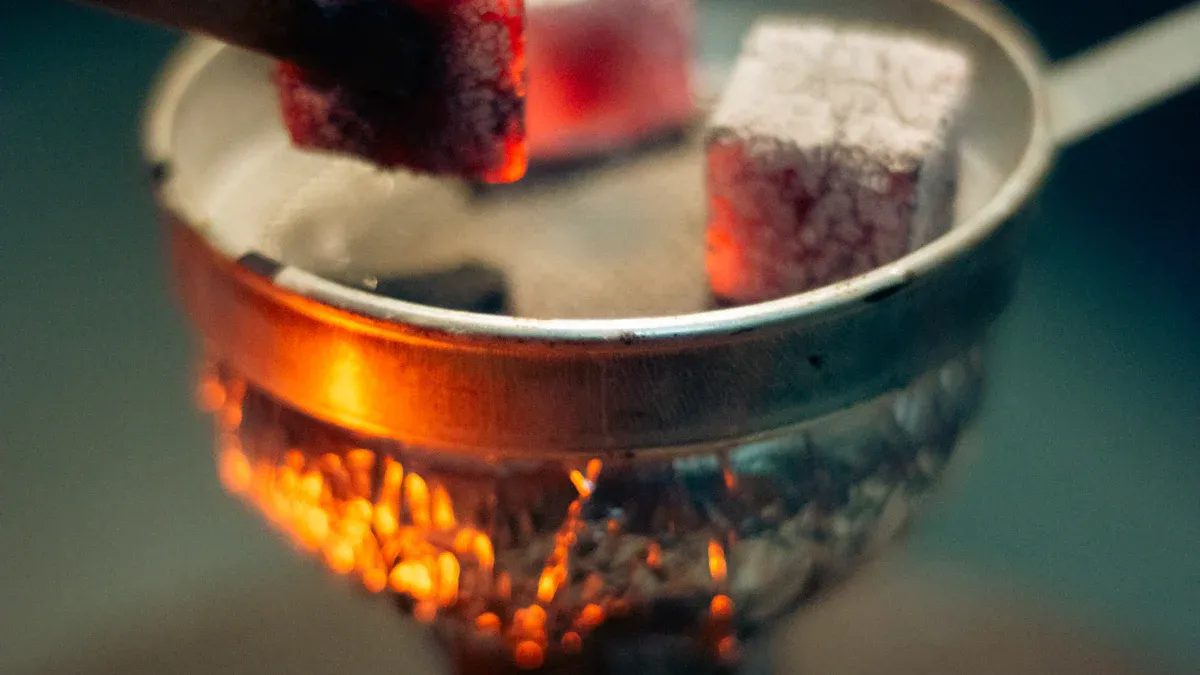
You might ask why people use physical activation activated carbon. This way costs less to make. It keeps the shape of the starting materials. The product has many tiny pores. These pores help remove small molecules and gases. The process uses very few chemicals. This makes it good for the environment. But making activated carbon this way needs a lot of energy. It cannot always make a surface area over 2000 m²/g.
Key Takeaways
Physical activation is an easy and earth-friendly way to make activated carbon. It uses very high heat and safe gases like steam.
This method needs less training and fewer chemicals. It is safer for workers and better for nature.
Activated carbon made this way has a big surface area. This helps it catch more bad stuff in water and air.
Physical activation does not cost a lot, but it uses a lot of energy. It also takes more time, which can make it cost more.
The pore structure of activated carbon from physical activation does not change. This might make it less useful for some special jobs.
Physical activation makes very little waste. It helps keep air and water clean without making bad chemical leftovers.
For most cleaning jobs, physical activation works well. But for special needs, you might need other ways to activate carbon.
Always think about what you need and how much you can spend before picking the best activated carbon for your project.
Pros of Physical Activation Activated Carbon
Simple Production Process
Fewer Steps
Making activated carbon with physical activation is easier than chemical activation. You only need to use high heat and a gas like steam or carbon dioxide. There are no extra chemicals to add or clean up. This makes the process simple and safer for people and nature. The table below shows how physical activation and chemical activation are different in steps and how they affect the environment:
Activation Type | Operational Steps | Environmental Impact |
|---|---|---|
Physical Activation | Needs high heat (800-1000 °C) and a gas like steam or CO2 | Good for the environment, no chemicals used |
Chemical Activation | Uses chemicals (like phosphoric acid) at lower heat (400-600 °C) | More chemicals needed, special uses |
Easy Operation
You do not need much training to use physical activation machines. You do not have to work with dangerous chemicals. You just control the heat and the gas. This makes it safer and easier to make activated carbon. Many factories pick this method because it is less risky and simple.
Environmentally Friendly Production
Minimal Waste
Physical activation makes very little waste. You do not have to throw away chemical leftovers. The process uses steam or carbon dioxide, which are safe for nature. Studies show that making activated carbon from waste materials saves energy and resources. This helps keep water and air clean and supports the planet.
Method Type | Temperature Range (°C) | Environmental Impact |
|---|---|---|
Physical | 400 – 1000 | Good for the environment because it costs less and uses safe gases |
Source | Key Findings |
|---|---|
Overview of relevant economic and environmental aspects of waste-based activated carbons aimed at adsorptive water treatments | Making activated carbon from waste is a green choice that saves energy and resources compared to using fossil fuels |
No Chemical Additives
You do not need to use extra chemicals in physical activation. This means you do not add things that can harm water or air. The process keeps the activated carbon safe and clean for cleaning water and air. By picking this method, you help the environment because there is no chemical waste.
Cost and Efficiency Benefits
Lower Energy Cost
Physical activation often uses less energy than chemical activation. You save money because you do not have to heat chemicals or wash the product. The process uses steam or carbon dioxide, which are cheap and safe. Many factories use physical activation to save money and help the environment.
High Production Efficiency
Physical activation lets you make activated carbon fast and well. The process gives the carbon strong pores and makes it tough. Steam activation can make the surface area much bigger. You get activated carbon that works well for cleaning water and air. Activated carbon helps remove bad stuff and makes water and air better.
Steam activation gives you:
Strong pores
Tough carbon
Green production
You can use activated carbon for many things, like cleaning water, filtering air, and trapping bad stuff. Its big surface area and strong power to trap things make it great for these jobs.
Tip: If you want a green and good way, physical activation activated carbon is a smart choice for cleaning water and air.
Quality and Adsorption Capacity
Large Surface Area
Physical activation gives activated carbon a big surface area. This means there are more spots for molecules to stick. When the surface area gets bigger, the adsorption power goes up. The table below shows how surface area changes adsorption:
Surface Area (BET) | Maximum Adsorption Capacity (Methylene Blue) |
|---|---|
Higher dye adsorption | |
Smaller Surface Area | Lower dye adsorption |
Activated carbon with a big surface area can trap more molecules. It is good for cleaning water and air. The pores grab tiny particles and gases. Activated carbon with more surface area works better. Many factories use physical activation because it makes strong activated carbon. The next table shows another comparison:
Surface Area Type | Adsorption Capacity (Methylene Blue) |
|---|---|
High Surface Area Activated Carbon | Higher than commercial activated carbon F400 |
Commercial Activated Carbon F400 | Lower adsorption capacity despite similar surface area |
You can trust activated carbon made by physical activation. It has high adsorption. The surface area helps remove more unwanted stuff. You get a product that works well for many uses.
Effective Removal of Contaminants
Activated carbon takes out contaminants from water and air. It traps small organic molecules and gases. This makes it great for cleaning air and water. You get clean water and fresh air with activated carbon. Here are some ways activated carbon helps:
You can remove harmful organic pollutants like pesticides and chlorine by-products from city water.
You can trap volatile organic compounds (VOCs) in air cleaning systems.
You can remove heavy metals such as lead, mercury, and cadmium from factory wastewater.
Activated carbon works best for small molecules and gases. It gives strong adsorption for these contaminants. How well it removes heavy metals depends on things like pH and contact time. You can use activated carbon for many jobs, but it works best for organic compounds and gases. Physical activation gives you a reliable product. The large surface area and strong adsorption make activated carbon a smart choice for cleaning water and air.
Tip: If you want to remove contaminants fast and well, pick activated carbon with a large surface area. You get better adsorption and cleaner results.
Cons of Physical Activation Activated Carbon
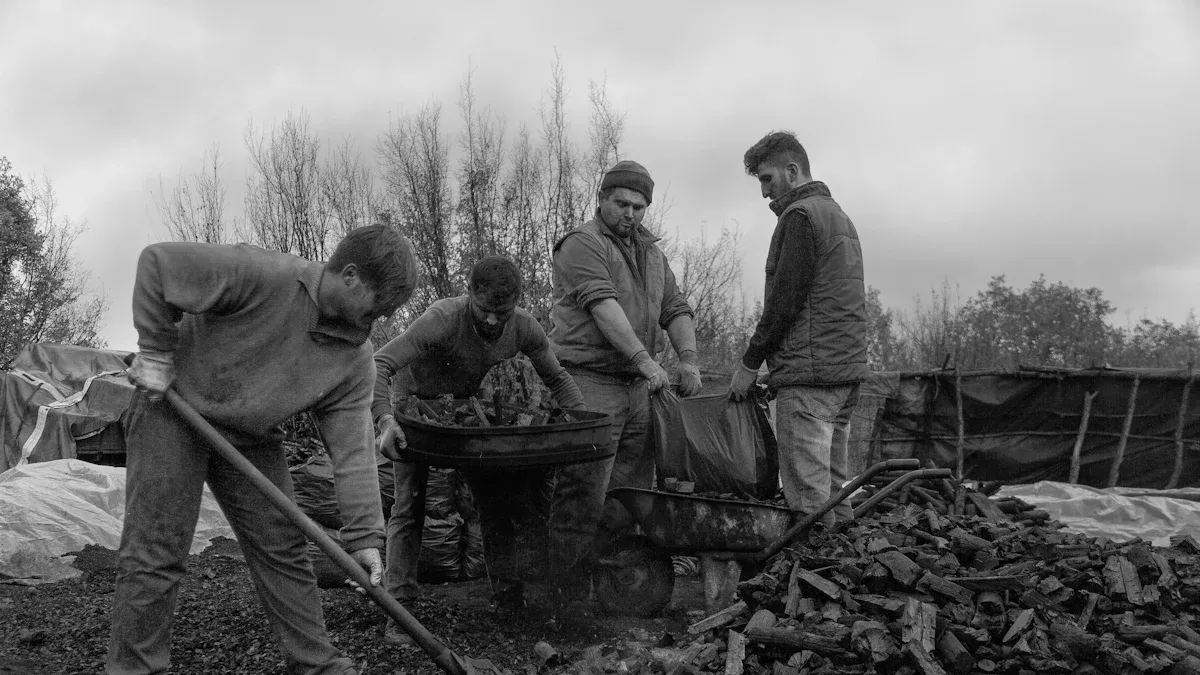
High Temperature Requirement
Increased Energy Use
Physical activation needs very high heat to work. The process uses heat from 800°C to 1,100°C. This means you use a lot of energy. High heat helps make strong pores for adsorption. But it also makes your energy bills go up. Some other activation agents need less heat. The table below shows how different agents use energy:
Chemical Agent | Optimal Activation Temperature (°C) | Impact on Energy Consumption |
|---|---|---|
H3PO4 | 450 – 600 | Too much heat can waste carbon. |
ZnCl2 | 500 | Lower heat keeps more product. |
KOH | 800 | High heat is needed, but too much can cause problems. |
Physical activation uses more heat than chemical activation. You will pay more for energy. This can make the process less good if you want to save money or help the environment.
Longer Processing Time
Physical activation takes longer to finish. High heat takes time to reach and cool down. The process can last for hours. This slows down how fast you can make activated carbon. If you need quick results, this method may not be best. Longer times also mean more energy use and higher costs.
Yield and Efficiency Limitations
Lower Yield with Steam
Using steam for activation gives you less product. When you raise the heat, you get even less activated carbon. For example, if you use steam on eucalyptus wood chips, the yield drops from 31.79% at 500°C to 21.63% at 700°C. High heat breaks down more material and makes more gases. You lose more, so you get less activated carbon. To get more product, you must balance heat and time.
Steam activation gives less product as heat goes up.
Heat and gas loss lower the amount you get.
Pyrolytic Oil Generation
Physical activation makes pyrolytic oil. This step uses the most energy. You need about 1.94 kWh to make activated carbon. Pyrolysis lets out carbon emissions like CO2, a big greenhouse gas. It also makes volatile organic compounds (VOCs) that can hurt people and nature. Methane (CH4) and carbon monoxide (CO) come out too. Methane is a strong greenhouse gas, and carbon monoxide is dangerous. Particulate matter (PM) adds to air pollution and can hurt your lungs. Some gases like hydrogen, CO, and CH4 can be used for energy, but you must handle them safely.
Pyrolysis uses lots of energy.
CO2, VOCs, methane, and carbon monoxide are made.
Particulate matter can harm air quality.
Some gases can be used for energy, but you must control them.
Equipment Needs
Specialized Furnaces
You need special furnaces for this process. Rotary kilns and shaft furnaces work best. These furnaces run at 800°C to 1,100°C. The table below shows the types and their heat range:
Furnace Type | Activation Method | Temperature Range (°C) |
|---|---|---|
Rotary Kilns | Physical Activation | 800–1,100 |
Shaft Furnaces | Physical Activation | 800–1,100 |
You must buy these furnaces. They cost more than simple ovens. If you want to start making activated carbon, plan for these costs.
Maintenance Concerns
Special furnaces need regular care. High heat can damage parts and wear them out. You must check and fix the equipment often. Maintenance costs more money and can slow down your work. If you do not keep furnaces in good shape, you get lower performance and less cleaning power. Workers must be trained to do maintenance safely.
Note: If you want to use physical activation activated carbon, think about energy use, yield, and equipment costs. These things affect your work and the environment.
Limited Pore Structure Control
Less Customization
Sometimes you want activated carbon for a special job. Physical activation does not let you change the pore structure much. You cannot pick the size or shape of the pores. The product always has the same pattern. If you need something different, this can be a problem. The way the pores form depends on the starting material and how you activate it. You do not get to change the process a lot. This means you cannot use the activated carbon for every job.
Physical activation gives you pores in many sizes. Some are small, and some are bigger. You cannot choose just one size. This makes it hard to catch only certain molecules. For example, if you want to trap big molecules, you may not get the right pore size. Not being able to change the pores can make adsorption weaker for some jobs. It works well for general cleaning, but not for special tasks.
Note: If you need activated carbon with special pores, physical activation may not work best. You might want to try other ways.
May Not Suit All Applications
Not every job uses the same activated carbon. Some jobs need a certain pore structure for the best results. Physical activation makes a product that works for many things, but not all. Sometimes, the adsorption is not strong enough for some molecules. The fixed pore structure can make the activated carbon less useful for special jobs.
Here is a table that shows how different pore structures change what you can do with activated carbon:
Pore Structure Type | Applications Limited by Pore Structure |
|---|---|
Structure (1) | Works well for high volatility solvents, some odor control, and removing trace organics from water. Has weak diffusion, so it may not work for larger molecules. |
Structure (2) | Good for many molecule sizes. Reduces vapor and liquid contamination to very low levels. Has good diffusion, so it fits more jobs. |
Structure (3) | Lets large molecules move in and out easily. Lacks small pores, so it does not hold most organics well. |
You can see that each pore structure has limits. If you want to trap big molecules, physical activation may not work well. If you want to remove tiny organics, you may need a different kind of activated carbon. The fixed pore structure can make adsorption weaker for some uses.
Physical activation gives you less choice in pore size.
Some jobs need special pores for better adsorption.
You may need chemical activation for more control.
If you want activated carbon for water or air cleaning, physical activation is a good choice. If you need it for a special job, check if the adsorption is strong enough. Always match the pore structure to what you need.
Tip: Think about what you want to remove. If you need strong adsorption for a special molecule, check if the activated carbon from physical activation fits your job.
Comparison of Pros and Cons
Physical Activation Activated Carbon vs Chemical Activation
Production Process Differences
There are big differences between these two methods. Physical activation uses very high heat and steam or carbon dioxide. You need special furnaces and more energy for this. Chemical activation uses chemicals like phosphoric acid or potassium hydroxide. It works at lower heat. Chemical activation is faster and skips a separate carbonization step. Sometimes, chemicals stay in the activated carbon, so you must clean it more. Chemical activation can make activated carbon with more surface area and even pores.
Here is a table that shows the main differences in production:
Feature | Physical Activation | Chemical Activation |
|---|---|---|
Process Temperature | High temperatures | Lower temperatures (400°C – 600°C) |
Environmental Impact | Minimal wastewater, CO2 and water vapor | Potential hazardous chemicals, wastewater |
Equipment Cost | Generally lower | Generally higher due to corrosion resistance |
Production Complexity | More complex, requires carbonization | Simpler, can be a single-step process |
Pore Size Distribution | Relatively large pore size | Higher specific surface area, uniform pores |
Yield | 30% to 50% from raw materials | Varies, but often lower than physical |
Environmental Impact
You should think about the environment when picking a method. Physical activation makes less dangerous waste. It only gives off CO2 and water vapor. Chemical activation uses chemicals that can hurt water and soil. You must handle and throw away these chemicals safely. Chemical activation uses less energy, but leftover chemicals can cause problems. Physical activation uses more energy, but it does not leave behind harmful chemicals.
Here is a table that shows energy and environmental impact:
Activation Method | Energy Requirements | Carbon Emissions | Adsorption Capacity (g/kg) |
|---|---|---|---|
KOH | Higher | Higher | 729 |
NaOH | Lower | Lower | 662 |
You can see chemical activation may use less energy, but it can make more waste. Physical activation is safer for nature, but it needs more energy.
Summary Table
Pros and Cons Side-by-Side
This table helps you compare the main pros and cons. You can see which method is better for your needs.
Criteria | Steam Activation (Physical) | Phosphoric Acid Activation (Chemical) |
|---|---|---|
Activation Temperature | 600°C to 1200°C | 450°C to 900°C |
Process | Carbonization then steam exposure | Impregnation with acid before carbonization |
Pore Structure | Wide range of pores | More micropores and mesopores |
Surface Area | 500 to 1500 m²/g | Often exceeds 1500 m²/g |
Adsorption Applications | Gas-phase (air filters, gas masks) | Liquid-phase (water purification) |
Adsorption Capabilities | Large particles, odors, gases | Small molecules, dissolved organics |
Cost and Energy Efficiency | High energy use, durable carbon | Lower energy, chemical handling needed |
Environmental Impact | Fewer hazardous by-products | Chemical disposal challenges |
Common Applications | Air purification, gas processing | Water purification, food processing |
Best Suited For | Gas-phase filtration | Liquid-phase applications |
Tip: Pick the activation method that fits your job. If you want safer production and fewer chemicals, use physical activation. If you need to remove small molecules, chemical activation might be better.
You can use this comparison to pick the best activated carbon. Think about energy, the environment, and what you want to clean.
Choosing Physical Activation Activated Carbon
Best Uses for Activated Carbon
Removal of Contaminants
Activated carbon is good for taking out bad stuff in many places. It works because it grabs molecules on its surface. Small molecules like formaldehyde get trapped in micropores. Mesopores help catch bigger things like pesticides. Pollutants stick to the surface, so water and air get cleaner.
In water treatment, activated carbon can remove almost all chlorine and most benzene chemicals. You can trust it to clean water and air. Here are some ways people use it:
Air purifiers use activated carbon filters to get rid of smells and gases.
HVAC systems use these filters to make indoor air better.
Factories use air filters to keep workers safe from toxic gases.
Car air filters help stop bad smells and keep out pollution.
Water filters use granular activated carbon to clean drinking water.
Application Type | Effectiveness Description |
|---|---|
Standalone Air Purifiers | Use activated carbon filters to eliminate odors and gaseous pollutants. |
HVAC Systems | Activated carbon filters enhance indoor air quality by removing harmful substances. |
Industrial Air Filtration | Employed in factories to manage emissions and protect workers from toxic gases. |
Automotive Air Filters | Reduces cabin odors and exposure to pollutants in vehicles. |
Water Filtration | Granular activated carbon removes up to 99% of residual chlorine and 95% of benzene derivatives in drinking water. |
Water and Air Purification
Activated carbon helps make water safe for drinking and cooking. It takes out chlorine, pesticides, and other chemicals. In air cleaning, it traps smells, gases, and harmful compounds. You find it in filters for homes, cars, and factories. Activated carbon is best when you need to clean water or air fast and well.
Tip: Pick activated carbon for water and air cleaning if you want strong adsorption and quick results.
When to Consider Alternatives
Custom Pore Structure Needs
Sometimes you need special pore sizes in activated carbon. Physical activation gives many pore sizes, but you cannot pick the exact ones. If you want to catch certain molecules, you may need chemical activation. Think about these things:
What activators you use
How long you activate it
Temperature
Surface area and porosity
How long you activate changes the pores. More time can make more micropores or mesopores. If you need special pores, try chemical activation or change the process.
Energy Cost Concerns
Physical activation uses high heat, so energy bills can go up. You need to plan for this if you want to save money. Some systems need special furnaces and regular care. Check your budget and see if you can pay for the energy.
Consideration | Description |
|---|---|
Odor/liquid source | Impregnated carbon works well for chloramines, sulfur compounds, or ammonia. |
Application Scale | GAC and pelletized carbon are good for big air flows; PAC is for small systems. |
Environment | Think about humidity, temperature, and flow conditions. |
Maintenance | Regular care is important; some types can be reused, others must be replaced. |
If you need special pores or want lower energy costs, look at other options besides physical activation. Chemical activation can give you more control and save energy.
Note: Always pick the activated carbon that fits your needs. Think about what you want to remove, your budget, and how much care the system needs.
Physical activation is an easy and green way to make activated carbon. It gives you strong adsorption and a big surface area. But it uses more energy and you cannot change the pores much. Many companies like this method because it saves money and helps the planet. If you want to pick the best option, follow these steps:
Think about what you want to clean and which contaminants you need to remove.
Pick the right shape of activated carbon for your process.
Decide if you need a special kind of carbon.
Look at how well the carbon works.
Compare the cost and the materials you will use.
Check what the supplier says about their product.
Look at the good and bad points for your needs. This helps you choose the best activated carbon for cleaning water or air.