

You may notice some face masks use activated carbon. This material has a special sponge-like structure that traps harmful gases, odors, and even some bacteria and viruses. Mask Activated Carbon can absorb toxic gases like COx, SOx, and NOx, offering better protection than standard masks. Many people find these masks comfortable and safe for daily use, especially in polluted cities or healthcare settings.
Key Takeaways
Activated carbon masks provide enhanced protection by trapping harmful gases, odors, and some bacteria, making them ideal for polluted areas.
The unique microporous structure of activated carbon increases its surface area, allowing it to capture more contaminants effectively.
Activated carbon masks improve air quality by absorbing odors and volatile organic compounds, making breathing more pleasant.
While effective, activated carbon masks do not filter out all viruses or ultrafine particles; consider using N95 masks for better protection.
Always replace your activated carbon mask or filter regularly to maintain its effectiveness and ensure clean air.
Activated Carbon Overview
What Is Activated Carbon
You may wonder what makes activated carbon special. Activated carbon is a form of carbon that has been processed to have many tiny pores. These pores give it a large surface area, which helps it trap gases, odors, and particles. Manufacturers often use charcoal as the starting material. They heat it at high temperatures, usually between 600 and 800 °C, and use chemicals like KOH to activate it. This process creates a material with about 75.9% carbon content and an amorphous structure. You find this type of carbon in many products, but it works especially well in face masks because it can adsorb harmful substances from the air.
Microporous Structure and Surface Area
The secret to Mask Activated Carbon’s effectiveness lies in its structure. The material has a network of tiny holes called micropores. These micropores increase the surface area, allowing the carbon to capture more contaminants. When you wear a mask with activated carbon, these pores act like a sponge, trapping gases such as CO2 and other pollutants. The high specific surface area and large pore volume make it possible for the mask to filter out both particles and gases. This structure also helps the mask stay stable and effective over time.
Tip: The more micropores activated carbon has, the better it can protect you from harmful substances in the air.
Terminology: Activated Carbon, Charcoal, Coal
You might see different terms like activated carbon, charcoal, and coal. These words do not mean the same thing. Coal is a natural mineral found underground. Charcoal comes from burning wood or other materials in low oxygen. Activated carbon starts as charcoal or coal, but it goes through a special process to create more pores. This process makes it much better at trapping gases and particles. When you see “activated carbon” on a mask label, you know it has gone through this extra step to boost its filtering power.
Activated Carbon Filtration
Adsorption Mechanism
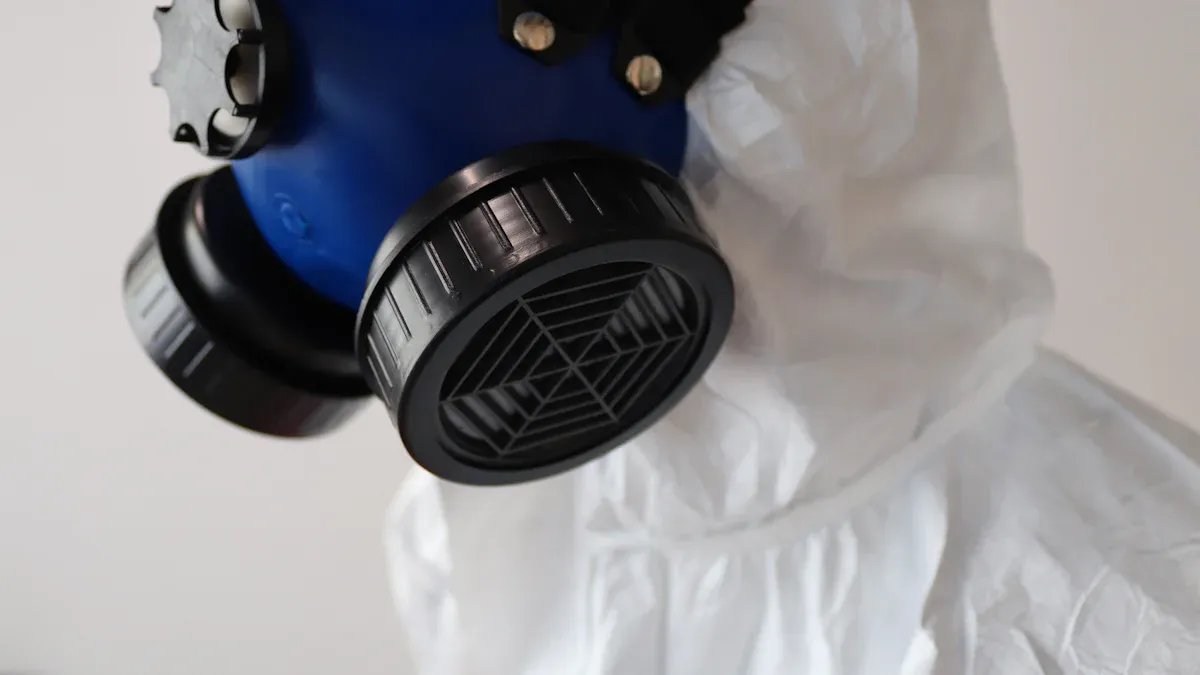
When you wear a mask with activated carbon, you benefit from a process called adsorption. Adsorption happens when molecules from the air stick to the surface of the carbon. Unlike absorption, where substances soak into a material, adsorption keeps them on the surface. The carbon in your mask has a huge surface area because of its many tiny pores. This structure acts like a sponge, but instead of soaking up water, it grabs onto gases, odors, and even some chemicals. The carbon attracts these molecules and holds them tightly, so you do not breathe them in. This makes Mask Activated Carbon very effective at removing harmful substances from the air you breathe.
Trapping Particles and Gases
You might wonder what kinds of things Mask Activated Carbon can trap. The answer is impressive. The pores in activated carbon are so small that they can catch not only dust and larger particles but also very tiny ones, including gases and chemicals that other filters often miss. This means your mask can help protect you from a wide range of contaminants.
Some of the most common gases and chemicals trapped by activated carbon include:
Hydrogen sulfide
Ammonia
Aromatics
Volatile organic compounds (VOCs) like acetone, benzene, and ethanol
The highly porous structure of activated carbon increases its surface area, which boosts its ability to capture these harmful substances. You get extra protection against pollutants that regular masks might not filter out. This makes Mask Activated Carbon a smart choice if you want to guard yourself against both particles and gases in the air.
Note: Activated carbon works well for both large and small contaminants, including many gases and chemicals that are hard to catch with standard filters.
Van der Waals Forces in Filtration
You may ask how activated carbon holds onto these tiny particles and gases so well. The answer lies in something called van der Waals forces. These are weak attractions that happen between molecules. When a gas or particle comes close to the surface of the carbon, these forces pull it in and hold it there. The many pores in activated carbon create more places for these forces to work, making the mask even more effective.
Van der Waals forces help the mask trap not just dust and chemicals but also viruses and bacteria. The unique structure of activated carbon, combined with these forces, gives your mask a high rate of adsorption. This means you breathe cleaner air, even in places with lots of pollution or germs.
The attraction between the carbon and incoming particles, thanks to van der Waals forces, is a key reason why activated carbon masks can filter out so many harmful substances.
Benefits of Mask Activated Carbon

Enhanced Protection
You get stronger protection from airborne hazards when you use a mask with activated carbon. The special structure of this material traps pollutants, viruses, and bacteria more effectively than standard filters. It absorbs harmful chemicals quickly, which helps keep you safe in polluted environments. Studies show that activated carbon improves filtration, especially against dangerous gases like carbon monoxide.
Study Title | Findings |
|---|---|
Letter to the editor on respiratory mask using a combination of spunbond, meltblown, and activated carbon materials for reducing exposure to CO: an in vivo study | The study indicates that activated carbon enhances the filtration capabilities of masks, particularly against harmful gases like carbon monoxide. |
Masks with activated carbon often have a 4-ply design. This design gives you better filtration and keeps the mask comfortable to wear.
Odor and Gas Removal
You will notice a big difference in air quality when you wear a mask with activated carbon. This material acts like a sponge, soaking up odors, smoke, fumes, and organic chemicals. It also traps the molecules that cause bad smells and binds to volatile organic compounds (VOCs) from things like paint or cleaning products.
Removes odors
Filters smoke and fumes
Binds VOCs
Improves air quality
The powdered form of activated carbon, such as CocoCarb, shows high chemical adsorption efficiency, making it very effective at cleaning the air you breathe.
Antibacterial Properties
You may also benefit from some antibacterial effects. Activated carbon can help lift bacteria from the air and your skin. Some masks combine activated carbon with other materials to boost these properties. For example, a seven-layer mask with activated carbon passed strict quality tests in Vietnam. While activated carbon alone does not kill as many bacteria as some advanced materials, it still helps reduce your exposure to germs.
Skin Health and Comfort
Wearing a mask with activated carbon can help your skin. It draws bacteria and impurities away from your face, which may help prevent acne and keep your skin clear.
Benefit | Description |
|---|---|
Activated charcoal may help remove impurities and dirt from the skin, improving its texture and appearance. | |
Soaking up excess oil | Activated charcoal may help by soaking up the excess oil that some people’s skin produces. |
Clearing blemishes and acne | Activated charcoal products may help to soak up and bind excess oil, which may help clear blackheads and improve the appearance of acne. |
Reducing the appearance of pores | Activated charcoal may help unclog pores and remove dead skin cells by binding to bacteria and toxins. |
Brightening skin | A study found that a 25% activated charcoal product could brighten dry skin on the hands without irritation. |
Many people find that Mask Activated Carbon masks feel comfortable for long periods and help keep their skin healthy.
Limitations and Misconceptions
What Mask Activated Carbon Can and Cannot Filter
You may think that activated carbon masks can block everything in the air. This is not true. While these masks do a great job at absorbing many toxic gases, they have some limits. Here is what you need to know:
Activated carbon masks absorb many harmful gases, but they struggle with very small particles.
You may not get full protection from viruses or ultrafine particles. These tiny particles can slip through the mask.
The large surface area of activated carbon helps with gas absorption, but it does not always stop biological aerosols as well as other respirators.
Studies show that activated carbon masks can reduce some exposures, but they may not filter out all ultrafine particles or viruses.
Tip: If you need strong protection from viruses or very fine dust, you should look for masks with special filters like N95 or higher.
Common Myths
Many people believe that activated carbon masks work like magic. You might hear that these masks can block every germ or chemical. This is a myth. Activated carbon does not kill viruses or bacteria. It only traps some of them. Some people also think that wearing two masks with activated carbon gives double the protection. In reality, this can make it harder to breathe and may not improve safety.
Remember, no mask can make you 100% safe. You still need to wash your hands and keep your distance from sick people.
Practical Limitations
You should know that moisture can affect how well your mask works. When you breathe, you add humidity to the mask. Research shows that high humidity can lower the filtration power of masks, especially those with electret materials. Water in the air can change how the mask holds a charge, which makes it less effective at trapping particles. If your mask gets wet, you should replace it with a dry one.
For best results, always use a clean, dry mask and follow the instructions from the manufacturer.
You gain strong protection from activated carbon masks, especially against gases and odors. Many users rate these masks highly for comfort and breathability.
Units Sold | Average Rating | Top Comments |
|---|---|---|
2 million | 4.8/5 | No fogging, easy breathing |
You should check fit and filter efficiency before buying. Replace filters when breathing becomes hard. Masks degrade over time and absorb moisture.
Always consider your air sensitivity and choose certified masks for best safety.
You help the environment by disposing of masks responsibly, since improper disposal can harm soil and water.
FAQ
How often should you replace a mask with activated carbon?
You should replace your mask or its filter every day if you use it often. If the mask feels damp or breathing gets hard, change it right away. Always follow the instructions from the manufacturer.
Can you wash and reuse activated carbon masks?
Most disposable activated carbon masks are not washable. Washing can damage the carbon layer and reduce its effectiveness. If you use a reusable mask, only replace the carbon filter as directed.
Does activated carbon protect you from viruses?
Activated carbon can trap some viruses, but it does not block all of them. For better virus protection, use masks with certified filters like N95. Always combine mask use with good hygiene.
Are activated carbon masks safe for children?
You can find masks made for children, but always check the fit. A mask that fits well works better. Children should wear masks only under adult supervision.
What are the signs that your mask is no longer effective?
If you notice odors, have trouble breathing, or see visible dirt, your mask may not work well anymore. Replace it to stay protected.