
Biogas Activated Carbon helps take out bad stuff from biogas. This gives you safer fuel that keeps your machines safe and follows rules. Cleaner biogas stops rust, lowers repairs, and makes machines last longer. You also get energy you can trust and help cut down on pollution.
Machines last longer
Energy is cleaner
Using it is safer
Key Takeaways
Activated carbon makes biogas clean by taking out bad impurities. This makes biogas safer to use. Purifying biogas helps machines work better. It also lowers the cost to fix machines. Some contaminants like hydrogen sulfide and siloxanes can hurt equipment. They can also be dangerous for people’s health. Following safety rules keeps biogas use safe. It also helps stop accidents from happening. Testing biogas often for impurities is important. It keeps biogas safe and working well. Activated carbon technology traps harmful gases. This makes biogas quality better. Picking the right activated carbon is very important. It helps clean biogas well. Cleaner biogas helps the environment. It lowers pollution and keeps air healthier.
Why Biogas Purification Matters
Common Biogas Impurities
Biogas has many things in it that are not good. These unwanted substances can cause trouble if they stay in the gas. Here are some common contaminants you find in biogas:
Hydrogen sulfide (H2S) is found most often. Its amount can be as high as 901 ppm in landfill gas.
Other sulfur compounds are also found in large amounts, especially in biogas from city waste.
Siloxanes are seen more in biogas from wastewater plants.
Landfill gas has more halocarbons and aromatic compounds than other biogas sources.
These impurities make biogas unsafe and less helpful. Purifying biogas removes these bad substances so the gas can be used safely.
Risks of Unpurified Biogas
If you use biogas without cleaning it, you face many dangers. These risks can hurt you, your machines, and your property. Here are some known dangers:
Gas explosions happen in almost 70% of cases.
Toxic gas leaks cause health problems in over 20% of incidents.
Asphyxia, which means you cannot breathe, happens in about 4% of cases.
Electric and mechanical systems can break in nearly 3% of situations.
Fires make up about 3% of the risks.
Using biogas that is not purified can cause injuries, deaths, and damage to property. Cleaning biogas helps keep you and your equipment safe.
Safety and Regulatory Needs
You must follow strict safety rules before using biogas for business. These rules help stop accidents and keep energy systems working well. Some important rules are:
Gas quality rules make sure biogas is safe and works well. They check methane and impurity levels.
Pressure system safety rules protect you from too much pressure in gas pipes. You must show you follow these rules.
Rules about dangerous substances and explosive atmospheres make you check and control fire and explosion risks at biogas sites.
Following these rules is not just about obeying the law. It helps make things safer and makes sure biogas cleaning works right.
Biogas purification is important for many reasons. It takes out harmful impurities, keeps you safe from big risks, and helps you follow safety rules. When you clean biogas, you make it safer, cleaner, and more dependable for daily use.
Key Contaminants in Biogas
Hydrogen Sulfide and Ammonia
Hydrogen sulfide and ammonia are often found in biogas. Hydrogen sulfide smells like rotten eggs. It can make pipes and engines rust. If you burn biogas with hydrogen sulfide, metal parts can get damaged. Ammonia is also bad for machines. It can make the gas unsafe to breathe. Taking out these contaminants keeps machines safe and makes the gas safer to use.
Siloxanes and VOCs
Siloxanes and VOCs cause big problems for biogas engines. Siloxanes come from things like shampoo and cleaning products. When you burn biogas with siloxanes, they turn into silicon dioxide. This leaves hard stuff on engine parts.
These deposits make engines work less well.
You have to pay more for repairs.
Engines can knock in the combustion chambers.
More pollution comes out of the exhaust.
VOCs are chemicals like benzene and toluene. These can hurt your health and add to pollution. You need to remove siloxanes and VOCs to keep biogas clean and engines working well.
Taking out siloxanes and VOCs saves money on repairs and keeps energy systems safe.
Carbon Dioxide in Biogas
Carbon dioxide is a big part of raw biogas. Usually, about 30-40% of biogas is carbon dioxide. This lowers how much energy the gas has. If you want to use biogas for heat or fuel, you need to lower the carbon dioxide.
Biogas with less carbon dioxide burns better.
Less carbon dioxide means more methane.
Cleaner biogas gives you better energy.
Taking out carbon dioxide makes biogas better. This helps you meet energy rules and makes the fuel more useful.
Cleaning biogas by removing carbon dioxide makes it worth more and safer to use.
Other Trace Compounds
Some people think biogas only has big contaminants like hydrogen sulfide or carbon dioxide. But there are also many small trace compounds in biogas. These small compounds can hurt your health and damage machines. You need to know about them to keep your energy safe.
Some trace compounds show up a lot in biogas. You can see them in this table:
Trace Compounds | Potential Effects |
|---|---|
Copper | Bad for health and can make pipes rust |
Lead | Bad for health and can make pipes rust |
Hydrogen sulfide | Bad for health |
Methyl mercaptan | Bad for health |
Ammonia | Health risks |
Six mercaptans | Health risks |
Six additional VOCs | Health risks |
17 trace metals | Health risks |
You find these compounds in different kinds of biogas. Copper and lead can make pipes rust. They can also hurt you if you breathe them in. Methyl mercaptan and other mercaptans smell very strong. These smells can make the gas hard to use and unsafe. Ammonia and VOCs can hurt your lungs and make the air dangerous.
There are other trace compounds in biogas too. Here are some common ones:
Ammonia
Alkanes
Sulfur compounds
VOCs
Siloxanes
Metals
Bacteria
Pesticides
Each compound can cause its own problems. Metals like copper and lead can build up in pipes and engines. Bacteria and pesticides can come from waste. These can make biogas unsafe for homes or businesses.
You need to take out these trace compounds to keep your machines and health safe. If you leave them in, you could get rust, toxic leaks, or even fires. Taking out trace compounds also helps you follow safety rules.
Tip: Always test your biogas for trace compounds before you use it. This helps you find hidden dangers and keeps your energy clean.
Activated carbon is good at trapping many trace compounds. It catches metals, VOCs, and sulfur compounds. This gives you safer biogas and machines that last longer. Cleaner biogas also means less pollution and better air.
You should not ignore trace compounds. They may be small, but they can cause big trouble. By taking them out, you make biogas safer, cleaner, and better for everyone.
Biogas Activated Carbon Technology

How Activated Carbon Works
Activated carbon is very important in biogas systems. It helps trap harmful gases. This makes biogas safer to use. Biogas goes through a bed of activated carbon. The carbon grabs bad stuff and keeps it in tiny holes. This protects your machines and makes methane better.
Adsorption Mechanism
Adsorption is used to clean biogas. Adsorption means molecules stick to the carbon’s surface. The carbon has lots of tiny holes and a big surface. When biogas moves through, the carbon catches hydrogen sulfide, ammonia, siloxanes, and other bad things.
Hydrogen sulfide removal can be from 35% to over 100%.
You can use two vessels so your system works during maintenance.
For best results, keep oxygen and hydrogen sulfide equal and humidity high.
The big surface and tiny holes help grab lots of hydrogen sulfide.
This makes biogas better and stops machines from rusting.
Using it right removes more bad stuff and lowers repairs.
You get cleaner methane and machines last longer with biogas activated carbon.
Structure and Properties
Activated carbon has special features for cleaning biogas. It can grab lots of bad gases at normal pressure, so costs stay low. Its hydrophobic property helps it work well with biogas. You can change its tiny holes to catch certain bad things.
Property | Description |
|---|---|
Adsorption Capacity | Can grab harmful gases using physical and chemical ways. |
Porosity | Tiny holes help it touch gas molecules well. |
Specific Types | Different kinds (like KOH-impregnated) catch certain impurities like hydrogen sulfide. |
Surface Modification | You can change the surface to grab more of certain bad things. |
You can pick different types of activated carbon for your biogas system. KOH-impregnated carbon reacts with hydrogen sulfide and makes potassium sulfide, which is better for the environment. KI-impregnated carbon works well against siloxanes and stops rust in your machines.
Why Activated Carbon is Effective
Biogas activated carbon is a great choice for cleaning biogas. It removes hydrogen sulfide, ammonia, siloxanes, and even carbon dioxide. Composite activated carbon made from farm waste works better than single adsorbents. It can remove 8.86 wt% of carbon dioxide. Oxygen groups in biomass-based carbon help grab more carbon dioxide. Nitrogen-rich materials also help grab more carbon dioxide.
Activated carbon removes harmful gases like hydrogen sulfide.
KOH-impregnated carbon reacts with hydrogen sulfide and helps the environment.
KI-impregnated carbon stops siloxane buildup and protects machines.
Char from Macadamia nut shells grabs more carbon dioxide than other farm byproducts.
You need to pick the right activated carbon for your system. You can choose active or passive adsorbents. Active adsorbents work well for certain bad things and can be reused, but cost more. Passive adsorbents are good for many uses and cost less. You should think about what impurities you have, how clean you want your biogas, and your budget.
Biogas activated carbon technology helps you clean biogas, protect your machines, and make better methane for energy.
Contaminants Removed by Activated Carbon
Hydrogen Sulfide Removal
Hydrogen sulfide in biogas is very risky. It smells like rotten eggs. It can hurt engines and pipes. Activated carbon helps take out hydrogen sulfide fast. Special activated carbon grabs hydrogen sulfide. It changes it into solid sulfur. This keeps machines safe and biogas clean.
You need to pick the right activated carbon. Some types remove more hydrogen sulfide. The table shows how much each material removes:
Activated Carbon Source | Hydrogen Sulfide Removal (mg H₂S/g adsorbent) |
|---|---|
Eucalyptus | 690 |
Almond shells | 230 |
Coffee grains | 22 |
Eucalyptus-based activated carbon removes the most. Almond shells work well too. Coffee grains remove less, but still help. Using activated carbon protects your equipment. It makes biogas safer.
Tip: Always check which activated carbon you use. Some types remove more hydrogen sulfide and help your system last longer.
Activated carbon removes hydrogen sulfide, siloxanes, and VOCs best. You can trust it to keep biogas safe.
Ammonia and Siloxane Removal
Biogas from waste has ammonia and siloxanes. Ammonia makes biogas unsafe to breathe. It can damage machines. Siloxanes come from shampoo and cleaning products. Burning biogas with siloxanes leaves hard deposits on engines. This causes engine wear and costly repairs.
Activated carbon removes siloxanes from biogas. Granular activated carbon grabs siloxanes. It stops them from reaching engines. Removal rate depends on siloxane type, amount, temperature, and humidity. Freezing methods can remove up to 90% of siloxanes.
Removing siloxanes protects engines. It lowers repair costs. It keeps biogas clean and safe. Activated carbon is known for siloxane removal. You get better results by controlling biogas conditions.
Note: Activated carbon works best for siloxanes. It is less clear for ammonia, so other methods may be needed.
CO2 and VOCs Removal
You want biogas with more methane and less carbon dioxide. Activated carbon removes carbon dioxide and VOCs. VOCs are chemicals like benzene and toluene. They smell strong and make biogas unsafe.
Activated carbon like NORIT RB4 is made for high VOC removal. Tiny holes in activated carbon trap VOCs. This stops bad smells and keeps biogas safe. Removing VOCs is important because strong odors can cause safety problems.
Activated carbon also removes carbon dioxide. The best activated carbon grabs up to 6.2 mmol of CO2 per gram. This stays true even after several uses. In real biogas upgrades, CO2 removal stays high. You get cleaner biogas.
Activated carbon removes VOCs and CO2.
Biogas has less odor and is safer.
Energy value of biogas improves.
Cleaning biogas with activated carbon gives you better fuel, safer machines, and fewer health risks.
Limitations of Activated Carbon
Activated carbon helps clean biogas, but it cannot fix everything. You should know what it cannot do. This helps you pick the best way to use your biogas system.
High energy demands for regeneration
You need lots of energy to make activated carbon work again. This can cost more money and make your system less efficient.Salt precipitation and foaming issues
Salts can build up in the carbon. This can cause foaming. Foaming makes it hard for carbon to trap bad gases. You may have to clean or change the carbon more often.Oxygen poisoning of amines leading to column clogging
Oxygen in biogas can hurt chemicals in the carbon. This can clog columns and stop the system from working well.Environmental impact of waste byproducts
Using activated carbon makes waste byproducts. These wastes can harm the environment if not handled safely.Corrosive nature of chemicals affecting sustainability
Some chemicals used with activated carbon are corrosive. They can damage equipment and make your system less sustainable.
Note: Check your biogas system often. Look for salt buildup, foaming, or clogging. Handle waste byproducts safely to protect the environment.
Activated carbon works well for many impurities, but you must watch for these limits. You can use other methods with activated carbon for better results. Always plan for maintenance and safe waste handling. This keeps your biogas system running smoothly and safely.
Methods of Biogas Purification
Activated Carbon vs Other Methods
There are many ways to clean biogas. Activated carbon is special because it traps bad gases like hydrogen sulfide and VOCs. It works well for small systems and simple plants. Other methods are better for big projects or when you need very pure methane.
Here is a table that shows how each method works:
Method | Mechanism | Purity Level | Efficiency/Recovery |
|---|---|---|---|
Water Scrubbing | CO₂ and H₂S mix with water, letting methane rise. | About 94% methane | Good cost balance |
Pressure Swing Adsorption (PSA) | Uses materials with holes to catch CO₂, then cleans them. | Over 96% methane | Up to 98% recovery |
Amine Absorption | Chemicals react with amine to grab CO₂. | Over 99% methane | Needs lots of energy |
Cryogenic Separation | Uses cold to turn gases into liquids and separate them. | 95-99% methane | Needs lots of energy |
Biological Methanation | Tiny living things change CO₂ and H₂ into methane. | Over 96% methane | Controlled process |
Membrane Separation | Special barriers split methane from CO₂ using pressure. | Over 99.8% methane | Complete CH₄ recovery |
Hybrid Systems | Mixes methods to work better and save money. | Over 96% methane | Cost-effective |
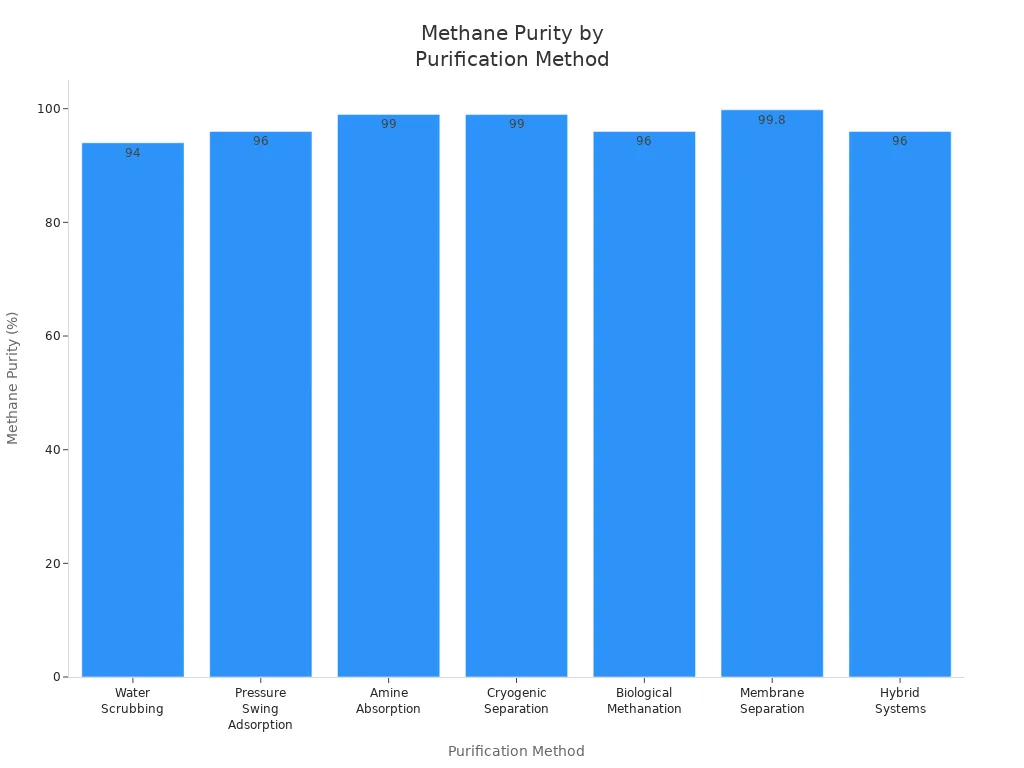
Activated carbon is easy to use and removes many bad things. Water scrubbing and PSA are good for taking out carbon dioxide. Membrane separation gives the purest methane. Amine absorption and cryogenic separation use more energy. Pick the method that fits your needs and money.
Tip: Activated carbon is best for removing sulfur compounds and VOCs. Use other methods if you want very pure methane.
How to Purify Biogas with Activated Carbon
To clean biogas, you pass it through activated carbon. The carbon grabs bad gases in its tiny holes. You must control how fast the gas moves and keep the air moist. You can use two carbon beds so one works while the other is changed.
Steps to clean biogas with activated carbon:
Test biogas to see what impurities are in it.
Pick the right activated carbon for your bad gases.
Put the carbon bed in your system.
Move biogas through the bed at a steady speed.
Watch the carbon for buildup and change it when needed.
Activated carbon takes out hydrogen sulfide, siloxanes, and VOCs. It helps you follow safety rules and keeps machines safe.
Note: Always check the carbon bed for buildup. Change it before it gets full so your biogas stays clean.
Upgrading Biogas to Biomethane
Upgrading biogas means making it into high-quality biomethane. You must remove carbon dioxide and other bad things. Activated carbon helps by trapping harmful gases. You can use other methods with activated carbon for better results.
First, take out hydrogen sulfide and VOCs using activated carbon. Next, use water scrubbing, PSA, or membrane separation to remove carbon dioxide. This gives you biomethane that is very pure. You can use upgraded biogas for cars, heating, or making power.
Cleaner biomethane gives you more energy and helps you follow strict rules.
You can use different ways to clean biogas to reach your goals. Activated carbon is important for upgrading biogas, especially for removing sulfur and organic compounds.
Operating Activated Carbon Systems
Optimal Conditions for Purification
You must set up your activated carbon system carefully. How you run it changes how well it cleans biogas. To get the best results, control humidity and temperature. Keep humidity under 50%. Keep gas temperature below 40°C. If you cannot do this, use a gas drier or cooler before the filter.
Activated carbon works best when you look at its features. Micropore volume is most important for trapping siloxane. Surface area matters too, but not as much. Total pore volume matters the least. Pick activated carbon with lots of tiny holes and a big surface area.
Keep humidity under 50%
Keep gas temperature below 40°C
Use a gas drier or cooler if needed
Pick carbon with high micropore volume
Tip: Test your biogas often. Change your system to keep conditions steady. This helps your carbon last longer and work better.
Maintenance and Replacement
You need to check your activated carbon system often. If you skip maintenance, your filter will stop working. Bad gases can get through. Watch for signs the carbon is full, like changes in gas quality or strong smells. Replace the carbon before it gets overloaded.
Common maintenance steps are:
Check the carbon bed for buildup
Watch gas quality and pressure
Change carbon when it reaches its limit
Clean or replace filters as needed
Keeping your system clean protects your machines. It keeps biogas safe. You also avoid expensive repairs and downtime.
Note: Maintenance keeps your biogas system working well. Make a schedule and follow it.
Cost and Environmental Benefits
Running an activated carbon system costs money. Most yearly cost comes from buying and changing activated carbon. For example, running an acidic biotrickling filter system costs about $90,500 each year. Activated carbon makes up 70–95% of the total cost for biogas treatment.
Item | Annual Cost Estimate |
|---|---|
Activated Carbon | $63,350–$85,975 |
Other Operating Costs | $4,525–$27,150 |
Total System Cost | $90,500 |
Even though the cost is high, you get big environmental benefits. Activated carbon filters remove harmful substances like hydrogen sulfide and siloxanes. This makes your biogas cleaner and safer. Cleaner biogas helps you make better renewable gas and electricity. You also help cut down on fossil fuels, which protects the environment.
Cleaner biogas means safer energy and less pollution. You help the planet every time you use activated carbon.
Using activated carbon makes biogas safer and more dependable. It takes out harmful stuff. This helps your machines last longer and costs less to fix.
Benefit | Explanation |
|---|---|
Prolongs Equipment Lifespan | Activated carbon removes bad contaminants. Engines, turbines, and boilers wear out slower. Machines can work for more years. |
Reduces Maintenance Costs | With less bad stuff, you fix machines less often. This saves money on repairs. |
Improves Biogas Quality | Cleaning biogas first makes it work better. You get high-quality biomethane for many uses. |
You lower the chance of bad germs.
You help keep nature safe.
You support cleaner energy for everyone.
New activated carbon and smart tools make cleaning biogas even easier. By picking better ways, you help make the world cleaner.