
You use honeycomb activated carbon to clean air and water in many places. This material removes harmful gases like benzene, formaldehyde, and VOCs from factories, power plants, and even your HVAC system at home. In aquariums, it helps keep water safe for fish by trapping toxins. Its high surface area captures odors and pollution while letting air or water flow easily. You can rely on it for strong odor control and better air quality.
Key Takeaways
Honeycomb activated carbon effectively cleans air and water by trapping harmful pollutants like VOCs and odors.
Use honeycomb activated carbon in HVAC systems and air purifiers to improve indoor air quality and reduce harmful gases.
In aquariums, honeycomb activated carbon keeps water clear and safe for fish by removing toxins and controlling algae growth.
This material is durable and can be regenerated, saving money and reducing waste over time.
Always replace or clean honeycomb activated carbon filters regularly to maintain their effectiveness.
Honeycomb activated carbon applications

Air purification systems
You can use honeycomb activated carbon in air purification systems to clean the air in homes, offices, and factories. The honeycomb structure lets air flow easily while trapping harmful gases and odors. You find this material in HVAC units, air conditioning systems, and gas masks. It removes pollutants such as toluene, xylene, esters, ammonia, hydrogen sulfide, and formaldehyde. These systems help you breathe safer air by capturing volatile organic compounds (VOCs) and chemical fumes.
Tip: Honeycomb activated carbon works well in places where you need high air quality and low resistance to airflow.
Water treatment solutions
Honeycomb activated carbon improves water quality in treatment plants and aquariums. You use it to remove organic compounds, heavy metals, and certain inorganic substances. The honeycomb design increases contact between water and carbon, making the process efficient.
Here is a table showing what contaminants you can remove and how effective the process is:
Contaminants Removed | Efficiency Rate |
|---|---|
Organic Compounds | Up to 90% |
Heavy Metals | 70% to 96% |
General Contaminants | 70% to 85% |
You can also use honeycomb activated carbon to absorb odors and pigments, making water clearer and fresher. In aquariums, it helps control algae growth and keeps fish healthy.
Industrial VOC and odor control
Factories and industrial plants rely on honeycomb activated carbon to manage emissions and odors. You can use it to capture acidic vapors, general odors, and airborne impurities. The honeycomb structure provides a large surface area, which boosts adsorption and keeps pressure low in filtration systems.
Here is a quick comparison of technologies for VOC and odor control:
Technology | Advantages | Disadvantages |
|---|---|---|
Honeycomb Activated Carbon | Effective for large airflow and low-concentration VOC streams. | N/A |
Granular Activated Carbon | Cost-effective and flexible; suitable for low to medium VOC concentrations. | N/A |
Regenerative Thermal Oxidizer | Breaks down VOCs effectively at high concentrations. | High capital and operating costs. |
Catalytic Oxidation | Energy-efficient; reduces combustion temperature. | Catalyst poisoning is a concern. |
Photocatalysis / Plasma Treatment | Emerging technology for low concentrations. | May generate by-products. |
Condensation and Recovery | Suitable for high VOC concentrations with recovery value. | Requires refrigeration and significant energy. |
You get high iodine adsorption and a large surface area, which means better performance for removing VOCs and odors.
Specialty uses in aquariums and power plants
Honeycomb activated carbon offers special benefits in aquariums and power plants. In aquariums, you use it to remove pollutants, odors, and chemicals from water. This keeps the water clear and safe for aquatic life. You also place it in filters to control algae and maintain a healthy environment.
In power plants, honeycomb activated carbon captures VOCs and chemical fumes from emissions. It provides strong structural integrity and durability, which helps with energy-efficient operation.
Here is a table showing the benefits in different specialty areas:
Application Area | Benefits |
|---|---|
Aquariums | Removes pollutants, odors, and chemicals; enhances water quality. |
Power Plants | Captures VOCs and chemical fumes; supports energy-efficient operation. |
Industrial Exhaust Systems | Maintains durability and low pressure drop. |
Wastewater Treatment | Adsorbs a wide range of contaminants; improves purification processes. |
Note: You should clean honeycomb activated carbon before use and replace it regularly for best results.
How honeycomb activated carbon works
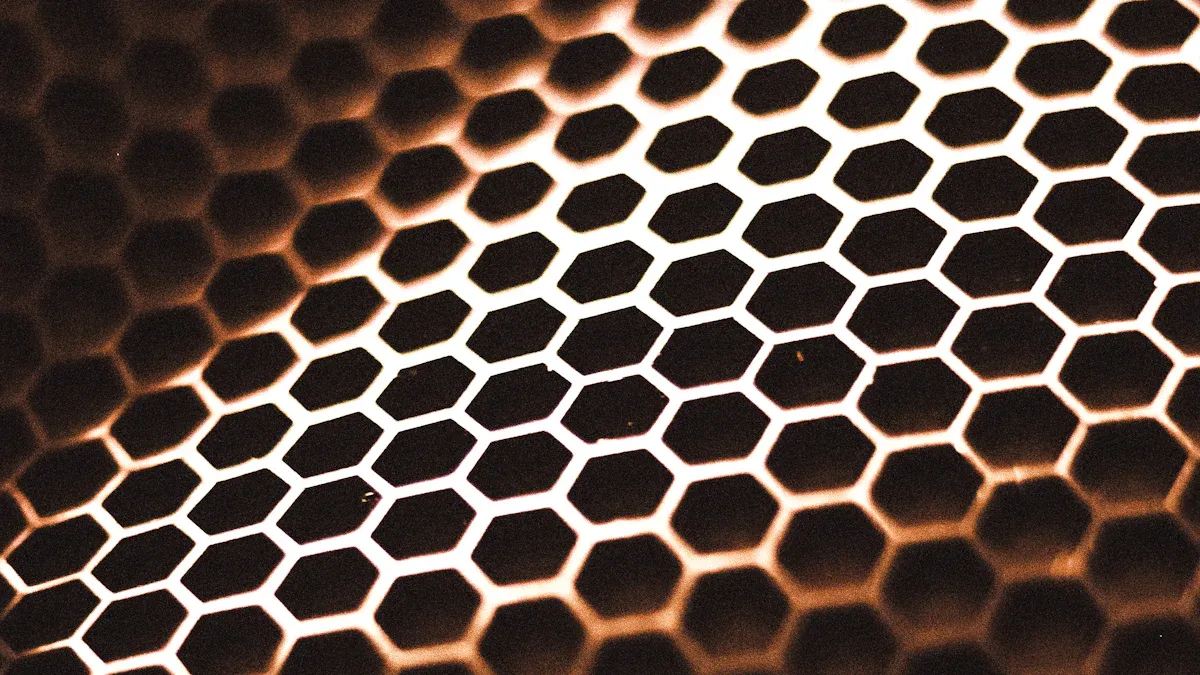
Honeycomb structure benefits
You see the honeycomb structure in activated carbon because it boosts performance in many ways. The design creates channels that let air and water flow smoothly. You get more contact between the carbon and contaminants, which means better cleaning. The honeycomb shape also keeps the carbon strong and prevents dust from escaping. You can pack more carbon into a small space, so you filter more without needing a bigger system.
Here is a table showing how the honeycomb structure improves filtration:
Feature | Benefit |
|---|---|
Enhanced Flow Dynamics | Uniform airflow maximizes contact time with contaminants. |
Lower Pressure Drop | Reduced resistance lowers energy use. |
Higher Packing Density | More filtration capacity in less space. |
Dust-Free Operation | Stops contamination and protects equipment. |
Customizable Pore Structure | Targets specific pollutants for better results. |
High Surface Area | Removes VOCs and hazardous air pollutants efficiently. |
Adequate Pore Volume | Uses the carbon’s adsorptive power fully. |
Compressive Strength | Keeps the filter strong under stress. |
Scientific studies show that honeycomb structures give you strong, durable filters. You can adjust the carbon percentage to match your needs. Researchers found that honeycomb designs maximize surface area, which helps trap gases like CO2 and improves selectivity.
Adsorption mechanism explained
You rely on honeycomb activated carbon because it uses two main ways to trap pollutants:
Physisorption: Molecules stick to the carbon surface through weak forces. This method works well for odors and many gases.
Chemisorption: Pollutants form strong chemical bonds with the carbon. You remove reactive substances like chlorine and ammonia this way.
You see physical adsorption when gases and odors cling to the carbon. Chemical adsorption happens when certain contaminants bond and change form. Both methods help you clean air and water by trapping harmful substances. The honeycomb structure gives you more surface area, so you capture more pollutants with each filter.
Tip: You get the best results when you choose honeycomb activated carbon for places with tough odors, VOCs, or water contaminants.
Key advantages
High adsorption efficiency
You get strong filtration power when you choose honeycomb activated carbon. This material removes up to 97% of volatile organic compounds (VOCs) and other harmful gases. You can trust it to clean air and water by trapping pollutants like formaldehyde, benzene, and toluene. The high surface area, which ranges from 700 to 1,500 m²/g, gives you more space to capture odors and chemical fumes. You see great results in homes, factories, and water treatment plants.
Removes VOCs, odors, and chemical fumes
Works well for formaldehyde, benzene, and toluene
High surface area for better adsorption
Here is a quick look at how honeycomb activated carbon compares to other filtration materials:
Advantage | Description |
|---|---|
Performance | Highly effective at removing a wide range of contaminants, ensuring superior filtration quality. |
Versatility | Adaptable for use in various industries including sports, water purification, and construction. |
Health Benefits | Improves water quality and provides a cleaner experience in products like ash catchers. |
Cost-Effectiveness | Competitive pricing and low minimum order quantities make it attractive for large-scale projects. |
Durability and lifespan
You want a filter that lasts. Honeycomb activated carbon gives you a longer lifespan than pellet activated carbon. You do not need to replace it as often because it holds more pollutants and you can regenerate it easily. This means you save money and reduce waste over time.
Type of Activated Carbon | Lifespan Comparison |
|---|---|
Honeycomb Activated Carbon | Longer lifespan due to larger capacity and easier regeneration |
Pellet Activated Carbon | Shorter lifespan, requires more frequent replacement |
Tip: You can extend the life of your filter by cleaning or regenerating it when needed.
Environmental impact
You help the environment when you use honeycomb activated carbon. It removes pollutants from air and water, which protects your health and the planet. You can use it to trap pesticides and industrial chemicals, keeping aquatic life safe. If you regenerate the carbon, you cut down on waste and lower costs. You should handle used carbon carefully, because it can release pollutants if not disposed of properly. You also reduce the carbon footprint by optimizing transportation and logistics.
Removes harmful substances from air and water
Protects aquatic ecosystems
Regeneration reduces waste and saves resources
Note: Always follow safe disposal and regeneration practices to protect the environment.
Practical examples
HVAC and indoor air quality
You can improve the air in your home or business by using honeycomb activated carbon in HVAC systems. Many buildings use these filters to remove harmful gases and odors. You will find that they trap pollutants like sulfur dioxide, nitrogen oxides, carbon monoxide, benzene, toluene, xylene, ammonia, hydrogen sulfide, formaldehyde, and radon. These filters also help with smells from cooking, pets, and smoke.
Here is a table showing how well these filters work for different contaminants:
Type of Contaminant | Examples | Filter Effectiveness |
|---|---|---|
Volatile Organic Compounds | Paints, cleaning products | Highly effective |
Odors | Cooking, pets, smoke | Very effective |
Chemical Fumes | Industrial, household chemicals | Effective |
Gases | VOCs, formaldehyde, ammonia | Highly effective |
Many companies have seen great results. For example, a Midwest chemical plant used honeycomb activated carbon filters and cut VOC emissions by 40%. A hotel chain in California installed these filters in their HVAC units and saw better air quality and a 15% drop in energy use.
Industrial emission control
You can use honeycomb activated carbon to clean the air in factories and plants. This material removes up to 97% of volatile organic compounds and other harmful gases. It also cuts sulfur dioxide and nitrogen oxides by 90%. Many industries use it because you can regenerate the filters, which saves money.
You can target VOCs, formaldehyde, and benzene.
The filters work well in chemical manufacturing and car exhaust systems.
They have a high surface area, so they trap more pollutants.
These filters stay strong at high temperatures and pressures.
Studies show they remove 85% to 95% of VOCs.
Water purification in aquariums
You can keep aquarium water clean and safe for fish by using honeycomb activated carbon. It removes toxins, odors, and colors from the water. You will notice less algae and healthier fish. Many aquarium owners use these filters to trap harmful chemicals and keep the water clear.
Tip: Replace or clean the filter often to keep your aquarium in top shape.
You can rely on honeycomb activated carbon for many air and water purification needs. It works well in homes, factories, and even cars. You benefit from its large surface area and strong ability to trap harmful gases and odors.
You use it in air purifiers, industrial exhaust systems, and automotive filters.
Its design helps capture VOCs and keeps your environment safer.
Trend/Innovation | Description |
|---|---|
Better at capturing pollutants for cleaner air and water. | |
Focus on Sustainability | Eco-friendly production and use are growing. |
Expansion of Industries | More industries, like food and pharmaceuticals, now use this technology. |
If you want cleaner air or water, consider this solution. For special needs, talk to a purification expert.
FAQ
What is honeycomb activated carbon made from?
You find honeycomb activated carbon made from materials like coconut shells, coal, or wood. Manufacturers process these materials at high temperatures to create a porous structure. This structure gives you a large surface area for trapping pollutants.
How often should you replace honeycomb activated carbon filters?
You should replace your filter every 3 to 6 months. The exact time depends on air or water quality and usage. Check for reduced performance or odors. If you notice these signs, change the filter sooner.
Can you clean and reuse honeycomb activated carbon?
You can sometimes regenerate honeycomb activated carbon by heating or washing it. This process removes trapped pollutants. However, you should follow the manufacturer’s instructions. Not all filters allow safe regeneration.
Is honeycomb activated carbon safe for aquariums?
You can safely use honeycomb activated carbon in aquariums. It removes toxins, odors, and colors from water. Always rinse the carbon before use. Replace it regularly to keep your fish healthy.
What pollutants does honeycomb activated carbon remove?
You use honeycomb activated carbon to remove VOCs, odors, chlorine, ammonia, heavy metals, and organic compounds. It works well for both air and water purification. You get cleaner, safer environments.