
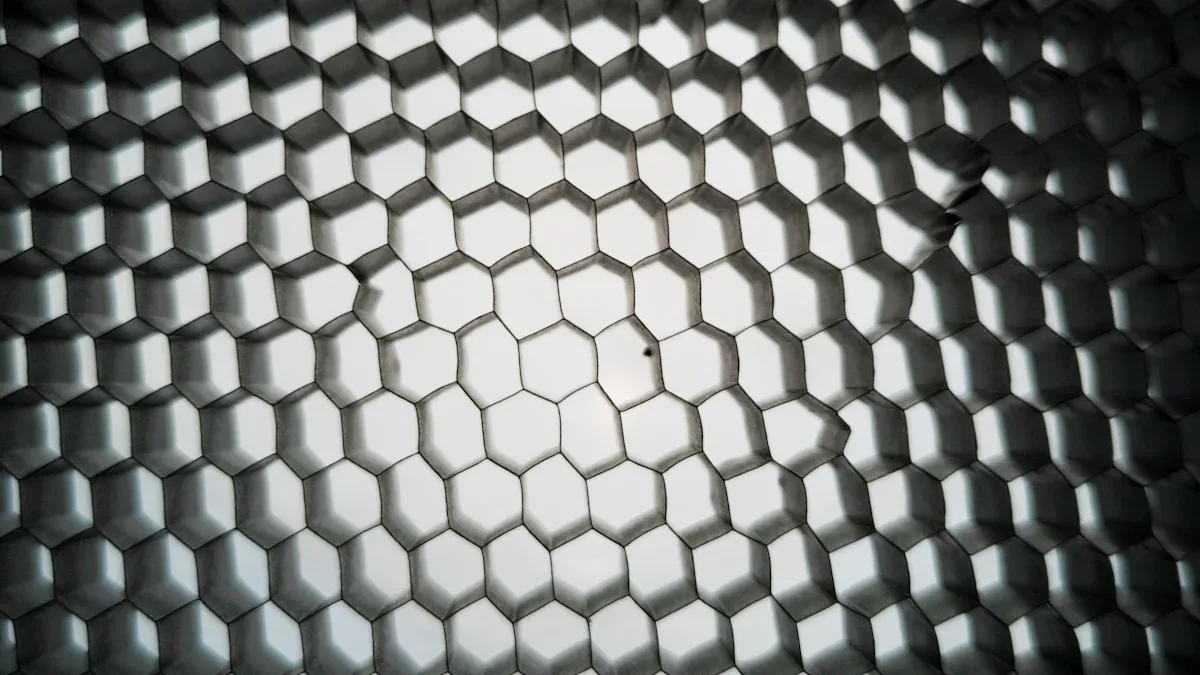
You can trust honeycomb activated carbon to clean your air. This material grabs odors and pollutants using adsorption. It makes your space smell better and feel fresher. The honeycomb shape gives it more surface area. This helps it clean air faster and better. Many studies show it removes lots of harmful things. You can see this in the chart below. By picking this eco-friendly option, you help the planet.
Key Takeaways
Honeycomb activated carbon cleans air well by trapping smells and bad stuff. It does this with a process called adsorption. The honeycomb shape gives it more surface area. This helps air move better and makes cleaning faster. The size of the cells and how thick the walls are change how well it works. Smaller cells catch more bad stuff. Bigger cells let air move better. Honeycomb activated carbon can be made from things like coconut shells. This makes it good for the environment. It can clean many harmful things from the air. It removes gases and volatile organic compounds. Honeycomb activated carbon lasts longer than other types. It also needs less care than granular or pellet activated carbon. Using it in air cleaners makes indoor air better. It also lowers health risks from bad air. Picking the right honeycomb activated carbon means thinking about cell density, where it comes from, and what you need it for.
Honeycomb Activated Carbon Structure
Honeycomb Design
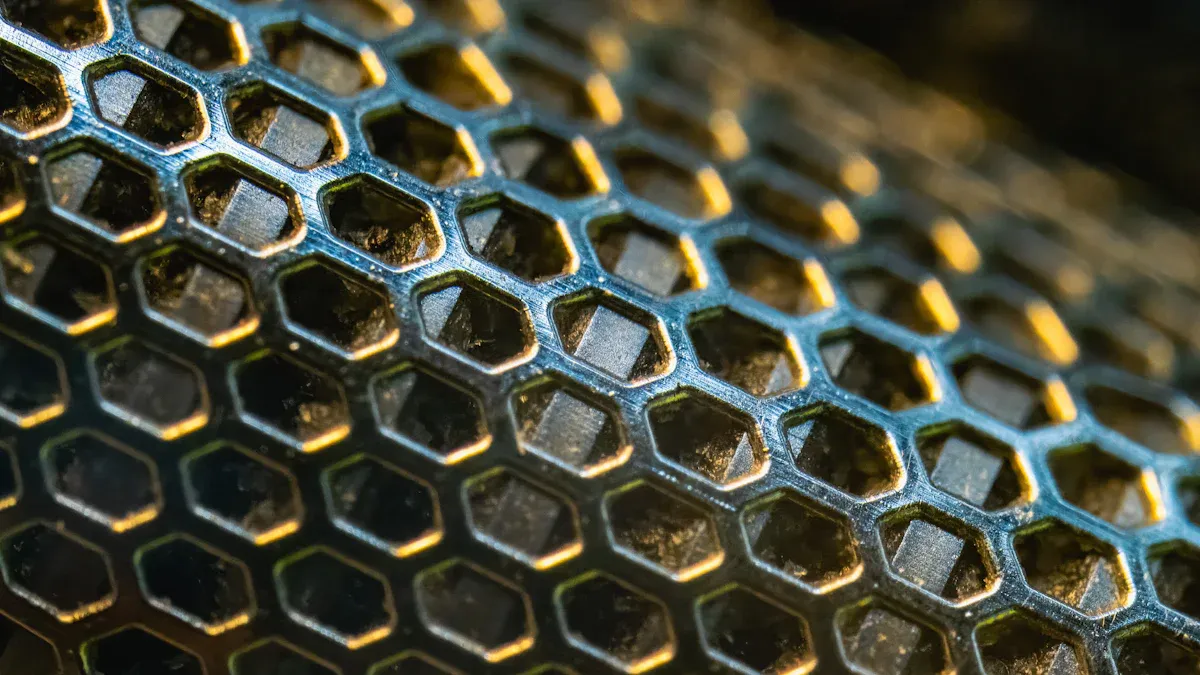
Honeycomb activated carbon is special because of its shape. It has a grid that looks like a honeycomb. This pattern gives lots of open spaces for air to move. Air can flow easily through the honeycomb mesh. This helps the carbon trap more bad stuff from the air.
Cell Size and Shape
Honeycomb activated carbon comes in many cell sizes and shapes. Small cells let the air touch more carbon, but they make it harder for air to move. Big cells let air move easier, but air does not stay as long inside. The walls can be thick or thin. Thick walls help catch more pollutants, but they block some air. How many cells there are changes how well the carbon cleans gas.
Parameter | Description |
|---|---|
Smaller cells increase contact with gas but raise airflow resistance; larger cells reduce pressure drop but may shorten gas residence time. | |
Wall Thickness | Thicker walls increase adsorption potential but may reduce open flow area and increase pressure drop. |
Cell Density | Affects the overall performance and efficiency of the activated carbon in gas treatment. |
Material Sources
Honeycomb activated carbon can be made from different things. People use coal, wood, or coconut shells. Coal can be good for the planet if it is mined carefully, but mining can hurt nature. Wood is best when it comes from forests that are managed well. Coconut shells grow back and are seen as good for the environment.
Material | Environmental Impact |
|---|---|
Coal | Can be renewable if sourced sustainably, but extraction can have significant environmental costs. |
Wood | Renewable when sourced from well-managed forests, low carbon footprint if sustainably harvested. |
Coconut Shells | Renewable resource, often considered environmentally friendly due to sustainable farming practices. |
Surface Area and Airflow
Honeycomb activated carbon has more surface area than other types. This means there are more spots for pollution to stick. The honeycomb shape lets air move without getting blocked. Waterproof activated carbon makes it even easier for air to go through. You get less pressure when gas moves through. This makes honeycomb activated carbon good for cleaning lots of air with little pollution.
Aspect | Honeycomb Structure | Non-Honeycomb Structure |
|---|---|---|
Surface Area | Smaller surface area limits adsorption | |
Gas Flow Dynamics | Improved flow dynamics | Restricted flow dynamics |
Pressure Drop | Negligible pressure drop | Higher pressure drop |
Mass Transfer | Better mass transfer | Limited mass transfer |
You can look at the surface area of each type:
Type of Activated Carbon | Surface Area (sq.m/g) |
|---|---|
Honeycomb Activated Carbon | |
Granular Activated Carbon | 600 – 1,200 |
Pellet Activated Carbon | > 1,000 |
Honeycomb activated carbon has a BET surface area of about 200 to 3,000 square meters per gram.
Granular activated carbon has between 600 and 1,200 square meters per gram.
Pellet activated carbon can have more than 1,000 square meters per gram.
You can see that honeycomb activated carbon is great for cleaning air. The honeycomb shape gives better airflow and more surface area. This means it removes pollution well and saves energy.
Tip: When you pick honeycomb activated carbon, look at the cell size, wall thickness, and what it is made from. These things change how well it works and how good it is for the planet.
How Honeycomb Activated Carbon Works
Adsorption Process
Honeycomb activated carbon traps bad smells and pollutants by adsorption. This means tiny molecules stick to the carbon’s surface. The honeycomb shape gives it a lot of inside area. That helps it catch more unwanted things from the air. The small holes in the carbon pull in fluid molecules. This makes adsorption stronger and helps clean air faster.
Physical Adsorption
Physical adsorption happens when molecules stick to the carbon’s surface but do not change. Weak forces like Van Der Waals or electrostatic attraction hold them there. This is a lot like how water turns into dew. You can undo physical adsorption, so you can use the carbon again after cleaning. The size of the holes matters. Big molecules cannot fit in small holes, so you need the right size for what you want to remove.
Feature | Physical Adsorption | Chemical Adsorption |
|---|---|---|
Nature of Forces | Van der Waals forces or electrostatic attraction | Chemical bonds |
Reversibility | Generally reversible | Generally irreversible |
Impact on Pollutants | Little effect on structure | Significant impact on structure |
Process Type | Analogous to condensation phenomenon | Considered a chemical reaction |
Chemical Adsorption
Chemical adsorption is also called chemisorption. It happens when the carbon and pollutant react together. This makes strong bonds that usually cannot be undone. Chemical adsorption changes the pollutant’s structure. It works well for getting rid of some harmful gases and smells. The carbon can hold a lot when it forms chemical bonds with the bad stuff.
Pollutant and Odor Removal
Honeycomb activated carbon can grab many kinds of pollutants and odors. You can use it to take out acid gases, alkaline gases, indoor gases, and volatile organic compounds. It also removes benzene, carbon tetrachloride, acetone, ethanol, aether, carbinol, acetic acid, ethyl ester, cinnamene, chlorine, phosgene, foul gas, butane, methanol, styrene, malodorous gases, other acids, carbon monoxide, formaldehyde, and alkaline gas. It also helps with hydrogen sulfide, sulfur dioxide, nitrogen oxides, ammonia, amine substances, toluene, xylene, and non-methane total hydrocarbons.
Acid gases
Alkaline gases
Indoor gases
Volatile organic compounds
Benzene
Carbon tetrachloride
Acetone
Ethanol
Aether
Carbinol
Acetic acid
Ethyl ester
Cinnamene
Chlorine
Phosgene
Foul gas
Butane
Methanol
Styrene
Malodorous gases
Other acids
Carbon monoxide
Formaldehyde
Alkaline gas
Hydrogen sulfide
Sulfur dioxide
Nitrogen oxides
Ammonia
Amine substances
Toluene
Xylene
Non-methane total hydrocarbons
You can see how well it works with different pollutants and conditions:
Pollutant | Temperature (ºC) | Contact Time (s) | |
|---|---|---|---|
o-dichlorobenzene | 30 | 0.9 | 100 |
o-dichlorobenzene | 30 | 0.4 | 60 |
o-dichlorobenzene | 150 | N/A | Decreased |
Organic Compounds | Increased | N/A | Increased |
Water Vapor | Increased | N/A | Decreased |
o-xylene | 27 | N/A | 550 μmol/g |
You get the best results when the temperature is low and the air touches the carbon long enough. Honeycomb activated carbon is great for cleaning air as gas phase adsorption activated carbon. You can trust it to remove many harmful things from the air. The honeycomb shape helps it work better and makes your air cleaner.
Tip: Pick honeycomb activated carbon if you want to remove lots of odors and pollutants. It works well for both physical and chemical adsorption, so you get clean air in many places.
Comparing Activated Carbon Types
Honeycomb vs. Pellet
When you look at honeycomb activated carbon and pellet activated carbon, you can see they are different. Honeycomb activated carbon is best for places where lots of air needs to move. Its special shape lets air pass through easily. This means it can clean big amounts of air without slowing down. Pellet activated carbon has more surface area, so it grabs pollution quickly. But it fills up faster and does not last as long. You have to change pellet carbon more often because it gets full sooner.
Here is a table that shows how they compare:
Performance Metric | Honeycomb Activated Carbon | Pellet Activated Carbon |
|---|---|---|
Adsorption Capacity | Better for high-flow systems | Higher surface area for quick adsorption |
Lifespan | Longer, due to larger capacity | Shorter, requires frequent replacement |
If you want a filter that lasts longer and works with lots of air, honeycomb activated carbon is a good pick. Pellet carbon works fast but needs to be replaced more often.
Honeycomb vs. Granular
You might wonder how honeycomb activated carbon is different from granular activated carbon. Honeycomb modules are easy to put in, take out, and keep clean. You can make honeycomb activated carbon last longer by using heat or steam to clean it. This makes it work 30–50% longer than granular activated carbon. Granular activated carbon needs to be refilled a lot and takes more work to handle. This means you spend more time and effort on it.
You can clean honeycomb activated carbon with heat or steam, so it lasts 30–50% longer than granular activated carbon.
Honeycomb modules are simple to install, remove, and take care of, so your system runs better.
Granular activated carbon needs to be refilled often and takes more work, which means more maintenance for you.
If you want a filter that needs less work and lasts longer, honeycomb activated carbon is a better choice.
Unique Benefits
Honeycomb activated carbon has special benefits that make it great for cleaning air. It can take out up to 95% of formaldehyde from indoor air in just one day. The honeycomb shape gives it a big surface area, so it can catch more pollution. Air moves smoothly through it, which helps your system work well.
Honeycomb activated carbon can remove up to 95% of formaldehyde from indoor air in one day.
The honeycomb shape gives it a large surface area, so it traps more pollution.
It can reach up to 97% adsorption for VOCs and other bad gases.
New ways of making honeycomb activated carbon make it strong and steady, even when it gets hot.
Tip: Pick honeycomb activated carbon if you want a filter that works fast, lasts a long time, and is easy to take care of. Its design helps you get cleaner air with less work.
Applications of Honeycomb Activated Carbon
Air Purification Systems
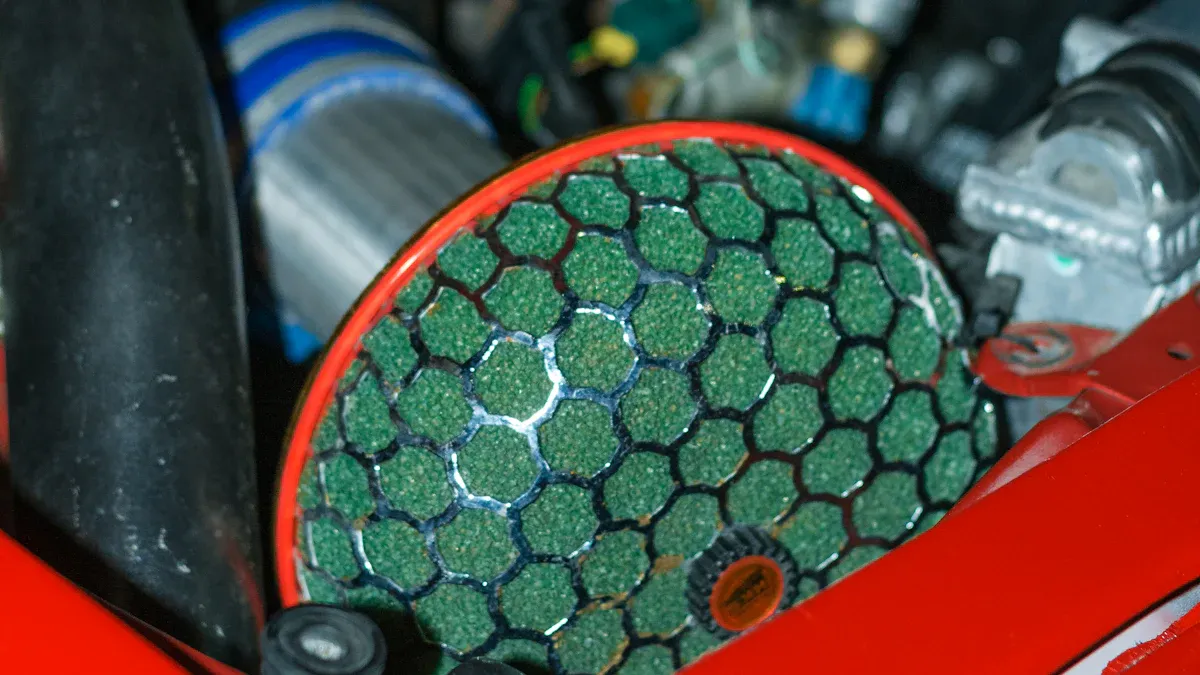
Honeycomb activated carbon is used in many air cleaning systems. The honeycomb shape gives it a big surface area. This helps the filter catch more pollution and smells. You get cleaner air at home, work, or in factories. The filter is good for indoor air because it removes harmful gases like formaldehyde and benzene. You can find it in HVAC units, air purifiers, and vents. These systems use honeycomb activated carbon to make air better and safer.
Tip: If you want cleaner air, pick a system with honeycomb activated carbon. It helps remove bad smells and dangerous chemicals from the air.
Industrial Uses
Factories and big buildings use honeycomb activated carbon to clean waste gas and control pollution. It is used in projects that treat large amounts of organic waste gas. The honeycomb shape lets air move easily, so it works well. Here are some common ways it is used:
Cleans large amounts of factory waste gas, like triphenyl and toxic gases, and helps with indoor air.
Catches and recovers organic solvents such as benzene, toluene, xylene, acetone, and oil and gas.
Removes harmful gases, including formaldehyde and benzene, for indoor and industrial gas cleaning (CO2, N2).
Used in the petrochemical industry for cleaning natural gas, removing sulfur, taking away bad smells, and treating wastewater.
Cleans and removes smells in biochemical, paint, leather factories, and animal farms.
Catches flue gas smells, sulfides, mercury vapor, and helps lower dioxin levels.
It works well for removing flue gas smells and organic waste gas. Honeycomb activated carbon helps factories meet rules and keeps workers safe.
Home and Commercial Settings
You can use honeycomb activated carbon in homes, schools, and stores. It is good for cleaning indoor air because it removes VOCs and smells. The honeycomb design lets you clean lots of air without slowing things down. You get better air and fewer health problems. Many studies show honeycomb activated carbon is strong for making indoor air better. You can find it in air purifiers, kitchen hoods, and office vents. It helps keep your spaces fresh and safe.
Setting | Main Use | Target Pollutants |
|---|---|---|
Home | Indoor air purification | VOCs, odors, formaldehyde |
School | Air purification | Organic waste gas, odors |
Store | Odor removal | VOCs, flue gas odors |
Office | Air purification | Benzene, xylene, indoor gases |
Note: Honeycomb activated carbon gives you strong cleaning in many places. You can trust it to keep your indoor air clean and healthy.
Environmental Protection
When you pick honeycomb activated carbon, you help the environment. This material cuts down on pollution and keeps nature safe. You can use it in many places to clean air and water. Factories, farms, and cities all get help from it. It traps harmful chemicals very well.
Honeycomb activated carbon is used in many green projects. You see it in systems that clean waste gas and water. It takes out dangerous things like heavy metals, pesticides, and fumes from factories. This stops bad stuff from getting into rivers, lakes, and the air.
Here are some ways to use honeycomb activated carbon for the environment:
Clean factory waste gas before it goes outside.
Take out toxic chemicals from water at treatment plants.
Trap smells and harmful gases at landfills and compost sites.
Lower pollution from power plants and refineries.
Keep water and air safe for animals by removing toxins.
Note: Honeycomb activated carbon is a green technology. You help the planet when you use it to lower pollution.
You can compare honeycomb activated carbon to other ways of cleaning:
Method | Target Pollutants | Efficiency (%) | Eco-Friendly |
|---|---|---|---|
Honeycomb Activated Carbon | VOCs, heavy metals, odors | 90-97 | Yes |
Chemical Scrubbing | Acid gases, ammonia | 80-90 | No |
Biological Treatment | Organic waste | 60-80 | Yes |
Honeycomb activated carbon works well and is good for the earth. The honeycomb shape lets air and water move easily. This saves energy and makes less waste.
Many groups say honeycomb activated carbon is a good choice. You can trust it to help keep air and water clean. It also helps cut greenhouse gases and keeps people healthy.
If you want to help, use honeycomb activated carbon in cleaning projects. You make the planet cleaner and keep people safe.
Tip: Ask your school or local government to use honeycomb activated carbon in their cleaning systems. This helps everyone have cleaner air and safer water.
Choosing Honeycomb Activated Carbon
Size and Cell Density
When you pick honeycomb activated carbon, look at size and cell density. The number of cells per square inch (CPSI) changes how the filter works. If there are more cells, the channels are smaller. This means air touches more carbon, so it cleans better. Small cells catch more pollution, but they can slow down the air. Big channels let air move fast, but they might not trap as much. The honeycomb shape lets you change these things. You can pick what works best for you. If you want strong cleaning, pick small cells. If you want fast air, pick big channels. CPSI also makes the filter stronger. Filters with more cells last longer. Think about what you need for your space. Air cleaning and water cleaning need different cell sizes and densities.
Tip: Always check the cell size and density before you buy. This helps you get the best filter for your system.
Here are some things to think about:
What you will use it for: air or water cleaning
What it is made from: coal, coconut shell, or wood
Cell size and how many channels it has
How well it adsorbs: iodine value, CTC value, surface area
How strong it is and how much water it holds
If it meets quality rules
Matching to Application
You should pick honeycomb activated carbon that fits your use. Different jobs need different features. For example, home air filters need to catch smells and VOCs. Factory filters may need to clean toxic gases. Impregnated activated carbon is good for special gases. It uses chemicals to work better and last longer. Custom shapes and sizes help it fit your system. You can ask for special CPSI to get the right airflow and surface area. Private-label recipes make the filter work just for you. If you balance airflow and cleaning, you get the best results. Low resistance lets air move fast, but it might not clean as much. You need to find the right mix so your filter works well and lasts longer.
Impregnated activated carbon is for special gases.
Custom CPSI helps airflow and surface area.
Custom shapes fit your system.
Private-label recipes make it work better.
Note: Picking the right filter for your job saves energy and works better.
Quality Considerations
You want your honeycomb activated carbon to be high quality. Good filters follow strict safety and performance rules. Look for certifications that show it is safe and works well. These rules protect your health and the planet.
Quality Standard/Certification | Description |
|---|---|
ISO Standards | Makes sure quality and care for the environment. |
REACH | Controls safe chemical use and emissions. |
EPA Guidelines | Checks for safety and environmental rules. |
Check for ISO, REACH, and EPA certifications. These show the filter is safe and follows world rules. You should also check how strong it is, how much water it holds, and how well it adsorbs. High-quality honeycomb activated carbon works better and lasts longer.
Tip: Always pick certified honeycomb activated carbon. This keeps your air clean and helps the planet.
Usage and Maintenance Tips
Installation Guidelines
You can put in honeycomb activated carbon filters by following easy steps. First, pick the right material for your needs. Coconut shell, coal-based, or wood-based carbon work best in different places. Next, choose the right CPSI and wall thickness. A CPSI from 100 to 150 gives good airflow and cleaning. Make sure air goes straight through the filter. Check the pressure drop by looking at filter size and how fast air moves.
Pick the right filter module size and design for your space. Sealing is important. Use good sealing so air does not leak around the filter. This helps the filter work well. Think about where you will use the filter. Gas levels and humidity can change how long the filter lasts. Plan for easy access so you can clean or change the filter when needed.
Installation Steps:
Pick the right activated carbon material for your job.
Choose CPSI and wall thickness for good airflow.
Check which way air flows and the pressure drop.
Pick the right filter module size and design.
Seal the filter well to stop air leaks.
Think about the environment and how long the filter will last.
Plan for cleaning or changing the filter.
Tip: If you install the filter right, it will work better and last longer.
Replacement and Care
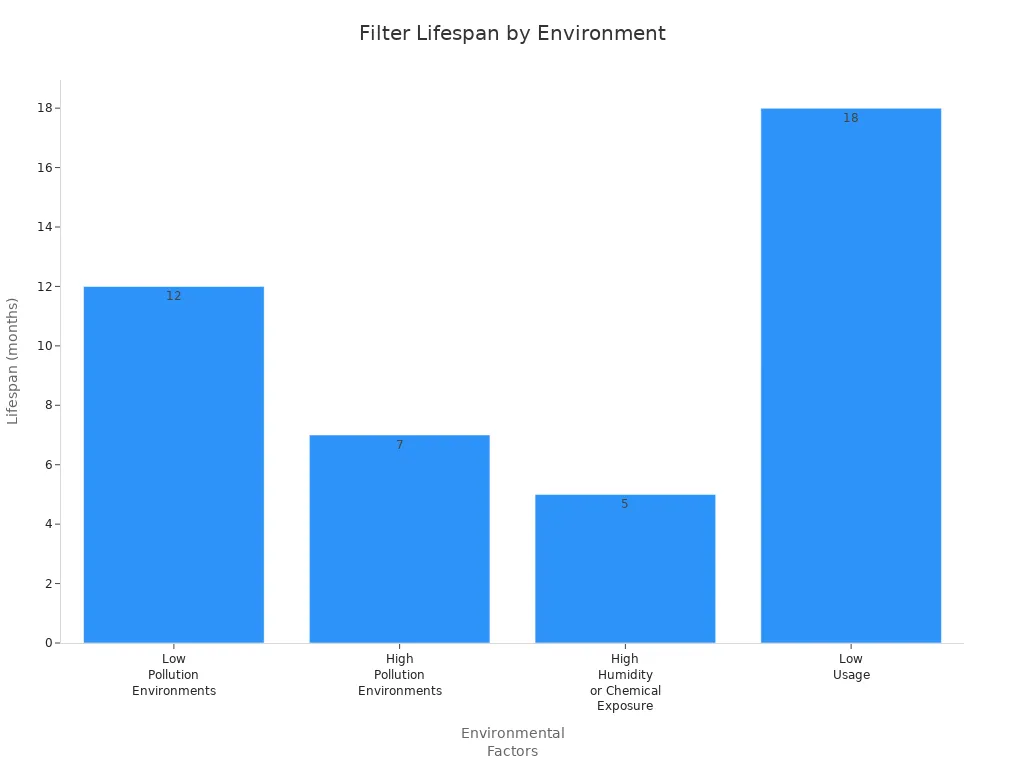
You should change honeycomb activated carbon filters based on where you use them. Filters last up to 12 months in clean places. In dirty or wet places, they do not last as long. Look at the table below to see when to change your filter.
Environmental Factors | Lifespan Estimate | Maintenance Frequency |
|---|---|---|
Low Pollution Environments | 12 months | Every 12 months |
High Pollution Environments | 6-8 months | Every 6-8 months |
High Humidity or Chemical Exposure | 4-6 months | Every 4-6 months |
Low Usage | 18 months | Every 18 months |
You can make filters last longer with regular care. Clean the filter every 1 to 3 months. Turn off the system, take out the filter, vacuum it, wash with mild soap, rinse, and let it dry. Check for cracks, warping, or color changes. If air does not move well or smells bad, clean or change the filter.
Care Steps:
Clean the filter every 1 to 3 months.
Check for damage each time you clean.
Fix problems like bad smells or low airflow.
Note: Cleaning and checking your filter often helps it work well.
Safety Tips
You need to handle used honeycomb activated carbon safely. If the filter cleaned toxic stuff, throw it away in special hazardous waste bags. If not, you can toss it in the trash or use it again for odor removal. Clean tools with mild soap and distilled water. Do not use strong cleaners. Wipe surfaces with a damp cloth and let the room air out for 30 minutes.
Throw away toxic filters in hazardous waste bags.
Clean tools with mild soap and distilled water.
Wipe and air out workspaces to decontaminate.
Safety first! Always follow the right steps to keep yourself and others safe.
You can count on honeycomb activated carbon to clean your air and help the environment. This material is made from things like coconut shells and farm waste. These are renewable resources, so they are better for nature. You will find honeycomb activated carbon in air purifiers, factories, and car exhaust systems. When you pick honeycomb activated carbon, look for a big surface area. Make sure it does not get damaged by water and can be used again. If you choose this kind, you make your air better and cut down on pollution in your space.