
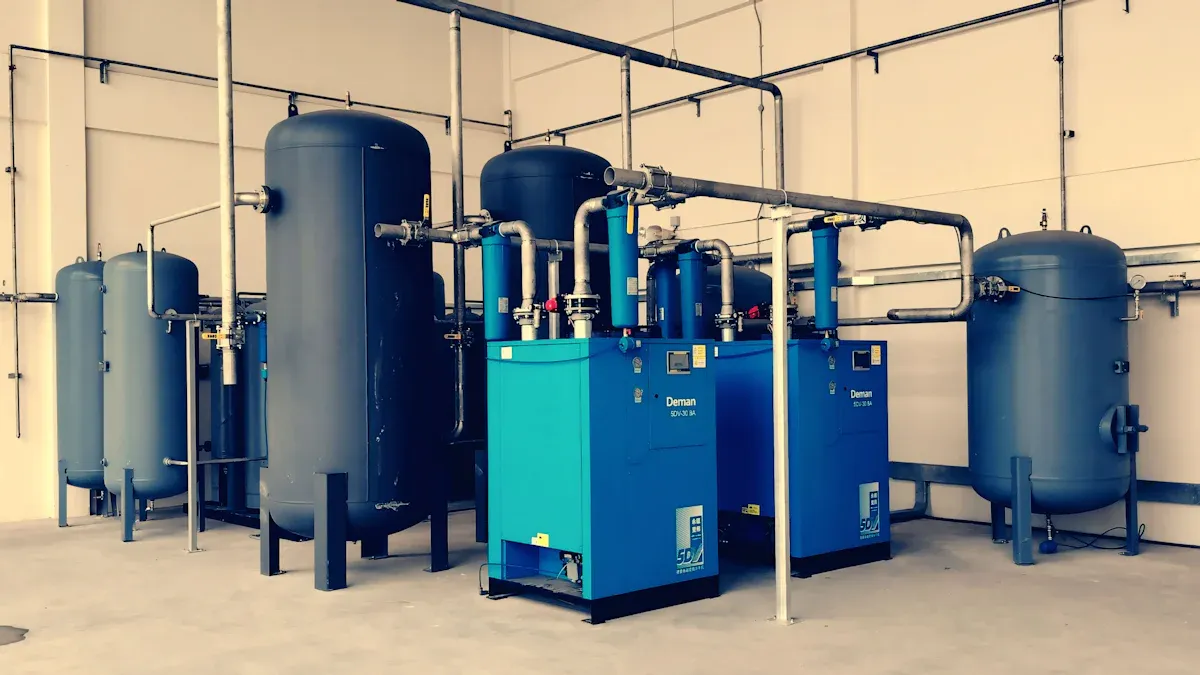
You see fast results when you use Desulfurization Activated Carbon in industry. This material works as both an adsorbent and a catalyst. It removes sulfur compounds from the air. Power plants and petroleum refineries rely on it to keep emissions low. You can count on it to clean air quickly and efficiently.
Key Takeaways
Desulfurization Activated Carbon quickly removes harmful sulfur compounds from the air, making it essential for industries like power plants and refineries.
The carbon’s unique structure, with tiny pores and surface groups, enhances its ability to trap sulfur gases, leading to cleaner air in less time.
Using modified activated carbon can improve sulfur removal efficiency, helping industries meet strict air quality standards while saving costs.
This technology not only cleans the air but also supports sustainability by allowing for the recycling of spent carbon and the recovery of valuable by-products.
Regular monitoring and proper handling of activated carbon systems ensure optimal performance and compliance with environmental regulations.
Mechanism of Desulfurization Activated Carbon
Adsorptive Sulfur Removal
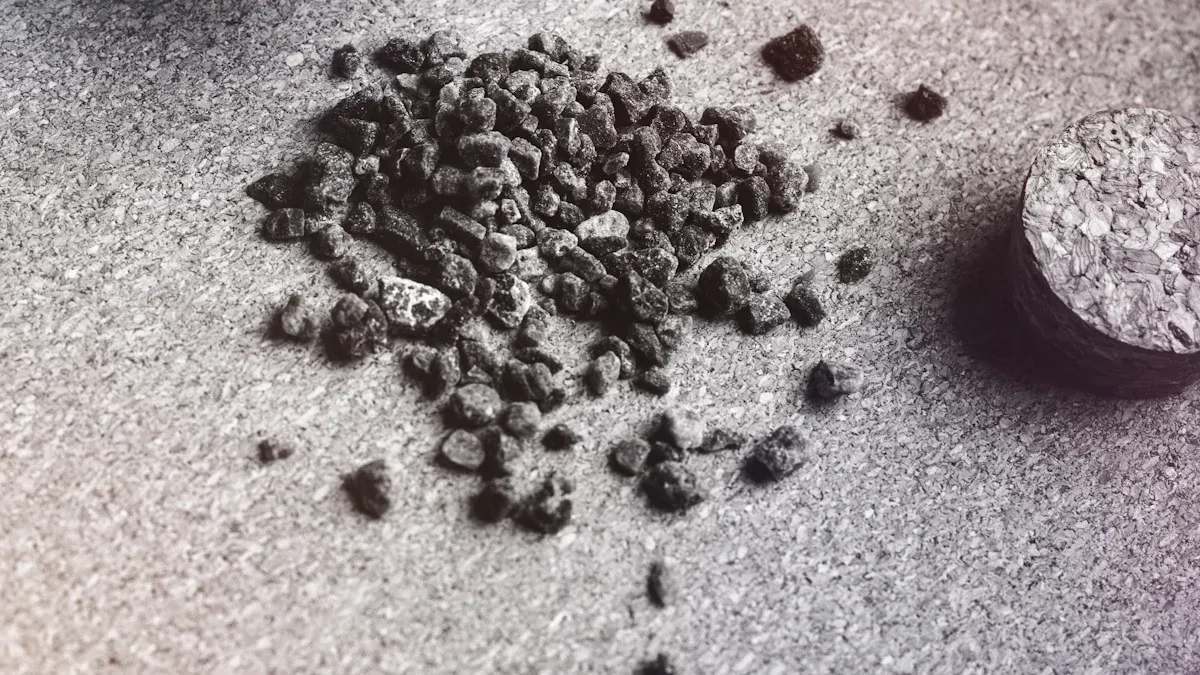
You can rely on Desulfurization Activated Carbon to trap sulfur compounds from the air. This process works because the carbon has many tiny pores and special surface groups. These features help the carbon grab and hold onto sulfur molecules like hydrogen sulfide (H₂S) and sulfur dioxide (SO₂). The surface of the carbon often contains acidic groups. These groups make it easier for the carbon to react with and hold sulfur compounds, especially mercaptans.
Water in the air helps the carbon work even better. It helps break down sulfur compounds so they stick more tightly to the carbon.
You can see how different activation methods affect adsorption capacity in the table below:
Source | Adsorption Capacity (mg/g) | Activation Conditions | Notes |
|---|---|---|---|
Calderon et al. | 1 M KOH, 700 °C | Made from wastewater treatment sludge | |
Guo et al. | N/A | Various activation agents | Chemical activation improves performance |
Javier et al. | N/A | CO₂ at 800 °C, H₂O at 700 °C | More surface area and micropores |
When you use metal-impregnated carbon, you create new active sites. These sites help the carbon bind sulfur compounds even more strongly. However, this can make it harder to reuse the carbon by heating it up.
Catalytic Oxidation Process
Desulfurization Activated Carbon does more than just trap sulfur. It also acts as a catalyst. This means it helps speed up chemical reactions that turn harmful sulfur gases into safer compounds. When you pass air containing SO₂ over activated carbon, the carbon helps change SO₂ into SO₃. Then, SO₃ can react with water to form sulfuric acid (H₂SO₄).
You can see some key facts about this process in the table below:
Key Findings | Details |
|---|---|
Catalyst Used | Activated carbon, platinum-impregnated carbon |
SO₂ Removal Efficiency | 95% SO₂ removal achieved |
Optimal Temperature | 80°C improves SO₂ scrubbing |
Process Design | Stopping liquid flow sometimes helps make stronger acid and lowers pressure drop |
The conversion rate of SO₂ to SO₃ in these systems can reach 60% by volume.
You get fast and efficient removal of sulfur gases when you use this method.
Modified Activated Carbon
You can boost the power of Desulfurization Activated Carbon by changing its structure or adding chemicals. These changes help the carbon trap more sulfur and work faster.
Urea impregnation at high temperatures makes the pores bigger and increases the number of mesopores. This lets the carbon hold more sulfur.
The way the pores are shaped and the chemicals on the surface both matter a lot. You can target these features to get better results.
Activated carbon with more mesopores also works better for removing dioxins, which helps with overall air cleaning.
You can use different chemicals to modify the carbon. Here are some common agents:
Type | Examples |
|---|---|
Acidic | Phosphoric acid, Nitric acid, Sulfuric acid, Hydrochloric acid |
Basic | NaOH, KOH |
Neutral | K₂CO₃, ZnCl₂, CaCl₂ |
Other ways to modify the carbon include:
Sulfuration
Nitrogenation
Adding special ligands to the surface
When you use these methods, you make the carbon more effective at removing sulfur from the air. This means cleaner air in less time.
Industrial Uses
Flue Gas Treatment
You can use Desulfurization Activated Carbon to clean flue gas in many industries. This process helps you remove sulfur oxides (SOx) from exhaust gases. You also get the benefit of removing other harmful substances like dioxins and heavy metals at the same time.
Here is how the process works:
You pass the flue gas through an adsorption tower filled with activated carbon.
The carbon traps sulfur compounds and other pollutants.
You can regenerate the activated carbon in a desorption tower, which lets you use it again.
The concentrated sulfur dioxide (SO₂) gas collected can be turned into sulfuric acid or elemental sulfur.
Tip: Using this method helps you recycle both the activated carbon and the sulfur byproducts, making your process more sustainable.
Petroleum Refining
You face tough challenges when you try to remove sulfur from fuels in petroleum refining. Desulfurization Activated Carbon helps you solve these problems, especially for aromatic sulfides that are hard to remove with traditional methods.
Check out the table below to see how it works:
Mechanism/Characteristic | Description |
|---|---|
Adsorption Mechanism | You can use activated carbon to target aromatic sulfides that resist other removal methods. |
Performance Enhancement | You improve adsorption by modifying the carbon’s surface or adding special atoms. |
Cost-Effectiveness | Adsorption desulfurization gives you a low-cost way to cut sulfur in fuels. |
You get better results when you modify the carbon with oxidants or metal salts. For example, cerium-loaded activated carbon can hold up to 49.75 mg of sulfur per gram. Unmodified carbon does not work as well, so always look for improved versions.
Natural Gas & Biogas
You need to remove toxic and corrosive gases like hydrogen sulfide (H₂S) from natural gas and biogas. Desulfurization Activated Carbon plays a key role in this process. It helps you meet strict quality standards for gas use.
When you use filtration units with activated carbon, you can extract harmful substances such as H₂S from biogas. This step is important if you want to upgrade biogas to biomethane. You also lower siloxane levels to very small amounts, which protects engines and equipment.
Desulfurization is vital for making biogas safe and useful. You can trust activated carbon to keep your gas clean and ready for use.
Efficiency & Speed
Rapid Air Cleaning
You want fast results when you clean air in your facility. Desulfurization Activated Carbon helps you achieve this goal. It removes sulfur compounds quickly from industrial air streams. You can see how effective it is by looking at the breakthrough time and capacity:
Breakthrough Capacity (mg/g) | Breakthrough Time (min) |
|---|---|
46.33 |
This means you can lower sulfur levels in less than an hour. The classic adsorption process gives you selective removal of sulfur compounds. You get better control over the process and save money compared to less selective methods. You can also use modified activated carbon, like Fe-Chitosan types, to clean air at different temperatures. This flexibility helps you keep your system running smoothly.
Factors Affecting Performance
You need to know what affects the performance of your air cleaning system. Several factors play a big role:
Temperature
Concentration of sulfur compounds
Surface area of the carbon
Fuel or adsorbent ratio
Time
Doping with special materials like CeOx or silver
Humidity also matters. You get better SO₂ removal when the air is humid. The best results happen at about 30°C with some moisture in the air. If the temperature goes up to 60°C or 90°C, the carbon does not work as well. You should always check these factors to get the best performance.
Case Studies
You can find many real-world examples that show how well Desulfurization Activated Carbon works. Many companies use adsorptive desulfurization because it is cost-effective and efficient. The high surface area and micropores in activated carbon help capture sulfur oxides. More industries now use this method to reach ultra-low sulfur levels.
One customer switched to a new carbon media called Campure 32. They saw zero H₂S at the filter outlet for 34 months. Their old media only lasted 12 months. Even though Campure 32 cost more, the customer saved time and money in the long run. This shows that you can trust activated carbon for fast and lasting air cleaning.
Advantages of Desulfurization Activated Carbon
Environmental Benefits
You help the environment when you choose Desulfurization Activated Carbon. This method removes sulfur compounds from air without creating large amounts of wastewater. Wet scrubbing, a common alternative, uses water and chemicals. It often produces dirty water that needs extra treatment. You avoid this problem with activated carbon. You also reduce the release of harmful gases like sulfur dioxide. Cleaner air means better health for people and animals. You can recycle the carbon or use the by-products, which supports a circular economy.
Economic Impact
You save money when you use this technology. Other methods, like hydrodesulfurization, need high pressure and temperature. These systems cost more to run and maintain. Activated carbon works at lower temperatures and does not need complex equipment. You can use many types of raw materials to make the carbon, which lowers costs. Here are some facts about the economic benefits:
You can reduce 1 ton of fuel oil with high sulfur content to a very low level for only $0.99.
By-products from the process have a high heating value, so you can use them for energy.
Large-scale production is possible, which helps you meet environmental rules and save money.
The desulfurizer made from PUPW gives you higher economic benefits than other methods.
You get more value from your investment and help your business stay competitive.
Maintenance & Safety
You find it easier to operate and maintain systems that use activated carbon. Wet scrubbing units need regular cleaning and careful handling of chemicals. Hydrodesulfurization units require skilled workers and strict safety checks. With activated carbon, you handle fewer chemicals and face less risk. You can replace or regenerate the carbon with simple steps. This makes your work safer and reduces downtime. You also avoid problems with corrosion and scaling, which often happen in wet systems.
Tip: Always follow best practices for handling spent carbon to keep your workplace safe and meet regulations.
Practical Concerns
Handling Spent Carbon
You must handle spent desulfurization activated carbon with care. Over time, the carbon fills up with sulfur compounds and loses its cleaning power. You can restore its effectiveness by using pre-treatment methods. Heat treatment removes unwanted materials and increases the surface area. Acid treatment reduces ash content and improves the ratio of fixed carbon to ash. When you combine heat and acid treatments, you get even better results. This process makes the spent carbon more efficient for reuse in air cleaning systems. You help your facility save money and reduce waste by regenerating spent carbon instead of throwing it away.
Tip: Always store spent carbon in sealed containers to prevent leaks and protect the environment.
Regulatory Compliance
You need to follow strict rules when you use desulfurization activated carbon. Environmental agencies check if your facility meets air quality standards. They use several methods to monitor compliance:
Many power plants use activated carbon injection (ACI) to lower mercury and sulfur dioxide emissions.
Most facilities with continuous emissions monitoring use advanced controls, including ACI, to reduce hazardous air pollutants.
Agencies review your emissions data to make sure you meet legal limits.
You should keep good records and report your results on time. This helps you avoid fines and shows your commitment to clean air.
Best Practices
You can maximize the efficiency and lifespan of your desulfurization system by following best practices. The design of your reactor plays a big role in how well the process works. Alumina coatings on catalysts help prevent deactivation from sulfur. Mathematical modeling tools, such as gPROMS, let you find the best operating conditions for your system.
Best Practice | Description |
|---|---|
Good design improves catalyst performance and mass transfer. | |
Alumina Coatings | These coatings keep catalysts working longer by blocking sulfur poisoning. |
Mathematical Modeling | Modeling helps you balance performance with cost. |
You also need to train your staff and monitor your system regularly. Training with advanced algorithms, like Levenberg–Marquardt, leads to better performance. Regular checks help you spot problems early and keep your air cleaning system running smoothly.
You can count on desulfurization activated carbon to clean industrial air quickly and effectively.
It removes over 99% of harmful sulfur compounds.
You see fast results, with most pollutants gone in minutes.
Its adsorption capacity is higher than many other materials.
Description | |
|---|---|
Adsorption | Grabs sulfur pollutants from air and liquids. |
Catalytic Oxidation | Changes sulfur into safer substances. |
Surface Modification | Makes removal of specific pollutants even better. |
You help your industry meet strict air quality standards and support a cleaner future. As more regions focus on clean air, you will see this technology grow and bring lasting benefits.
FAQ
What is desulfurization activated carbon?
You use desulfurization activated carbon to remove sulfur compounds from air or gas. This material has many tiny pores. These pores trap harmful gases like hydrogen sulfide and sulfur dioxide. You can find it in power plants and refineries.
How do you know when to replace the carbon?
You should check the breakthrough time. When sulfur compounds start to appear in the cleaned air, you need to replace or regenerate the carbon. Most systems have sensors or test kits for this purpose.
Can you recycle spent activated carbon?
Yes, you can recycle spent carbon. You use heat or chemicals to remove trapped sulfur. This process restores the carbon’s cleaning power. Recycling helps you save money and reduce waste.
Is desulfurization activated carbon safe to use?
You find this material safe when you handle it properly. Always wear gloves and masks during replacement. Store spent carbon in sealed containers. Follow safety guidelines to protect yourself and the environment.