

You can change your farm with Agriculture Activated Carbon. This simple material helps you improve your soil and make your crops healthier. You use it to clean irrigation water, control pests, and remove harmful chemicals from your land. These actions lead to better harvests and less work for you. You also protect the environment and save money over time.
Key Takeaways
Agriculture Activated Carbon improves soil health by enhancing nutrient retention and water absorption, leading to healthier crops.
Using activated carbon can reduce the need for synthetic fertilizers and pesticides, promoting a safer farming environment.
Farmers can apply activated carbon in various ways, such as mixing it into soil or using it in irrigation systems for better water quality.
Start with small amounts of activated carbon to monitor its effects on soil moisture and plant growth before scaling up.
Incorporating sustainable practices with activated carbon can lead to long-term cost savings and environmental benefits.
What Is Agriculture Activated Carbon?
Definition and Features
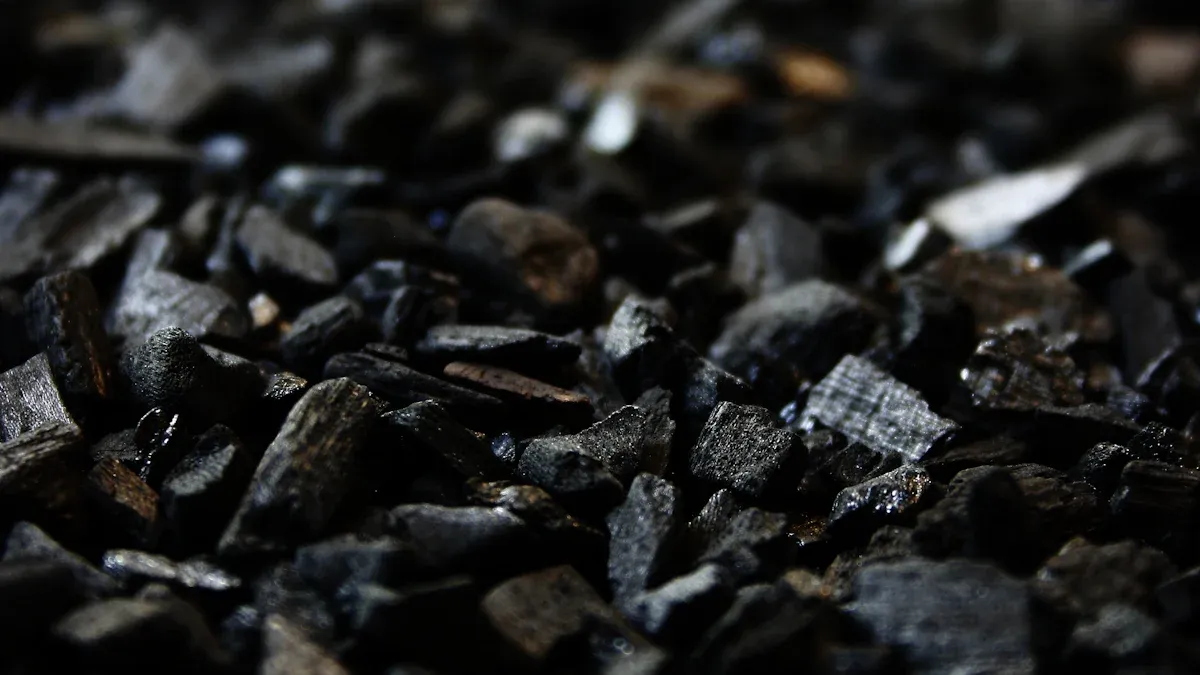
You use Agriculture Activated Carbon to improve your farm’s soil and water. This material comes from natural sources like wood, coconut shells, or agricultural waste. Producers heat these materials at high temperatures to create a carbon with tiny pores. These pores give the carbon a high surface area, which helps it trap and hold contaminants.
Here is a table showing the main features of Agriculture Activated Carbon:
Property | Description |
|---|---|
Surface Area | High surface area (600–1200 m²/g) lets it absorb more contaminants. |
Bulk Density | Makes it easy to handle and spread on your farm. |
Attrition | Low attrition keeps the carbon strong during use. |
pH | Neutral pH works well in many soil and water conditions. |
Ash Content | Low ash content means fewer impurities and better performance. |
Conductivity | Low conductivity is best for water treatment applications. |
You can see that these features make Agriculture Activated Carbon a powerful tool for farming. The high surface area and neutral pH help it work in many environments.
How It Works in Farming
Agriculture Activated Carbon helps your farm in several ways. Its porous structure acts like a sponge. You can use it to:
Hold water in the soil, which keeps your crops hydrated.
Trap nutrients so plants can use them longer.
Support healthy soil microbes that help plants grow.
When you add Agriculture Activated Carbon to your soil or water, you boost its ability to remove harmful chemicals. The carbon’s pores grab contaminants like pesticides and heavy metals. You also improve soil quality and water purity. Producers use different activation methods to make the carbon more effective. Chemical activation creates more pores and increases the surface area, which improves its ability to clean water and soil.
You can make Agriculture Activated Carbon from farm waste using pyrolysis. This process heats the material without oxygen, creating more pores and a higher surface area. When you optimize the temperature and activation agents, you get better results in removing pollutants and improving soil health.
Tip: You can start with small amounts of Agriculture Activated Carbon to see how it works on your farm. Watch for improvements in soil moisture, plant growth, and water clarity.
Uses of Agriculture Activated Carbon
Soil Fertility and Remediation
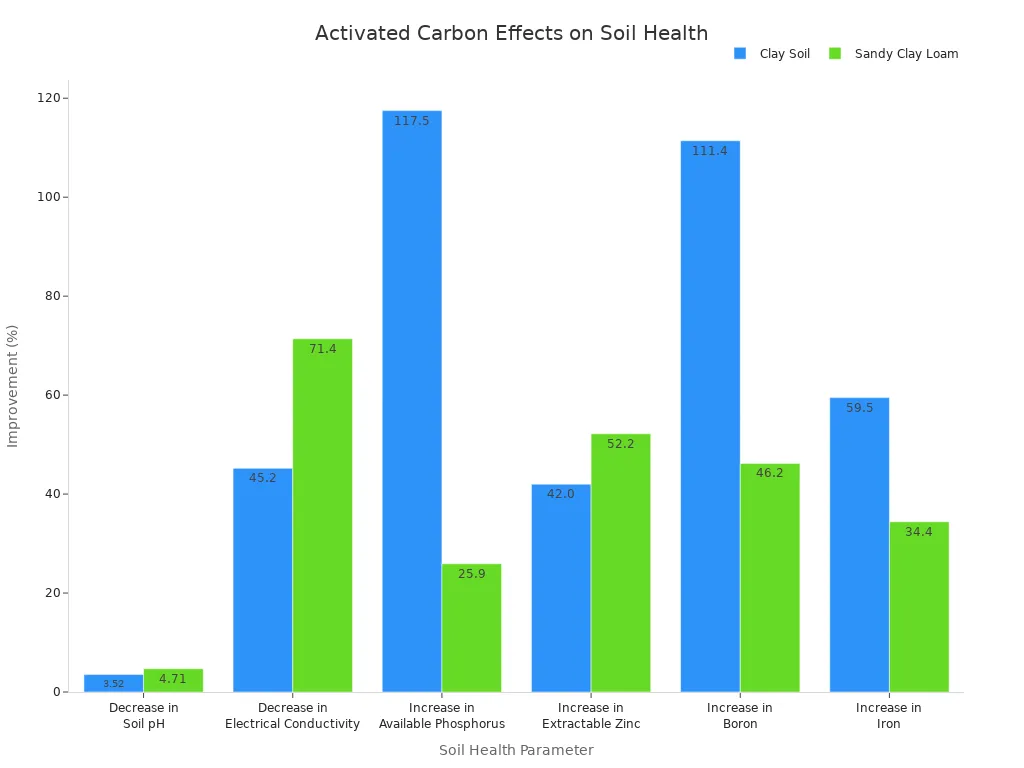
You can boost your soil’s health by adding Agriculture Activated Carbon. This material improves both clay and sandy soils. It helps balance soil pH and reduces salt buildup. You also get more nutrients like phosphorus, zinc, boron, and iron in your soil. These changes make your plants stronger and your harvests bigger.
Here is a table that shows how Agriculture Activated Carbon improves soil quality:
Parameter | Clay Soil Improvement (%) | Sandy Clay Loam Improvement (%) |
|---|---|---|
Decrease in Soil pH | 3.52 | 4.71 |
Decrease in Electrical Conductivity (EC) | 45.2 | 71.4 |
Increase in Available Phosphorus (P) | 117.5 | 25.9 |
Increase in Extractable Zinc (Zn) | 42.0 | 52.2 |
Increase in Boron (B) | 111.4 | 46.2 |
Increase in Iron (Fe) | 59.5 | 34.4 |
You can see these improvements in the chart below:
When you use Agriculture Activated Carbon, you also help soil organisms. Studies show that it changes how microbes and plants interact. You may notice better plant growth and healthier soil life. Some research suggests that it can slow down how soil organisms communicate, but it often leads to a stronger soil community.
Tip: Try mixing activated carbon into your seedbeds. You may see more seedlings and stronger plants.
Water Filtration in Irrigation
You can use Agriculture Activated Carbon to clean your irrigation water. This material removes harmful metals like copper, lead, cadmium, zinc, and chromium. It works well with different types of farm waste, such as rice husk, sugarcane bagasse, and coconut sawdust. The table below shows how different sources of activated carbon remove heavy metals:
Source of Activated Carbon | Heavy Metals Removed | Observations |
|---|---|---|
Modified Rice Husk | Copper, Lead | High adsorption capacity, effective at pH 2-3 |
Sugarcane Bagasse | Cadmium, Zinc | Removal increases with pH, 100% uptake at pH > 8.0 |
Coconut Tree Sawdust | Chromium | Maximum removal at acidic pH, adsorption capacity of 3.46 mg/g at pH 3.0 |
You can also reduce pesticides in your water. Farms in Italy used constructed wetlands with activated carbon to lower levels of chemicals like imidacloprid, dimethomorph, and glyphosate. Biological filters with activated carbon can help you keep your irrigation water safe for crops and the environment.
Pest and Disease Management
You can protect your crops from pests and diseases with Agriculture Activated Carbon. When you add it to your soil or use it as a seed coating, you help your plants grow stronger. Research shows that activated carbon seed technology increases seedling emergence and plant biomass. It also shields young plants from herbicides, which can harm growth.
You get more seedlings sprouting.
Your plants grow bigger and healthier.
You protect crops from harmful chemicals.
You support a healthy soil community. Activated carbon changes the mix of microbes in the soil. This can help your plants resist disease and pests naturally.
Odor and Contaminant Removal
You can keep your farm cleaner by using Agriculture Activated Carbon to remove odors and contaminants. This material traps gases like hydrogen sulfide and ammonia, which cause bad smells. Studies show that even a small amount of activated carbon can make a big difference. For example, adding just 30 mg of carbon per kilogram of soil increased plant length by 11% and dry weight by 42%.
You also reduce harmful chemicals in the air and soil. This means a safer place for you, your workers, and your animals.
Note: Cleaner air and soil lead to healthier crops and a better working environment.
Benefits for Farmers
Higher Yields and Quality
You want your crops to grow strong and healthy. Many farmers report that using Agriculture Activated Carbon helps them reach this goal. You can see several benefits when you add it to your fields:
You improve crop yields and boost long-term productivity.
You enhance soil health and fertility.
You increase water retention, which helps your crops survive dry periods.
You reduce pollution on your land.
You support your community by practicing sustainable farming.
Field trials show that adding biochar, a form of activated carbon, does not always change the quality or yield of every crop. Sometimes, you may see only small changes in soil properties. These changes might not lead to big differences in your harvest. Still, many farmers notice better soil and healthier plants over time.
Tip: Track your results each season. You may see improvements in plant growth and soil quality even if your harvest size stays the same.
Reduced Chemical Use
You can cut down on synthetic fertilizers and pesticides when you use activated carbon. This helps you protect your soil and water. Here are some benefits you might notice:
Better water and nutrient retention
Lower greenhouse gas emissions
You make your farm safer for people and animals. You also save money by buying fewer chemicals.
Sustainability and Cost Savings
You help the planet when you use sustainable farming methods with activated carbon. The table below shows how different techniques support sustainability:
Technique | Contribution to Sustainability |
|---|---|
No-till farming | Minimizes soil disturbance and erosion, preventing carbon loss. |
Crop rotation | Improves soil health and increases carbon capture capacity. |
Planting cover crops | Protects soil and enhances nutrient cycling during off-seasons. |
Agroforestry | Integrates trees to improve soil structure and retain carbon. |
You can combine these methods with activated carbon to build a stronger, more resilient farm. You save money over time and create a better future for your family and your land.
How to Use Activated Carbon on the Farm
Application Methods
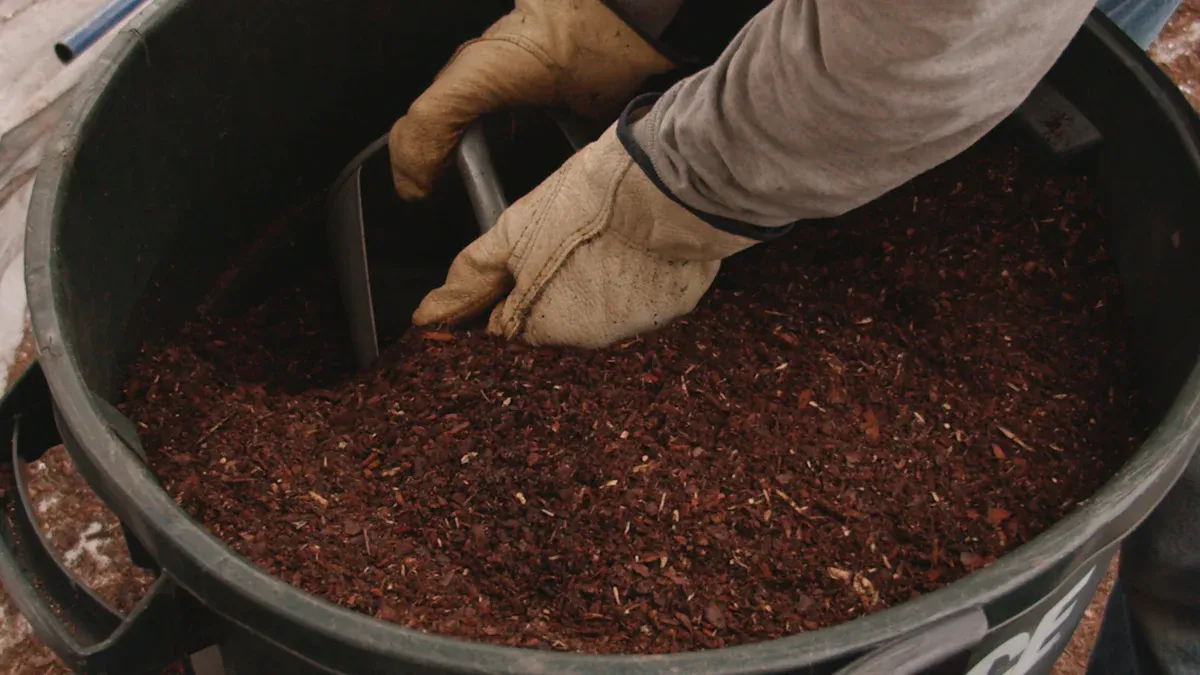
You can apply Agriculture Activated Carbon in several ways. You may mix it directly into the soil, add it to compost, or use it as a filter for irrigation water. Farmers often spread it across fields before planting or blend it into seedbeds. You can also use it in greenhouse pots or hydroponic systems. Each method helps you target soil improvement, water purification, or pest control.
Dosage and Best Practices
You need to adjust the amount of activated carbon based on your soil type, crop, and local conditions. Too little may not give you the results you want, while too much can affect soil balance. You should follow these best practices to maximize benefits:
Best Practice | Description |
|---|---|
Optimal application rates | Change rates for different soils, crops, and environments. |
Standardization of production | Use certified products for consistent results. |
Education and demonstration | Join pilot projects and learn from other farmers. |
Monitoring soil health | Check soil and plant health after application using satellite tools. |
Tip: Start with a small area and monitor plant growth and soil moisture. Adjust your dosage as you see results.
Safety Guidelines
You must handle activated carbon carefully to protect your crops and the environment. Follow these safety steps:
Mix activated charcoal into the top few inches of soil for best contact with pesticides.
Apply a higher amount if you need to remove strong contaminants.
Observe seed growth in treated areas to check if pesticides are inactive.
Note: If you use activated carbon incorrectly, you may harm your soil or plants.
“The application of biochar in agriculture might pose a potential hazard to ecosystems, as toxic organic pollutants present in biochar may enter the environment. Phytotoxicity, caused by organic compounds contained in biochar, is one of the most frequent adverse effects observed. Additionally, ecotoxicity due to heavy metals and the negative impact of biochar particle size on soil biota have been reported.”
You can avoid these risks by using certified products and following recommended rates. Always monitor your soil and crops after application.
You can make your farm more productive and sustainable with agriculture activated carbon. Many farmers, like those at Riverhill and Tom Cannon in Oklahoma, see better soil health and higher yields after using regenerative practices. Start small—talk to other farmers, organize your records, and try activated carbon on a test plot. Use simple monitoring tools, such as real-time sensors, to track improvements. As more companies support carbon farming, you join a growing movement for cleaner water, healthier soil, and better harvests.
FAQ
What crops benefit most from activated carbon?
You can use activated carbon with almost any crop. It works well for vegetables, grains, and fruit trees. Many farmers see the best results with crops that need healthy soil and clean water.
How often should I apply activated carbon?
You usually apply activated carbon once per growing season. Some soils may need more frequent applications. Always check your soil’s condition before adding more.
Is activated carbon safe for organic farming?
Yes, you can use certified activated carbon in organic farming. Make sure you choose products approved for organic use. Always read the label and follow guidelines.
Can activated carbon remove all pesticides from soil?
Activated carbon removes many pesticides, but not all. Its effectiveness depends on the type of pesticide and soil conditions.
Tip: Test your soil after application to check for remaining chemicals.