
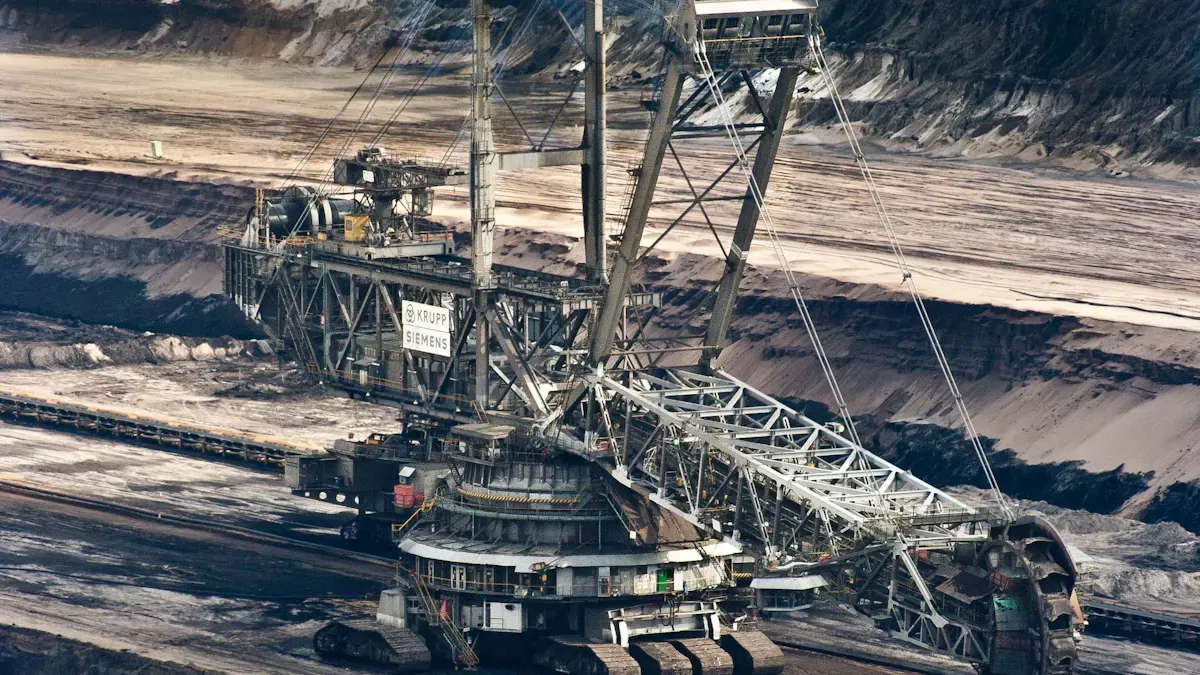
Activated Carbon plays a vital role in metal mining. You see its impact in gold recovery processes like CIC, CIL, and CIP. Over half of global gold production uses these methods. The structure of activated carbon gives it high selectivity and strong adsorption. You benefit from its ability to capture gold even at low concentrations. Activated carbon also removes impurities and protects water sources. You support efficient mining and help meet strict environmental standards.
Property | Description |
|---|---|
High selectivity | Ideal for gold recovery even at low concentrations, enhancing efficiency. |
Adsorption of impurities | Removes organic and inorganic impurities, ensuring cleaner electrolytes. |
Reduces scaling and fouling | Improves efficiency in electrowinning and precipitation stages. |
Key Takeaways
Activated carbon significantly boosts gold recovery rates, especially in low-concentration solutions, enhancing mining efficiency.
Using activated carbon helps remove impurities from mining solutions, leading to cleaner electrolytes and higher purity metals.
Activated carbon is reusable, which reduces costs and waste in mining operations, making it a sustainable choice.
Proper handling and regeneration of activated carbon are essential for maintaining its effectiveness and prolonging its lifespan.
Activated carbon supports environmental protection by reducing water pollution and helping mining operations meet strict regulations.
Activated Carbon Properties
Definition And Structure
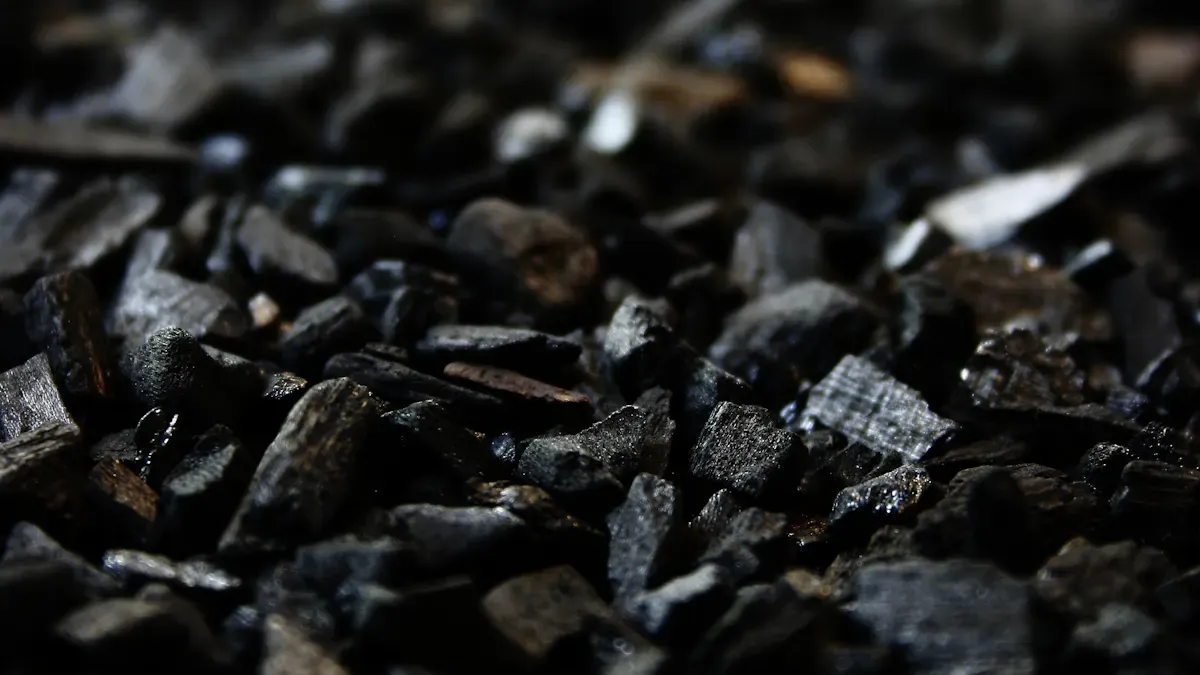
You can recognize activated carbon by its unique structure. It looks like a fine black powder or small granules, but its real power comes from what you cannot see. Each piece contains millions of tiny pores. These pores create a huge internal surface area. In fact, one gram of activated carbon can have more than 1,000 square meters of surface inside. This high porosity lets it trap and hold many different substances, including gold and other metals. The activation process, which uses heat or chemicals, opens up these pores and makes the carbon even more effective for mining.
Did you know?
The tiny pores in activated carbon are less than 2 nanometers wide. This allows them to capture even the smallest metal ions from mining solutions.
Key Features For Mining
When you use activated carbon in mining, you benefit from several important features:
Micropore Structure: The highly developed microporous network gives activated carbon its strong adsorption ability.
High Adsorption Capacity: You can recover up to 25% more gold compared to regular carbon grades.
Low Ash Content: With less than 5% ash, you get purer gold and fewer impurities.
Rapid Adsorption Kinetics: Fast gold capture means shorter processing times and higher efficiency.
Chemical Resistance: Activated carbon stays strong even in harsh chemical environments.
Regeneration Capability: You can reuse it many times, which saves money and reduces waste.
Characteristic | Value |
|---|---|
Micropore diameter | Less than 2 nanometers |
Internal surface area | Exceeds 1,000 square meters/gram |
Gold adsorption capacity | Up to 25% more than conventional grades |
You can see why mining operations choose activated carbon. Its physical and chemical properties make it ideal for extracting precious metals and keeping processes efficient.
Applications In Metal Mining
Gold Recovery Processes (CIC, CIL, CIP)
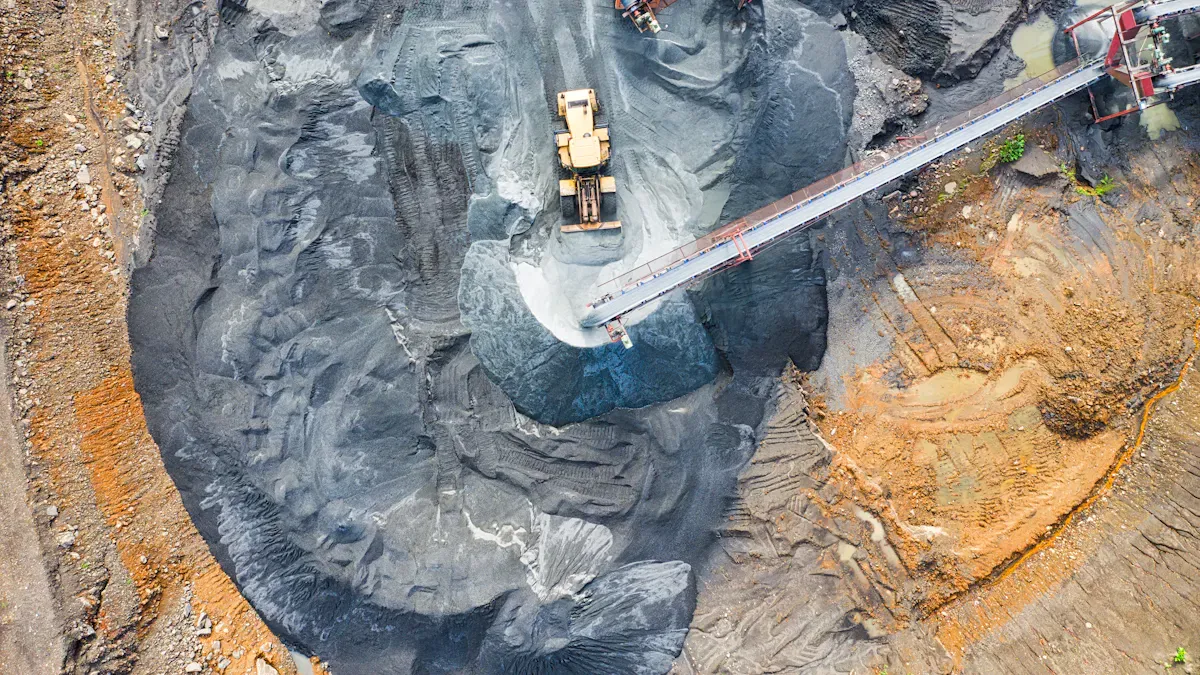
You see activated carbon used most often in gold mining. It works in processes like Carbon-in-Column (CIC), Carbon-in-Leach (CIL), and Carbon-in-Pulp (CIP). These methods help you recover gold from ore by capturing gold-cyanide complexes. You get high-purity gold because activated carbon holds gold tightly and releases it only during the final step. In well-managed circuits, you can achieve gold recovery rates over 99%. The high adsorption capacity and rapid kinetics of activated carbon make these results possible.
Tip:
You can boost gold recovery even in low-cyanide or alternative leaching systems. Activated carbon shows a much higher gold loading capacity in glycine-based solutions compared to traditional cyanide systems.
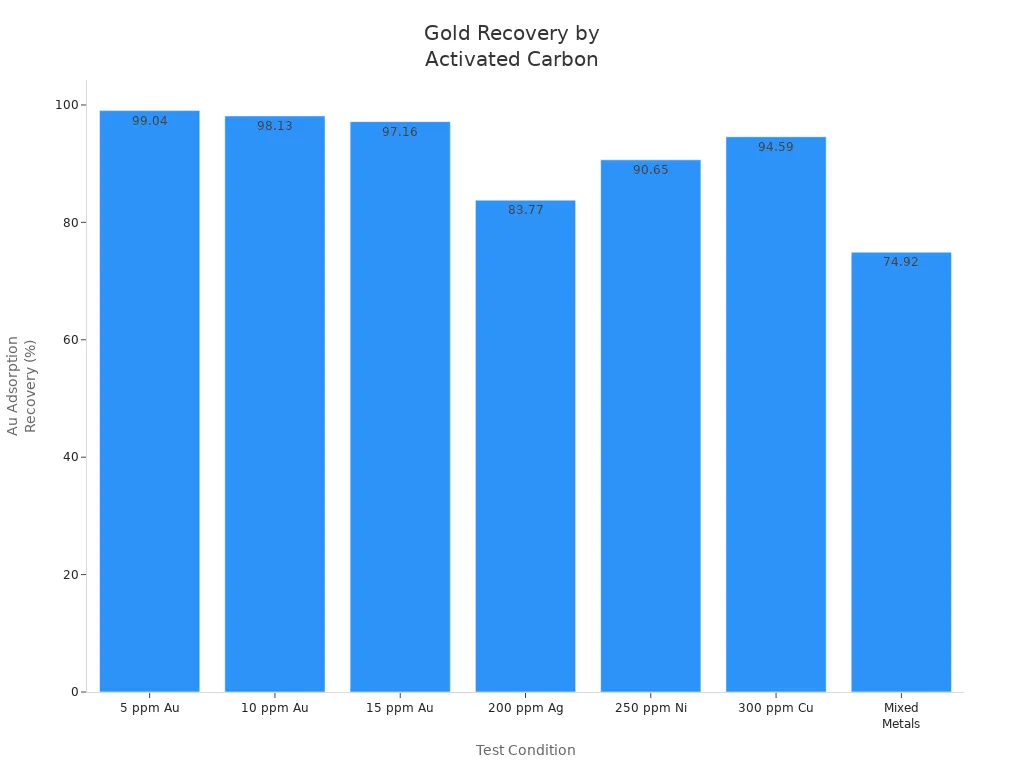
Gold Concentration (ppm) | Au Adsorption Recovery (%) |
|---|---|
5 | 99.04 |
10 | 98.13 |
15 | 97.16 |
200 ppm Ag | 83.77 |
250 ppm Ni | 90.65 |
300 ppm Cu | 94.59 |
Mixed Metals | 74.92 |
You can see that activated carbon works well even when other metals are present. This makes it a reliable choice for gold recovery.
System Type | Gold Loading Capacity (kg Au/ton carbon) |
|---|---|
Cyanide System | 2.7 |
Cyanide-Starved Glycine System | 9.95 |
Other Metal Extraction
You can use activated carbon for more than just gold. It helps you extract metals like silver and copper from mining solutions. You also see it used in water purification, where it removes both organic and inorganic contaminants. Granulated activated carbon treated with silver or copper oxide nanoparticles can even inactivate viruses in water. This means you get cleaner water and better metal recovery at the same time.
You can remove heavy metal ions from process water, which helps you meet environmental standards.
You improve the efficiency of electrowinning by purifying mineral solutions.
You support sustainable mining by reducing harmful substances in wastewater.
Electronic Waste Recycling
You can recover precious metals from electronic waste using activated carbon. In e-waste recycling, you use processes similar to gold mining. Activated carbon captures trace amounts of gold, silver, and palladium from complex mixtures. This helps you recycle valuable resources and reduce electronic waste.
Application | Description |
|---|---|
Carbon-in-Pulp (CIP) | Activated carbon extracts precious metals from pulp by adsorbing gold cyanide complexes. |
Carbon-in-Leach (CIL) | Activated carbon is added directly to the leaching process for simultaneous extraction. |
E-waste Recovery | Activated carbon recovers trace precious metals like gold, silver, and palladium from e-waste. |
Note:
You help protect the environment and recover valuable metals when you use activated carbon in electronic waste recycling.
Application | Impact on Extraction Efficiency |
|---|---|
Gold Recovery (CIP & CIL Processes) | Enhances recovery rates by capturing gold-cyanide complexes, allowing for high-purity gold recovery. |
Purification of Mineral Solutions | Improves efficiency in electrowinning and reduces impurities, leading to higher yields of precious metals. |
Removal of Heavy Metal Ions | Helps meet environmental standards and protects ecosystems, indirectly supporting sustainable mining practices. |
Environmental Remediation | Adsorbs harmful substances, ensuring compliance with regulations and promoting site rehabilitation. |
Adsorption of Organic Compounds | Prevents contamination and maintains process efficiency, reducing downtime and improving overall operational stability. |
You can see that activated carbon supports many steps in metal mining. You get higher recovery rates, cleaner water, and better environmental outcomes.
Benefits Of Activated Carbon
Efficiency And Selectivity
You gain higher efficiency and selectivity when you use activated carbon in metal mining. The material captures gold-cyanide complexes quickly and holds them tightly. You see rapid adsorption kinetics, which means you recover metals faster. Activated carbon also shows high selectivity for gold compared to other metals. You can easily elute gold, and the large particle size helps with handling.
Benefit | Description |
|---|---|
High Adsorption Capacity | Captures gold-cyanide complexes effectively, boosting recovery rates. |
Selectivity for Metal Complexes | Adsorbs specific metal complexes, ensuring higher purity of extracted metals. |
Rapid Adsorption Kinetics | Speeds up the extraction process, improving overall efficiency. |
Chemical Resistance | Maintains performance in harsh chemical environments. |
Reduced Contaminants | Removes impurities, leading to cleaner electrolytes and higher purity. |
Cost Efficiency | Lowers refining costs and increases metal recovery rates. |
Activated carbon shows high selectivity towards gold relative to base metals.
You find ease of elution and large particle size helpful in processing.
Gold adsorption capacity reaches 3783.8 mg/g, while silver reaches 2076.6 mg/g.
Environmental Protection
You help protect the environment when you use activated carbon. Waste-based activated carbon offers a promising option for water treatment. You reduce environmental impacts compared to traditional methods. Producing activated carbon from waste materials saves energy and resources. Life cycle assessments show that waste-based activated carbon minimizes the depletion of non-renewable resources.
Evidence Type | Description |
|---|---|
Heavy Metal Removal | Removes toxic heavy metal ions from wastewater, helping you meet environmental discharge standards. |
Aquatic Ecosystem Protection | Ensures cleaner discharge, protecting aquatic ecosystems and groundwater sources. |
Environmental Remediation | Adsorbs harmful substances, supporting compliance with EPA and EU directives. |
You support cleaner water and safer mining sites.
You help meet strict environmental regulations.
Cost Advantages
You save money when you use activated carbon in mining. Pre-treatment with activated carbon reduces refining costs. You increase metal recovery rates, which means you get more value from each batch. Waste-based activated carbon lowers production costs and reduces the need for fossil resources.
💡 Tip:
You can reuse activated carbon many times, which cuts down on waste and operating expenses.
You see that activated carbon delivers efficiency, environmental protection, and cost savings. You improve your mining operation and support sustainable practices.
Selection And Best Practices
Types For Mining (Granular, Powdered, Specialty)
You can choose from several types of activated carbon for mining. Granular activated carbon (GAC) works best for gold recovery. It has a strong structure and high adsorption rates. Powdered activated carbon (PAC) is less effective for heavy metals but can help in water treatment. Specialty carbons, like coconut shell-based or wood-based, offer unique benefits for certain metals.
Type of Activated Carbon | Advantages | Limitations |
|---|---|---|
Coconut Shell-Based | High gold adsorption, strong, low attrition | Higher cost, supply depends on agriculture |
Coal-Based (Bituminous) | Cost-effective, robust, good for large operations | Lower microporosity, more ash |
Wood-Based | Good for mass transfer, eco-friendly | Lower hardness, less effective in high agitation |
Pitch-Based | Very high surface area, controlled pore size | Expensive, not common in mining |
Fruit Pit & Nut Shell-Based | Renewable, good microporosity, waste-to-resource use | Inconsistent quality, lower strength |
Granular carbon removes over 80% of cadmium and lead. Powdered carbon removes less. You get better results with GAC for most mining needs.
Choosing The Right Carbon
You should match the carbon type to your mining process. Look at hardness, particle size, iodine number, and ash content. Hardness above 97% means the carbon will last longer. Particle sizes like 6×12 or 6×16 mesh fit most systems. A high iodine number (over 1000 mg/g) shows strong adsorption. Low ash content keeps your metals pure.
Criteria | Description |
|---|---|
Hardness | Should be greater than 97% for durability. |
Particle Size | Typically 6×12 or 6×16 mesh for optimal use. |
Iodine Number | High values (>1000 mg/g) are essential for efficiency. |
Ash Content | Low levels are preferred to minimize impurities. |
Tip:
Test a small batch before full use. This helps you confirm the best choice for your ore and process.
You should also define your goals. Think about the metals you want to recover, the flow rate, and the pH of your solution. Choose the right form and pore size for your equipment. Plan for enough contact time and check the pressure in your system.
Handling And Regeneration
You need to handle activated carbon with care. Store it in a dry, clean place. Monitor for signs of wear, fouling, or loss of capacity. Use proper thermal regeneration to restore adsorption. This keeps your carbon working longer and saves money.
Best Practice | Description |
|---|---|
Regular Monitoring | Check for attrition, fouling, and capacity loss. |
Proper Handling | Store and move carbon carefully to prevent damage. |
Adherence to Regeneration Protocols | Follow correct steps for consistent recovery and efficiency. |
Selection of Carbon Type | Use high-hardness, mining-grade carbon for best results. |
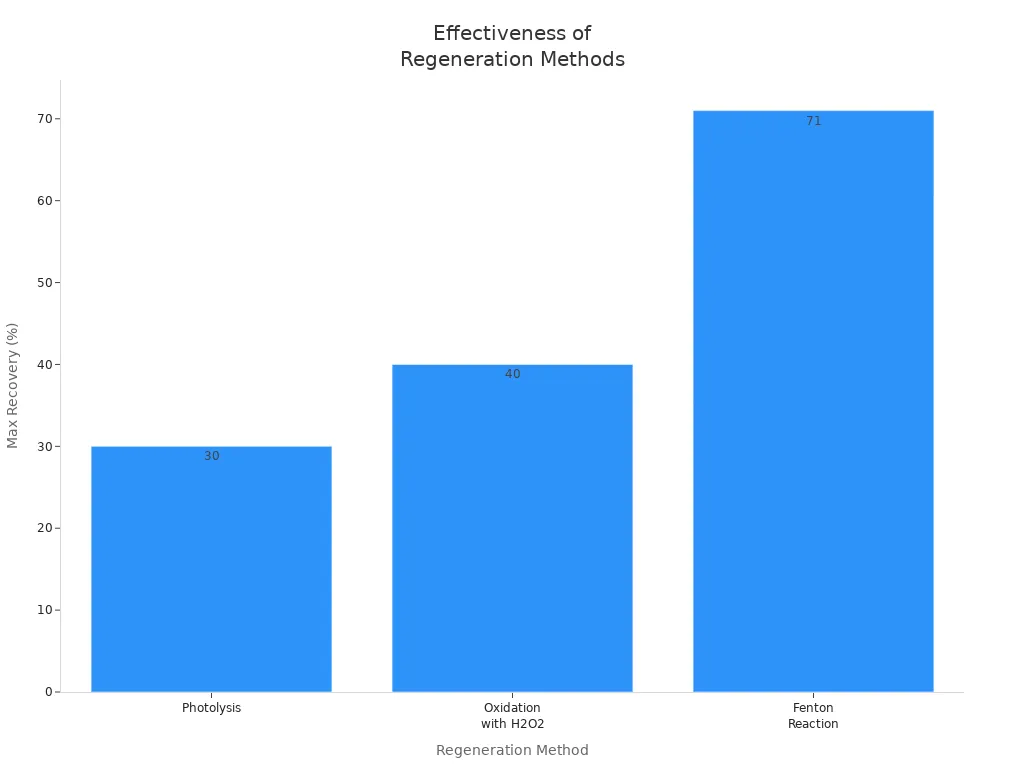
You can use different regeneration methods. The Fenton reaction restores up to 71% of adsorption capacity. Oxidation with hydrogen peroxide restores 40%. Photolysis restores 30%. The Fenton method works best for most mining operations.
Note:
Always measure the hardness of your carbon after regeneration. This helps you predict how well it will perform in the next cycle.
You improve recovery and reduce costs when you follow these best practices.
Challenges And Solutions
Common Issues (Fouling, Loss Of Efficiency)
You face several challenges when you use activated carbon in metal mining. Carbon fouling is a major issue. Contaminants from the ore can block the pores in the carbon. This reduces the efficiency of metal recovery. Attrition loss happens when carbon particles break down during use. You lose adsorption capacity as the carbon wears out. Regeneration costs can also become high. You need energy-intensive heating to reactivate used carbon.
Challenge | Description |
|---|---|
Carbon Fouling | Contaminants in the ore can block the carbon’s pores, reducing efficiency. |
Attrition Loss | Some carbon particles break down over time, leading to losses in adsorption capacity. |
Regeneration Costs | Reactivating used carbon requires energy-intensive heating. |
You see continuous chemical degradation of activated carbon. Inorganic and organic species build up and block the porous structure. You must use rejuvenation steps like acid washing and thermal regeneration to restore performance.
Tip:
Regular monitoring helps you spot fouling early. You can prevent major losses by acting quickly.
Supply And Disposal
You need to manage supply and disposal carefully. Activated carbon supply depends on raw materials like coconut shells or coal. You may face shortages if demand rises or sources become limited. Disposal of spent carbon creates another challenge. Used carbon contains adsorbed metals and contaminants. You must follow strict regulations for safe disposal.
You can use surface modification techniques to improve adsorption capacity and selectivity. Physical modification methods, such as microwave-assisted surface chemistry, help you control the surface of activated carbon. Post-treatment processes, including washing, remove impurities and ensure quality.
Surface modification boosts metal removal efficiency.
Physical modification allows precise control over carbon structure.
Post-treatment ensures clean and effective carbon for reuse.
You improve sustainability when you recycle and regenerate activated carbon. You reduce waste and lower costs by using advanced treatment methods. Careful supply management and proper disposal protect the environment and keep your mining operation running smoothly.
You see activated carbon making a big difference in metal mining. You boost gold recovery rates, especially from low-grade ores, and help reduce waste. You meet strict environmental standards by using high-performance carbon. Demand for premium activated carbon keeps rising as gold prices increase. For best results, you should follow industry guidelines and talk to experts. Stay informed about new technologies and improvements in activated carbon.
Enhanced recovery efficiency for gold and other metals
Better environmental compliance and reduced chemical waste
Growing demand for premium activated carbon in mining
FAQ
What is activated carbon used for in metal mining?
You use activated carbon to capture gold and other metals from mining solutions. It helps you remove impurities and recover valuable metals efficiently.
How many times can you reuse activated carbon?
You can reuse activated carbon several times. Proper regeneration restores its adsorption ability. Most mining operations reuse it until the carbon loses strength or capacity.
Does activated carbon help protect the environment?
Yes! You reduce water pollution and remove toxic metals when you use activated carbon. This helps you meet environmental standards and keep mining sites safe.
Which type of activated carbon works best for gold recovery?
Type | Best Use |
|---|---|
Granular (GAC) | Gold recovery |
Coconut shell-based | High efficiency |
You get the best results with granular, coconut shell-based activated carbon.