
You use activated carbon to get gold because it works fast. It is better than other adsorbents. Activated carbon is strong and adsorbs quickly. This makes it the best choice in hydrometallurgy. When you process gold, activated carbon grabs gold cyanide complexes fast. This helps you make more gold and spend less money. Methods like CIP, CIL, and CIC need good activated carbon. This helps you get the most gold possible.
Key Takeaways
Activated carbon is important for gold recovery. It quickly adsorbs gold-cyanide complexes. This helps get more gold.
Picking good activated carbon, like coconut shell carbon, makes the process better. It also lowers costs.
Activated carbon needs regular care and regeneration. This helps stop losses and gets more gold back.
Gold recovery methods like CIP, CIL, and CIC use activated carbon in different ways. Choose the method that works best for your ore.
Magnetic activated carbon makes gold recovery easier. It speeds up the process and keeps it clean. It also helps reduce gold losses.
Activated Carbon In Gold Recovery
Adsorption Process
You use activated carbon to get gold from cyanide solution because it works fast and well. When you put activated carbon in the gold system, it pulls gold-cyanide complexes to its surface. First, a neutral ion pair forms. Cations like calcium join with the aurocyanide anion. This makes a neutral complex. The complex sticks to the activated carbon. Activated carbon has many tiny holes and a big surface area. This helps it catch gold molecules quickly.
The aurocyanide complex sticks to activated carbon.
Neutral ion pairs help gold stick better.
Cations like Ca2+ help make these pairs.
The structure of activated carbon helps gold stick fast.
You can also use magnetic activated carbon for gold recovery. This kind of carbon is both magnetic and good at adsorption. You can pull magnetic activated carbon out of slurry with magnets. This makes the process faster and cleaner. Magnetic activated carbon still uses the same adsorption method. It is just easier to handle and recover.
How well adsorption works depends on a few things. The pore structure and surface area are most important. Micropores are the main spots for gold cyanide ions. Mesopores help the solution move through the carbon. The surface reactivity and special groups also matter. Oxygen groups on the carbon make active spots for gold-cyanide complexes. Smaller grains give more surface area and speed up adsorption. The purity and strength of activated carbon change how well it works and how long it lasts.
Factor | Description |
|---|---|
Pore Structure and Surface Area | Good pores trap gold cyanide ions and let solution flow easily. |
Surface Reactivity and Functional Groups | Oxygen groups on the surface make active spots for gold complexes. |
Grain Size and Granularity | Smaller pieces adsorb gold faster but can break more easily. |
Purity and Mineral Composition | Clean, high-quality carbon adsorbs gold better. |
Mechanical Strength | Strong carbon lasts longer and works better for gold recovery. |
Effectiveness In Gold Extraction
Activated carbon is very important in gold hydrometallurgy. It is special because it picks up gold-cyanide complexes from cyanide solution. Its many holes and special surface make it the best for gold recovery. When you use activated carbon in Carbon-in-Leach, it grabs gold as soon as it dissolves. The quality of activated carbon changes how much gold you get and how pure it is.
Magnetic activated carbon gives you another good thing. You can take it out of slurry fast, so you lose less and work better. This means you spend less time and money changing and fixing carbon.
Tip: Always pick high-quality activated carbon for gold recovery. It helps you get more gold and spend less money.
Activated carbon efficiency changes your operation:
Impact of Activated Carbon Efficiency | High Efficiency | Low Efficiency |
|---|---|---|
Gold losses in tailings | Lower | Higher |
Need for carbon replacement | Less often | More often |
Operational costs | Lower | Higher |
Recovery rates | Higher | Lower |
Processing times | Shorter | Longer |
When activated carbon works well, you get more gold, lose less gold, and finish faster. You also change carbon less, which saves money. Activated carbon is still very important in gold extraction today. It helps you get more gold from ore and keeps your business making money.
Gold Recovery Processes With Activated Carbon
There are three main ways to recover gold. These are Carbon-In-Pulp (CIP), Carbon-In-Leach (CIL), and Carbon-In-Column (CIC). Each one uses activated carbon in its own way. The best process depends on your ore and what you need.
Carbon-In-Pulp (CIP)
First, gold dissolves in a cyanide solution. Next, you add activated carbon to the pulp. The carbon pulls gold from the liquid. CIP works well for ores with little gold and small gold pieces. You can get a lot of gold out, usually between 95% and 99%. This process is better for the environment because you control cyanide. You need activated carbon that is all the same size and can adsorb a lot. This helps you lose less carbon and keep things steady.
Note: CIP works best for oxidized gold ore and tailings. Magnetic activated carbon makes it easier to recover gold and lose less.
Carbon-In-Leach (CIL)
CIL mixes leaching and adsorption together. You put activated carbon right into the leaching tanks. The carbon grabs gold as it comes out. CIL is good for bigger gold pieces and ores with carbon. You can recover between 92% and 97% of the gold. This process saves time and costs less to run. You need strong activated carbon that works fast. This matters because the tanks mix the slurry and cause rubbing.
Advantages of CIL:
Lower costs
Works with tough ores
Tip: Magnetic activated carbon is great for CIL. You can take it out fast and keep tanks clean.
Carbon-In-Column (CIC)
CIC uses columns filled with activated carbon. You run a cyanide solution with little solid through the columns. The carbon takes gold from the solution. CIC is best for ores with little gold and tailings. You need activated carbon with lots of holes and even size. This helps the carbon adsorb gold well. CIC usually gets between 88% and 94% of the gold. You can use electrocoagulation to catch tiny carbon pieces and get more gold.
Process Type | Extraction Efficiency | Process Difference | Suitable Ore Type | Environmental Risk | Operational Cost |
|---|---|---|---|---|---|
Carbon-In-Pulp (CIP) | Cyanide leaching first, then carbon adsorbs gold | Oxidized gold ore, fine gold | Low | Medium to high | |
Carbon-In-Leach (CIL) | 90%-95%+ | Leaching and adsorption at the same time | Coarse gold ore | High | Medium |
Carbon-in-Column (CIC) | 88%-94% | Fixed columns for low-solid solutions | Low-grade ores | Low | Medium |
You can pick the process that matches your ore and goals. Activated carbon and magnetic activated carbon are important in each method. Your choice changes how much gold you get, what it costs, and the effect on the environment.
Types Of Activated Carbon For Gold Recovery
Granular Activated Carbon
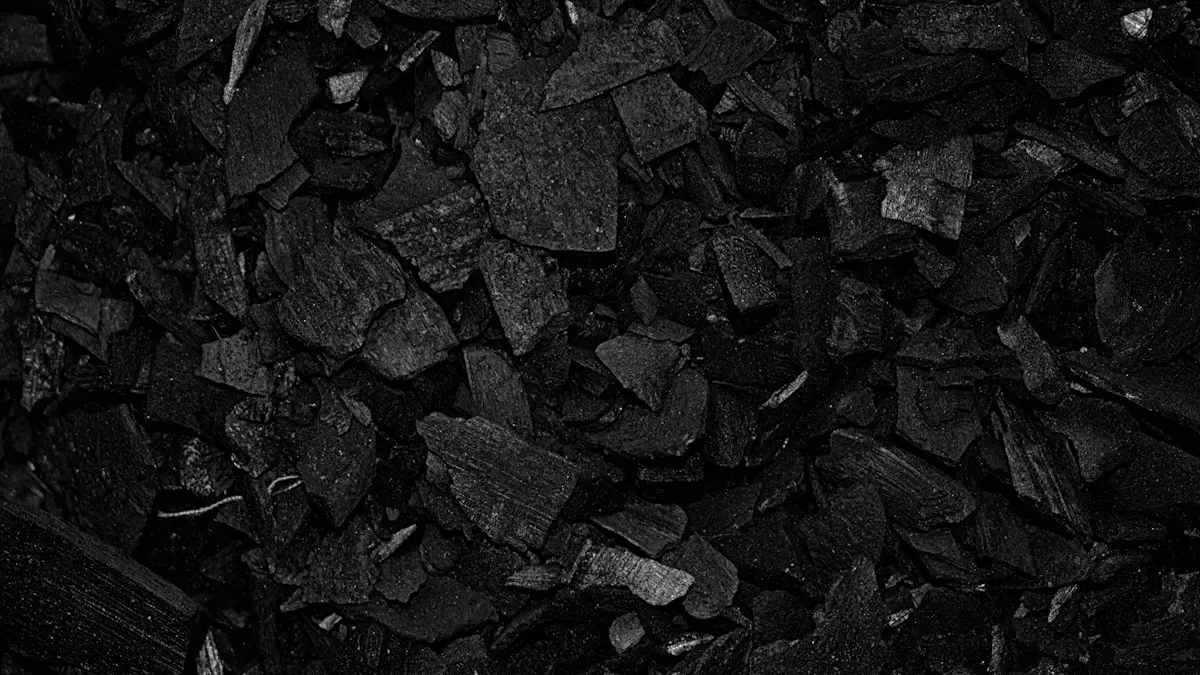
Granular activated carbon is used a lot in gold recovery plants. It is strong and adsorbs gold well. You can use it again and again, which saves money. Granular activated carbon has many tiny holes and a big surface area. These features help it catch several grams of gold per metric ton. It keeps the flow steady and makes separation easy.
Lots of surface area and pore space
Strong and does not break easily
Simple to take out of slurry
Can be cleaned and reused
The size of the particles is important. Small particles (0.2–0.5 mm) grab gold fast but can block the system. Big particles (1.0–2.0 mm) move better but work slower. Medium size (0.5–1.0 mm) is best for speed and easy use.
Type of Activated Carbon | Properties |
|---|---|
Granular Activated Carbon | Strong, adsorbs well, used most in gold mining |
Powdered Activated Carbon | Grabs gold fast at first, but does not recover well and breaks easily |
Coconut Shell Activated Carbon
Coconut shell activated carbon comes from thick coconut shells with little water. It is the best choice for gold recovery. It is very hard and has lots of tiny holes. These features help it adsorb gold well and last longer. You lose less carbon when you handle and clean it.
High surface area (iodine number 1000–1100 mg/g)
Very hard and does not wear down easily
Tiny holes help gold stick fast
Less ash means better results
Coconut shell activated carbon works well in CIP, CIL, and CIC systems. You need less of it to get the same results as coal-based carbon. This saves money and makes less waste.
Tip: You can use magnetic activated carbon made from coconut shells. It grabs gold well and you can pull it out fast with magnets.
Key Properties For Gold Adsorption
You need activated carbon with the right features to get the most gold. Look for these things:
Property | Description |
|---|---|
Adsorptive Capacity | How much gold the carbon can hold |
Adsorption Rate | How quickly gold sticks to the carbon |
Mechanical Strength | How well it resists breaking and loss during use |
Particle Size Distribution | Balance between fast adsorption and easy handling |
Hardness | Helps keep carbon from breaking and making small pieces |
Coconut shell-based carbon gives you the best mix of these features. It also has strong forces that help gold-cyanide complexes stick to the carbon. Magnetic activated carbon is easy to remove and loses less, making your process even better.
Operational Challenges And Best Practices
Minimizing Carbon Losses
When you use activated carbon for gold recovery, you face some problems. The most common problems are carbon fouling, attrition loss, and high regeneration costs. Contaminants in the ore can block the pores in the carbon. This makes the carbon work less well. Some carbon particles break down as time goes by. When this happens, you lose both carbon and gold. Regenerating used carbon also uses a lot of energy.
To lower these losses, you should do a few things:
Pick high-strength coconut shell activated carbon. This kind does not break easily and lasts longer.
Use methods like Carbon-in-Leach, Carbon-in-Pulp, or Carbon-in-Column. These ways help you keep more carbon in your system.
Regenerate your carbon often. Good regeneration makes the carbon almost like new.
Test how well your regenerated carbon works by comparing it to new carbon.
Watch the apparent density of your carbon. If it gets lower, change your regeneration process.
Losing carbon costs you money. You have to buy new carbon. You also lose the gold that was on the lost carbon. This makes your process less efficient and can lower your profits.
Tip: Always check your carbon for signs of wear and fouling. Fixing problems fast saves you money and gold.
Maximizing Gold Yield
You want to get as much gold as you can from your cyanide solution. Activated carbon helps because it can hold a lot of gold. It works best in Carbon-in-Pulp and Carbon-in-Leach systems. Granular activated carbon is very good at catching fine gold, even if the ore has impurities.
Make sure your carbon is clean and strong.
Regenerate your carbon to keep it working well.
These steps help you get more gold and lose less.
Maintenance And Attrition Control
Regular maintenance keeps your system working well. You need to stop your carbon from breaking into small pieces. High-efficiency activated carbon gives you better results and more gold. If your carbon does not work well, you will see more gold in your tailings and higher costs.
Key actions for maintenance and attrition control:
Check your carbon’s strength and size often.
Take out broken or worn-out carbon quickly.
Use good ways to clean and regenerate your carbon.
A good maintenance plan helps you keep your gold recovery process working well and making money.
You use activated carbon to help get more gold and make your work better. Picking good carbon and using smart steps helps you for a long time. You will get more gold, spend less money, and help the environment.
Benefit Type | Description |
|---|---|
Good activated carbon helps you get more gold out. | |
Reduced Operational Costs | Better ways mean you pay less for each ounce of gold. |
Enhanced Environmental Sustainability | Using less cyanide and making less pollution is better for the earth. |
You can make more money by making your process better. Acid-washed carbon helps gold come off faster. The best carbon costs less for each ounce of gold you get. You also use less cyanide and save money every year. Always use good carbon, make your process better, and take care of your tools. This helps you get more gold and keeps your business strong.
FAQ
What makes activated carbon good for gold recovery?
Activated carbon is good for gold recovery because it has a lot of surface area. It is also very hard and has many small holes. These things help it catch gold fast and last longer in your system.
Can you reuse activated carbon after gold recovery?
Yes, you can use activated carbon again. You clean it with heat or chemicals to make it work like new. This helps it grab gold again. Always check if the carbon is still strong before using it again.
Why do you prefer coconut shell activated carbon?
Coconut shell activated carbon is very hard and has a big surface area. It does not break easily and works well for gold recovery. You lose less carbon and get better results with it.
How do you prevent carbon losses during operation?
Tip: Pick strong, high-quality carbon for your system. Look for broken pieces often. Clean and regenerate your carbon on a regular schedule. Take out worn carbon quickly to keep your gold recovery high.