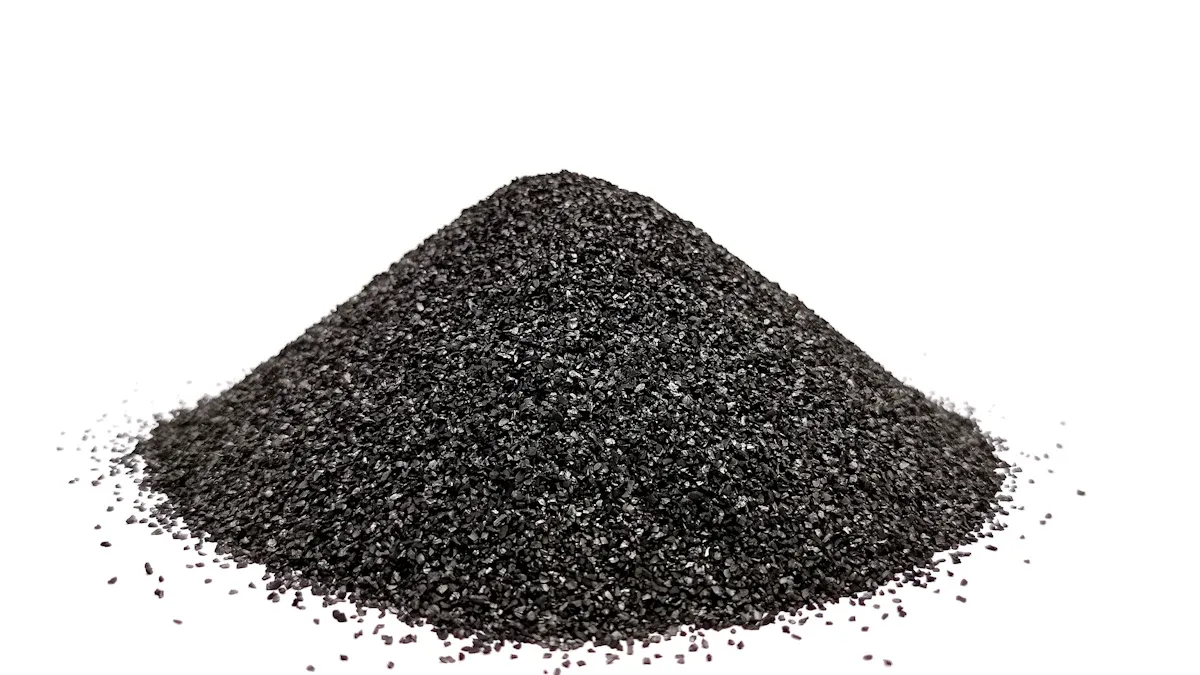
Chemical Activation produces activated carbon by impregnating raw materials with agents such as phosphoric acid or potassium hydroxide before controlled carbonization. This energy-efficient process develops high surface area and tailored mesoporosity, enhancing adsorption of large molecules and organic compounds for liquid-phase purification.

Production
Controlled impregnation, activation, washing, and drying processes ensure consistent impregnated activated carbon quality, uniform pore characteristics, stable adsorption performance, and reliable batch-to-batch consistency for demanding industrial applications.

Sales
We recommend suitable chemically activated carbon grades based on precursor materials, application conditions, technical specifications, contaminant profiles, and adsorption targets, ensuring optimized pore characteristics and reliable purification performance.

Service
Our technical team provides professional activated carbon application guidance, product selection, testing support, dosage evaluation, and performance optimization to ensure efficient adsorption and reliable treatment across diverse industrial systems.